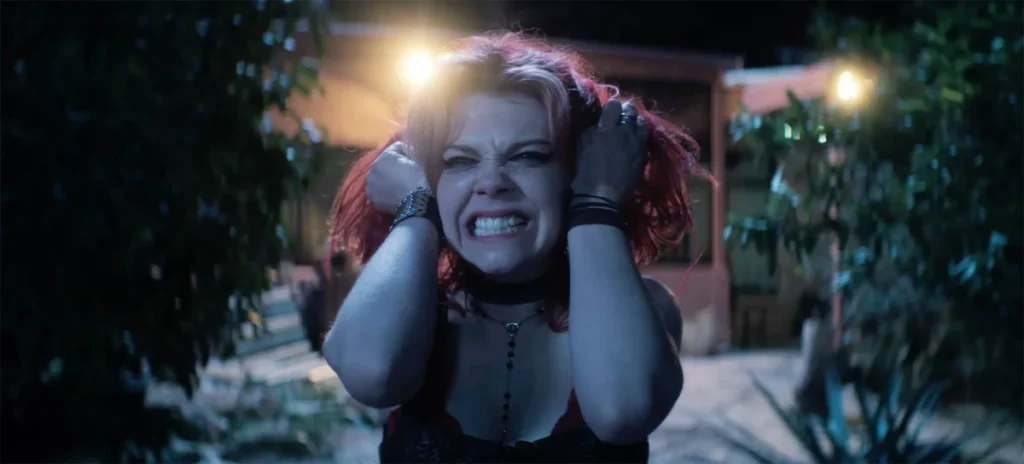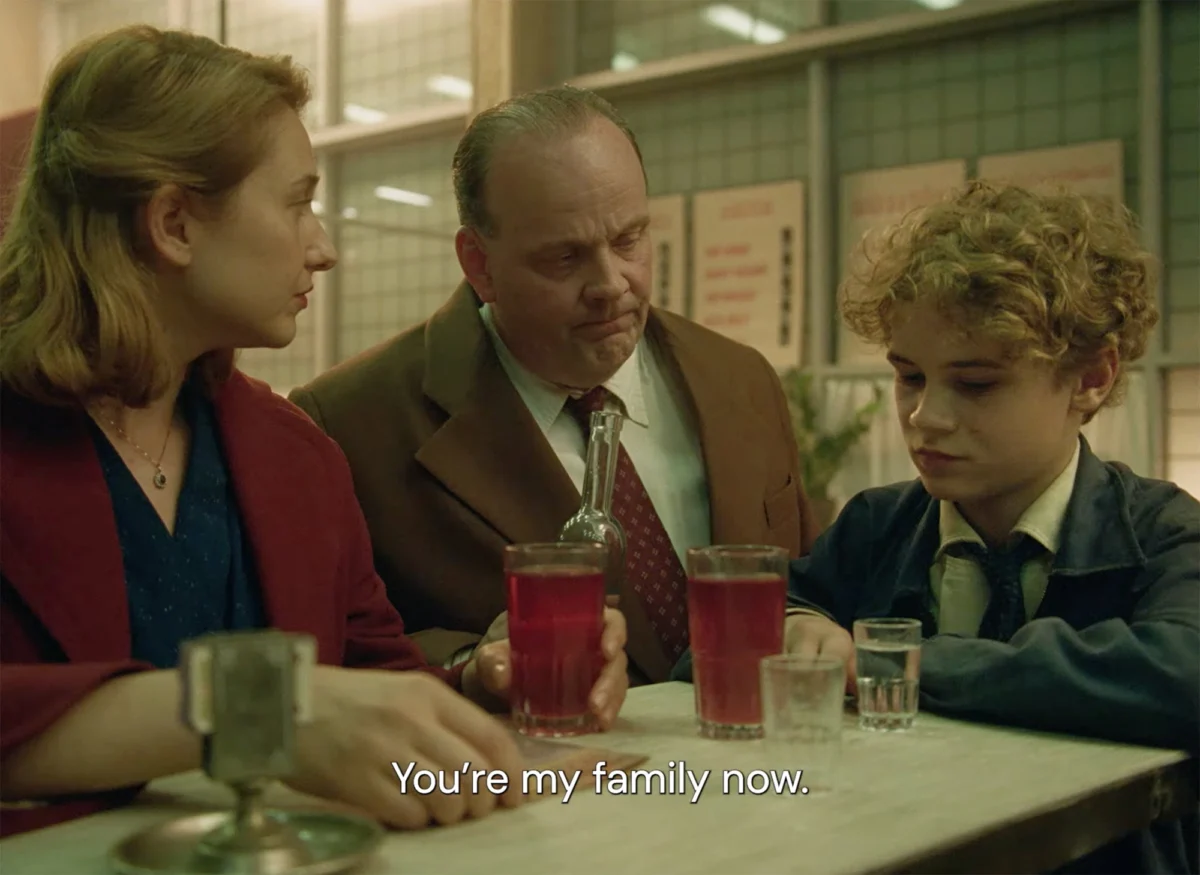
Mubi has officially released the international trailer and promotional materials for Orphan, the third feature film from Academy Award-winning Hungarian director László Nemes. Scheduled for a theatrical rollout in the United Kingdom, Ireland, and Germany on May 15, 2026, the film marks a significant return for Nemes, whose previous works, Son of Saul (2015) and Sunset (2018), established him as a rigorous practitioner of immersive, historically grounded cinema. Orphan, titled Árva in its native Hungarian, explores the psychological and social ripples of the 1956 Hungarian Uprising through the eyes of a young boy navigating a landscape defined by political instability and personal deception.
The film arrives following an extensive festival run that began at the 82nd Venice International Film Festival in late 2025. Since its world premiere on the Lido, Orphan has been showcased at the Toronto International Film Festival, the Zurich Film Festival, the BFI London Film Festival, AFI Fest, and the Denver Film Festival. This trajectory reflects the high anticipation surrounding Nemes’ work, though the critical response has proven more polarized than that of his debut, Son of Saul. Currently holding a 60% approval rating on the review aggregator Rotten Tomatoes, the film has been described by some critics as an "exquisitely mounted historical vision," while others have found the narrative "unevenly paced" and "curiously uninvolving."
Narrative Structure and Cinematic Premise
Set in Budapest in 1957, exactly one year after the brutal suppression of the Hungarian Revolution by Soviet forces, Orphan centers on Andor (portrayed by newcomer Bojtorján Barabás). The boy has been raised by his mother (Andrea Waskovics) in an environment thick with the mythos of his absent father. According to his mother’s accounts, his father was an idealized figure, a man of principle who is no longer present. This fragile domestic reality is shattered when a "brutish man," played by French actor Grégory Gadebois, appears at their home claiming to be Andor’s biological father.
The stranger demands a role in the boy’s upbringing, forcing Andor into a state of profound ontological confusion. The film’s tension is derived from the ambiguity of this man’s identity and the reliability of the mother’s past narratives. As Andor attempts to reconcile these conflicting versions of his heritage, the film serves as a metaphor for the broader Hungarian national identity during the "normalization" period—a time when the truth of the 1956 uprising was being systematically suppressed or rewritten by the Kádár regime.
The screenplay, co-written by Nemes and his frequent collaborator Clara Royer, continues the director’s fascination with individuals caught in the machinery of history. Royer and Nemes previously collaborated on the scripts for both Son of Saul and Sunset, suggesting a thematic continuity in their exploration of subjective experience amidst objective historical trauma.

Historical Context: Hungary in 1957
To understand the stakes of Orphan, one must look at the specific historical moment in which it is set. The year 1957 was a period of deep mourning and coerced silence in Hungary. The 1956 Revolution, which began as a student protest and escalated into a nationwide revolt against the Soviet-imposed policies of the People’s Republic of Hungary, was crushed in November 1956. By 1957, the new government led by János Kádár had begun a series of reprisals, leading to thousands of arrests and hundreds of executions.
For the Jewish community in Budapest, the period was particularly complex. Having survived the Holocaust only a decade prior, many were caught between the promise of communist equality and the reality of Stalinist oppression. Nemes, who has frequently explored Jewish identity in his work, places Andor at the intersection of these forces. The "freedom" mentioned in the trailer’s tagline—"Freedom has its price"—refers not only to the failed political revolution but also to the personal cost of seeking the truth in a society where deception is a survival mechanism.
The Director’s Evolution: From Saul to Orphan
László Nemes emerged as a major voice in world cinema with Son of Saul, which won the Grand Prix at Cannes and the Academy Award for Best Foreign Language Film. That film was noted for its radical formal constraints: a 4:3 aspect ratio, extremely shallow depth of field, and a camera that remained tethered to the protagonist’s neck, forcing the audience to experience the horrors of Auschwitz through peripheral vision and sound.
His follow-up, Sunset, applied a similar aesthetic to the twilight of the Austro-Hungarian Empire on the eve of World War I. While Sunset was praised for its technical virtuosity, it was also criticized for its dense, often impenetrable narrative. Orphan appears to continue this stylistic lineage. Early reports from festival screenings suggest that Nemes maintains his preference for long takes and a subjective camera, though the setting has shifted from the grand scales of war and empire to the intimate, claustrophobic confines of a fractured family.
The production of Orphan involved a prestigious international team. Produced by Mike Goodridge, Gregory Jankilevitsch, Alexander Rodnyansky, Ildiko Kemeny, and Ferenc Szále, the film represents a collaboration between Hungarian, British, and international financiers. The involvement of Alexander Rodnyansky, a prominent producer known for his work with Andrey Zvyagintsev, underscores the film’s status as a high-tier European art-house production.
Cast and Performance
The casting of Bojtorján Barabás as Andor follows Nemes’ tradition of placing heavy narrative weight on young or relatively unknown actors. Barabás is supported by a veteran ensemble. Andrea Waskovics, who plays the mother, is a rising star in Hungarian theater and film, while Grégory Gadebois brings international weight to the production. Gadebois, a César-nominated French actor known for his roles in An Officer and a Spy and Delicieux, provides a foil to the Hungarian cast, his "brutish" presence serving as the primary catalyst for the film’s conflict.

Other supporting cast members include Marcin Czarnik, who previously appeared in Sunset and Son of Saul, further solidifying the "Nemes troupe" of actors. Elíz Szabó and Sándor Soma round out the primary cast, contributing to the lived-in, period-accurate atmosphere of 1950s Budapest.
Critical Reception and Festival Chronology
The journey of Orphan began on the festival circuit, where it faced the difficult task of following Nemes’ previous successes. At the Venice Film Festival in September 2025, the initial reactions were markedly divided. Some critics lauded the film for its uncompromising atmosphere and its refusal to provide easy answers. Others, however, felt that the director’s signature style—which emphasizes sensory immersion over traditional plot progression—had become "curiously uninvolving" when applied to this specific domestic drama.
Following Venice, the film’s screening at the Toronto International Film Festival (TIFF) in the "Special Presentations" section allowed North American critics to weigh in. The consensus remained stable: the film is a technical marvel but a narrative challenge. This sentiment was echoed during its screenings at the London and Zurich festivals. The 60% Rotten Tomatoes score indicates a film that is likely to find a dedicated audience among "cinephiles only," as noted in early trade reports, rather than achieving the broad crossover success of Son of Saul.
Distribution and Release Strategy
Mubi, the global distributor and streaming service known for its curated selection of independent and world cinema, has taken the lead on the film’s release in several key territories. By securing the rights for the UK, Ireland, and Germany, Mubi continues its expansion into traditional theatrical distribution. The May 15, 2026, release date places the film in the "pre-Cannes" window, a strategic time for prestigious art-house titles to capture the attention of serious moviegoers before the summer blockbuster season begins.
The marketing campaign, centered on the newly released trailer, emphasizes the film’s pedigree. The trailer utilizes the quote "An exquisitely mounted historical vision" and highlights Nemes’ Academy Award-winning status to appeal to fans of high-end international drama. The poster, featuring a stark, evocative image of Andor, reinforces the film’s focus on the isolation of the individual within a turbulent historical framework.
Broader Impact and Implications
Orphan arrives at a time when Hungarian cinema is navigating a complex political and financial landscape. The Hungarian National Film Institute has undergone significant changes in recent years, affecting the types of projects that receive state support. Nemes, as one of the country’s most internationally recognized filmmakers, remains a vital representative of Hungarian culture on the world stage.

The film also contributes to a growing body of work that re-examines the 1950s in Eastern Europe. By focusing on the aftermath of the 1956 Uprising rather than the event itself, Nemes provides a nuanced look at the psychological "hangover" of failed revolutions. This thematic focus on the "orphans" of history—those left to pick up the pieces of shattered ideologies—gives the film a contemporary resonance in an era marked by shifting political allegiances and the return of Cold War-era tensions in Europe.
For Mubi, the success of Orphan will be measured not just in box office returns but in its ability to bolster the platform’s reputation as a home for the world’s most uncompromising auteurs. For Nemes, the film represents a crucial point in his career as he seeks to refine his aesthetic language and prove that his unique approach to historical storytelling remains relevant a decade after his breakthrough.
As the May 15 release date approaches, Orphan stands as one of the most significant foreign-language releases of the 2026 spring season. Whether it will eventually be viewed as a misunderstood masterpiece or a stylistic dead-end for its director remains to be seen, but its technical ambition and historical gravity ensure that it will be a central topic of discussion among global cinema audiences.