The 2026 Cannes Film Festival has officially unveiled the first trailer for Red Rocks, the latest cinematic venture from acclaimed French auteur Bruno Dumont. Set to premiere within the prestigious Directors’ Fortnight (Quinzaine des Cinéastes) sidebar, the film marks a significant tonal shift for the filmmaker following his recent foray into high-concept science fiction with The Empire. Red Rocks, known in its native French as Les Roches rouges, explores the volatile intersection of childhood innocence and the harsh realities of social rivalry against the sun-drenched backdrop of the Côte d’Azur. The release of the trailer, coordinated with a special retrospective of Dumont’s body of work at the festival, signals a return to the director’s roots in grounded, naturalistic drama, albeit through a lens that remains uniquely his own.
Narrative Overview and Thematic Foundations
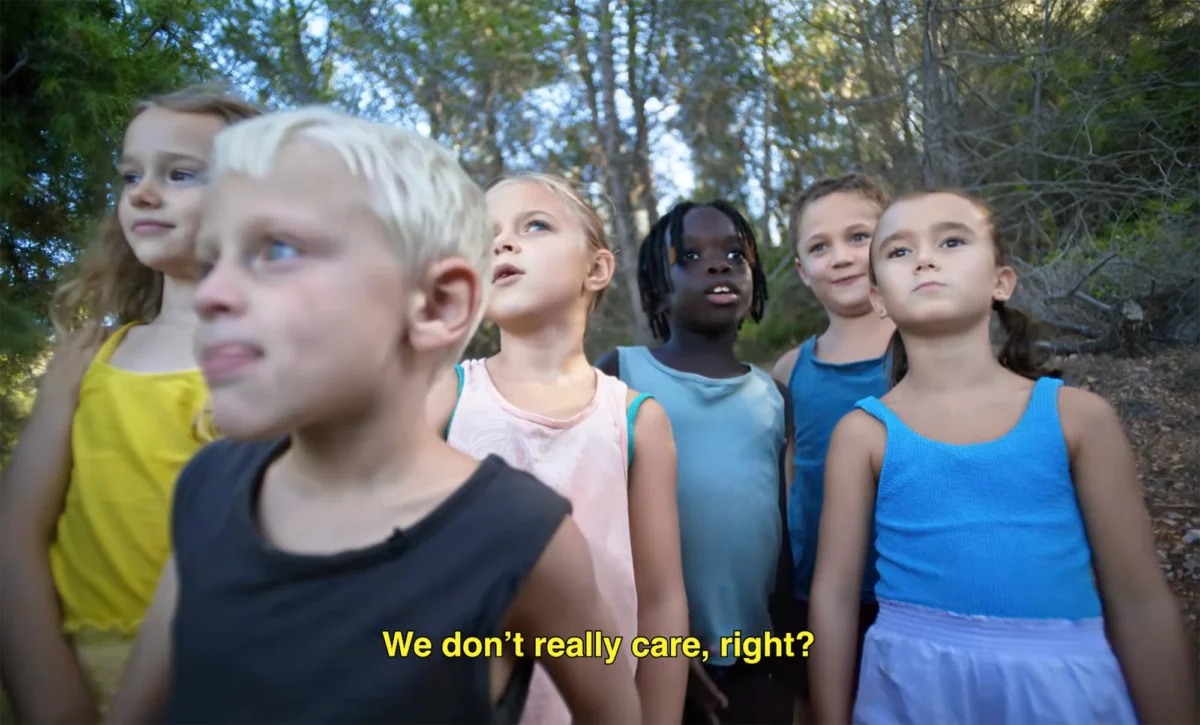
Red Rocks centers on the experiences of two rival gangs of children residing on the French Riviera. The narrative distinguishes between the "locals"—those who inhabit the coastal towns year-round—and the "summer visitors" who descend upon the Mediterranean during the peak tourist season. This seasonal clash serves as the catalyst for a series of escalating confrontations centered around a perilous local tradition: cliff jumping.
At the heart of the story is Géo, a protagonist barely five years old, portrayed by Kaylon Lancel. Through Géo’s perspective, the audience witnesses the emergence of complex social hierarchies and the first stirrings of romantic interest, described by the production as a "Romeo and Juliet-style romance" set among the very young. The film chronicles how a simple game of bravado and physical daring evolves into a profound exploration of life, love, and the omnipresent shadow of mortality. By focusing on such young protagonists, Dumont aims to capture a raw, unvarnished look at human nature before the total imposition of adult social structures.
The cast is comprised largely of non-professional child actors, a hallmark of Dumont’s casting philosophy which prioritizes authentic presence over traditional theatrical training. Joining Kaylon Lancel are Kelsie Verdeilles as Eve, Louise Podolski as Manon, Mohamed Coly as Rouben, Alessandro Piquera as B, and Meryl Pires as Do. This ensemble approach allows the film to function as a collective portrait of a generation navigating the beautiful but treacherous landscape of the Mediterranean.

The Aesthetic of Red Rocks: Technical and Stylistic Choices
One of the most striking elements revealed in the trailer and promotional materials is the film’s distinct visual language. Cinematographer Carlos Alfonso Corral, working closely with Dumont, has utilized wide-angle lenses extensively throughout the production. This technical choice serves a dual purpose: it captures the "dazzling Mediterranean landscape" in its full, immersive glory while simultaneously creating a slightly distorted, hyper-real atmosphere that mirrors the intense, sometimes overwhelming sensory experience of early childhood.
The "documentary vibe" noted by early viewers is a deliberate stylistic maneuver. By utilizing natural lighting and real-world locations on the French Riviera, Dumont strips away the artifice often associated with coming-of-age dramas. The camera remains at the eye level of the children, emphasizing their physical relationship with the rugged "Red Rocks" and the vast sea. This approach aligns with Dumont’s career-long investigation into the concept of "grace"—the idea that spiritual or transcendental beauty can be found within the most mundane or even brutal aspects of human existence.
Historical Context: Bruno Dumont’s Cinematic Evolution
To understand the significance of Red Rocks, it is essential to situate it within the broader trajectory of Bruno Dumont’s career. Since his debut with The Life of Jesus (La Vie de Jésus) in 1997, Dumont has established himself as one of the most provocative voices in contemporary world cinema. His early work was characterized by a "Bressonian" austerity, focusing on the lives of marginalized individuals in rural northern France. Films such as Humanity (L’humanité) and Flanders (Flandres) earned him multiple Grand Prix awards at Cannes, though they also polarized audiences with their unflinching depictions of violence and sexuality.
In the mid-2010s, Dumont’s style underwent a radical transformation. He moved toward absurdist comedy and surrealism with projects like P’tit Quinquin and Slack Bay (Ma Loute). This period saw him experimenting with genre, leading eventually to his 2024 sci-fi epic The Empire. Red Rocks appears to be a synthesis of these two eras. It retains the grounded, human-centric focus of his early dramas while incorporating the visual dynamism and experimental energy of his later work.
The 2026 Cannes Film Festival’s decision to host a retrospective of Dumont’s filmography alongside the premiere of Red Rocks underscores his status as a pillar of French cinema. The retrospective will cover nearly three decades of work, allowing festival-goers to trace the thematic threads of faith, desire, and social conflict that run from his earliest shorts to this latest feature.

Directors’ Fortnight and the 2026 Cannes Landscape
The selection of Red Rocks for the Directors’ Fortnight is a strategic placement. Founded in 1969 by the French Directors Guild in the wake of the May 1968 protests, the sidebar is known for its independence and its focus on "cinéaste" vision over commercial viability. While Dumont has frequently appeared in the Main Competition, the Directors’ Fortnight offers a more intimate platform that emphasizes the film’s artistic innovations and its documentary-like purity.
Industry analysts suggest that the inclusion of Red Rocks in this section highlights a broader trend at the 2026 festival: a return to "pure cinema" and auteur-driven narratives after several years dominated by high-budget streaming acquisitions. The presence of a Dumont retrospective further solidifies the festival’s commitment to honoring the history of the medium while looking toward its future.
Production and Global Distribution
Red Rocks is a co-production involving several key figures in independent European cinema. The film was produced by Joaquim Sapinho, Marta Alves, and Fiorella Moretti. Their involvement points to a robust international backing, which is crucial for a film that avoids the traditional tropes of the "coming-of-age" genre in favor of a more experimental, atmospheric approach.
As of May 2026, no firm theatrical release dates have been set for the United States or the United Kingdom. However, given Dumont’s established reputation and the film’s high-profile premiere at Cannes, it is expected that boutique distributors such as Kino Lorber, MUBI, or Janus Films will be eyeing the project for a late 2026 or early 2027 rollout. In France, the film is expected to receive a significant theatrical push, bolstered by the critical reception it receives during its festival run.
Broader Implications and Critical Reception
The initial reaction to the Red Rocks trailer has been overwhelmingly positive among cinephiles and critics. The juxtaposition of the innocent "Romeo and Juliet" narrative with the "perilous game" of cliff jumping suggests a film that will challenge viewers’ perceptions of childhood. By treating the conflicts and emotions of five-year-olds with the same gravity usually reserved for adult tragedies, Dumont continues his career-long project of deconstructing the human condition.

Furthermore, the film’s focus on the rivalry between locals and summer visitors touches upon contemporary issues of "over-tourism" and the shifting social fabric of the Mediterranean coast. While Dumont typically avoids overt political messaging, the environmental and social context of the Côte d’Azur provides a rich subtext for the physical and emotional battles played out by the gangs of children.
The use of wide-angle lenses and the emphasis on the "dazzling landscape" also suggests a dialogue with the history of French cinema itself. The French Riviera has been a central location for filmmakers ranging from Alfred Hitchcock to Jean-Luc Godard. By reclaiming this space through the eyes of children and utilizing a documentary-like aesthetic, Dumont offers a fresh perspective on one of the most photographed regions in the world.
Conclusion: A Vision of Grace
Red Rocks stands as a testament to Bruno Dumont’s refusal to be pigeonholed. Whether he is directing a medieval musical about Joan of Arc or a wacky space opera, his core interest remains the same: the search for grace in a world defined by struggle. With its premiere at the 2026 Cannes Film Festival, Red Rocks is poised to be one of the most talked-about films of the year, offering a visceral, visually stunning exploration of the first stirrings of the heart and the dangerous games of youth. As the trailer suggests, the film invites the audience to "let the kids play," but with the sobering reminder that in the world of Bruno Dumont, play is often a matter of life and death.