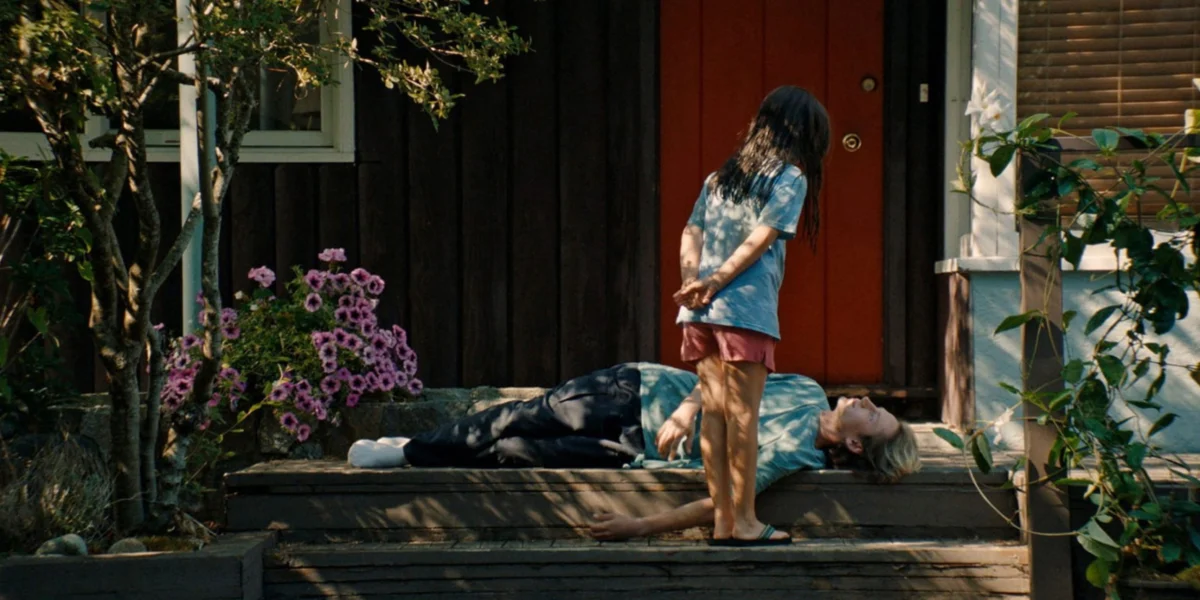
Blue Heron, the 2025 drama film written and directed by Sophy Romvari, represents a significant milestone in contemporary Canadian cinema, marking the filmmaker’s transition from celebrated short-form storytelling to feature-length narrative. Described as a semi-autobiographical exploration of memory, displacement, and familial fracture, the film draws heavily from Romvari’s personal history and her acclaimed 2020 short film, Still Processing. Set against the backdrop of Vancouver Island in the late 1990s, the narrative centers on Sasha, an eight-year-old girl portrayed by Eylul Guven, as her Hungarian immigrant family attempts to navigate the complexities of a new life in Canada. The domestic stability of the household is increasingly challenged by the volatile behavioral issues of the eldest son, Jeremy, played by Edik Beddoes. This tension serves as the primary catalyst for the film’s emotional trajectory, exploring how trauma and mental health crises ripple through a migrant family unit.
The film features a diverse ensemble cast that bridges international talent with local performers. Ádám Tompa and Iringó Réti portray Sasha’s parents, capturing the specific anxieties of first-generation immigrants balancing cultural preservation with the demands of assimilation. Liam Serg and Preston Drabble appear as Sasha’s other brothers, while Amy Zimmer provides a reflective framing device as the adult version of Sasha. Following its world premiere at the 78th Locarno Film Festival, where it received the Swatch First Feature Award, Blue Heron has been positioned by critics as a definitive work of the "New Canadian Wave," a movement characterized by intimate, personal narratives that prioritize psychological depth over traditional plot structures.
Narrative Origins and the Influence of Still Processing
To understand the structural and emotional foundations of Blue Heron, one must look to Sophy Romvari’s previous body of work, specifically the short film Still Processing. In that 2020 documentary-style short, Romvari documented her own experience viewing long-lost family photographs and home movies of her deceased brothers. The short was widely praised for its vulnerability and its meditation on the "archival" nature of grief. Blue Heron functions as a narrative expansion of these themes, translating the raw emotion of documentary into a scripted, cinematic framework.
By setting the film in the late 1990s, Romvari utilizes a specific temporal distance to examine the immigrant experience. The late 90s in Canada was a period of significant demographic shift, and by focusing on a Hungarian family on Vancouver Island—a location often associated with rugged isolation—the film highlights the loneliness inherent in relocation. The semi-autobiographical nature of the script allows for a meticulous attention to detail, from the production design reflecting the era’s aesthetic to the specific linguistic nuances of a bilingual household. This authenticity has been cited by festival programmers as the film’s greatest strength, moving beyond the tropes of the "immigrant drama" to offer a more nuanced look at how family secrets are kept and discovered by children.
A Chronology of Critical and Festival Success
The trajectory of Blue Heron from production to international recognition followed a path typical of high-caliber independent cinema, beginning with intense interest on the festival circuit.
- Production and Post-Production (2023–2024): The film was developed with support from Canadian arts councils and independent financiers, focusing on capturing the specific atmosphere of the Pacific Northwest. Romvari collaborated with cinematographers to create a visual language that contrasted the natural beauty of Vancouver Island with the claustrophobic tension inside the family home.
- World Premiere at Locarno (August 2024): The film debuted at the 78th Locarno Film Festival in Switzerland. As one of the world’s oldest and most prestigious platforms for auteur-driven cinema, Locarno provided the ideal stage for Romvari’s debut. The film was met with universal acclaim, with the jury awarding it the Swatch First Feature Award, a prize specifically designed to recognize emerging directorial talent.
- North American Premiere at TIFF (September 2024): Following its European success, Blue Heron traveled to the Toronto International Film Festival (TIFF). In Toronto, the film resonated deeply with domestic audiences and critics alike. It was ultimately awarded the Best Canadian Discovery award, a distinction that often serves as a bellwether for future awards season success and international distribution.
- Distribution Acquisition (Late 2024): Recognizing the film’s commercial and critical potential, Janus Films acquired the distribution rights. Janus, known for its partnership with the Criterion Collection and its focus on "art-house" masterpieces, signaled that Blue Heron would be treated as a significant cultural artifact rather than a standard theatrical release.
- Theatrical Release (April 17, 2025): The film is scheduled for a wide theatrical release in mid-April, supported by a promotional tour and director interviews intended to engage both the Hungarian-Canadian community and the broader cinephile public.
Supporting Data: The Landscape of Canadian Independent Film
The success of Blue Heron occurs during a period of transformation for the Canadian film industry. Data from Telefilm Canada and various provincial film commissions suggest a growing appetite for "discovery" films—debut features that offer fresh perspectives on Canadian identity. In 2024, independent dramas accounted for a significant portion of Canada’s international cultural exports, with films like Blue Heron leading the charge at A-list festivals.
Statistically, debut features by female directors in Canada have seen a steady increase in funding and festival representation over the last five years. However, the transition from short films to feature-length remains a difficult hurdle. Romvari’s ability to secure international distribution through Janus Films is a statistical outlier, as only a small percentage of Canadian independent films achieve major US theatrical distribution. This achievement underscores the high level of "critical consensus" surrounding the film. Furthermore, the film’s focus on the Hungarian diaspora addresses a less-represented demographic in Canadian media, adding to the country’s growing library of "hyphenated-identity" cinema.

Official Responses and Jury Statements
The recognition bestowed upon Blue Heron at Locarno and TIFF came with high praise from industry professionals. The Locarno jury noted that Romvari’s debut was "a masterclass in restraint," praising her ability to handle sensitive subject matter—such as a child’s realization of a sibling’s mental instability—without resorting to melodrama. The jury specifically highlighted the performance of Eylul Guven, noting that the film succeeds largely because it remains anchored in the perspective of an eight-year-old, making the "dangerous behavioral issues" of the brother feel both mysterious and terrifying.
At TIFF, the "Best Canadian Discovery" award was accompanied by a statement emphasizing the film’s "poetic realism" and its contribution to the national narrative. Critics have drawn comparisons to the works of Alice Rohrwacher and Celine Sciamma, noting a similar focus on the interior lives of young girls. Romvari herself, in various press engagements, has expressed that the film was an attempt to "give a body and a voice to memories that felt like ghosts." This sentiment has resonated with audiences who have experienced similar family dynamics, particularly regarding the stigma of mental illness within immigrant communities during the 1990s.
Broader Impact and Industry Implications
The release of Blue Heron carries implications that extend beyond its box office performance. First, it solidifies Sophy Romvari’s position as a leading voice in the "New Canadian Wave." Her success provides a blueprint for other short-form filmmakers looking to scale their personal narratives into feature-length projects. By maintaining her distinct visual and thematic style, she has demonstrated that personal, semi-autobiographical stories can have global appeal.
Secondly, the film’s acquisition by Janus Films is a significant indicator of the "prestige" market’s current interests. Janus Films rarely takes on contemporary debuts unless they exhibit a level of craft and "timelessness" associated with the cinematic canon. This placement suggests that Blue Heron will have a long afterlife on streaming platforms like the Criterion Channel and in academic settings, where it can be studied for its portrayal of memory and the immigrant experience.
Finally, the film contributes to a necessary dialogue regarding mental health. By depicting the "increasingly dangerous behavioral issues" of the character Jeremy through the eyes of his younger sister, the film avoids clinical detachment. Instead, it captures the confusion and fear that children feel when a household’s safety is compromised by an illness that no one knows how to name. This thematic depth ensures that Blue Heron will be discussed not just as a piece of art, but as a social document reflecting the challenges of the late 20th-century family unit.
Conclusion and Theatrical Outlook
As Blue Heron prepares for its April 17th theatrical debut, the industry’s eyes are on how this "small film with a big emotional impact" will perform with the general public. While its festival accolades have guaranteed a certain level of critical interest, the film’s true test will be its ability to connect with audiences who share the experience of displacement or the quiet trauma of a fractured home.
With a script rooted in the director’s own childhood and a cast that brings a palpable sense of reality to the screen, Blue Heron is more than just a directorial debut; it is a sophisticated examination of the threads that hold a family together—and the forces that threaten to tear them apart. As Janus Films rolls out the theatrical release, the film stands as a testament to the power of personal storytelling in an increasingly globalized film market. For Sophy Romvari, the journey from "processing" her own past in short films to projecting it onto the silver screen marks the arrival of a major new talent in international cinema.