While much of the United States experienced a cooling period in on-location film and television production during the first quarter of the year, New Jersey has emerged as a significant outlier, bucking national trends with record-breaking growth. According to the latest quarterly insights report from production intelligence platform ProdPro, the "Garden State" achieved a 45 percent year-over-year increase in filming count and a 37 percent surge in total production expenditure. These figures stand in stark contrast to the broader domestic market, where filming volume decreased by an average of 10 percent during the same period.
The report, which tracks the movement of capital and camera crews across the North American entertainment landscape, highlights a shifting geography in the industry. As traditional hubs like Georgia and New Mexico face uncharacteristic downturns, New Jersey is rapidly solidifying its reputation as "Hollywood East." This transformation is being fueled by a strategic combination of aggressive tax incentives, massive private investment in studio infrastructure, and a robust local workforce that has benefited from the state’s proximity to the New York City talent pool.
The Surge of the Garden State
New Jersey’s ascendancy is not an overnight phenomenon but the result of multi-year legislative and economic planning. The state’s 45 percent jump in filming activity is largely attributed to a "surge in episodic activity." Unlike feature films, which often involve one-off location shoots, episodic television series provide long-term stability for local economies, keeping crews employed for months or even years at a time.
Industry analysts point to the New Jersey Film & Digital Media Tax Credit Program as the primary engine for this growth. By offering transferable tax credits of up to 35 percent on qualified film production expenses, plus additional bonuses for diversity and local hiring, the state has successfully lured high-budget projects that previously would have defaulted to Manhattan or Brooklyn.
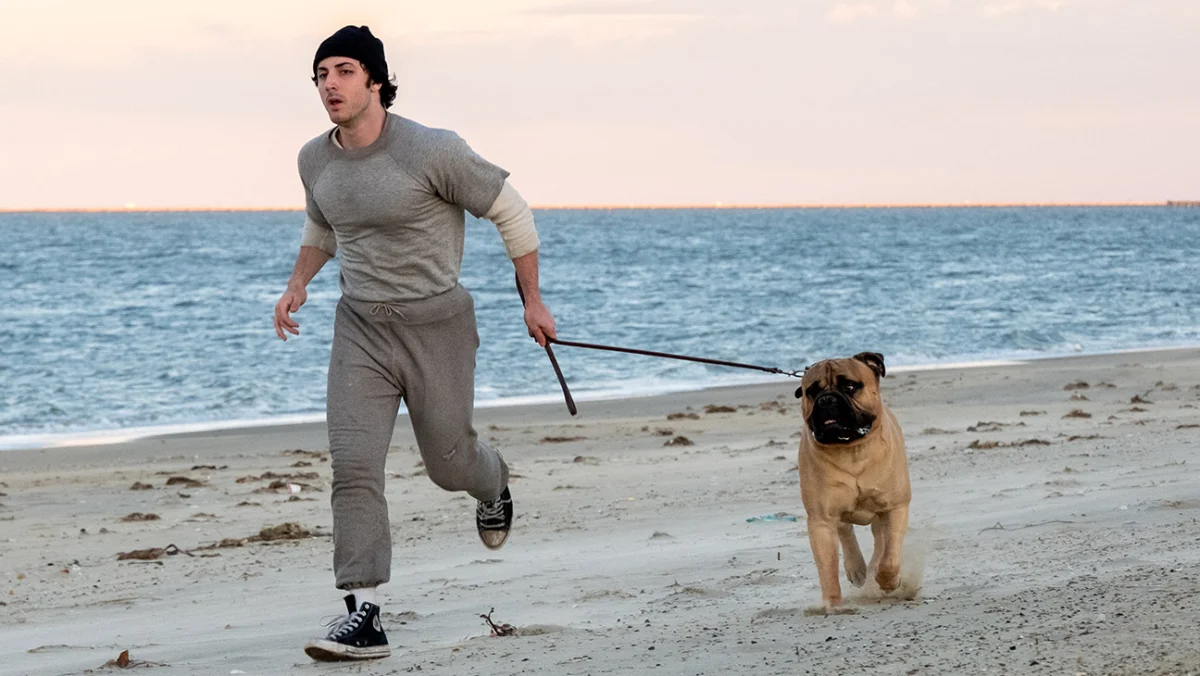
A prime example of this fiscal magnetism is the Amazon MGM production I Play Rocky, a biopic detailing the early life of Sylvester Stallone. Producer Toby Emmerich recently noted that while the project’s narrative roots are in New York and Pennsylvania, the financial reality of the industry dictated a move across the Hudson. "In a normal world, we would have shot that movie in New York and Pennsylvania," Emmerich told industry reporters. "We ended up shooting it in New Jersey because they had the best tax deal."
A Billion-Dollar Infrastructure Evolution
The sustainability of New Jersey’s production boom is being anchored by three massive studio developments currently in various stages of completion. These facilities are designed to provide the "Hollywood-style" soundstage environment that modern streaming services and major studios demand.
- Netflix at Fort Monmouth: The streaming giant is investing approximately $1 billion to transform a portion of the former Army base into its East Coast flagship. The plans include 12 state-of-the-art soundstages, post-production facilities, and backlots. This development alone is expected to create thousands of permanent jobs and provide a dedicated home for Netflix’s growing slate of original content.
- 1888 Studios in Bayonne: In October, Paramount Global signed a 10-year lease to occupy 85,000 square feet of this massive complex. Designed by the renowned Bjarke Ingels Group, 1888 Studios is positioned to be one of the largest purpose-built studio campuses in the world, offering proximity to New York City with the logistical ease of a suburban site.
- Lionsgate at Great Point Studios: Located in Newark, this facility will serve as the anchor for Lionsgate’s regional operations. By placing a major studio in the heart of Newark, the project aims to revitalize the local economy while tapping into the city’s diverse architecture and transportation hubs.
Beyond these major developments, New Jersey has hosted high-profile feature films that signal its arrival as a "tentpole-ready" destination. Steven Spielberg’s upcoming sci-fi feature Disclosure Day, produced by Universal, utilized New Jersey locations for significant portions of its principal photography. The film is being positioned as a major summer blockbuster for the 2026 season, further elevating the state’s profile among top-tier directors.
California and New York: The Resilient Giants
Despite the rise of New Jersey, California remains the undisputed leader in production spend. The state recorded $1.48 billion in production expenditures during the first quarter, representing a 2 percent year-over-year increase. However, this financial growth occurred alongside a 14 percent decline in total filming count, suggesting that while fewer projects are being shot in the "Golden State," the projects that remain are increasingly high-budget "tentpoles."
California Governor Gavin Newsom has taken a proactive stance to protect the state’s signature industry. Last year, he signed legislation doubling the state’s annual tax incentive to $750 million. This move was a direct response to "runaway production"—the trend of studios moving shoots to Canada, London, or other U.S. states to save money.
The California Film Commission has used these funds to aggressively court projects that celebrate California culture. Recent "big ticket" tax break recipients include a Snoop Dogg biopic filming in Los Angeles, a revival of the classic series Baywatch shooting at Venice Beach, and an Ang Lee-directed project focused on the Gold Rush, set to film near Sacramento.
New York, the nation’s second-largest market, mirrored California’s trend. While production spending remained essentially flat year-over-year, the number of individual shoots declined by 14 percent. This suggests a consolidation of resources, with studios opting for larger, more expensive productions rather than a high volume of smaller indie films or commercials.
The Struggle of the Secondary Hubs
One of the most surprising revelations in the ProdPro report is the decline of markets that were previously seen as unstoppable juggernauts: Georgia and New Mexico. Both states have built their modern economies around film production, yet both saw notable declines in filming count and spend to start the year.
Industry executives suggest this may be part of a broader trend of "flight to quality" and "flight to infrastructure." Victor Coleman, CEO of Hudson Pacific—the owner of the Netflix-occupied Sunset Studios—commented on this shift during a recent financial conference in Miami.
"L.A. and New York have seen a rise in production with the downfall of other markets like Albuquerque, New Mexico; New Orleans, Louisiana; and Atlanta, Georgia," Coleman stated. He noted that these markets are currently "much more depressed" and that enhanced tax credits in the traditional hubs of Los Angeles and New York are drawing the production flow back to the centers of industry power.
Illinois: The Procedural Powerhouse
While other regions fluctuated, Illinois maintained a steady trajectory. The state, anchored by the "Chicago" franchise (Chicago Fire, Chicago P.D., Chicago Med) and the critically acclaimed FX series The Bear, saw its filming count remain flat while production spend enjoyed a slight uptick.
Governor JB Pritzker’s office recently announced that full-year film production expenditure reached an all-time high of $703 million in 2025, up significantly from the pre-pandemic high of $560 million in 2019. The success of Illinois is often cited as a blueprint for how a state can leverage a specific niche—in this case, gritty urban procedurals—into a permanent and thriving economic sector.
National Trends: Features Down, Episodic Up
On a national level, the data paints a picture of an industry in transition. Overall, the United States saw a 10 percent decrease in filming count, even as total spend increased by a marginal 1 percent.
The most significant divergence is found between the two primary formats of storytelling. Feature film activity plummeted by 21 percent, reflecting a more cautious approach by major studios toward theatrical releases in a post-strike, post-pandemic economy. Conversely, TV episodic activity increased by 4 percent. This growth in television is likely the result of networks and streaming platforms rushing to refill content pipelines that were depleted during the 2023 labor disputes.
Implications for the Future
The current data suggests that the "incentive wars" between U.S. states are entering a new, more mature phase. It is no longer enough for a state to simply offer a tax credit; they must now provide the physical infrastructure (soundstages) and the specialized labor force (crew) to compete with the established giants.
New Jersey’s success indicates that being "near" a major hub like New York is a massive advantage, provided the state can offer a more competitive financial package. For Georgia and New Mexico, the challenge will be to prove that their lower costs of living and established studio backlots can still compete when California and New York are aggressively fighting to keep their home-grown industries.
As the industry moves toward the second half of the year, all eyes will be on the completion of the New Jersey studio complexes. If the "Hollywood East" momentum continues, the state may soon find itself not just as an alternative to New York, but as a primary destination that rivals the historical dominance of the West Coast.