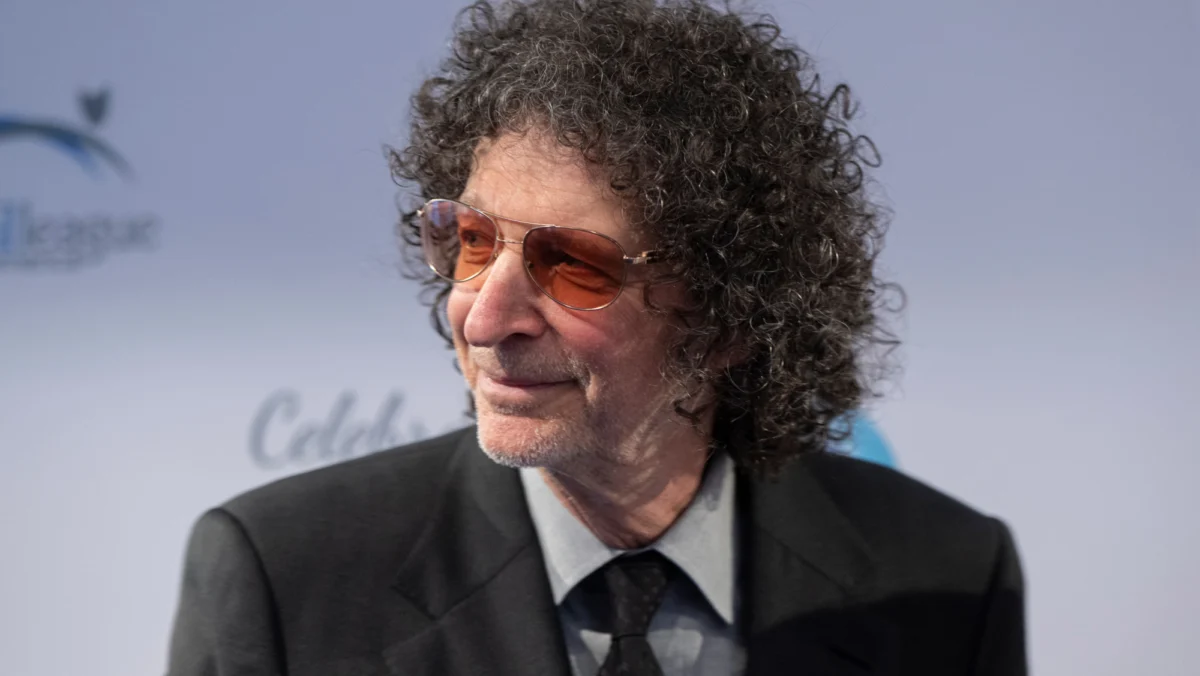
The legal confrontation between radio icon Howard Stern and his former executive assistant, Leslie Kuhn, has escalated into a high-stakes battle over privacy, contractual integrity, and allegations of professional misconduct. On Wednesday, Stern and his legal team moved to dismiss the $2.5 million lawsuit filed by Kuhn, characterizing the litigation not as a legitimate pursuit of justice, but as a calculated "shakedown" designed to extract a significant hush-money payment. The motion, filed in the wake of Kuhn’s initial complaint last month, seeks to not only end the litigation but also to impose sanctions on Kuhn and her legal counsel for what Stern’s attorneys describe as a bad-faith weaponization of the judicial system.
At the heart of the dispute is a clash between a high-profile media figure’s right to personal privacy and an employee’s allegations of a toxic workplace. Kuhn, who served as an office manager and eventually as Stern’s executive assistant, claims she was subjected to a hostile environment and eventually terminated under questionable circumstances. Stern, however, maintains that the termination was for cause and that Kuhn’s subsequent legal actions are a direct violation of the non-disclosure agreements (NDAs) she signed during her tenure.
The Origins and Chronology of the Dispute
The relationship between Leslie Kuhn and the Howard Stern organization began in 2022 when she was hired by SiriusXM to serve as the office manager for The Howard Stern Show. Her role quickly evolved, and she was promoted to the position of executive assistant to Stern himself. This role granted her unprecedented access to the private lives of Stern and his wife, Beth Stern, as well as the inner workings of Stern’s production company, One Twelve.
According to court documents, the professional relationship soured in early 2024. Kuhn was terminated for cause, though the specific internal reasons for the firing were initially kept private by the Stern camp. Kuhn’s complaint, however, alleges that her dismissal was the culmination of mounting pressure and a hostile environment allegedly fostered by the Sterns. Specifically, Kuhn pointed toward the animal foster operations led by Beth Stern, suggesting that the demands and dynamics of this philanthropic work created an untenable workplace situation.
The legal proceedings began in earnest last month when Kuhn filed her lawsuit seeking $2.5 million in damages. In addition to the financial claim, Kuhn requested a court order to void two separate confidentiality and non-disclosure agreements. She argued that she never signed these documents and that they were being used to silence her and prevent her from defending her reputation. Stern’s response, filed this Wednesday, contradicts these claims with documentary evidence intended to prove that Kuhn was well aware of her contractual obligations.
The Centrality of Non-Disclosure Agreements
In the world of high-profile entertainment, non-disclosure agreements are the standard mechanism for protecting the private lives of celebrities from public exposure. For Howard Stern, a figure who has built a multi-decade career on provocative and personal broadcasting while simultaneously maintaining a fiercely guarded private life, these agreements are viewed as essential.
The NDAs in question are remarkably broad, covering the personal affairs of anyone associated with Stern’s production company, One Twelve. This includes Stern’s immediate family, friends, daily activities, personal habits, and even his political affiliations. Kuhn’s legal team argued that these agreements are overly restrictive and unenforceable, claiming that Kuhn’s purported lack of signature rendered them moot.
However, Stern’s motion to dismiss presents a different narrative. His legal team, led by Ilene Farkas of the firm Pryor Cashman, provided the court with evidence of electronic correspondence that suggests Kuhn knowingly entered into these agreements. The filing cites a 2022 exchange where Kuhn allegedly sent a signed confidentiality agreement to the production manager of The Howard Stern Show. Furthermore, the motion highlights an email from 2025 in which Kuhn explicitly stated, "Signed NDA attached," while submitting documentation for review.
The Stern camp argues that these records prove Kuhn is lying to the court. "The Sterns are entitled to enforce non-disclosure agreements signed by employees who enter their home and their private life," Farkas said in an official statement. The defense contends that Kuhn’s attempt to void the NDAs is a strategic move to allow her to leak private information to the press as leverage for a settlement.
Allegations of a Hostile Work Environment and the "Shakedown" Defense
Kuhn’s lawsuit paints a picture of a workplace characterized by undue pressure and a lack of professional boundaries. A significant portion of her complaint focuses on the animal rescue work performed by Beth Stern. Beth Stern is a prominent advocate for animal welfare, frequently collaborating with the North Shore Animal League America. Kuhn alleges that the demands of this foster work bled into her professional responsibilities as an executive assistant, creating a "hostile" atmosphere that eventually led to her termination.
Stern’s legal team has dismissed these claims as fabrications designed to generate negative publicity. In the Wednesday filing, Stern’s lawyers characterized the lawsuit as a "shakedown." They allege that prior to filing the suit, Kuhn and her attorney, John Leonard, attempted to extract a massive payment in exchange for her silence.
The filing states: "The reason Kuhn filed this lawsuit was to pressure the Stern Parties into making an outlandish payment to make her go away. And the sole reason Kuhn’s termination has become a matter of public record is because Kuhn and her counsel chose to publicize it by filing this lawsuit and seeking to leverage the press."
Stern maintains that he had no intention of making the details of Kuhn’s departure public and would have provided a neutral employment reference had she not pursued litigation. By filing the suit, Stern argues, Kuhn has forced a public airing of a private employment matter.
Supporting Data and Financial Context
The financial stakes of the lawsuit—$2.5 million—are significant, but they represent only a fraction of the broader economic ecosystem surrounding the Howard Stern brand. Stern’s current contract with SiriusXM, signed in late 2020, is estimated to be worth approximately $100 million per year. This deal covers both his radio show and his extensive archive of content.
Given Stern’s immense wealth and the high-profile nature of his brand, legal experts note that he is a frequent target for litigation. However, the use of "for cause" termination and the aggressive pursuit of sanctions in this case suggest that the Stern legal team is taking a hardline stance to deter similar "nuisance" lawsuits from other staff members.
The request for sanctions against Kuhn and Leonard is a particularly aggressive legal maneuver. Under court rules, sanctions can be imposed if a party is found to have filed a lawsuit for an improper purpose or if they have made factual misrepresentations to the court. If the judge finds that Kuhn lied about not signing the NDAs despite the existence of the emails cited by Stern, both she and her lawyer could face significant financial penalties and professional repercussions.
Broader Impact and Legal Implications
This case serves as a high-profile litmus test for the enforceability of NDAs in the entertainment industry. In recent years, there has been a growing cultural and legal movement to limit the scope of NDAs, particularly regarding workplace harassment and hostile environments. Several states have passed legislation—such as California’s "Silenced No More Act"—that restricts the use of NDAs to cover up illegal workplace conduct.
However, Stern’s case rests on the distinction between "illegal conduct" and "private life." His defense argues that the NDAs are not being used to hide crimes, but to protect the standard privacy any individual is entitled to within their own home. If Stern’s motion to dismiss is granted, it will reinforce the validity of such agreements for domestic and personal staff, confirming that high-net-worth individuals can legally shield their private habits from public disclosure via contract.
The outcome of the motion will also hinge on the court’s interpretation of the "hostile work environment" claim. In employment law, a hostile work environment generally requires proof of pervasive harassment based on protected characteristics (such as race, gender, or religion). Kuhn’s allegations, which seem to center on the stresses of animal rescue work and personal demands, may struggle to meet the rigorous legal definition required to override a signed contract.
Official Responses and Next Steps
As of this week, Leslie Kuhn and her attorney, John Leonard, have not issued a formal rebuttal to the specific evidence of the signed NDAs presented in Stern’s motion. The legal battle is expected to continue in the New York court system, where a judge will eventually rule on whether the case should proceed to discovery or be dismissed as requested.
If the motion to dismiss is successful, the NDAs will remain in full effect, permanently barring Kuhn from disclosing any personal information about the Sterns. If the motion is denied, the case could move toward a public trial, potentially leading to a discovery phase where internal emails, testimony, and the specifics of Stern’s private life could become part of the public record—the very outcome Stern is seeking to avoid.
For now, the Stern camp remains resolute. "We are not going to play this out in public," Ilene Farkas reiterated, emphasizing that the filing of the motion is the first step in holding Kuhn accountable for what they perceive as a breach of trust and a fraudulent legal claim. The case continues to draw intense scrutiny from both the legal community and the media, as it intersects the boundaries of celebrity privilege, employee rights, and the sanctity of the written contract.