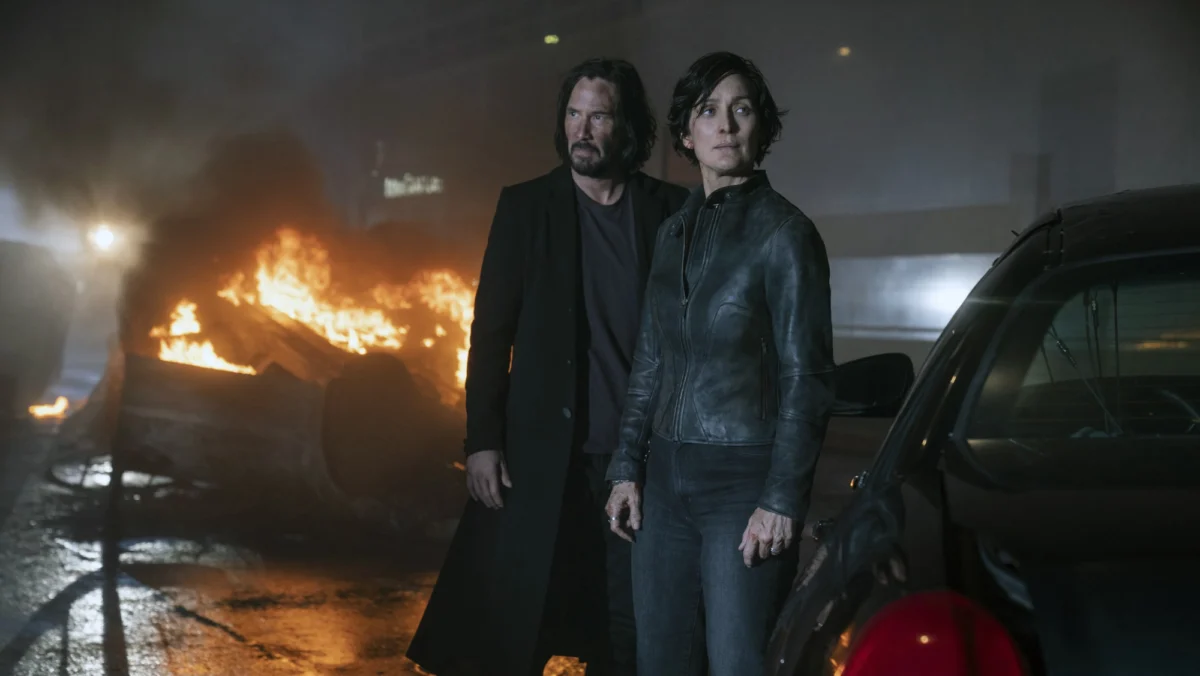
In a significant resolution to one of the most contentious legal battles in recent Hollywood history, Village Roadshow has reached an agreement to pay Warner Bros. $57 million to settle its outstanding liabilities. The settlement, finalized within the framework of Village Roadshow’s Chapter 11 bankruptcy proceedings, effectively ends a multi-year conflict that centered on financing obligations for The Matrix Resurrections and the broader management of shared intellectual property. The agreement marks a definitive, if somber, conclusion to a 25-year partnership that once stood as a cornerstone of the global film industry.
The resolution comes after a 2023 arbitration ruling found that Village Roadshow had breached its contractual obligations by failing to contribute its $107 million share of the production costs for the fourth installment of the Matrix franchise. While an initial judgment suggested a much higher financial burden for the financier, subsequent appeals and the constraints of bankruptcy court led to the finalized $57 million figure. This payment, which was due this week, addresses damages owed to Warner Bros. and clears the path for the studio to move forward without the lingering shadow of this specific litigation.
The Genesis of the Conflict: The Matrix Resurrections and Project Popcorn
The roots of the dispute trace back to the height of the COVID-19 pandemic and Warner Bros.’ controversial "Project Popcorn" strategy. In 2021, under the leadership of then-WarnerMedia CEO Jason Kilar, the studio decided to release its entire 2021 film slate simultaneously in theaters and on its streaming platform, HBO Max (now Max). This move was intended to bolster subscriber numbers during a period of theater closures, but it drew immediate fire from talent and financial partners who argued it cannibalized box office revenue and devalued their backend participation.
Village Roadshow, which had co-financed the original Matrix trilogy and held significant stakes in the franchise, alleged that Warner Bros. moved the release date of The Matrix Resurrections from 2022 to December 2021 specifically to facilitate the day-and-date streaming release. In a lawsuit filed in California state court in early 2022, the financier accused the studio of "predatory" behavior, claiming the decision was a breach of contract designed to benefit the studio’s parent company at the expense of its partners.
Warner Bros. countered by initiating arbitration, arguing that Village Roadshow had used the streaming dispute as a pretext to avoid its financing obligations. The studio maintained that the financier had simply failed to pay its $107 million share of the production budget, a breach that predated the release strategy arguments.
From State Court to Arbitration: A Shift in Legal Momentum
The legal battle initially garnered headlines for its public nature, but the momentum shifted when a judge moved the case from the public court system into private arbitration, as stipulated in the parties’ original co-financing agreements. In 2023, the arbitrator sided largely with Warner Bros., ruling that Village Roadshow had indeed breached its distribution and co-ownership agreements.
The arbitrator’s initial decision was substantial. It called for Village Roadshow to pay $125 million, a figure that included the original $107 million in withheld production costs plus approximately $17 million in interest. This payment would have secured Village Roadshow a 50% ownership stake in The Matrix Resurrections, entitling it to half of the film’s profits after the studio recouped its distribution fees and marketing expenses (P&A).
However, the film’s lackluster performance at the global box office—earning approximately $159 million against a budget estimated at $190 million—meant that a 50% stake in the proceeds was far less valuable than the $125 million buy-in price. On appeal, it was determined that Village Roadshow could not be legally compelled to purchase the stake in the film. Consequently, the final $57 million settlement represents a negotiated figure for damages and interest, rather than a full buyout of the film’s equity.
The Financial Collapse of a Hollywood Titan
The legal fees and the mounting debt from the Matrix dispute proved catastrophic for Village Roadshow. Once one of Hollywood’s most prolific co-financiers, the company had backed massive hits including the Ocean’s Eleven franchise, Sherlock Holmes, and the original Matrix films. However, a pivot toward developing content in-house, combined with the "Project Popcorn" fallout, strained the company’s liquidity.
In 2023, Village Roadshow filed for Chapter 11 bankruptcy protection. Keith Maib, the company’s chief restructuring officer, stated in court filings that the litigation with Warner Bros. had "irreparably decimated the working relationship" between the two entities. The bankruptcy was not merely a financial necessity but a strategic move to manage the $125 million claim Warner Bros. had filed against the company’s assets.
Throughout the bankruptcy proceedings, the tension between the former partners remained palpable. Warner Bros. attempted to regain full control over several high-profile properties by bidding for Village Roadshow’s derivative rights. These rights allow a partner to participate in sequels, remakes, and spin-offs of films they previously co-financed.
The Rights Sale and the Entry of Alcon Entertainment
As Village Roadshow sought to liquidate assets to pay its creditors, a bidding war emerged over its derivative rights to several key franchises, including I Am Legend, Sherlock Holmes, and Practical Magic. Warner Bros. submitted a bid to reclaim these rights, but they were ultimately outbid by Alcon Entertainment, the production company behind Blade Runner 2049 and The Blind Side.
Alcon emerged as the winner with an $18.5 million bid. In a final attempt to block the sale to a third party, Warner Bros. submitted a revised bid of $19.5 million, but the court rejected the late offer, allowing Alcon to step in as the new rights holder. This transition effectively ends Village Roadshow’s involvement in future iterations of these franchises, while introducing a new partner for Warner Bros. on projects like the recently announced Practical Magic 2.
Broader Implications for Film Financing and Studio Partnerships
The $57 million settlement and the dissolution of the Warner Bros.-Village Roadshow partnership serve as a cautionary tale for the modern entertainment industry. It highlights the inherent risks in the co-financing model, which relies heavily on mutual trust and the alignment of distribution interests.
- The Death of Traditional Co-Financing Models: For decades, studios relied on "slate financing" and co-financiers to mitigate the financial risk of big-budget tentpoles. The Village Roadshow collapse suggests that as studios prioritize their own streaming ecosystems, the traditional "middleman" financier may find it increasingly difficult to protect their investments.
- Contractual Evolution in the Streaming Age: The dispute over "Project Popcorn" has already led to a total overhaul of how talent and financing contracts are written. Modern agreements now include specific "streaming triggers" and formulas to ensure that partners are compensated if a film bypasses a traditional theatrical window.
- The Consolidation of Intellectual Property: Warner Bros.’ aggressive attempts to reclaim derivative rights during the bankruptcy highlights the premium studios now place on total ownership. In an era of reboots and cinematic universes, sharing rights with a third-party financier is increasingly viewed as a liability rather than a benefit.
Conclusion and Current Status
The $57 million payment, confirmed to be resolved this week, officially settles the Matrix Resurrections dispute and includes a resolution for the dispute over Wonka. While Warner Bros. dismissed its claims regarding Wonka without prejudice—meaning they could technically be reasserted in the future—the settlement is intended to provide a clean slate for both parties as they emerge from the bankruptcy process.
For Warner Bros. Discovery, the settlement provides a modest cash infusion and the ability to move forward with new partners like Alcon. For Village Roadshow, the payment represents the final chapter of its life as a major studio partner. The company, which helped define the blockbuster landscape of the early 2000s, now exists in a significantly diminished capacity, serving as a reminder of how quickly the shift from theatrical to digital can dismantle even the most storied alliances in Hollywood.