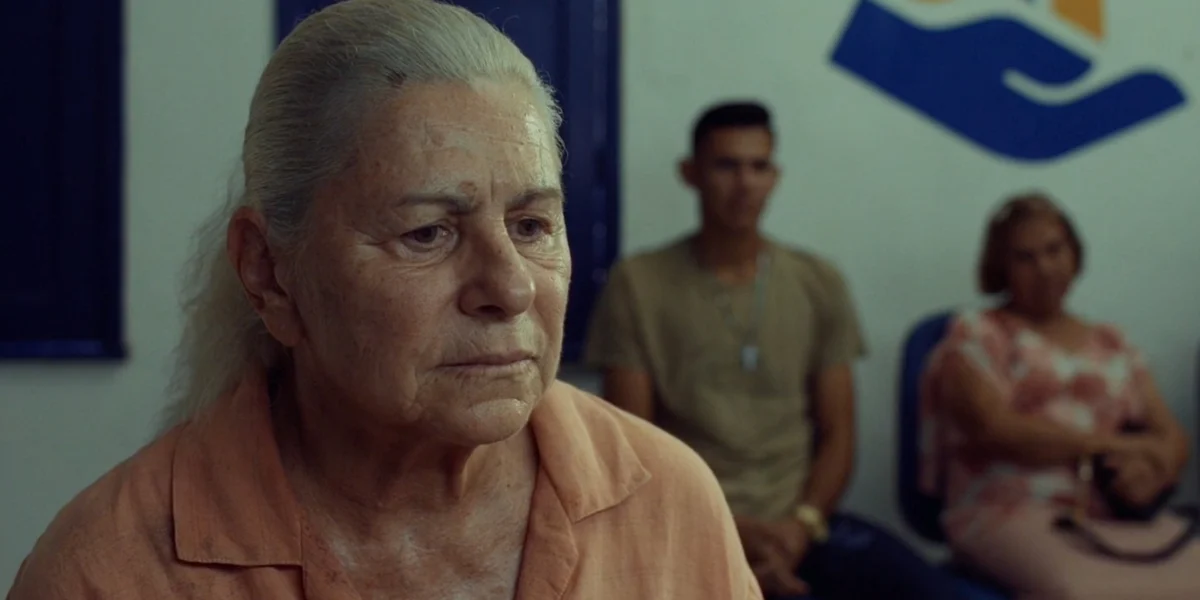
Directed by Gabriel Mascaro, this 2026 feature follows the journey of Tereza, a 77-year-old woman navigating a futuristic Amazonian landscape defined by industrialization and age-based segregation. The film, titled "O Último Azul" in its native Portuguese, marks a significant milestone in contemporary Brazilian cinema, blending speculative fiction with the lush, immersive aesthetic that has become Mascaro’s directorial hallmark. Starring veteran actress Denise Weinberg in the lead role alongside international star Rodrigo Santoro, the production explores the intersection of economic productivity, the dignity of the elderly, and the environmental transformation of the Amazon basin.
The narrative centers on Tereza’s refusal to comply with a government mandate that requires her to relocate to a remote senior housing colony. In this dystopian iteration of Brazil, the state prioritizes economic output and youth-driven productivity, viewing the elderly as a demographic to be sequestered in order to optimize urban efficiency. Faced with the loss of her autonomy and her lifelong home in a small industrialized town, Tereza chooses to embark on a final, transformative voyage through the rivers and tributaries of the Amazon. This decision serves as the catalyst for a story that examines the resilience of the human spirit against the backdrop of systemic ageism and authoritarian control.
Directorial Vision and Stylistic Evolution
Gabriel Mascaro has established himself as one of the most distinctive voices in world cinema, particularly following the critical success of "Neon Bull" (2015) and "Divine Love" (2019). His work frequently interrogates the relationship between the human body, the landscape, and the socio-political structures that govern them. With the Silver Berlin Bear Grand Jury Prize already to his credit, Mascaro utilizes "The Blue Trail" to further refine his "lyrical storytelling" approach, which often prioritizes visual atmosphere and sensory immersion over traditional plot mechanics.
In "The Blue Trail," the Amazon is depicted not merely as a natural wonder, but as a site of heavy industrialization and state-managed infrastructure. This aesthetic choice reflects Mascaro’s interest in the contradictions of modern Brazil—a nation caught between its immense natural heritage and its drive for industrial modernization. Critics who viewed the film during its festival run have noted that the cinematography captures the "arresting" beauty of the river systems while simultaneously documenting the encroaching machinery of the state, creating a visual tension that mirrors Tereza’s internal struggle.
Narrative Depth: The Dystopian Mandate and Societal Implications
The premise of the "senior housing colony" serves as a sharp critique of contemporary social policies regarding aging populations. As global demographics shift toward an older median age, the film’s depiction of a society that views the elderly as obstacles to "productivity and economic growth" resonates with current debates on the "silver economy" and the sustainability of social welfare systems.
Tereza’s journey is portrayed as a radical act of defiance. By choosing the "Blue Trail"—the river paths that represent the historical and spiritual heart of the region—she rejects the sterile, managed future promised by the government. This plot point has been analyzed by film scholars as a commentary on the erasure of historical memory; by removing the elderly from productive society, the state effectively severs the link between the past and the future, ensuring that the younger generations remain focused solely on immediate economic advancement.
The Lead Performance and Supporting Cast
Denise Weinberg, a celebrated figure in Brazilian theater and film, provides the emotional anchor for the film. Her portrayal of Tereza has been described as a "tour de force," capturing both the physical fragility of a 77-year-old and the indomitable will of a woman reclaiming her destiny. Weinberg’s performance is central to the film’s exploration of intergenerational connection, particularly in scenes that highlight the contrast between her character’s lived experience and the utilitarian worldview of the younger characters she encounters.
Rodrigo Santoro, known to international audiences for his roles in "Westworld" and "300," plays a pivotal supporting role that bridges the gap between the state’s bureaucratic interests and the human element of the story. Santoro’s involvement has been seen as a significant draw for the film’s international distribution, providing a recognizable face for global audiences while maintaining the film’s commitment to authentic Brazilian storytelling. The chemistry between Weinberg and Santoro is reported to be one of the film’s highlights, grounding the speculative elements of the plot in a deeply human relationship.
Global Recognition and Festival Chronology
Before its scheduled North American theatrical release, "The Blue Trail" underwent an extensive and successful circuit at major international film festivals. This trajectory is typical for high-profile "art-house" films seeking to build critical momentum and secure distribution in competitive markets.
The film’s festival chronology includes:

- Toronto International Film Festival (TIFF): Served as the primary North American platform, where it received praise for its visual composition and Weinberg’s performance.
- Busan International Film Festival: Introduced the film to Asian markets, highlighting the universal themes of aging and industrialization.
- Zurich Film Festival and BFI London Film Festival: Solidified the film’s standing in Europe, with critics drawing comparisons to the works of Alfonso Cuarón and Lucrecia Martel.
- Palm Springs International Film Festival: Acted as a gateway for the film’s entry into the American awards conversation.
- Guadalajara International Film Festival: Celebrated the film’s Latin American roots and its contribution to regional cinema.
This rigorous festival run has positioned "The Blue Trail" as a significant contender for international film awards, with many industry analysts predicting it will be a focal point of the 2026-2027 awards season.
Supporting Data and Production Context
The production of "The Blue Trail" involved significant logistical challenges, primarily due to the decision to film on location in the Amazon. According to production notes, the crew worked closely with local communities to ensure an authentic representation of the industrialized river towns. This commitment to realism is a hallmark of Mascaro’s production company, which often employs a mix of professional actors and local non-professionals to enhance the film’s texture.
Data from the Brazilian Film Agency (Ancine) suggests that "The Blue Trail" is one of the most ambitious Brazilian co-productions of the decade. The film’s budget was allocated not only to high-end visual effects for its dystopian elements but also to environmental conservation efforts during the shoot, reflecting the film’s underlying themes. The use of immersive sound design, intended to replicate the auditory experience of the Amazonian tributaries, further emphasizes the "immersive" quality cited by early reviewers.
Official Responses and Thematic Analysis
While the film is a work of fiction, its themes have prompted responses from social advocates and cultural critics. Representatives from age-advocacy groups have praised the film for its "courageous" depiction of an elderly protagonist who refuses to be marginalized. In a statement regarding the film’s themes, one cultural analyst noted, "Mascaro has managed to turn the aging process into a thriller of the spirit, making the act of growing old a revolutionary gesture in a world obsessed with the new."
The film also addresses the "authoritarian constraints" that can arise in societies where economic metrics supersede human rights. By framing the relocation of the elderly as a "government order," the script highlights the potential for state overreach in the name of progress. This thematic layer adds a degree of political urgency to the film, aligning it with other notable Latin American "social thrillers" that use genre tropes to critique contemporary governance.
North American Release and Distribution Strategy
The North American release of "The Blue Trail" is scheduled for Friday, April 3rd, 2026. The rollout strategy focuses on key urban markets known for their support of independent and foreign-language cinema. The film will debut at the Angelika Film Center in New York City and the Nuart Theatre in Los Angeles. These venues are traditionally used as "launch pads" for films that require strong word-of-mouth and critical support before expanding nationally.
A significant component of the pre-release campaign is a special sneak preview screening at the Angelika Film Center on Monday, March 23rd. This event is part of the inaugural Art House Cinema Week New York, an initiative designed to bolster the profile of independent theaters and international films in an increasingly digital-dominant market. The choice to include "The Blue Trail" in this program underscores its status as a premier example of "socially resonant cinema."
Broader Impact and Implications
The release of "The Blue Trail" comes at a time when Brazilian cinema is experiencing a resurgence on the global stage. Directors like Mascaro are leading a movement that combines high production values with deep philosophical inquiries, proving that regional stories can have profound universal appeal. The film’s success at international festivals suggests that there is a significant global audience for stories that challenge traditional narratives about aging and environmental change.
Furthermore, the film’s focus on the Amazon—a region often discussed in purely ecological or political terms—through a dystopian lens provides a new framework for understanding the area’s future. By centering the story on a 77-year-old woman, Mascaro reminds the audience that the "destiny" of the Amazon is inextricably linked to the people who have inhabited it for generations.
As "The Blue Trail" prepares for its national expansion following the April 3rd opening, it stands as a testament to the power of visionary filmmaking to address the most pressing issues of the 21st century. Through its portrayal of Tereza’s journey, the film offers a meditation on what it means to be free in a world that increasingly values utility over humanity. For audiences and critics alike, the film is expected to remain a significant point of discussion regarding the role of the elderly in society and the enduring importance of personal autonomy in the face of systemic pressure.