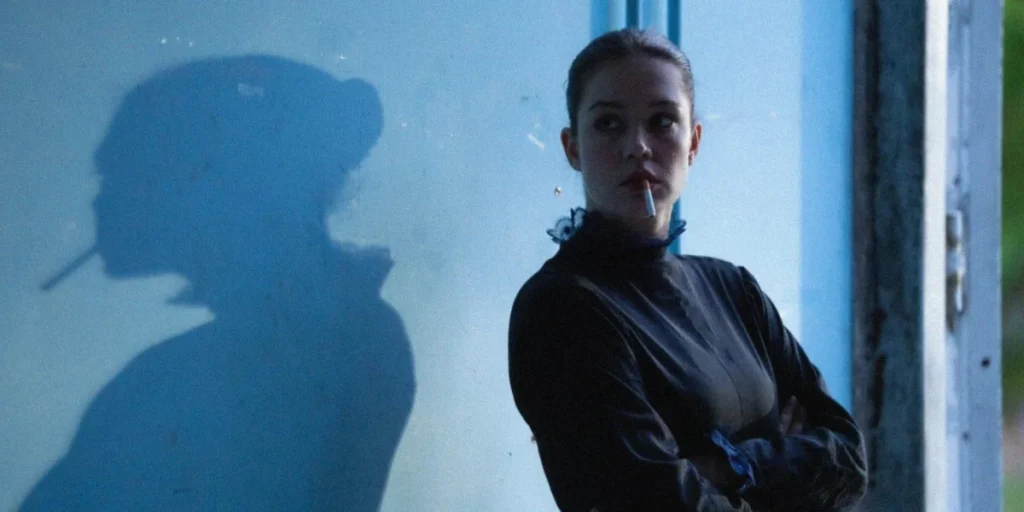
Following its world premiere at the 2025 Toronto International Film Festival (TIFF), the film has emerged as a major contender in the international awards circuit. It recently garnered five nominations at the 79th British Academy Film Awards (BAFTA), ultimately securing victories in two high-profile categories: Best Actor in a Leading Role for Robert Aramayo and Best Casting. These accolades have solidified the film’s status as a critical success ahead of its scheduled United States theatrical release on April 24th, distributed by Sony Pictures Classics.
Historical Context: The Legacy of "John’s Not Mad"
To understand the weight of the film, one must look back to the 1989 BBC documentary "John’s Not Mad," which chronicled the life of a then-15-year-old John Davidson living in Galashiels, Scotland. At the time, Tourette syndrome was a poorly understood neurological disorder, frequently stigmatized or dismissed as a behavioral issue. The documentary was a landmark moment in British broadcasting, drawing millions of viewers and sparking a national conversation about disability, tolerance, and the isolation caused by involuntary physical and vocal tics.
The documentary highlighted the paradox of Davidson’s life: a young man with a sharp wit and a kind nature trapped within a body that frequently betrayed him with violent movements and involuntary expletives (coprolalia). The 2025 film "I Swear" expands upon this foundation, utilizing the passage of time to reflect on Davidson’s journey into adulthood, the evolution of medical understanding regarding Tourette’s, and the enduring impact of being "the face" of a condition for several decades.
Production Development and Directorial Vision
Kirk Jones, known for his work on "Waking Ned Devine" and "Nanny McPhee," took a distinct tonal shift with "I Swear." Eschewing the more whimsical elements of his previous filmography, Jones spent several years developing the script in consultation with medical experts and John Davidson himself. The production aimed for a rigorous level of authenticity, focusing on the physical and psychological toll of the disorder rather than relying on the "shock value" of the symptoms.
The film was produced under the banner of independent British studios with significant backing for international distribution. Jones’s decision to both write and direct allowed for a singular vision that prioritized the internal emotional landscape of the protagonist. According to production notes, the cinematography was designed to mimic the sensory overload often experienced by those with Tourette’s, using tight framing and rapid editing to convey the lack of control over one’s own physical presence.
Cast and Performance Analysis
The casting of Robert Aramayo in the lead role has been cited as the film’s greatest asset. Aramayo, known for his roles in "The Lord of the Rings: The Rings of Power" and "Game of Thrones," underwent a grueling preparation process to portray Davidson. This involved months of physical training to replicate the specific tics and muscle contractions associated with Davidson’s condition without appearing caricatured. Critics at TIFF noted that Aramayo’s performance succeeds by focusing on the "quiet moments" between the tics—the exhaustion, the social anxiety, and the resilience.
Supporting Aramayo is a veteran cast of British and Scottish actors. Peter Mullan provides a grounded performance as a father figure, a role that earned him significant critical praise and contributed to the film’s emotional core. Maxine Peake and Shirley Henderson also fill pivotal roles, portraying the communal and familial support systems that are essential for Davidson’s navigation of a world often hostile to his presence. Additionally, the film introduces Scott Ellis Watson in his acting debut as the young John Davidson, appearing in flashback sequences that mirror the footage from the original 1989 documentary. This dual-timeline structure allows the film to contrast the raw confusion of adolescence with the weary acceptance of middle age.
The 79th British Academy Film Awards and Critical Reception
The recognition of "I Swear" at the 79th BAFTAs serves as a milestone for biographical dramas centered on disability. The film was nominated for five awards:

- Best Actor in a Leading Role (Robert Aramayo) – Winner
- Best Casting – Winner
- Best British Film
- Best Supporting Actor (Peter Mullan)
- Best Adapted Screenplay
The win for Best Casting is particularly noteworthy, as it acknowledges the challenge of assembling a cast that could authentically represent the specific regional and social milieu of Galashiels while maintaining the delicate balance required for a medical drama. Aramayo’s win for Best Actor places him among the elite of his generation, with the BAFTA committee citing his "transformative and deeply empathetic portrayal of a complex real-life figure."
Critics have been nearly unanimous in their praise. Review aggregators indicate a high level of "universal acclaim," with many journalists highlighting that the film avoids the "inspirational" tropes often found in stories about disability. Instead, it presents a factual, often difficult look at the daily realities of Tourette syndrome, including the physical pain of repetitive tics and the social isolation resulting from public misunderstanding.
Medical and Social Implications
From a clinical perspective, "I Swear" has been lauded by advocacy groups for its accurate depiction of Tourette syndrome. Tourette’s is a nervous system disorder involving repetitive movements or unwanted sounds (tics) that can’t be easily controlled. While the media often focuses on coprolalia—the involuntary use of obscene language—this symptom only affects about 10% to 15% of people with the disorder. The film addresses this by showing the full spectrum of Davidson’s tics, ranging from facial grimaces to complex motor movements, and the exhaustion that follows a "tic attack."
The film also serves as a study of the evolution of social stigma. By placing the narrative in the context of the late 20th century and moving into the 21st, it analyzes how public perception has shifted from viewing the condition as a moral or psychological failing to a recognized neurological diversity. The film’s release is expected to trigger renewed interest in funding for neurological research and better support systems for adults living with severe tics.
Distribution and Market Outlook
Sony Pictures Classics (SPC) acquired the US distribution rights following the film’s success at TIFF. SPC has a long history of handling prestige dramas and "awards bait" films, often focusing on character-driven narratives that require a sophisticated marketing approach. The choice of an April 24th release date suggests a strategy aimed at capturing the "pre-summer" adult audience, positioning the film as a serious alternative to the upcoming blockbuster season.
Industry analysts predict that while the film’s subject matter is niche, the strength of the performances and the "true story" element will drive a respectable box office performance in arthouse and independent circuits. The film is also expected to have a long life on streaming platforms and in educational settings, given its pedagogical value regarding disability awareness.
Chronology of the Film’s Journey
- 1989: The BBC airs "John’s Not Mad," bringing John Davidson’s story to millions.
- 2022: Kirk Jones begins development on a scripted adaptation, spending time in Scotland with Davidson.
- 2023: Principal photography takes place in Scotland, with Robert Aramayo confirmed for the lead role.
- September 2025: "I Swear" premieres at the Toronto International Film Festival to standing ovations.
- February 2026: The film receives five BAFTA nominations and wins two (Best Actor and Best Casting).
- April 24, 2025 (Projected): The film opens in US theaters via Sony Pictures Classics.
Conclusion and Broader Impact
"I Swear" represents more than just a biographical recount of a specific man’s life; it is a technical and emotional achievement in the genre of biographical cinema. By grounding the narrative in the factual reality of John Davidson’s experiences, Kirk Jones has created a document that challenges the audience to look past the symptoms of a disorder to the person beneath.
The film’s success at the BAFTAs and the universal acclaim from critics suggest that there is a significant appetite for stories that treat disability with dignity and medical accuracy rather than sentimentality. As the film prepares for its international rollout, it stands as a testament to the power of biographical film to educate, humanize, and bridge the gap between public perception and private reality. With Robert Aramayo’s award-winning performance at its center, "I Swear" is poised to remain a reference point for both the film industry and the Tourette syndrome community for years to come.