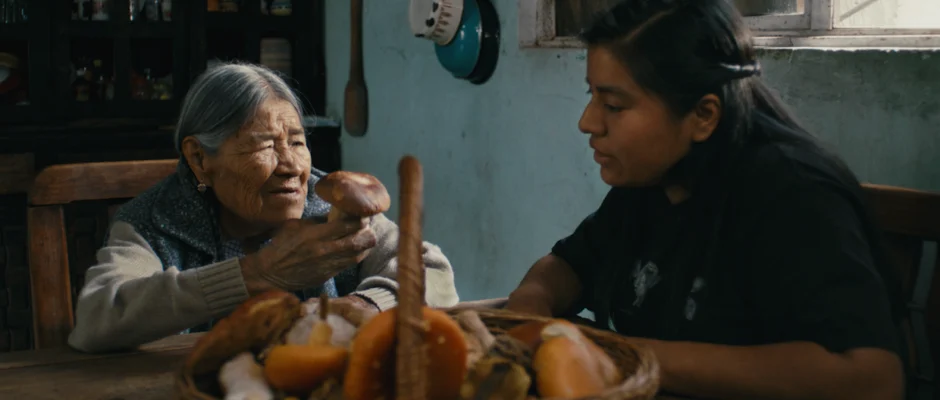
The upcoming documentary Daughters of the Forest, from Mexican filmmaker Otilia Portillo Padua, offers a profound exploration into the ancient, yet persistently vital, knowledge of mushrooms held by Indigenous women in Mexico. Scheduled for simultaneous premieres at the prestigious SXSW and Copenhagen’s non-fiction festival CPH:DOX on March 13, the film introduces audiences to Lis and Juli, two Indigenous women who embody a living library of ancestral wisdom concerning fungi—ranging from their medicinal and culinary applications to their spiritual significance and toxic properties. This knowledge, meticulously refined over generations, has been transmitted through matrilineal lines, echoing the intricate, interconnected mycelial networks that thrive unseen beneath the forest floor.
Unearthing Ancestral Mycology: A Legacy of Knowledge
For millennia, Indigenous communities across Mexico have cultivated an intimate relationship with their natural environment, developing sophisticated systems of knowledge that often predate and, in many cases, surpass Western scientific understanding. Within this rich tapestry, mycology—the study of fungi—holds a particularly revered place. Beyond mere sustenance, mushrooms have played multifaceted roles in spiritual ceremonies, healing rituals, and daily life, becoming integral to the cultural identity and survival of numerous groups. This deep connection is not a relic of the past but a dynamic, evolving tradition, as exemplified by the protagonists of Daughters of the Forest.
Lis and Juli, residents of verdant enclaves where this knowledge has been carefully nurtured, represent the vanguard of a movement seeking to bridge traditional wisdom with contemporary academia. While they possess an inherited wealth of information about local mycoflora, their ambition extends to distinguishing themselves within formal scientific circles. Padua’s film masterfully navigates the perceived tension between traditional homeopathy and modern science, revealing that for Lis and Juli, these are not opposing forces but complementary pathways. Their objective is to leverage the legitimacy of academic fields to secure broader recognition for the significant, albeit often unacknowledged, contributions their communities have consistently made to mycology. This pursuit underscores a broader global trend where Indigenous knowledge systems are increasingly being recognized as invaluable resources for scientific innovation, particularly in areas like biodiversity conservation, sustainable agriculture, and pharmaceutical discovery.
The Uphill Battle: Threats to Indigenous Knowledge and Ecosystems
The journey undertaken by Lis and Juli, however, is fraught with formidable challenges. Their efforts unfold against a backdrop of systemic obstacles, including rampant illegal logging practices, entrenched institutional discrimination, and the accelerating loss of Indigenous languages. These factors collectively threaten not only the ecological integrity of their ancestral lands but also the very fabric of the knowledge systems they strive to preserve.
Mexico, a country recognized as one of the world’s most biodiverse, faces severe environmental pressures. Illegal logging, often driven by demand for timber and agricultural expansion, decimates critical forest habitats, leading to biodiversity loss, soil erosion, and climate change impacts. According to recent reports, significant portions of Mexico’s forests are under constant threat, with rates of deforestation alarming conservationists. For Indigenous communities, these forests are not merely resources but living entities, integral to their cultural identity, spiritual practices, and economic sustenance. The destruction of these ecosystems directly imperils the very mushrooms that form the basis of their ancestral knowledge, severing the physical link to generations of accumulated wisdom.
Compounding this ecological crisis is the pervasive issue of institutional discrimination. Indigenous peoples in Mexico, despite constitutional protections, frequently encounter barriers to education, healthcare, and legal justice. Their traditional knowledge is often undervalued or appropriated without due recognition or benefit-sharing. This historical marginalization makes the academic aspirations of women like Lis and Juli an even more profound act of resilience and self-determination. They are not merely seeking personal advancement but aiming to carve out a legitimate space for their community’s intellectual heritage within institutions that have historically excluded or exploited them.
Furthermore, the erosion of Indigenous languages represents a critical threat to the transmission of this intricate knowledge. Language is the primary vehicle for cultural memory, carrying nuanced understandings of the natural world that are often untranslatable into other tongues. With dozens of Indigenous languages in Mexico classified as endangered, the loss of each language signifies the potential extinction of unique perspectives on mycology, ethnobotany, and ecological relationships. The film subtly gestures toward this looming crisis, highlighting the urgency of Lis and Juli’s mission to formalize and share their expertise before it is irrevocably lost.
Fungi as Narrators: An Unconventional Sci-Fi Lens
Otilia Portillo Padua’s architectural background subtly permeates her directorial approach, imbuing Daughters of the Forest with a distinctive perspective. Padua notes that both architecture and filmmaking are inherently collaborative practices, moving beyond the myth of the singular "auteur" to embrace a collective creative process. This collaborative ethos extends to her understanding of how individuals are situated within spaces, leading to films that, as one observer noted, resemble complex ecosystems. This is particularly apt for a film centered on fungi.
Mushrooms, with their hidden mycelial networks and often ephemeral fruiting bodies, defy conventional linear structures. Padua recognized this inherent characteristic and allowed it to dictate the film’s narrative. Rather than imposing a traditional three-act structure or a linear hero’s journey, the fungi themselves guided the storytelling, reflecting their interconnected, non-hierarchical, and often unseen existence. This unconventional approach seeks to "make the invisible visible," exploring the spores, the underground webs, and the myriad forces at play that typically escape human observation.

Perhaps the most striking artistic choice is the film’s "sci-fi" lens, which grants the mushrooms agency and a voice of their own. This innovative technique allows the organisms to "meditate on their own existence," whispering profound truths like "transforming death into life." While this might initially sound like the musings of someone under the influence of psychedelic substances, it serves a deeper narrative purpose. Padua consciously chose this speculative approach to challenge conventional documentary filmmaking, distinguishing it from "magical realism." She draws inspiration from theorists like Donna Haraway and Adrienne Maree Brown, as well as Indigenous sci-fi and African futurism, which explore speculative fiction not through advanced technology, but through alternative forms of knowledge and ways of seeing the world. This framework enables the film to envision a future that, despite current dystopian realities, remains "rife with possibility."
The decision to give mushrooms a voice was not without controversy during production. While some feared anthropomorphism, Padua argued that the human voice conveyed an emotional depth that abstract sounds could not. Moreover, drawing from the experience of a "holy mushroom" trip, where internal voices are often perceived, the film layers multiple voices—Juli’s, her grandmother’s, her brother-in-law’s, and her sister’s—to represent this complex internal dialogue.
The Sacred Journey: Visualizing the Psychedelic Experience
One of the film’s most electrifying sequences involves Juli consuming a psychedelic "holy mushroom," trusting it to provide the same guidance her late father received years ago. This scene is handled with remarkable sensitivity and artistic ingenuity. Padua describes how the visuals for this sequence were meticulously crafted without 3D generation, using 2D composites, filmed spores in a garage, layering, and projection to create an abstract visual language. The goal was to translate an intensely personal and often ineffable experience into a shared cinematic journey.
Following Juli’s trip, an interview two days later captured her descriptions, from which Padua and her team took creative liberties to construct the visual narrative. The validation came when Juli, upon seeing the film, exclaimed, "That’s exactly what my journey was like! How did you know?" This speaks to the film’s success in capturing the essence of such a profound experience, leaving enough interpretive space for viewers and subjects alike.
The inclusion of the "holy mushroom" segment highlights the spiritual dimension of mycology in Indigenous cultures, a facet often overlooked by purely scientific inquiry. These entheogenic fungi have historically served as conduits to ancestral wisdom, facilitating healing, vision quests, and spiritual communion. By portraying this aspect alongside the pursuit of academic recognition, the film underscores the holistic nature of Indigenous knowledge, where the sacred and the scientific are not separate but interwoven.
Broader Implications and a Future of Coexistence
Daughters of the Forest is more than just a documentary about mushrooms; it is a powerful statement on cultural resilience, environmental stewardship, and the urgent need for a more inclusive scientific paradigm. The film’s dual premiere at major festivals like SXSW, known for its innovative storytelling, and CPH:DOX, a bastion of non-fiction cinema, signals its potential to resonate with a diverse global audience.
The film’s exploration of Lis and Juli’s quest for academic recognition carries significant implications for policy and practice. It advocates for recognizing Indigenous intellectual property rights and integrating traditional ecological knowledge into mainstream scientific research and conservation strategies. Environmental groups and Indigenous rights organizations are likely to see the film as a compelling tool for advocacy, raising awareness about the intertwined fates of biodiversity, cultural heritage, and human well-being. Academic institutions, in turn, may be prompted to re-evaluate their engagement with Indigenous communities, fostering more equitable collaborations that respect and value diverse knowledge systems.
Padua’s vision of sci-fi as a "rupture, of imagining" offers a profound message of hope. She posits that "there are people actively building different futures relating to the environment in different ways, doing very small—like a spore—actions and then transforming their environment around them." This philosophy underpins the film’s ultimate aspiration: to inspire. Padua hopes that a young girl watching the film might realize that "I believe in the holy mushroom but I also want to be a scientist and those two things can coexist." This sentiment encapsulates the film’s core message: that traditional beliefs and modern scientific inquiry are not mutually exclusive but can, and indeed must, complement each other to forge sustainable and culturally rich futures.
A Deeper Understanding: The Cost of Knowledge
Reflecting on her journey, Padua shared a particularly striking lesson learned about the white amanita mushroom. While some varieties of amanita are deadly, the specific white amanita consumed by Indigenous communities, though still toxic, becomes edible through precise cooking methods. Padua recounted an experience where she, without sufficient knowledge, attempted to consume it, only to be later warned by a scientist about the potential liver damage. This personal anecdote highlights a critical truth: much of the ancestral knowledge surrounding mushrooms, particularly those with toxic properties, was acquired through generations of dangerous experimentation, often at the cost of lives. "It struck me that a lot of people might have died for this knowledge," Padua mused, emphasizing that the delicate balance between life and death is encoded within this inherited wisdom. This realization profoundly underscores the immense value and profound respect owed to the Indigenous women who, like Lis and Juli, carry forth such critical, hard-won knowledge. Their work, and Padua’s film documenting it, serves as a powerful testament to the enduring human spirit in the face of adversity and a beacon for imagining alternative, more harmonious futures.