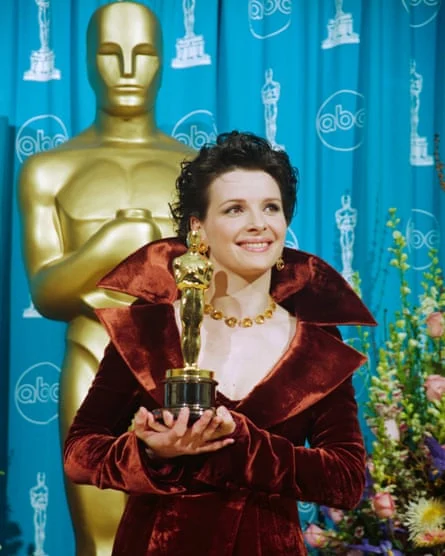
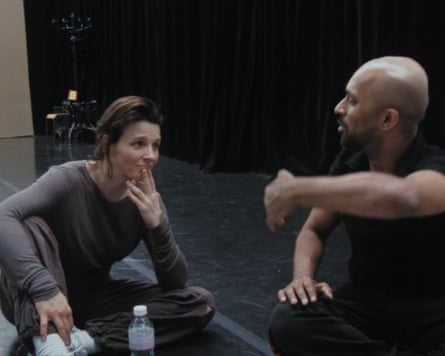
Juliette Binoche, a titan of international arthouse cinema for over four decades, has stepped into a new and exhilarating arena with "In-I In Motion," her directorial debut. The film, a vérité-style documentary, chronicles Binoche’s transformative journey into contemporary dance in the late 2000s, a period marked by daring and often enigmatic performances alongside British dancer Akram Khan. As she prepares to introduce the film to a sold-out audience at New York’s Museum of Modern Art, Binoche admits to experiencing the familiar flutter of nerves, a testament to her enduring commitment to pushing creative boundaries. "You have to go out of your comfort zone," she states, "otherwise you become a prude."
A Career Defined by Audacious Choices
With a career spanning over 70 films, Binoche has consistently defied categorization, navigating between cerebral experimental theater, virtuosic collaborations with acclaimed auteurs, and the occasional mainstream Hollywood production. Her breakthrough role in Jean-Luc Godard’s "Hail Mary" in the 1980s propelled her to the forefront of European arthouse cinema. Subsequent roles in "The Unbearable Lightness of Being," "The English Patient," and "Chocolat" cemented her status as an international star. The 21st century has seen her deliver some of her most profound performances in films such as Michael Haneke’s "Caché," Abbas Kiarostami’s "Certified Copy," and more recently, the historical romance "The Taste of Things," the social realism drama "Between Two Worlds," and Claire Denis’s "Let The Sunshine In," where she was lauded for her raw portrayal of a woman navigating the complexities of love.
The Genesis of "In-I In Motion"
"In-I In Motion" emerges from a period of intense personal exploration for Binoche. The documentary captures her deep dive into contemporary dance, a departure from her established acting career. The film documents six months of rigorous rehearsals with Akram Khan, showcasing Binoche’s emotional vulnerability and physical exertion. The footage reveals moments of profound introspection, intense physical struggle, and the raw process of artistic creation. The comparison made by one audience member – "That was like Leo in The Revenant, but with dance" – underscores the perceived level of commitment and physical transformation Binoche underwent.

Binoche explains that her motivation was not to replicate the glamour of the red carpet, but to offer audiences a glimpse into the authentic process of creation. "I wanted the audience to experience what it feels like to be in a process of creation," she says. "That’s not a red carpet. It’s searching, and it’s finding a common place between two very different people." She embraced the "blurry place" of inexperience, describing it as a state of "not knowing" and "allowing yourself to be nothing," a sentiment that resonates with a Buddhist philosophy of surrender to the creative flow.
The collaboration with Khan was not solely based on physical rehearsal; it was deeply informed by therapeutic conversations with acting coach Susan Batson and improvisational work guided by movement director Su-Man Hsu. The documentary explores profound questions about human connection: "Why do we need the other so much?" Binoche reflects in the film. "What does it mean to love? And when do we give up on it because it’s so hard, and when do we carry on?" These existential inquiries are brought to life in the full "In-I" performance, a piece that oscillates between graceful fluidity and raw, visceral passion.
A Personal Landmark and Unexpected Encouragement
While "In-I" received mixed reviews upon its London premiere in 2007, Binoche views the project, which subsequently toured internationally for over 100 performances, as a significant personal milestone. The raw footage, accumulated by her sister, filmmaker Marion Stalens, over nearly 200 hours, was meticulously edited by Binoche into the final two-hour documentary. The impetus to film the performance came from an unexpected source: the late Hollywood icon Robert Redford. Following a performance at the Brooklyn Academy of Music in 2008, Redford reportedly urged Binoche to capture the show on film, a suggestion that resonated with her over time. "He repeated it several times, and I was like, ‘Yeah yeah, I know,’" Binoche recalls. "I thought, ‘One day I have to find a way.’ And I was lucky enough that two and a half years ago, a producer and a financier came to me and said: ‘Do you have a project you’d like to do?’"
Childhood Echoes and Traumatic Memories
Binoche’s artistic process often draws from deeply personal experiences, including childhood memories and even trauma. The opening of "In-I" is inspired by a striking childhood memory: at the age of 12, she was captivated by Federico Fellini’s "Casanova" (1976), an experience that ignited a fascination with an older man. This initial spark serves as the catalyst for the romantic arc depicted in the dance piece, which progresses from the honeymoon phase to a tempestuous and sexually charged dynamic, ultimately culminating in a messy breakup.
The film also incorporates a powerful scene where Binoche, suspended against Anish Kapoor’s crimson set, mimes being choked. This visceral moment is drawn from a harrowing childhood experience of being mugged and strangled. Binoche recounts the incident with a chilling composure: "It became a big fight, and I was strangled. I said to him: ‘Go ahead, do it.’ And then he stopped because I said that." This act of defiance, looking her assailant in the eye and calling his bluff, speaks volumes about her inner strength. While acknowledging the pain of revisiting such trauma, Binoche emphasizes the universality of such experiences, particularly for women. "A lot of people go through it, hello?! In France, the percentage of women who go through violence like this is huge."
Directorial Philosophy and Artistic Integrity
Binoche had previously considered directing, but never felt an overwhelming urge to helm her own film, as she has always actively participated in shaping her projects. "As an actor, you’re so involved in the directing because you’re in the middle of it," she explains. "I never felt the desire somehow, because I felt that I was in it." Her approach to directing is rooted in the ethos of the directors she has collaborated with, particularly their reliance on intuition. "What I learned from most directors is that they follow their intuition," she states. "So you go with your intuition but mainly your need. I think any art form starts from the sensation. Because that’s what your body and gut feeling is telling you."
This philosophy extends to her diverse filmography. While her commitment to spiritual truth and intense character studies is evident in her arthouse work, she also applies this intuitive approach to her more commercial roles. She acknowledges that even in films like "Mauvais Sang," where she was younger and less self-aware of the director’s vision, her participation was driven by her relationship with Leos Carax and a desire for his approval.
Navigating Hollywood and the Question of Intimacy
Binoche’s crossover into English-speaking cinema in the 1990s, following critically acclaimed performances in Krzysztof Kieślowski’s "Three Colours: Blue" and the Oscar-winning "The English Patient," led to her being labeled a sex symbol. Publications like Sight and Sound dubbed her "The Erotic Face," a label she largely accepted without significant discomfort, though she acknowledges the inherent difficulty of nude scenes. "Each time you have to do nude scenes, it’s always difficult. You have to focus on why you’re doing them so you’re not worried about them in a heavy way. It helps when you trust the director."
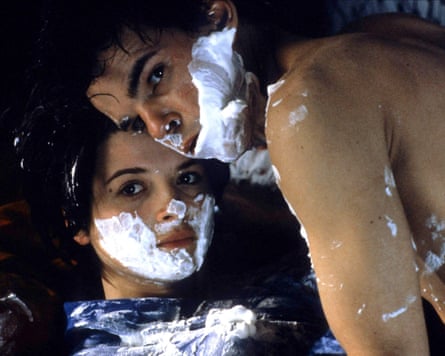
This trust was tested in the mid-1990s when director André Téchiné reportedly deviated from an agreement regarding a nude scene in "Alice and Martin." Binoche described feeling "betrayed" by this breach of confidence, though she ultimately persuaded the producer to remove the shots. The incident led her to never work with Téchiné again.
The contemporary discussion around intimacy coordinators in filmmaking is a topic Binoche approaches with a nuanced perspective. While she recognizes their value for less experienced actors, she feels her film "goes against what is being said today" by embracing a more raw and intuitive approach to physical contact. "When you’re in a love scene it needs to come from the heart, the guts, the need," she argues. "And so if you’re thinking of the movement you’re going to do and not of the feeling, you’re in a bad situation. When you’re embodying lovers, you overcome some fears of touching bodies. You really have to go beyond your comfort zone because otherwise you become a prude and not truthful to what’s happening in life."
The Future of Art in the Age of AI
As the film industry grapples with the implications of artificial intelligence, Binoche remains sanguine. "They were saying that painting was going to disappear because we had cameras, or that theater was going to die when cinema arrived," she notes. "So I don’t think you should be worried. It’s called artificial intelligence. It’s not spiritual intelligence or human intelligence." She is currently drawn to projects that ground her, including the drama "Queen at Sea," which earned accolades at the Berlin Film Festival, and the French rural thriller "North Loire." Her decision to join "North Loire," a second film by an emerging director, underscores her commitment to supporting new talent and following her instincts.
Binoche’s enduring appeal lies in her unwavering commitment to artistic truth and her willingness to explore the full spectrum of human experience, pushing beyond comfort zones to discover new dimensions of herself and her craft. Her directorial debut, "In-I In Motion," stands as a powerful testament to this lifelong pursuit.