Shuji Terayama’s 1971 short film, "The War of Jan-Ken-Pon," stands as a stark, black-and-white testament to the director’s unique experimental vision, running approximately 12 minutes. Produced during Terayama’s most prolific avant-garde period, the film is a characteristic provocation, transforming the seemingly innocuous Japanese children’s hand game, Jan-Ken-Pon (a variation of rock-paper-scissors), into a grotesque and absurdist spectacle. It delves into profound themes of violence, humiliation, power dynamics, and the chilling nature of spectatorship, reflecting a critical commentary on human behavior and societal structures. The central game, known as "Janken Sensou" or "Jan-Ken War," renames the familiar gestures with militaristic terms such as "warship," "sinking," and "explosion," immediately signaling the film’s satirical intent.
Contextualizing the Creator: Shuji Terayama’s Avant-Garde Vision
To fully appreciate "The War of Jan-Ken-Pon," it is essential to understand the artistic landscape cultivated by its creator, Shuji Terayama (1935-1983). A towering figure in Japan’s post-war avant-garde, Terayama defied categorization, excelling as a poet, playwright, photographer, filmmaker, and founder of the experimental theater troupe Tenjo Sajiki. His work consistently challenged conventional norms, exploring themes of identity, memory, alienation, and the subversion of everyday rituals. Terayama’s films, often characterized by their surreal imagery, non-linear narratives, and provocative content, were extensions of his broader artistic philosophy, aiming to disrupt societal complacency and expose hidden truths.
His experimental period, spanning the late 1960s and early 1970s, saw him produce a series of influential shorts and features that cemented his reputation as a radical innovator. These works, including "Tomato Kecchappu Kōtei" (Tomato Ketchup Emperor, 1971) and "Pastoral: To Die in the Country" (Den’en ni Shisu, 1974), frequently employed amateur actors, unconventional shooting techniques, and a deliberate blurring of reality and fantasy. "The War of Jan-Ken-Pon" fits squarely within this trajectory, utilizing a minimalist approach to amplify its maximalist message. Terayama’s fascination with games, performance, and the psychological underpinnings of human interaction found a fertile ground in this short, transforming a simple contest into a complex allegory.
The Art Theatre Guild: A Cradle for Innovation
The production of "The War of Jan-Ken-Pon" by the Art Theatre Guild (ATG) is significant. Established in 1961, ATG played a pivotal role in shaping Japanese independent cinema, serving as a vital platform for experimental and unconventional filmmakers who often struggled to secure funding and distribution through mainstream studios. ATG championed artistic freedom, providing a sanctuary for directors like Nagisa Ōshima, Kiju Yoshida, Susumu Hani, and Hiroshi Teshigahara, alongside Terayama.
ATG’s mandate was to promote artistic expression over commercial viability, often distributing foreign art-house films in Japan and subsequently funding domestic productions that pushed cinematic boundaries. Their support allowed filmmakers to explore controversial subjects, experiment with form, and challenge societal norms without succumbing to commercial pressures. "The War of Jan-Ken-Pon," with its audacious premise and stark execution, perfectly embodied ATG’s ethos. The Guild’s commitment to showcasing diverse and challenging cinematic voices ensured that Terayama’s provocative vision could reach an audience, however niche, and contribute to the vibrant counter-cultural movement of the era. Without ATG, many of Japan’s most daring and influential films of the 1960s and 70s might never have been made or seen.
Deconstructing "The War of Jan-Ken-Pon": A Detailed Analysis
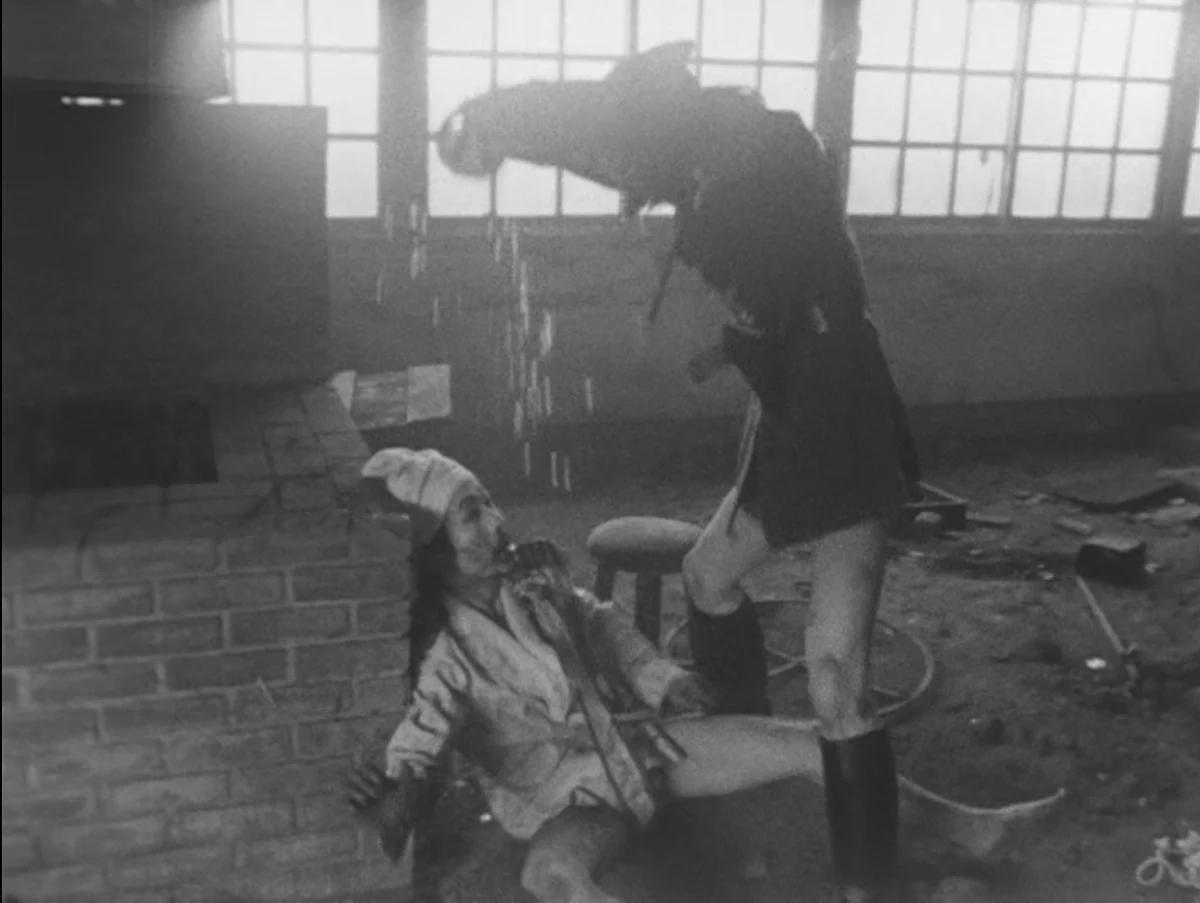
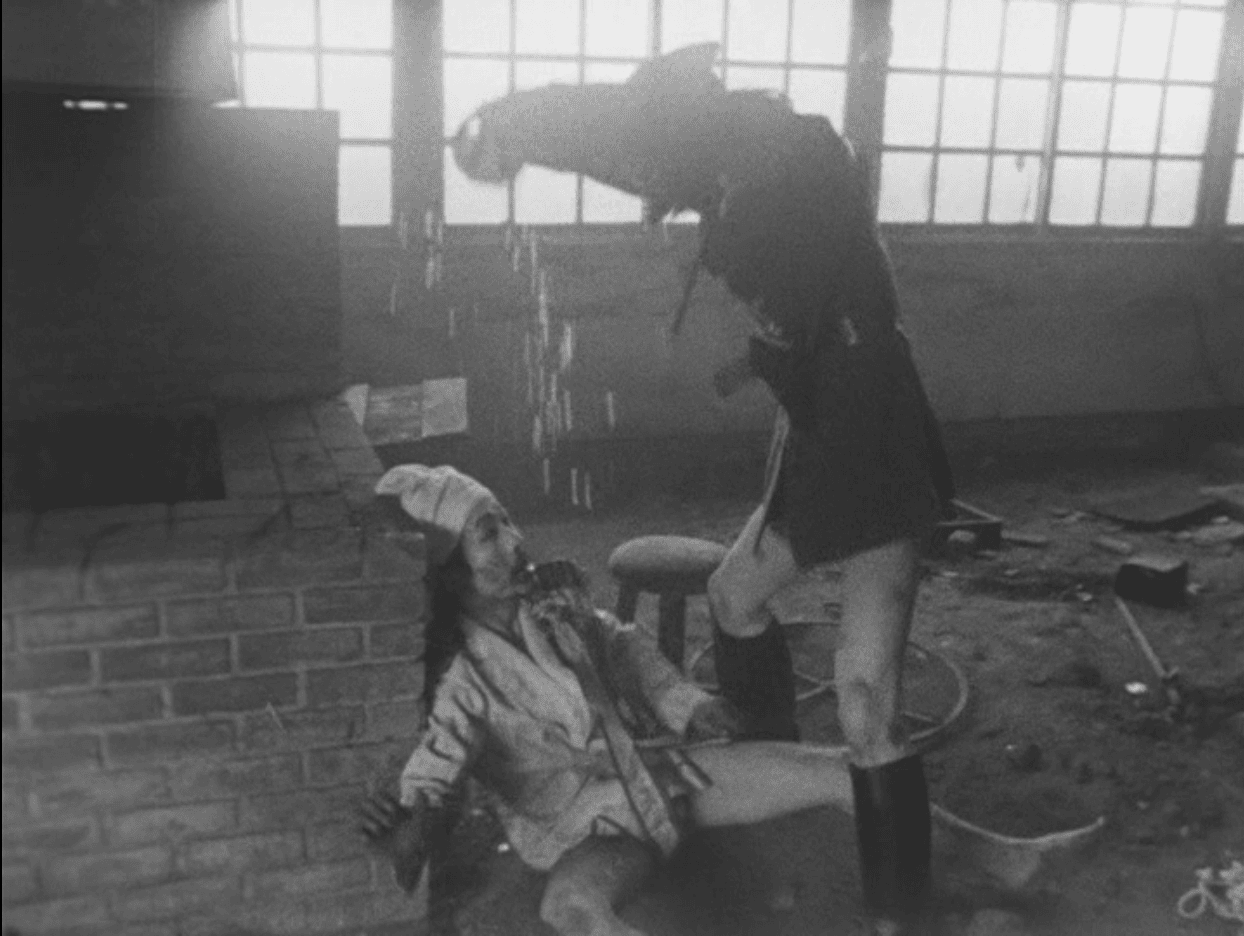
The film commences in a desolate setting, reminiscent of war-torn ruins, as two protagonists engage in the "Janken Sensou" game. Their initial movements are accompanied by a rhythmic, marching score, immediately establishing a militaristic atmosphere. Terayama’s characteristic mocking approach becomes evident in their attire: while their upper halves are clad in what appears to be military-style shirts, their lower bodies are incongruously dressed only in underwear. This visual juxtaposition — formal military semblance above, casual vulnerability below — instantly introduces an element of absurdity and undermines any genuine sense of martial gravity.
As the game intensifies, their movements become more frantic, culminating in a sudden, abrupt cut. The scene shifts, revealing the two men seated on makeshift chairs, surrounded by what appears to be a confined, almost clinical space. The first victory is claimed by the man in black, and it quickly becomes apparent that the stakes are higher than a simple win-loss: the victor administers a punishment to the loser. This pivotal moment transforms the innocent children’s game into a chilling ritual of dominance and submission.
As the narrative progresses, Terayama masterfully manipulates the film’s soundscape. Periods of muted audio are punctuated by the gentle chirping of a bird and soft, almost melancholic music. This sonic contrast heightens the unsettling nature of the unfolding events, creating an eerie calm that belies the escalating tension. Concurrently, the presence of an unseen audience is subtly introduced, peering through a window, observing the "shenanigans." This element of spectatorship is crucial, transforming what could be a private, harmless contest into a public performance of escalating abuse and humiliation. The militaristic vocabulary of the game — warship, sinking, explosion — serves as a constant, ironic reminder of the absurd, yet increasingly brutal, reality being enacted.
The film reaches a crescendo of disquiet when the soundtrack shifts to what sounds unmistakably like excerpts from one of Adolf Hitler’s speeches, overlaid with renewed militaristic music. This abrupt and jarring sonic intrusion unequivocally links the trivial game to the gravest historical atrocities, imbuing the escalating punishments with a sinister, historical resonance. The game continues, and with each loss, the penalties become more severe and dehumanizing.
Symbolism and Social Commentary: Beyond the Game
The punishments meted out to the loser are a disturbing blend of the childish, the cruel, and the strangely specific. Acts such as biting a shoe or enduring physical humiliation are not merely arbitrary; they are meticulously crafted to strip the individual of dignity and agency. The progression of these acts transforms the scene into a bizarre hybrid of grotesque comedy and a psychological experiment, blurring the lines between performance, torture, and a twisted form of entertainment.
The pervasive theme of spectatorship is central to Terayama’s commentary. The observers, watching from a safe distance, are implicated in the escalating violence. Their silent gaze transforms the abuse into a spectacle, suggesting how easily cruelty can be normalized and consumed as entertainment. This resonates with broader societal tendencies to observe conflicts and suffering from afar, detached and unburdened by direct involvement. Terayama implies that the act of watching, without intervention, is itself a form of complicity.
By the film’s conclusion, the initial "joke" of turning a children’s game into war has curdled into something profoundly dark and disturbing. The two men are still playing Jan-Ken-Pon, yet the rules of their engagement have become indistinguishable from the brutal logic of conflict. The film’s minimalist approach, with its confined setting and focus on two individuals, becomes a microcosm for larger societal dynamics, illustrating how power, humiliation, and violence can permeate even the most innocuous interactions, especially when amplified by an indifferent audience.
This cinematic fable can be interpreted as Terayama’s stark comment on the lingering psychological scars of World War II in Japan, a nation grappling with its post-war identity and rapid economic resurgence. The militaristic undertones, the ruins, and the cycle of dominance and submission could be seen as an allegory for the dangers of unchecked power and the human capacity for cruelty, both on an individual and national scale. The "Jan-Ken War" becomes a symbolic representation of all conflicts, demonstrating how easily trivial disputes can escalate into devastating battles, fueled by a desire for power and witnessed by passive observers.
Cinematic Craftsmanship: Form and Function
Mitsufumi Hashimoto and Salvador Tari, the two actors, deliver performances that are both improvisational and perfectly aligned with the film’s absurdist tone. Their exaggerated movements and expressions evoke the silent film era, transforming them into caricatures caught in a tragicomic dance of power. The dialogue-less approach enhances this effect, forcing the viewer to rely solely on visual cues and the unsettling sound design to interpret the unfolding drama. This stylistic choice amplifies the film’s universality, transcending linguistic barriers to communicate its core message.
Hajime Sawatari’s cinematography plays a crucial role in capturing the escalating absurdity. The camera remains intimately close to the protagonists, often moving around them in a disorienting fashion. This proximity intensifies the viewer’s engagement, creating a sense of claustrophobia and immediacy. The black and white aesthetic, devoid of the softening effects of color, further underscores the film’s stark, unvarnished portrayal of human nature.
Takase Usui’s editing complements the visual style, contributing to the overall dizziness and disorientation. The abrupt cuts and shifts in perspective mirror the unsettling progression of the game, creating a rhythm that is both jarring and compelling. The interplay between sound and silence, the sudden intrusions of militaristic music and speeches, and the stark visual contrasts all converge to create a sensory experience that is deeply unsettling and thought-provoking.
Legacy and Interpretation
"The War of Jan-Ken-Pon" is more than just a peculiar short film; it is a potent piece of avant-garde cinema that exemplifies Shuji Terayama’s distinctive style and the pioneering spirit of ATG productions. Filled with raw energy, audacious provocation, and undeniable artistic flair, it remains a memorable work within Terayama’s extensive oeuvre. Its enduring relevance lies in its ability to strip away the veneer of civility, revealing the uncomfortable truths about power, humiliation, and the human propensity for violence and detached observation.
Film scholars and critics often cite "The War of Jan-Ken-Pon" as a prime example of Terayama’s ability to distill complex philosophical and social critiques into seemingly simple, yet profoundly impactful, narratives. It serves as a microcosm of his broader artistic concerns, exploring the performative nature of identity, the oppressive weight of societal structures, and the subversion of everyday life. The film continues to provoke discussion about the fine line between play and conflict, and the uncomfortable role of the bystander in the face of escalating cruelty. Its influence can be seen in subsequent experimental works that explore similar themes through unconventional cinematic language, cementing its place as a significant contribution to both Japanese and global avant-garde cinema.