The expansion of the dystopian universe created by Margaret Atwood has officially transitioned from the page to the screen with the premiere of The Testaments on Hulu. Debuting with a three-episode launch on Wednesday, April 8, the series serves as both a sequel and a spinoff to the critically acclaimed and cultural phenomenon The Handmaid’s Tale. While the flagship series focused on the harrowing journey of June Osborne and her contemporaries who remembered the world before the rise of the totalitarian regime, The Testaments shifts its lens toward a new generation: the daughters of Gilead who have been raised entirely within the confines of its oppressive borders. This narrative shift explores the psychological complexities of indoctrination, the erosion of history, and the burgeoning resistance led by those who have never known the taste of true freedom.
Set approximately four years after the events of The Handmaid’s Tale series finale, the show arrives at a pivotal moment for the franchise. The premiere episodes establish a world that is at once familiar and terrifyingly evolved. In this new era, the shock of the revolution has faded into the mundane cruelty of a functioning state. The girls of Gilead are raised in a state of carefully curated ignorance, kept illiterate and sheltered from the realities of the outside world, yet the series highlights an inherent human intuition—a sense among the youth that the propaganda they are fed does not align with the whispers of the world they inhabit.
The Narrative Foundation and Character Dynamics
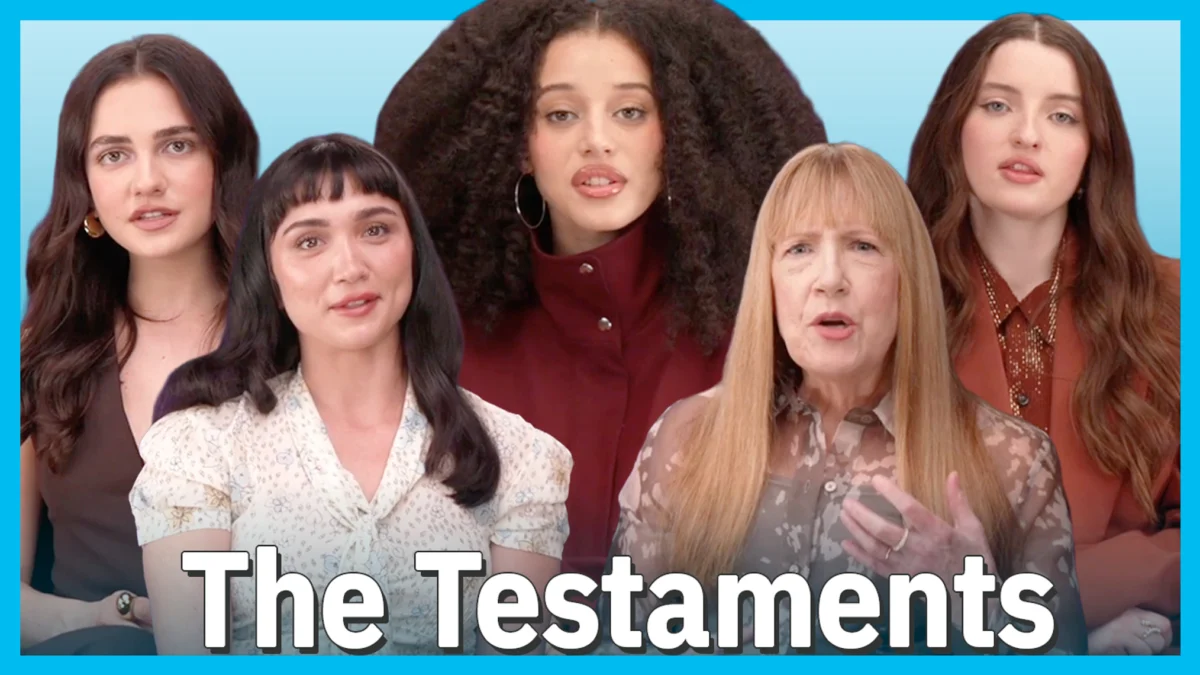
The Testaments centers on two primary young protagonists: Agnes, played by Chase Infiniti, and Daisy, portrayed by Lucy Halliday. For long-time viewers of the franchise, the name Agnes carries significant weight. She is Agnes Jemima, the daughter of June Osborne (Elisabeth Moss) and Luke Bankole (O-T Fagbenle), originally named Hannah before she was abducted by the state and placed with the high-ranking MacKenzie family. In this series, Agnes is no longer a child to be rescued but a young woman navigating the treacherous waters of Gilead’s social hierarchy.
Agnes’s life is defined by the loss of her adoptive mother and the presence of her father, Commander MacKenzie (now played by Nate Corddry), and his new wife, Paula (Amy Seimetz). Paula represents the "second generation" of Gilead’s elite—women who are not merely victims of the system but active participants in its preservation. The tension within the MacKenzie household serves as a microcosm of the larger power struggles within Gilead. Chase Infiniti, in discussions regarding her role, noted that Agnes begins the series with a distorted view of her biological mother. To Agnes, June Osborne is not a hero or a mother, but a "rebel handmaid"—a figure of destruction and chaos who threatens the only stability Agnes has ever known. This subversion of the audience’s perspective provides a fresh entry point into the lore, forcing viewers to see the protagonist of the original series through the eyes of the regime’s propaganda.
Simultaneously, the series introduces Daisy, a character whose origins are shrouded in mystery during the opening episodes. Her connection to the resistance movement Mayday and her eventual arrival in Gilead form the backbone of the premiere’s secondary arc. The interaction between Agnes and Daisy—representing the "insider" and the "outsider"—promises to be the emotional core of the season as they both grapple with their identities and the roles they are expected to play in a crumbling society.
The Return of June Osborne and Production Continuity
Despite the focus on a new cast, the shadow of June Osborne looms large over The Testaments. Elisabeth Moss reprises her role in a significant cameo at the end of the first episode, a move that anchors the spinoff to its predecessor. Moss also serves as an executive producer on the project, ensuring that the visual and thematic language of the series remains consistent with the groundwork laid over five seasons of The Handmaid’s Tale.
The premiere also features a clever use of audio to bridge the gap between the two series. In the opening scene of Episode 1, the voice of "Radio Free Boston" can be heard, featuring a cameo by late-night host Stephen Colbert as the announcer. This inclusion serves a dual purpose: it provides world-building by showing the persistence of the American resistance and offers a meta-commentary on the role of media in times of political upheaval. Sam Jaeger, who played Mark Tuello in the original series, also lends his voice to these segments, reinforcing the idea that while the setting has changed, the geopolitical struggle between Gilead and the remnants of the United States continues.
The transition of power from the established stars to the newcomers was a collaborative process. Both Infiniti and Halliday have expressed that Moss provided them with the "creative space" to define their characters independently of her legacy. This mentorship was crucial, as the young actors were tasked with portraying the specific trauma of "Gilead-born" citizens—a psychological state that differs significantly from the "pre-Gilead" trauma experienced by June’s generation.
Chronology and Context: From Novel to Screen
The Testaments is based on Margaret Atwood’s 2019 novel of the same name, which was published 34 years after the original Handmaid’s Tale. The novel was a literary event, winning the Booker Prize and providing a definitive conclusion to the story of Gilead. However, the television adaptation has made strategic adjustments to the timeline. While the novel is set fifteen years after the original story, the Hulu series has condensed this timeline to four years. This decision allows for a more immediate connection to the events of the original show’s finale and enables the writers to utilize the existing cast in meaningful ways while they are still chronologically relevant.
The series also sees the return of Ann Dowd as Aunt Lydia, a character who underwent a massive transformation in the novel. In the spinoff, Lydia remains a formidable and feared figure within the Ardua Hall—the headquarters of the Aunts—but the premiere hints at the internal fissures within her character. As the architect of the female experience in Gilead, Lydia’s evolution from a collaborator to a potential mole is one of the most anticipated arcs of the series. Dowd’s performance continues to be a masterclass in nuance, portraying a woman who has mastered the art of survival in a system that she helped build but may now be seeking to dismantle from within.
Supporting Data and Production Background
The production of The Testaments marks a significant investment for Hulu and MGM Television. The Handmaid’s Tale was the first series on a streaming service to win the Emmy for Outstanding Drama Series, and the expectations for its successor are high. The creative team includes Bruce Miller, the original showrunner of The Handmaid’s Tale, who moved into a broader oversight role to focus on the development of the spinoff.
Data from streaming analytics suggests that dystopian content continues to perform strongly among audiences, particularly those that offer a "coming-of-age" perspective within high-stakes environments. The decision to release three episodes at once was a tactical move to allow viewers to fully immerse themselves in the new status quo of Gilead before moving to a weekly release schedule. This strategy aims to build "narrative momentum," ensuring that the complex backstories of Agnes and Daisy are firmly established.
| Key Production Details | Information |
|---|---|
| Source Material | The Testaments by Margaret Atwood (2019) |
| Lead Cast | Chase Infiniti, Lucy Halliday, Ann Dowd |
| Executive Producers | Bruce Miller, Elisabeth Moss, Margaret Atwood |
| Network | Hulu |
| Timeline | 4 years post-The Handmaid’s Tale finale |
| Premiere Date | April 8 |
Broader Implications and Analysis
The Testaments arrives at a time when the themes of reproductive rights, state surveillance, and the indoctrination of youth are at the forefront of global discourse. By focusing on the "second generation," the series asks difficult questions about the nature of complicity and the possibility of reform within a totalitarian system. Unlike June, who fought to return to a world she remembered, Agnes and Daisy are fighting for a world they can only imagine.
The inclusion of the "Radio Free Boston" segments and the presence of Mayday operatives suggest that the series will lean more heavily into the "spy thriller" elements of Atwood’s sequel. The novel was noted for its shift in tone from the original—moving from a meditative study of isolation to a fast-paced narrative of espionage and resistance. The first three episodes of the Hulu adaptation suggest a similar trajectory, blending the atmospheric dread of the original series with a more propulsive plot.
Furthermore, the series explores the "Aunt" system in greater detail than ever before. In the premiere, the hierarchy of Ardua Hall is presented as a parallel power structure to the Commanders’ rule. The Aunts are the only women in Gilead permitted to read and write, making them the keepers of the regime’s secrets. This intellectual monopoly creates a unique class of women who are both the enforcers of the patriarchy and the only ones capable of bringing it down.
Future Outlook
As the season progresses, viewers can expect the paths of Agnes, Daisy, and Aunt Lydia to converge in a high-stakes mission that could determine the fate of Gilead. The premiere has successfully laid the groundwork for a story that honors its predecessor while carving out its own identity. By centering the narrative on the youth of Gilead, the show offers a sobering look at how quickly "abnormal" becomes "normal" and the immense courage required to question the only reality one has ever known.
With the return of Elisabeth Moss in a guest capacity and the continued brilliance of Ann Dowd, The Testaments bridges the gap between the old guard and the new. It remains a stark reminder of the fragility of freedom and the enduring power of the human spirit to seek light in the darkest of places. As the "Radio Free Boston" announcer might say, the fight is far from over; it has simply moved into the hands of the next generation.