
Based on the multi-award-winning manga by Paru Itagaki, "Beastars" emerged in 2019 as one of the most distinctive anime of its generation, quickly gaining international recognition following its distribution through Netflix. Produced by Studio Orange, the series stood out for its bold use of CGI animation at a time when the technique was still met with skepticism among anime audiences. Across its three seasons, culminating in "Beastars Final Season" in 2026, the show consistently received critical acclaim, winning multiple awards including the Anime of the Year at the Tokyo Anime Award Festival and securing strong placements in international critics’ lists. Its blend of genre elements, from coming-of-age drama and noir to social allegory and romance, ultimately cemented its place among the most important anime productions of the past decade, challenging conventions in both narrative and animation.
The Genesis of a Phenomenon: From Manga to Global Anime Sensation
The journey of "Beastars" began with Paru Itagaki’s critically acclaimed manga series, which first debuted in Akita Shoten’s Weekly Shōnen Champion in September 2016. Itagaki, known for her unique anthropomorphic character designs and mature storytelling, quickly garnered a dedicated readership. The manga itself was a commercial and critical success, selling millions of copies and winning numerous accolades, including the Manga Taishō award in 2018, making it the first title published by Akita Shoten to receive the honor. It also secured a New Creator Prize at the Tezuka Osamu Cultural Prize and Best Shōnen Manga at the Kodansha Manga Awards. This strong foundation provided fertile ground for an anime adaptation that promised to push boundaries.
The announcement of an anime adaptation by Studio Orange in February 2019 generated considerable buzz. Studio Orange had previously impressed critics and audiences with their full CGI animation work on Land of the Lustrous (2017), demonstrating a mastery of the technique that set them apart from many peers. For "Beastars," the challenge was to translate Itagaki’s intricate character expressions and dynamic action sequences into a 3D environment while retaining the manga’s distinct visual and emotional appeal. The first season premiered in Japan in October 2019, followed by its global release on Netflix in March 2020, immediately capturing a worldwide audience.
Studio Orange’s Technical Prowess: Redefining CGI in Anime
At the heart of "Beastars"’s success lies Studio Orange’s groundbreaking CGI animation. In an industry where 2D hand-drawn animation has long been the gold standard, and 3D CGI often relegated to backgrounds or specific action sequences, Studio Orange took the audacious step of producing the entire series in full CGI. This decision was initially met with a degree of skepticism from a segment of the anime community, who often perceived CGI as stiff, less expressive, or visually jarring compared to traditional animation. However, "Beastars" quickly dispelled these doubts.
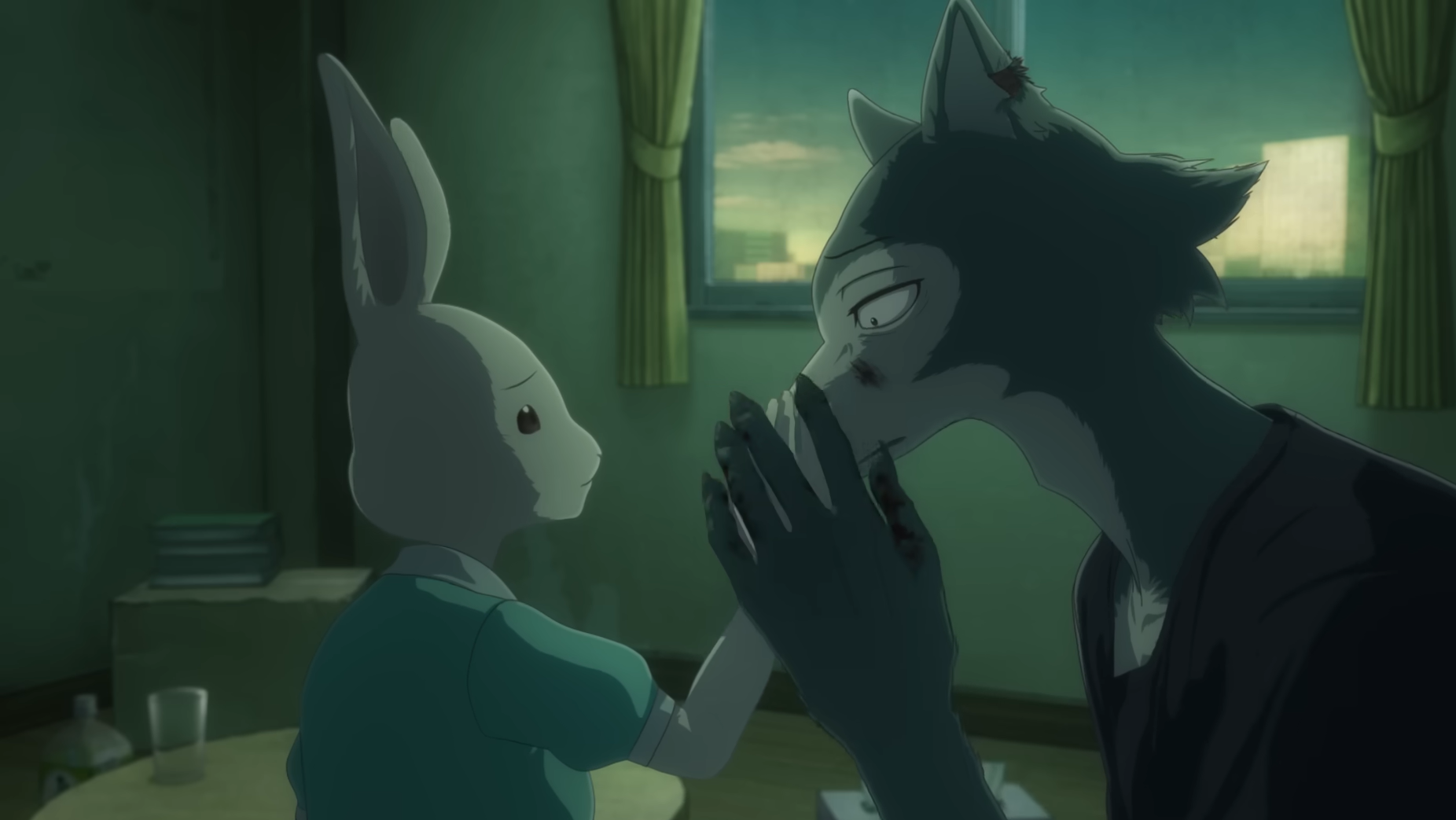
Studio Orange’s approach to CGI is characterized by its fluidity, meticulous attention to detail, and ability to convey nuanced emotions. The animators effectively blended the expressive qualities typically associated with 2D animation—such as dynamic smear frames and exaggerated facial expressions—with the spatial depth and intricate movement possibilities of 3D. This was particularly evident in the show’s complex action sequences, which benefited from the precise choreography and camera movements that CGI facilitates, creating a sense of weight and impact. Equally impressive were the quieter, character-driven moments, where subtle shifts in posture, ear movements, and eye contact conveyed deep emotional states, showcasing the versatility of the medium when expertly handled. The studio’s commitment to maintaining Itagaki’s distinctive art style, meticulously translating it into 3D models, was crucial in achieving this visual fidelity and contributing to the series’ immersive quality.
A Chronology of Critical Acclaim and Global Impact
The release schedule and reception of "Beastars" underscore its consistent quality and growing influence:
- September 2016: Manga serialization begins in Weekly Shōnen Champion.
- 2018: Manga wins Manga Taishō, New Creator Prize at Tezuka Osamu Cultural Prize, and Best Shōnen Manga at Kodansha Manga Awards.
- February 2019: Anime adaptation by Studio Orange announced.
- October 2019: "Beastars" Season 1 premieres in Japan.
- March 2020: "Beastars" Season 1 released globally on Netflix, introducing the series to a massive international audience. The series quickly trended on the platform and garnered widespread positive reviews.
- 2020 Awards Season: Season 1 receives Anime of the Year at the Tokyo Anime Award Festival, Best CGI Anime at the Crunchyroll Anime Awards, and numerous nominations across various categories, cementing its critical standing.
- January 2021: "Beastars" Season 2 premieres in Japan.
- July 2021: "Beastars" Season 2 released globally on Netflix, further building on its narrative and thematic complexity.
- 2021 Awards Season: Continued critical success, with nominations and wins for its animation, character development, and storytelling.
- December 2022: "Beastars Final Season" announced, slated for release in two parts in 2024 and 2026. This decision to split the final season allows for meticulous production and a comprehensive adaptation of the manga’s conclusion.
- 2024 (Projected): "Beastars Final Season Part 1" released.
- 2026 (Projected): "Beastars Final Season Part 2" (the ultimate conclusion) released.
Throughout this timeline, the series consistently received high scores from critics on platforms like Rotten Tomatoes and MyAnimeList, with particular praise for its unique narrative, sophisticated themes, and visual innovation. Its presence on Netflix was pivotal, allowing it to bypass traditional anime distribution channels and reach millions of viewers who might not typically engage with Japanese animation, thereby broadening its cultural footprint.
Narrative Complexity: A World of Anthropomorphic Allegory
The narrative of "Beastars" unfolds in a richly imagined world populated by anthropomorphic animals, where carnivores and herbivores coexist under a fragile social contract that strictly forbids meat consumption. Much of the story initially centers on Cherryton Academy, a prestigious boarding school where simmering tensions between the two distinct groups threaten to boil over. The delicate peace is shattered by the brutal murder of Tem, an alpaca student, an event that exposes the underlying prejudices and fears within the seemingly harmonious society.
The central figure is Legoshi, a towering gray wolf whose timid, introspective, and gentle personality stands in stark contrast to his inherent predatory instincts. His journey of self-discovery, identity, and moral struggle forms the emotional core of the series. His life becomes increasingly complicated following Tem’s murder, forcing him to confront the dark aspects of his own nature and the predatory instincts he constantly suppresses.
Legoshi’s evolving relationship with Haru, a diminutive dwarf rabbit ostracized for her unapologetic sexual behavior and perceived fragility, is one of the story’s most complex and compelling aspects. Their bond is a poignant exploration of forbidden love, mutual understanding, and inherent danger. Legoshi grapples with the terrifying possibility that his carnivore instincts might lead him to harm the very person he cares for, while Haru navigates her own vulnerabilities and desires in a world that often objectifies or dismisses her.
Parallel to this, Louis, a charismatic red deer and the star of Cherryton Academy’s drama club, navigates his own ambitious path. Born a herbivore in a society dominated by carnivore power structures, Louis is driven by a desire for control and respect, often clashing with Legoshi. His journey takes him beyond the academy’s confines, leading him into the dangerous criminal underworld of the Black Market, where he confronts the brutal realities of interspecies exploitation and power dynamics, eventually becoming a figure of significant influence.
As the series progresses beyond the confines of the academy, the narrative expands into the sprawling metropolis of Zebuth City. Here, organized crime, political corruption, and escalating interspecies tensions push the fragile societal balance towards collapse. The "Final Season" brings these intricate threads together through the emergence of Melon, a hybrid gazelle-leopard antagonist. Melon, a character embodying the ultimate conflict of nature vs. nurture, struggles with a profound identity crisis due to his mixed heritage, and his actions threaten to ignite widespread chaos and dismantle the entire social order, forcing Legoshi and his allies to confront the ultimate challenges to their world.
Thematic Resonance: A Deep Dive into Societal Allegories
Contextually, "Beastars" operates as an intricate and profound allegory of human society, utilizing its anthropomorphic premise to tackle complex issues of identity, discrimination, and coexistence with remarkable effectiveness. The fundamental division between carnivores and herbivores serves as a potent metaphor for real-world systems of segregation, prejudice, class struggle, and systemic inequality. This binary mirrors historical and contemporary conflicts based on race, ethnicity, religion, or socio-economic status.
The series delves deeply into the question of whether individuals can transcend their inherent nature or societal conditioning. Legoshi’s constant battle against his predatory urges, Louis’s defiance of herbivore stereotypes, and Haru’s assertion of autonomy all suggest that while change is possible, it often comes at a significant psychological and physical cost, demanding immense personal sacrifice and self-awareness.
Beyond this central theme, the narrative explores a wide array of sociopolitical issues. The stark depiction of the Black Market, where herbivores are clandestinely commodified and consumed as food, serves as a searing commentary on exploitation, systemic injustice, and the commodification of life under capitalism. This underground economy highlights the hypocrisy and moral compromises inherent in a society striving for an impossible peace.
Furthermore, the series skillfully portrays the role of media manipulation, public opinion, and political maneuvering in shaping societal perceptions and controlling narratives, particularly in the later stages of the story as Louis becomes entangled in the political landscape. Elements of sexuality, especially in relation to adolescence and consent, are handled with surprising frankness and maturity, adding another layer to the characters’ internal struggles and their navigation of burgeoning desires in a complex social environment. While the series occasionally employs familiar narrative tropes, such as providing tragic backstories for antagonists to evoke sympathy, its overall thematic density, courage in addressing uncomfortable truths, and refusal to offer simplistic solutions remain among its strongest attributes.
Aesthetic and Audiovisual Excellence: Crafting Immersion
From an artistic and technical standpoint, "Beastars" is a landmark production that meticulously crafts an immersive world. The CGI animation by Studio Orange is consistently among the best seen in contemporary anime, seamlessly blending with hand-drawn elements for facial expressions and certain effects to create fluid movement and incredibly expressive character interactions. This hybrid approach proves particularly effective in dynamic action sequences, where the choreography benefits from the added dynamism and precise camera control of digital animation. Concurrently, quieter moments, such as intimate character interactions and profound emotional exchanges, are rendered with equal care, showcasing the versatility and emotional depth achievable through this medium.
The character design, primarily credited to Nao Otsu and further enriched by the faithful adaptation of Itagaki’s original artwork, plays a crucial role in the series’ success. Each character’s physical traits not only reflect their species but also serve as extensions of their personalities and narrative arcs. Details such as posture, subtle changes in facial expressions (especially around the eyes and ears), and even nuanced shifts in appearance over time contribute to a sense of realism and emotional depth that significantly enhances the overall immersion. The deliberate use of color, often leaning toward softer, desaturated palettes in everyday scenes but employing vibrant hues for dramatic effect, further complements the tone of the story. The distinct Victorian-inspired aesthetic of certain settings, from the architecture of Cherryton Academy to the fashion choices, adds a unique visual identity that grounds the fantastical world in a familiar yet distinct aesthetic.
Musically, the series also excels, with its score, composed by Satoru Kōsaki (known for Monogatari series and Kill la Kill), effectively enhancing both tension and emotion. Kōsaki’s compositions range from melancholic jazz numbers that underscore the noir elements to pulsing electronic tracks that heighten action, and tender orchestral pieces that emphasize emotional vulnerability. Particular highlights include sequences in the final season where the audiovisual approach becomes more experimental, incorporating elements such as rotoscoping, surreal imagery, and highly stylized visual metaphors to heighten the psychological impact of key moments and delve into the characters’ internal worlds. These bold stylistic choices underline the series’ willingness to push boundaries, both narratively and technically, in its pursuit of artistic expression.
Conclusion: A Lasting Legacy Despite Minor Fissures
While "Beastars" stands as an undisputed achievement, if there is a point of minor criticism, it lies primarily in the pacing and resolution of its final arc. The concluding season, while successfully tying together most narrative threads and delivering several memorable and impactful sequences, has been noted by some critics and fans for opting for a somewhat safer or less ambitious resolution compared to the audacious build-up of its earlier seasons. This perceived tempering of ambition in its ultimate conclusion, however, does little to diminish the overall achievement of the series, which remains compelling, thought-provoking, and visually stunning from start to finish.
"Beastars" stands as a remarkable example of contemporary anime storytelling, combining a highly original premise with profound thematic exploration and cutting-edge animation. Its ability to merge compelling entertainment with sharp social commentary, while maintaining a strong emotional core through its deeply complex characters, ensures its lasting impact on the medium. Even if its conclusion does not fully satisfy every expectation, the journey it offers—a visceral and intellectual exploration of identity, prejudice, and coexistence—is more than enough to secure its legacy as one of the defining anime of its era, influencing future productions and expanding the possibilities of animated storytelling.