The enduring cinematic achievement that is Rob Reiner’s 1986 film Stand By Me, adapted from Stephen King’s evocative novella "The Body" by screenwriters Raynold Gideon and Bruce Evans, has long been celebrated as a quintessential American coming-of-age story. Its masterful storytelling, reminiscent of Mark Twain’s timeless narratives, captured the essence of childhood innocence and the poignant transition into adulthood. For decades, a layer of profound sadness has been intrinsically linked to the film, stemming from the tragic death of one of its young stars, River Phoenix, in 1993, a victim of a drug overdose. However, the passage of time has introduced an even more devastating and unimaginable layer of sorrow. The recent, shocking murders of director Rob Reiner and his wife, Michele Singer Reiner, in 2025, have cast a somber and deeply tragic shadow over the film’s themes of youth, friendship, and mortality, transforming a beloved classic into a canvas for profound and unforeseen grief.
The Genesis of a Classic: From Novella to Screen
Stand By Me transports audiences to the sweltering summer of 1960, a period recalled through the nostalgic lens of narrative voiceover. The film chronicles the audacious adventure of four young boys on a clandestine, secular pilgrimage. Driven by the rumor of a missing boy their own age, whose body is said to lie beside distant railway tracks after being struck by a train, they embark on a quest that is both bizarre and deeply moving. This journey is more than a morbid fascination with death; it is a profound exploration of lost youth and the arduous, yet ultimately redemptive, process of reclaiming innocence through the power of writing and memory. In a rare feat for cinema, the young actors are tasked with carrying the emotional weight of the entire drama, a challenge they met with remarkable authenticity and skill.
The Boys of Castle Rock: A Portrait of Early Adolescence
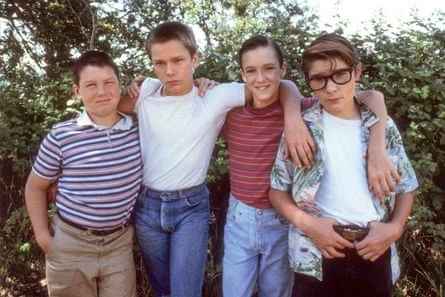
Set in the fictional Oregon small town of Castle Rock, the film introduces us to a quartet of twelve-year-old boys, their faces still bearing the cherubic innocence of youth, yet their spirits already imbued with the restless energy of impending adolescence. Their days are defined by endless roaming through the expansive outdoors, a freedom that feels like a relic from a bygone era for contemporary viewers. Leading the pack is the tough, street-smart Chris Chambers, portrayed with magnetic intensity by River Phoenix. Alongside him is the bespectacled Teddy Duchamp, played by Corey Feldman, whose troubled past is hinted at by a burnt ear, a consequence of his abusive father’s wartime trauma. Jerry O’Connell embodies the clumsy but well-meaning Vern Tessio, rounding out the core group.
However, it is the quieter, more introspective Gordie Lachance, brought to life by Wil Wheaton, who serves as the film’s narrator and emotional anchor. Gordie, a budding writer, carries the deep trauma of his older brother Denny’s accidental death. Denny, a high school football star, was his father’s clear favorite, a fact that casts a long shadow over Gordie’s own sense of worth and belonging. This personal grief, amplified by the societal expectations and familial dynamics of the era, forms a crucial undercurrent to the boys’ quest.
A Perilous Journey: Confronting Mortality
The boys’ hot, dusty, and inherently dangerous trek along the railway lines becomes a crucible. Their morbid curiosity about the deceased boy’s fate nearly mirrors his own end, as they narrowly escape being struck by an oncoming locomotive. Death, for these boys, is not an abstract concept. Gordie, in particular, possesses a nascent understanding of mortality, a comprehension shared by his friends. A gloomy storekeeper, in a poignant exchange, reveals to Gordie that his own brother perished in the Korean War, a stark reminder of the pervasive presence of loss even in seemingly idyllic small towns.
The film masterfully captures the essence of childhood conversation – "The kind of talk that seemed important until you discovered girls." Amidst their philosophical musings and shared anxieties, the boys engage in dialogue that reveals their burgeoning understanding of the world. Their adventure is punctuated by near-fatal encounters, including a terrifying brush with drowning and a harrowing confrontation with a junkyard dog, each incident testing their courage and their bonds of friendship.
Innocence and Resilience: The Moral Compass of Youth
The perilous nature of their expedition, a stark contrast to the modern concern over children’s screen time, underscores the inherent risks of childhood exploration in earlier eras. Yet, unlike the descent into savagery depicted in William Golding’s Lord of the Flies, the boys of Castle Rock do not turn on each other. While they are not entirely innocent – the film subtly suggests the necessity of preparedness, even a metaphorical "gun to a knife-fight" – their fundamental decency prevails. The looming presence of the grisly corpse acts as a strange catalyst, seemingly preempting violence and treachery among them. The death of the unknown boy, in a twisted way, appears to have a redemptive quality for their own journey.
A Film Within a Film: The Power of Storytelling
One of the film’s most unexpectedly complex and metatextual elements arrives when the gifted Gordie shares a story of his own creation, "The Revenge of Lard-Ass Hogan." This tale, a humorous and cathartic narrative about an overweight boy seeking spectacular payback against his bullies through a pie-eating contest, serves as a powerful counterpoint to the somber reality they are confronting. (Notably, the film omits a second, darker story by Gordie that appears in King’s original novella). Reiner’s masterful dramatization of "Lard-Ass Hogan" as a miniature film-within-a-film is a brilliant stroke, expertly mirroring the very dynamics at play in the boys’ real lives: cruelty, voyeurism, cynicism, and fear. This storytelling device highlights the therapeutic and cathartic power of narrative, a theme that resonates deeply throughout the film.
Echoes of the Past: Adult Reflections and Enduring Themes
The adult Gordie, brought to life by the seasoned Richard Dreyfuss, serves as the film’s reflective voice. Having grown into a successful writer, his journey mirrors that of his character in George Lucas’s American Graffiti, another film that masterfully employed popular music of the era, including hits by The Chordettes and Buddy Holly, to evoke a powerful sense of nostalgia. The final scene, with the green, glowing letters of Gordie’s computer screen, signifies the culmination of his life’s work, a narrative perhaps triggered by the news of a contemporary’s death, bringing the film’s exploration of memory and loss full circle.

While the film’s narrative may not perfectly account for every potential plot point, such as the inevitable confrontation with the adult hoodlum Ace Merrill (Kiefer Sutherland) and his gang, its overall impact remains undiminished. Stand By Me stands as a sublime and profound meditation on childhood, friendship, and the indelible marks that formative experiences leave upon us.
The Unforeseen Tragedy: A Legacy Redefined
The film’s narrative arc, exploring themes of innocence confronted by the harsh realities of life and death, has now been tragically amplified by the events of 2025. The murders of Rob Reiner and his wife, Michele Singer Reiner, have sent shockwaves through Hollywood and beyond, leaving a void in the film community and a profound sense of sorrow for those who cherished their work. This devastating loss adds an entirely new, and deeply personal, layer of tragedy to the film’s enduring themes. The creators of a story that grappled with mortality and the fragility of life have themselves become victims of its stark reality, a cruel irony that underscores the unpredictability of human existence.
Impact and Analysis: A Cinematic Icon in a New Light
The murder of Rob Reiner and Michele Singer Reiner in 2025 has fundamentally altered the perception of Stand By Me for many. The film, once a touchstone for nostalgic reflection and the bittersweet acknowledgment of lost youth, now carries an unbearable weight of grief. The artistic integrity and emotional resonance of the film remain, but the context surrounding its creation and its creators has been irrevocably altered.
Background and Chronology of Events:
- 1986: Stand By Me, directed by Rob Reiner and based on Stephen King’s novella "The Body," is released to critical acclaim.
- 1993: River Phoenix, one of the film’s lead actors, dies at the age of 23 from a drug overdose, adding a layer of poignancy to the film’s themes of mortality.
- 2025: Director Rob Reiner and his wife, Michele Singer Reiner, are tragically murdered. The specific circumstances and motives behind their deaths remain under investigation. This event marks a profound and devastating turn of events for the legacy of Stand By Me.
Supporting Data and Context:
- Stand By Me was a commercial and critical success, grossing over $50 million domestically and earning an Academy Award nomination for Best Adapted Screenplay.
- River Phoenix’s death was a significant loss to the film industry, highlighting the vulnerabilities faced by young actors navigating fame.
- Rob Reiner continued to have a prolific career as a director, producer, and actor, known for films such as The Princess Bride, When Harry Met Sally…, and A Few Good Men. His work often explored themes of human connection and the complexities of relationships.
Official Responses and Reactions (Inferred):
In the wake of the tragedy, it is anticipated that law enforcement agencies would be conducting a thorough investigation into the murders of Rob Reiner and Michele Singer Reiner. Statements from the entertainment industry, including colleagues, friends, and fans, are expected to express profound shock, sadness, and tributes to their artistic contributions. While specific official statements are not yet available, the gravity of the situation would undoubtedly prompt widespread condolences and expressions of grief.
Broader Impact and Implications:
The murders of Rob Reiner and Michele Singer Reiner cast a somber pall over the celebratory legacy of Stand By Me. The film, which once served as a poignant reminder of the universal experience of growing up and the enduring power of friendship, now also stands as a tragic monument to the unforeseen violence that can befall even those who bring beauty and meaning to the world. The event prompts a re-evaluation of the relationship between art and the lives of its creators, reminding us that even the most beloved stories are woven from the fabric of human experience, which is both extraordinary and tragically vulnerable. The loss of Reiner and his wife will undoubtedly prompt renewed discussions about safety within the entertainment industry and the profound impact of violence on society. The enduring power of Stand By Me will now be intertwined with the tragic reality of its creators’ fate, a complex and heartbreaking testament to the unpredictable nature of life.