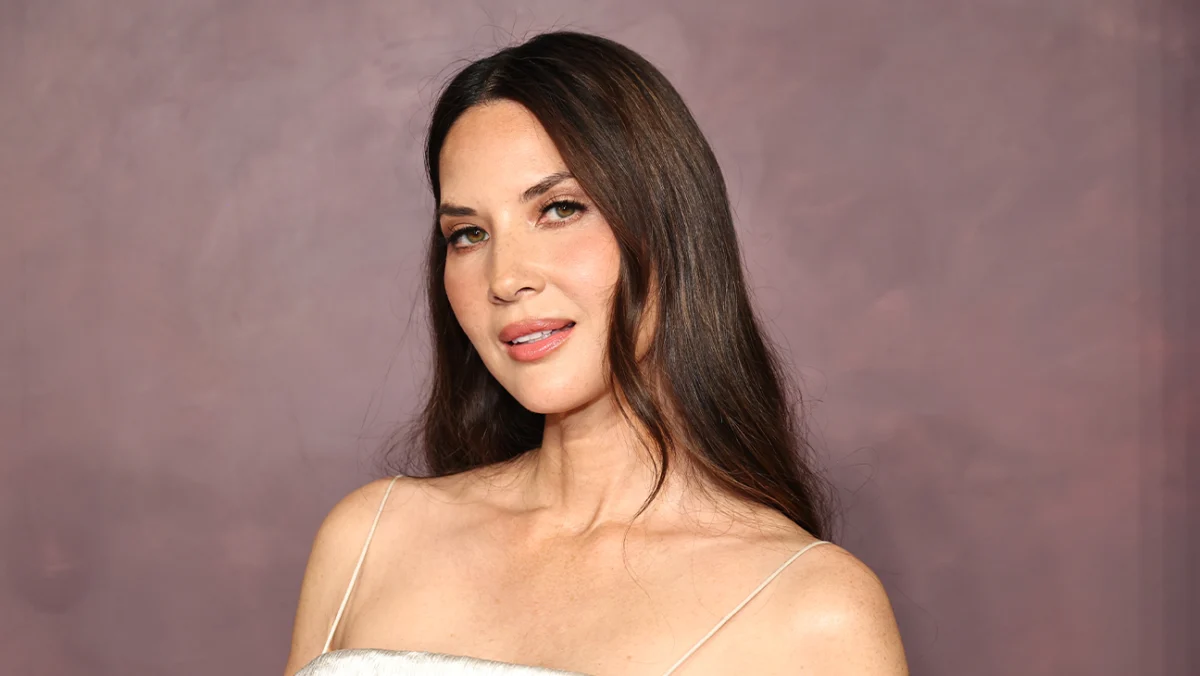
Actress Olivia Munn recently provided a candid account of a challenging on-set experience, revealing how an unnamed male co-star refused to film a scene where her character, a female operative, was scripted to save his life. This revelation, made during her appearance on The Drew Barrymore Show, has ignited conversations about entrenched gender dynamics and male ego within the entertainment industry, underscoring the subtle yet pervasive biases that continue to affect creative integrity and workplace environments.
The Incident: A Scripted Rescue and an Unscripted Standoff
Munn recounted the specific incident, which occurred during the filming of an action sequence set in an underground bunker. Her character, portrayed as a CIA agent or a cop, was engaged in a gunfight alongside her male counterpart. The original script meticulously detailed a moment where, after switching positions, Munn’s character would intercept an enemy combatant about to shoot her co-star in the back, thereby saving him. "If you read the script, it was that he was guarding his side, I was guarding my side, then we switch sides and then there’s a guy that was coming for him — was gonna shoot him in the back — so I shoot him," Munn explained, outlining the straightforward narrative progression.
However, as the scene was about to commence, the unnamed actor reportedly halted production. Munn described his sudden realization and subsequent objection: "Wait, wait, wait. Hold on. She can’t save me. No, no. She can’t save me." This abrupt refusal, she noted, stemmed from an apparent oversight on the actor’s part in understanding the script’s specific details prior to filming. The actor’s resistance quickly escalated, becoming "combative with the director" over the scene’s content. Munn observed the actor’s complete lack of self-consciousness in voicing his discomfort, stating, "There was no insecurity about being obnoxious and everyone hearing this and being like, ‘She can’t save me! We’re not doing this.’"
The production ground to a halt for an estimated 45 minutes, a significant disruption in a high-pressure, time-sensitive industry where every minute of delay translates to substantial financial cost. Faced with the stalemate, Munn herself intervened, proposing a solution that, while seemingly placating the co-star’s ego, left the physical action of the scene unchanged. "OK, how about instead of my character saving you, it’s just that we switch because it’s time for us to switch and so this is my guy to get," she suggested. To her surprise, the actor readily agreed. The irony, as Munn highlighted to Drew Barrymore’s audience, who responded with laughter and cheers, was that "nothing changed. It’s just what he thought. I was doing the exact same thing." This anecdote vividly illustrates how perception and ingrained gender expectations can override logical narrative progression, even at the cost of production efficiency.
Historical Context: Gender Roles in Cinema and Evolving Narratives
The resistance encountered by Munn is not an isolated incident but rather a symptom of deeply rooted historical patterns in Hollywood’s portrayal of gender. For decades, traditional cinematic narratives have predominantly cast male characters as the saviors and heroes, with female characters often relegated to supporting roles, love interests, or figures in need of rescue. This "damsel in distress" trope has been a pervasive element in storytelling, shaping audience expectations and, seemingly, some actors’ perceptions of their roles.
The late 20th and early 21st centuries have witnessed a gradual but significant shift, with a growing demand for and depiction of strong, independent female protagonists. Characters like Ellen Ripley in Alien, Sarah Connor in The Terminator franchise, and more recently, superhero figures like Wonder Woman and Black Widow, have challenged and redefined what it means to be a hero on screen. These characters demonstrate competence, resilience, and the ability to protect themselves and others, including male counterparts. Yet, despite these advancements, instances like Munn’s experience suggest that the acceptance of women in unequivocally powerful and protective roles is not universal, particularly when it directly challenges a male character’s traditional role as the primary protector.
Industry reports and academic studies frequently highlight the ongoing disparities in representation. While the number of female protagonists in films has seen a modest increase, women remain underrepresented in action and leadership roles. A 2023 study by the Center for the Study of Women in Television and Film at San Diego State University found that women comprised only 37% of protagonists in the top 100 grossing films, and an even smaller percentage in action-oriented genres. This data underscores the cultural inertia that Munn’s co-star’s reaction represents, a lingering adherence to outdated gender archetypes that resist narratives of female agency and heroism.
Olivia Munn’s Broader Advocacy and Navigating Hollywood
Munn’s candor on The Drew Barrymore Show is consistent with her previous willingness to speak out about negative experiences in Hollywood. Last year, she publicly recounted an incident during her time on The Newsroom. She described receiving "bad notes" from a visiting director, which she chose not to implement. Subsequently, she discovered that the director had actively attempted to sabotage her career by bad-mouthing her to prevent her from securing another job. Despite this calculated attempt at professional detriment, Munn successfully booked the role, demonstrating her resilience and ability to navigate adverse industry politics.
In a recent interview with The Hollywood Reporter, Munn further elaborated on her learned approach to navigating a system often resistant to women’s voices. She reflected on the necessity of "playing the game a bit more" to protect her artistic integrity and choices. "I should be able to speak up for myself and I should be able to draw the line, but we cannot. I can’t change the world and I cannot change how women have been portrayed and received for however long we’ve been on earth," Munn articulated. This pragmatic perspective highlights the ongoing challenge for women in Hollywood: balancing the desire for genuine self-expression and advocacy with the practical realities of career sustainability in a complex industry.
Munn also shared an evolution in her understanding of how actors protect their craft. Initially critical of other actors who resisted notes, she later realized that such resistance could be a legitimate method of safeguarding one’s artistic vision. "I used to see so many other actors do it, and I’d think, ‘Why are you not taking the note? I can’t believe you’re being so indignant.’ Then I realized it’s a way to protect your art and your choices with a character," she explained. By sharing her experiences and insights, Munn hopes to empower other actresses to develop similar strategies, fostering a sense of solidarity and shared wisdom in confronting industry challenges. Her journey reflects a broader trend among female artists and professionals who are increasingly vocal about the subtle and overt forms of discrimination they face, contributing to a collective effort to dismantle systemic biases.
Implications and Industry Response
The incident recounted by Olivia Munn carries several significant implications for the film industry. Firstly, it exposes the tangible impact of individual ego and gender bias on production efficiency. A 45-minute delay, particularly for a large-scale action sequence, can translate into tens of thousands of dollars in lost time, affecting budgets and schedules. Such disruptions also contribute to a strained working environment, impacting morale for the entire cast and crew. The director, caught between script integrity and managing an uncooperative actor, faces a difficult leadership challenge that could have been avoided if not for the actor’s personal hang-up.
Secondly, it highlights the often-unseen emotional labor disproportionately borne by women in professional settings. Munn’s quick thinking to rephrase the scene, effectively managing her co-star’s insecurity without altering the core action, exemplifies how women often adapt and strategize to navigate male resistance, ensuring projects move forward even when their contributions are undermined or unacknowledged. This "invisible labor" adds another layer of burden to female professionals already navigating complex career paths.
While no official statements from the unnamed co-star or the production company have been made, the widespread sharing and discussion of Munn’s story on social media and news platforms indicate a collective resonance. The audience’s reaction on The Drew Barrymore Show — laughter followed by cheers — suggests a recognition of the absurdity and frustration inherent in such situations. It implies that many viewers, particularly women, have encountered similar instances where their competence or agency was questioned based on gender.
The incident serves as a stark reminder that despite advancements in diversity and inclusion discussions, the industry still grapples with deeply ingrained biases. While overt sexism might be less tolerated than in previous eras, subtle forms, such as the refusal to accept a female character in a powerful, life-saving role, persist. These microaggressions contribute to an environment where female professionals may feel undervalued, constantly needing to prove their worth, or having to navigate male insecurities.
Moving Forward: The Ongoing Battle for Equity
Olivia Munn’s detailed account is more than just an anecdote; it’s a testament to the ongoing struggle for true gender equity in Hollywood. Her experience underscores that achieving equality is not merely about increasing representation numbers, but also about fundamentally shifting perceptions, dismantling biases, and fostering a culture where talent and narrative integrity are valued above outdated gender roles and male ego.
The industry’s journey towards genuine inclusivity requires continuous introspection and proactive measures. This includes not only advocating for more diverse storytelling and casting but also creating on-set environments where every individual is respected, and creative decisions are based on merit and script fidelity, rather than antiquated notions of gender. The collective effort of actresses like Olivia Munn, who bravely share their experiences, is crucial in bringing these subtle yet impactful biases to light, paving the way for a more equitable and authentic future for cinematic storytelling. As discussions around power dynamics and workplace respect continue to evolve in post-#MeToo Hollywood, such revelations serve as vital reminders that vigilance and advocacy remain essential for progress.