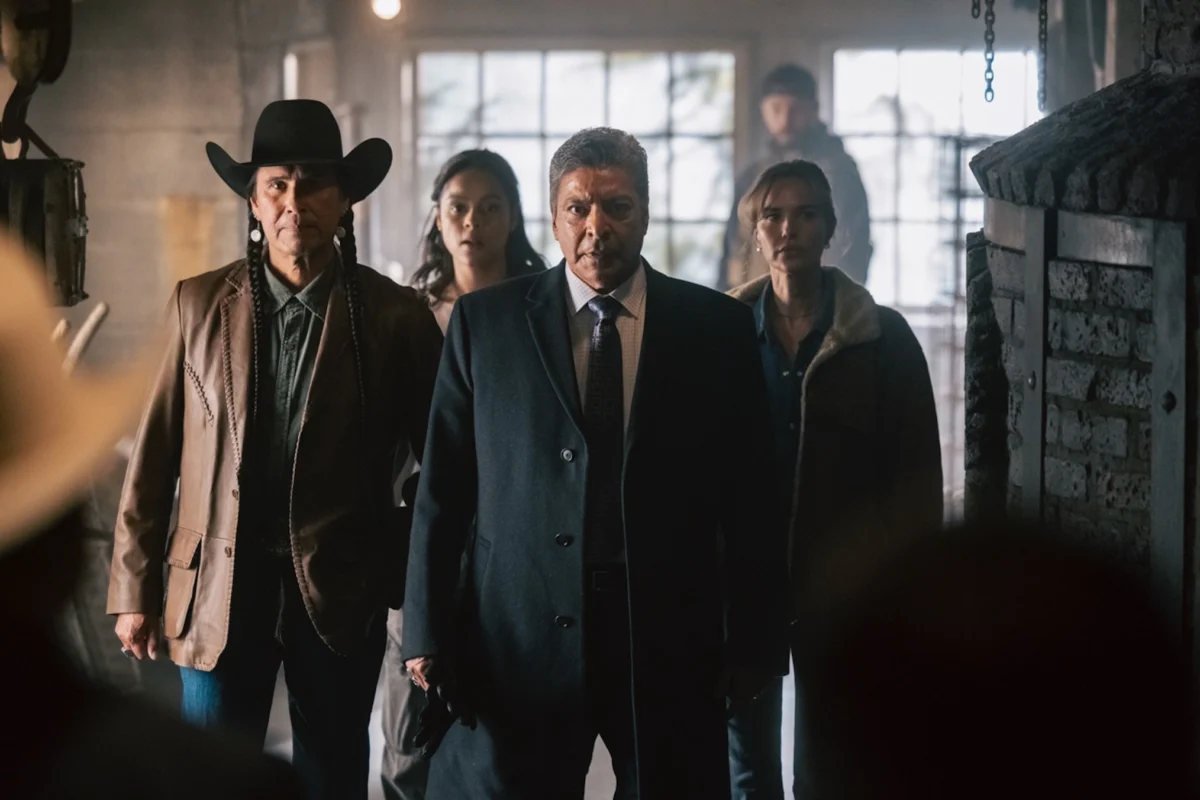
The freshman season of the Yellowstone spinoff series, Marshals, is set to conclude with a high-stakes finale that places one of the franchise’s most enduring characters in the crosshairs of a lethal conspiracy. According to the latest production details and episodic loglines released by CBS, the Season 1 finale, titled "Wolves at the Door," will center on a coordinated assassination attempt against Thomas Rainwater, the chairman of the Broken Rock Reservation. Portrayed by Gil Birmingham, Rainwater has been a central figure in the Taylor Sheridan-created universe since the inception of Yellowstone, and his potential exit from the series has sparked significant discussion regarding the future of the spinoff and its connection to the broader Montana-based narrative.
Scheduled to air on Sunday, May 24, at 8/7c, the finale follows a season characterized by grief, political unrest, and the transition of Kayce Dutton (Luke Grimes) from a reluctant rancher to a dedicated member of the U.S. Marshals Service. The episode’s synopsis indicates that the assassination attempt is merely the catalyst for a much larger confrontation. As Kayce moves to protect Rainwater, the Marshals find themselves embroiled in a battle against a domestic militia, uncovering a conspiracy that suggests the threats against Broken Rock are far more organized and expansive than previously suspected.
Narrative Background and Character Evolution in Season 1
Marshals launched as a direct expansion of the Yellowstone timeline, picking up approximately one year after the tragic death of Monica Dutton (Kelsey Asbille). In a departure from the traditional ranch-focused drama of the flagship series, Marshals explores the professional life of Kayce Dutton as he seeks a fresh start following the loss of his wife to cancer. This narrative choice provided a somber emotional foundation for the first season, focusing on the shared grief of Kayce and his son, Tate (Brecken Merrill).
The relocation and Kayce’s subsequent employment with the U.S. Marshals in Montana brought him back into the orbit of Thomas Rainwater and his trusted associate, Mo (Mo Brings Plenty). Throughout the first twelve episodes, the series has balanced procedural law enforcement elements with the ongoing sociopolitical struggles of the Broken Rock Reservation. Rainwater and Mo have functioned as stabilizing forces for Kayce and Tate, while simultaneously navigating the increasingly volatile landscape of Montana land rights and indigenous sovereignty.
The tension between the reservation and outside interests has been a recurring theme. The series premiere featured a violent explosion at a protest organized by the people of Broken Rock, an event that left Rainwater severely injured. While he eventually recovered, that initial act of violence established a precedent for the physical dangers facing the chairman. The upcoming finale suggests that the forces opposing Rainwater have escalated from opportunistic violence to targeted political execution.
Chronology of Events Leading to the Finale
To understand the gravity of the Season 1 finale, it is necessary to examine the chronological progression of the season’s primary conflicts. The narrative arc has been defined by three distinct pillars: Kayce’s professional integration, the fallout of Monica’s passing, and the escalating mining dispute.
- The Post-Monica Era: The series began twelve months after Monica’s death. This jump in time allowed the show to bypass the immediate medical trauma and focus on the long-term psychological impact on the Dutton family. Kayce’s decision to join the Marshals was framed as a pursuit of justice in a world that felt increasingly lawless.
- The Mine Controversy: A central plot point of Season 1 involved the proposed construction of a new industrial mine bordering reservation land. Rainwater’s staunch opposition to the project created a rift between Broken Rock and white Montana residents who viewed the mine as a vital source of economic growth.
- The Rise of Local Militias: As legal battles stalled the mining project, the rhetoric in the community shifted. Several episodes highlighted the growth of extremist groups and militias who felt that the state and federal governments were unfairly favoring tribal interests.
- Internal Marshal Dynamics: Kayce’s integration into the Marshals team, led by Cal (Logan Marshall-Green), provided a new perspective on law enforcement in the West. The team, including members like Belle (Arielle Kebbel) and Andrea (Ash Santos), has had to navigate the thin line between maintaining order and respecting tribal jurisdiction.
The penultimate episode left viewers with the sense that the "wolves" were no longer just at the door but had already breached the perimeter. The militia’s involvement in the finale signifies a shift from local civil unrest to organized domestic terrorism.
Supporting Data and Production Context
Marshals has performed strongly for CBS, benefiting from the massive built-in audience of the Yellowstone franchise. The network’s decision to renew the series for a second season prior to the airing of the Season 1 finale underscores its confidence in the show’s longevity and its ability to sustain a viewership independent of the flagship series’ conclusion.
Production data indicates that the finale was filmed on location in Montana, utilizing the rugged terrain to enhance the realism of the militia standoff. The inclusion of Logan Marshall-Green as the team leader Cal has been cited by critics as a successful addition to the franchise, providing a tactical foil to Kayce Dutton’s more instinctual approach to law enforcement.
The casting of Gil Birmingham and Mo Brings Plenty as series regulars in the spinoff was a strategic move to maintain continuity with the original series. Rainwater has long been one of the most complex characters in the "Sheridan-verse," often serving as both an antagonist and an ally to the Dutton family depending on the survival of his people. His central role in the finale highlights the show’s commitment to exploring indigenous issues through the lens of a contemporary Western thriller.
Official Responses and Thematic Analysis
While CBS and the show’s producers have remained tight-lipped regarding the specific outcome of the assassination attempt, the promotional materials for "Wolves at the Door" emphasize a theme of "unforeseen conspiracy." This language suggests that the villains behind the attempt may not be the obvious local antagonists introduced earlier in the season.
Thematically, Marshals continues the franchise’s exploration of the "New West," where traditional power structures are being challenged by corporate interests, extremist ideologies, and the reassertion of tribal rights. The assassination attempt on a democratically elected tribal leader is a narrative device that mirrors real-world concerns regarding political violence and the radicalization of fringe groups.
Logistically, the presence of characters like Belle and Andrea in the defense of Rainwater—as seen in the recently released production still—indicates a unified front between the U.S. Marshals and the Broken Rock leadership. However, the notable absence of Kayce and Miles (Tatanka Means) from the initial promotional imagery suggests they may be engaged in a separate, more offensive maneuver to intercept the militia before the main assault begins.
Broader Implications for the Yellowstone Universe
The fate of Thomas Rainwater carries significant weight for the entire Yellowstone universe. As one of the few characters to appear across multiple iterations of the story, his death would represent a major shift in the franchise’s power dynamics. If Rainwater were to fall, the vacuum of leadership on the Broken Rock Reservation could lead to internal power struggles or leave the land vulnerable to the very corporate interests he has spent years fighting.
Furthermore, the finale’s focus on a "larger conspiracy" may serve as the connective tissue for Season 2. By expanding the scope of the threat beyond a local militia, the showrunners are positioning Marshals to tackle broader themes of federal corruption or organized crime, potentially involving the same shadowy entities that have plagued the Dutton ranch for generations.
The decision to kill off Monica Dutton off-screen prior to the series premiere was a controversial move that some fans felt was designed solely to drive Kayce’s character development. If the writers choose to kill Thomas Rainwater in the finale, they risk repeating a pattern of sacrificing established characters to heighten the stakes for the remaining protagonists. Conversely, a successful defense of Rainwater could solidify the bond between the Marshals and the reservation, setting the stage for a more collaborative Season 2.
As the May 24 air date approaches, the primary question remains whether Kayce Dutton can prevent another tragedy from defining his new life. With a militia on the move and a conspiracy unfolding, "Wolves at the Door" is poised to be a definitive moment in the expansion of the Yellowstone narrative, testing the resilience of its characters and the stability of the Montana wilderness they call home.