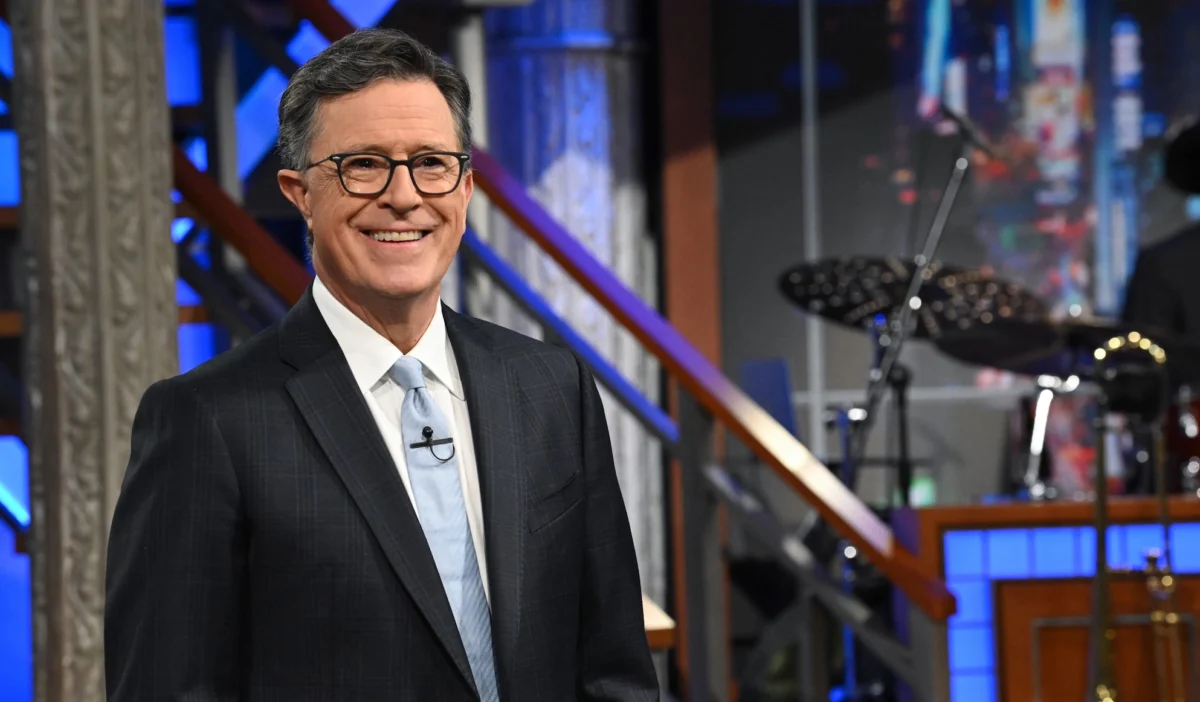
The landscape of late-night television is bracing for a significant shift as the tenure of Stephen Colbert at CBS approaches its final chapters. Ben Karlin, a foundational figure in Colbert’s professional history and the co-creator of The Colbert Report, recently shared his insights regarding the host’s upcoming departure. Speaking on The Daily Beast’s Obsessed podcast, Karlin provided a nuanced perspective on how Colbert will navigate his exit from The Late Show, a position he has held since succeeding David Letterman in 2015. Karlin, who served as head writer for The Daily Show and worked alongside Colbert for over a quarter-century, dismissed suggestions that the comedian would leave the network in a state of public acrimony. Instead, Karlin emphasized Colbert’s reputation for professionalism and poise, suggesting that while the circumstances of the show’s conclusion may be fraught with industry tension, the host himself will likely maintain a "classy" demeanor.
The Professionalism of the Exit: Kindness Over Conflict
The speculation surrounding Colbert’s exit often centers on whether he will use his final broadcasts to critique the network’s management or its shifting corporate priorities. Karlin, however, argues that such a "scorched earth" approach is inconsistent with Colbert’s character. Describing him as a "class act," Karlin noted that Colbert possesses a unique ability to "kill with kindness." According to Karlin, the power of Colbert’s exit may lie in what he chooses not to say, rather than in overt confrontation. This assessment suggests a departure strategy rooted in the traditions of broadcasting veterans who prioritize the legacy of the program over short-term grievances.
Karlin’s defense of Colbert’s likely approach is bolstered by the host’s long-standing relationship with CBS. Despite the eventual decision to end the show, the network provided Colbert with a massive platform, significant financial compensation, and the creative freedom to transition his satirical persona into a more traditional, yet still politically sharp, late-night format. Karlin pointed out that CBS allowed Colbert to bring a substantial portion of his creative team from Comedy Central to the Ed Sullivan Theater, ensuring that his collaborators also benefited from the show’s success. This history of mutual benefit, Karlin suggests, creates a foundation of gratitude that is unlikely to be discarded in the final weeks of production.
The Intersection of Comedy and Politics
A central point of Karlin’s commentary involved the motivation behind CBS’s decision to conclude The Late Show after the 2025-2026 broadcast season. While CBS has officially characterized the move as a financial decision necessitated by the evolving economics of linear television, Karlin offered a more pointed interpretation. He stated his belief that the decision was "100 percent political," citing the network’s recent efforts to appeal to a broader, more conservative-leaning audience. This shift occurs against the backdrop of Colbert’s consistent and often scathing critiques of the political right, particularly during the Trump administration and its aftermath.
The tension between a host’s creative voice and a network’s demographic goals is a recurring theme in media history. Karlin observed that the current environment feels "icky" because the boundaries between comedy and political strategy have become increasingly blurred. In previous eras, late-night comedy was often viewed as a separate entity from the corporate and political maneuvering of the parent network. However, as media conglomerates face mounting pressure to stabilize declining viewership, the political alignment of their most prominent stars has become a subject of intense scrutiny. Karlin’s analysis suggests that Colbert’s exit is not merely a byproduct of budget cuts but a reflection of a broader realignment within the media industry.
The Economic Reality of Late-Night Television
While Karlin highlights the political dimensions of the exit, the financial data surrounding late-night television provides a stark context for CBS’s decision. The traditional late-night model, which relies on high production costs and a fixed broadcast schedule, has been under immense pressure for over a decade. According to industry data, advertising revenue for the three major network late-night shows—The Late Show, The Tonight Show, and Jimmy Kimmel Live!—has seen a steady decline as viewers migrate to streaming platforms and social media.
In the early 2010s, these programs were profit centers for their networks, generating hundreds of millions of dollars in annual ad revenue. By the 2020s, however, the rise of cord-cutting and the fragmentation of the audience have diminished the "appointment viewing" aspect of 11:35 PM broadcasts. High-profile hosts like Colbert command salaries estimated to be in the range of $15 million to $20 million per year, with total production budgets for such shows often exceeding $50 million annually. When weighed against declining linear ratings, the return on investment for these programs has become increasingly difficult for corporate executives to justify.
CBS has already signaled a shift toward more cost-effective programming in late-night slots. The cancellation of The Late Late Show with James Corden and its replacement with the game show-style format of After Midnight—which is significantly cheaper to produce—serves as a blueprint for the network’s future strategy. In this context, the sunsetting of The Late Show represents the end of an era of "prestige" late-night comedy at CBS.
Chronology of the Colbert Era at CBS
The journey of Stephen Colbert at CBS began in April 2014, when he was named the successor to David Letterman. At the time, Colbert was still performing as the "pundit" character on The Colbert Report, leading to widespread speculation about how he would adapt to a broader audience.
- September 2015: Colbert debuts as the host of The Late Show. Initial reviews are mixed as he finds his footing outside of his satirical character.
- 2016-2017: The show finds its voice during the 2016 presidential election. Colbert’s sharp, nightly critiques of Donald Trump resonate with a large segment of the audience, propelling The Late Show to the top of the ratings, overtaking NBC’s The Tonight Show Starring Jimmy Fallon.
- 2020: During the COVID-19 pandemic, Colbert earns praise for his "A Late Show" segments filmed from his home. The stripped-down format highlights his improvisational skills and personal connection with the audience.
- 2021-2024: Colbert maintains his ratings lead but faces a changing media landscape where viral clips on YouTube often outweigh live broadcast viewership.
- 2025: CBS announces that the 2025-2026 season will be the final run for The Late Show with Stephen Colbert.
This timeline illustrates a decade of dominance that eventually collided with the structural decline of the medium itself. Unlike other hosts who were forced out abruptly, Colbert has been granted a "sunset period," allowing him to curate his final year and provide a proper farewell to his audience.
Implications for the Future of Network Media
The exit of Stephen Colbert from CBS has broader implications for the future of political discourse in entertainment. For years, Colbert’s monologue served as a nightly "town square" for liberal-leaning viewers. His departure, coupled with Karlin’s suggestion of a political shift at CBS, raises questions about where that audience will go and whether other networks will follow suit by de-emphasizing overt political satire in favor of "safer," more universal content.
Furthermore, the end of The Late Show in its current form marks a significant moment for the Ed Sullivan Theater. This historic venue, which hosted The Ed Sullivan Show and Letterman’s entire CBS run, has been synonymous with top-tier American entertainment for nearly a century. The future of the theater—and whether it will continue to host a nightly variety program—remains uncertain as CBS evaluates its long-term real estate and production needs.
A Legacy of Integrity
Despite the "icky" feeling Karlin described regarding the intersection of comedy and politics, he remains optimistic about Colbert’s legacy. He noted that the host gets to leave "not as a martyr, but certainly as someone who kind of stood his ground and stayed true to who he was." This sentiment captures the essence of Colbert’s tenure: a decade-long exercise in maintaining a consistent moral and comedic compass in a rapidly changing environment.
As the final season approaches, the focus will likely shift from the corporate maneuvers behind the scenes to the celebration of a career that bridged the gap between cable satire and network tradition. For Colbert, the transition offers a "dream come true" scenario—the ability to exit at the height of his influence with his reputation intact. For the television industry, it serves as a final, high-profile marker of the end of the traditional late-night era, as networks move toward a future defined by smaller budgets, broader demographics, and a cautious approach to the political divide.