Ten years after the groundbreaking success of Train to Busan, director Yeon Sang-ho returns to the undead genre with Colony, a film that is already making waves and redefining the parameters of zombie cinema. The film, which premiered at the prestigious Cannes Film Festival, has been lauded for its ambitious scale, innovative creature design, and relentless pacing. Critics and audiences alike are hailing Colony not just as a spiritual successor to Train to Busan, but as a significant advancement in the zombie subgenre, potentially ushering in a new golden age for flesh-eating mayhem on screen.
A Decade of Undead Influence and the Rise of Colony
The impact of Train to Busan in 2016 cannot be overstated. The South Korean film single-handedly revitalized the zombie genre, proving that the undead could be more than just shambling obstacles; they could be the catalysts for deeply emotional and socially relevant narratives. Its critical and commercial success, even earning praise from acclaimed director Quentin Tarantino, who placed it among his favorite films of the 21st century, sparked hopes for a widespread resurgence of high-quality zombie films. While the anticipated flood of zombie-centric blockbusters did not materialize, with only sporadic indie efforts like Virus-32 and occasional legacy sequels like 28 Years Later making notable appearances, Yeon Sang-ho’s latest offering, Colony, is poised to be the definitive cinematic event that fulfills that promise.
Colony is described as a standalone epic, yet it clearly stands in dialogue with Yeon Sang-ho’s previous works, Train to Busan and its divisive sequel, Peninsula. The film has shattered opening day records in its domestic market, a testament to the anticipation surrounding Yeon Sang-ho’s return to a genre he has mastered. Early reports from Cannes suggest a film that is both grand in its scope and terrifyingly intimate, delivering a visceral experience that harkens back to the best of the genre.
Unveiling the Premise: A Biotechnology Conference Descends into Chaos
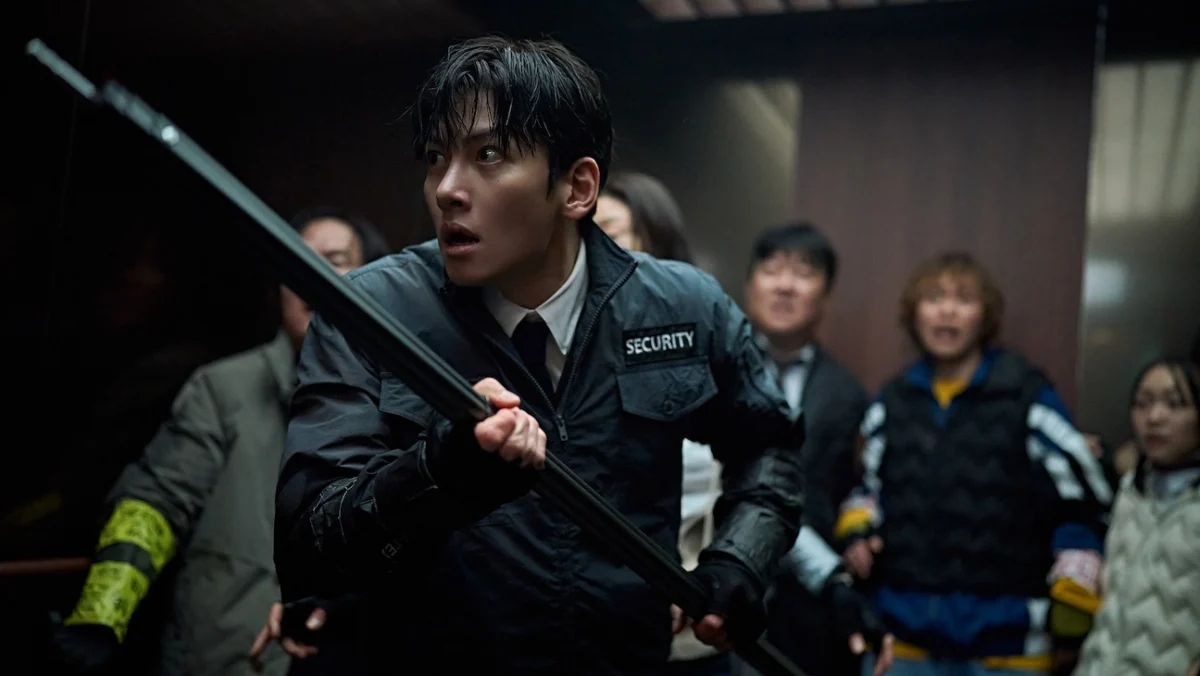
The narrative of Colony unfolds within the colossal Doongwoori Building, a multi-story complex housing a biotechnology conference, extensive event spaces, and bustling retail hubs. The story centers on Kwon Se-jeong (Jun Ji-hyun) and her ex-husband, Han Gyu-seong (Go Soo), who are among the attendees. The initial exposition introduces a diverse group of survivors, including security guard Choi Hyun-seok (Ji Chang-wook), his wheelchair-bound older sister Choi Hyun-hee (Kim Shin-rok), and a trio of students. Their attendance at the conference quickly devolves into pandemonium as a novel virus sweeps through the attendees, transforming them into the ferociously fast and aggressive undead that have become a hallmark of modern zombie fiction.
The central mission of the survivors hinges on capturing Seo Young-cheol (Koo Kyo-hwan), the scientist credited with developing the virus and, crucially, the alleged creator of a potential vaccine. The premise suggests a desperate race against time: if Seo Young-cheol can be apprehended and delivered to a waiting rescue team, there may be hope for salvation. However, the immediate obstacle is navigating a skyscraper teeming with highly agitated and infected individuals.
![‘Colony’: Ferocious, Terrifying, and a New Zombie Classic [Cannes 2026 Review]](https://www.dreadcentral.com/wp-content/uploads/2026/05/Cannes-Stills_04.jpg)
Evolution of the Undead: A Symbiotic and Terrifying New Threat
Yeon Sang-ho masterfully expands the scale of his signature claustrophobic terror from the confines of a speeding train in Train to Busan to the labyrinthine verticality of a massive skyscraper in Colony. Each floor of the Doongwoori Building presents a unique set of challenges and horrors. A significant innovation in Colony lies in its depiction of the infected. Drawing inspiration from elements seen in other contemporary horror narratives, such as the complex biological and behavioral patterns in The Last of Us, the zombies in Colony exhibit a unique, ant-like neural communication network.
These creatures are described as "slimy and disgusting," coating themselves and their surroundings in a viscous mucus. Kwon Se-jeong, who also penned the screenplay, theorizes that this secretion facilitates communication, enabling a rudimentary hive-mind. This is not merely a cosmetic change; the evolution of the infected is integral to the plot. Initially, they are depicted as volatile and quadrupedal. As the narrative progresses and the survivors’ mission intensifies, the infected demonstrate an alarming capacity for coordination, displaying an ability to listen, speak, and strategize their attacks, raising the stakes considerably. This intelligent and evolving threat represents a significant departure from the more passive, instinct-driven zombies of earlier cinematic lore.
Thematic Undercurrents: Systemic Failure and Corporate Malice
While Colony‘s primary focus is on visceral action and survival horror, the film also engages with contemporary anxieties. The narrative broadly touches upon themes of surveillance, lockdown protocols, the dangers of groupthink, and the pervasive spread of misinformation. However, these thematic elements are largely framed through the lens of systemic failure and, at times, overt malice. The communicative monsters serve as potent metaphors for bureaucratic incompetence and the potentially destructive actions of powerful entities.
Korean cinema has a long-standing tradition of unflinching critiques of authority, and Colony is no exception. Despite its genre trappings, the film’s core message resonates with a stark indictment of governmental and corporate entities. The underlying implication is that in the face of disaster, the interests of the public are secondary to those of powerful institutions, with a strong suggestion that the lives of ordinary citizens are of little consequence to those in power. This critique, while not entirely novel, is delivered with a potent urgency within the context of the unfolding zombie apocalypse.
Technical Prowess and Cinematic Virtuosity
Despite the expanded cast and the grander scale compared to Train to Busan, Yeon Sang-ho manages to retain a sense of intimacy within the chaos. The pacing of Colony is consistently praised as exceptional. Across its two-hour runtime, the film is characterized by its relentless and electrifying momentum. The undead are depicted as merciless and savage, dispatching potential survivors with brutal efficiency. The film doesn’t shy away from graphic depictions of violence, with characters being torn limb from limb, but these moments are underscored by a sufficient level of pathos to ensure that the deaths have an emotional impact on the audience.
Ji Chang-wook delivers a particularly compelling performance as Choi Hyun-seok, serving as a primary audience surrogate. He adeptly balances his concern for his sister’s safety with a growing awareness of the extreme measures he must take to survive. His character arc exemplifies the moral compromises and desperate actions necessitated by the escalating crisis.
![‘Colony’: Ferocious, Terrifying, and a New Zombie Classic [Cannes 2026 Review]](https://www.dreadcentral.com/cdn-cgi/image/width=788,height=444,fit=crop,quality=75,gravity=auto,metadata=none,format=auto,onerror=redirect/wp-content/uploads/2026/05/Cannes-Stills_04.jpg)
Colony consistently raises the stakes, layering escalating threats and escalating action. The film has been compared to a confluence of various popular horror and sci-fi franchises, including Resident Evil, Train to Busan, The Tower, Yeon Sang-ho’s own Netflix series Hellbound, and even the alien invasion narrative of Parasyte. The film incorporates elements such as killer primates, villains who engage in lengthy monologues, shifting alliances among survivors, and agile zombies reminiscent of the unsettling movements seen in recent horror films. While some might interpret this abundance of activity as a reflection of a modern cinematic sensibility geared towards constant stimulation, Yeon Sang-ho’s directorial skill prevents the film from succumbing to mere spectacle.
A Magnum Opus in the Undead Pantheon
Yeon Sang-ho’s talent is evident in his ability to weave together these disparate elements into a cohesive and thrilling narrative. Colony emerges not merely as another zombie film, but as a potential magnum opus, akin to George A. Romero’s seminal Dawn of the Dead. He has solidified his position as a modern maestro of the undead, and Colony represents the culmination of years of experience and artistic development.
While the film may be considered thematically lighter than some of its predecessors, its technical execution and visceral impact are undeniable. Colony is presented as a loud, rip-roaring theatrical experience, one that may well inspire a renewed appreciation for the zombie subgenre. Its infectious energy and relentless terror suggest that the decay of the undead genre is, in fact, far from over; rather, it has been revitalized with a potent and exhilarating new strain.
Summary: Yeon Sang-ho’s Colony is a monumental achievement in zombie cinema, amplifying the intensity and scope of Train to Busan. This exhilarating and terrifying epic delivers a masterclass in horror filmmaking, solidifying its place as the most impactful undead movie in years and potentially redefining the genre for a new generation of viewers.