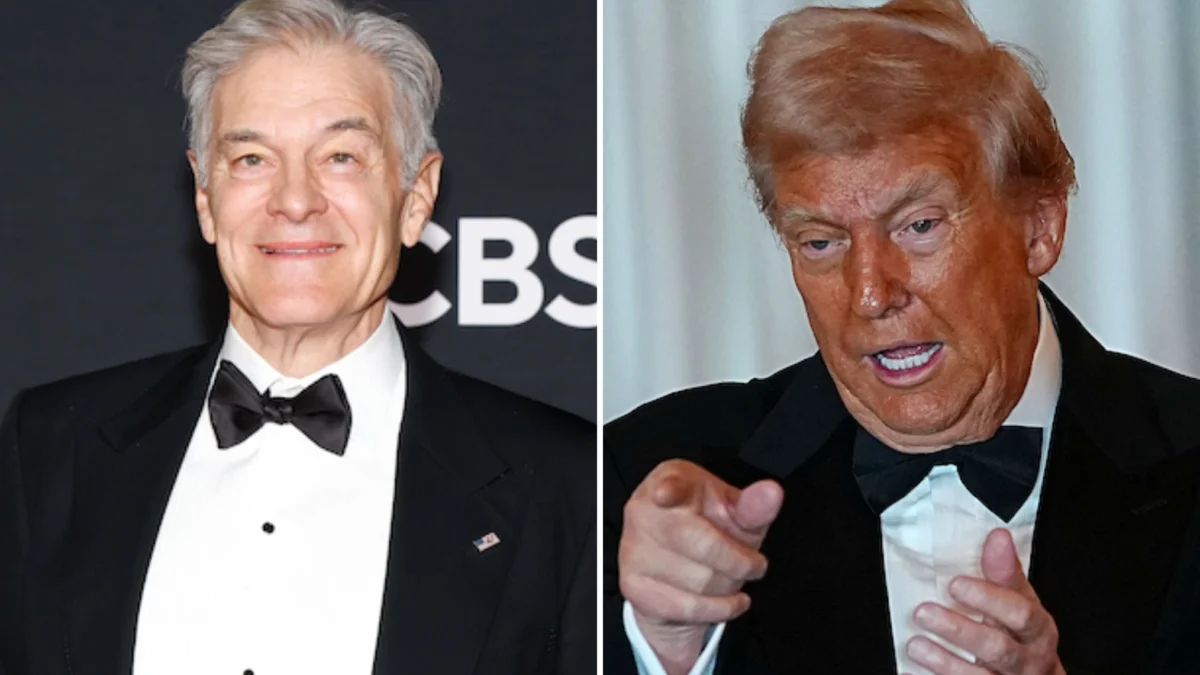
During a recent appearance on the podcast Triggered with Don Jr., Dr. Mehmet Oz, the current Administrator for the Centers for Medicare & Medicaid Services (CMS), shared an unconventional medical theory held by President Donald Trump regarding the health benefits of carbonated beverages. The interview, hosted by the President’s eldest son, Donald Trump Jr., offered a rare glimpse into the private conversations and dietary philosophies of the commander-in-chief, specifically focusing on his well-documented affinity for diet soda and other soft drinks. Dr. Oz recounted an exchange that took place aboard Air Force One, where the President suggested that the caustic properties of soda, which can be used to kill grass, might similarly target cancer cells within the human body.
The revelation comes at a time when the administration is heavily promoting the Make America Healthy Again (MAHA) movement, an initiative aimed at reforming the American food system and addressing chronic disease. The juxtaposition of the President’s personal dietary habits with his administration’s public health goals has become a point of significant discussion among political analysts and health professionals alike. According to Dr. Oz, the President’s logic stems from a belief in the potency of the chemical composition of these drinks, noting that if the liquid is strong enough to affect organic matter like grass, it must possess some form of internal "cleansing" or "combative" property against malignant cells.
The Air Force One Exchange and the Fanta Theory
The conversation detailed by Dr. Oz occurred during a flight on Air Force One, where the President was observed with an orange Fanta on his desk. When Dr. Oz questioned the choice of beverage, given his own background as a physician and his current role overseeing federal healthcare programs, the President reportedly responded with a grin. He posited that the soda was beneficial for his health, specifically citing its ability to "kill cancer cells." Furthermore, the President claimed that Fanta was "fresh squeezed," asking rhetorically how a drink derived from fruit could be detrimental to one’s health.
Donald Trump Jr. defended his father’s perspective during the podcast, suggesting that the President’s longevity and high energy levels might serve as anecdotal evidence for his unique lifestyle choices. He noted that despite being nearly 80 years old, the President maintains a level of stamina and cognitive recall that surpasses many younger individuals. The younger Trump argued that while his father might not personally adhere to a traditional "clean" diet, he remains committed to providing the American public with the knowledge and transparency required to make their own health decisions through the MAHA platform.
Historical Context of the President’s Soda Consumption
President Trump’s preference for diet soda has been a consistent element of his public persona since his first term in office. In 2017, reports surfaced that the President consumed as many as 12 cans of Diet Coke per day. Central to this habit was a specially installed red button on the Resolute Desk in the Oval Office. When pressed, a member of the White House staff would be alerted to bring the President a fresh glass of the beverage. This button became a symbol of the President’s specific lifestyle preferences and was a frequent point of interest for visiting journalists and foreign dignitaries.
While the button was reportedly removed during the subsequent administration, it was promptly reinstalled upon the President’s return to the White House for his second term in January 2025. The persistence of this habit, even as the administration appoints figures like Dr. Oz and Robert F. Kennedy Jr. to lead health-focused initiatives, highlights a unique dichotomy in the President’s approach to governance versus personal lifestyle.
Medical Analysis and Scientific Data on Soft Drink Ingredients
The President’s claim that diet soda or Fanta could combat cancer cells stands in stark contrast to established medical research and the consensus of the global scientific community. Standard orange Fanta, for instance, is not "fresh squeezed" but is a carbonated soft drink typically containing carbonated water, high fructose corn syrup, citric acid, sodium benzoate, and various artificial colors and flavors. In the United States, a 12-ounce serving of Fanta Orange contains approximately 44 grams of sugar, which exceeds the daily recommended intake of added sugars suggested by the American Heart Association.
Regarding diet sodas, the primary concern of health organizations has been the use of artificial sweeteners such as aspartame. In 2023, the International Agency for Research on Cancer (IARC), a branch of the World Health Organization (WHO), classified aspartame as "possibly carcinogenic to humans" (Group 2B). This classification was based on limited evidence suggesting a potential link to a type of liver cancer, though the Joint FAO/WHO Expert Committee on Food Additives (JECFA) maintained that the acceptable daily intake remains at 40 milligrams per kilogram of body weight.
Furthermore, the "killing grass" analogy used by the President refers to the acidity of carbonated drinks. Most sodas have a pH level between 2.5 and 3.5 due to the presence of phosphoric and citric acids. While these acids can indeed damage grass or dissolve certain materials over time, the human body regulates internal pH through complex buffering systems involving the kidneys and lungs. There is no clinical evidence to suggest that the acidity of soda selectively targets cancer cells; rather, excessive consumption of acidic, sugary, or artificially sweetened beverages is more commonly linked to dental erosion, obesity, and type 2 diabetes.
The "Quality Control" Philosophy and Fast Food Security
Dr. Oz also shed light on why the President prefers large, reputable fast-food chains over more diverse or artisanal dining options. According to Oz, the President’s diet is driven in part by a concern for food safety and hygiene. "He doesn’t want to get sick," Oz explained, noting that the President views large corporations like McDonald’s or Wendy’s as having superior quality control and standardized cleanliness protocols. This "quality control" philosophy suggests that the President views the predictability of processed food as a safeguard against foodborne illnesses that might be more prevalent in less regulated environments.
This perspective is consistent with the President’s self-described "germaphobia." By consuming products from national chains, he perceives a lower risk of contamination, as these companies rely on highly mechanized and audited supply chains. While this may mitigate the risk of acute bacterial infection, health experts often point out that the long-term consumption of highly processed foods presents its own set of chronic health risks.
Political Implications and the MAHA Movement
The role of Dr. Mehmet Oz as the Administrator of CMS adds a layer of official weight to these discussions. CMS is responsible for managing programs that provide health coverage to more than 150 million Americans. Under the current administration, the agency has been tasked with integrating the principles of the Make America Healthy Again movement into federal policy. This movement seeks to reduce the prevalence of ultra-processed foods in school lunches, increase transparency in food labeling, and address the "toxic" nature of the modern American diet.
The President’s personal endorsement of soda as a health tonic creates a complex messaging environment for the administration. Critics argue that these statements could undermine the credibility of the MAHA movement, while supporters view them as evidence of the President’s authenticity and his refusal to be constrained by conventional "elitist" health norms. Robert F. Kennedy Jr., a key figure in the MAHA initiative, has frequently spoken out against the dangers of seed oils and artificial additives, yet he has also been seen traveling with the President in environments where fast food and soda are the primary offerings.
Reactions from the Public Health Community
Public health advocates and medical professionals have reacted to Dr. Oz’s comments with a mixture of concern and calls for scientific rigor. While the President’s comments were delivered in a conversational and sometimes humorous tone, the reach of the Triggered podcast and the status of Dr. Oz mean that such theories are disseminated to millions of people.
"It is essential that public health policy remains grounded in peer-reviewed science," stated a spokesperson for a leading national health advocacy group. "While personal anecdotes regarding energy and stamina are noteworthy, they do not replace the decades of research linking high-sugar and highly processed diets to the very chronic diseases the MAHA movement seeks to eradicate."
Conclusion and Future Outlook
As the administration continues its second term, the intersection of the President’s personal habits and his policy goals will likely remain a focal point of public interest. The appointment of Dr. Oz to a top healthcare position signals a shift toward a more media-savvy, and perhaps unconventional, approach to federal health management. Whether the "Make America Healthy Again" movement can reconcile the President’s love for "quality controlled" fast food and diet soda with its stated goal of cleaning up the American food supply remains to be seen.
The timeline of the President’s dietary habits—from the installation of the Diet Coke button in 2017 to the "fresh squeezed" Fanta theory of 2026—illustrates a consistent, if unorthodox, worldview. As the CMS under Dr. Oz moves forward with its regulatory agenda, the tension between personal choice, corporate food safety, and nutritional science will continue to shape the national discourse on health and wellness. For now, the President appears content to stick with his regimen, banking on his own vitality as the ultimate rebuttal to traditional medical advice.