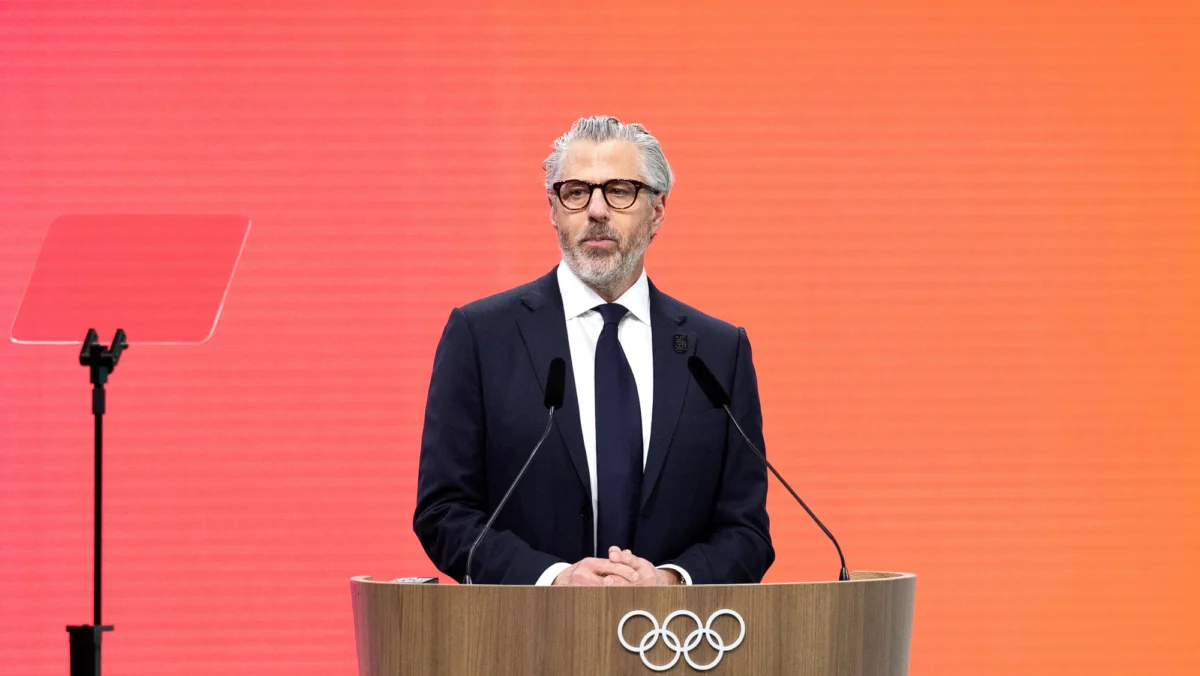
The landscape of Hollywood and global sports representation is facing a seismic shift as the auction for the company formerly known as Wasserman—now rebranded as The Team—moves into its first critical phase of bidding. Following months of internal turmoil and external pressure triggered by the release of Department of Justice documents linking founder Casey Wasserman to Ghislaine Maxwell, the industry is now witnessing a high-stakes scramble among talent giants and private equity firms. On Monday, the first round of non-binding bids was submitted to the investment bank Moelis & Co., marking the beginning of what could be one of the most significant consolidations in the history of talent representation.
The sale comes as Casey Wasserman, a figure long considered a pillar of the Los Angeles business and sports community, attempts to navigate the fallout from his inclusion in the Jeffrey Epstein files. The documents, which surfaced in early 2024, revealed flirtatious email exchanges between Wasserman and Maxwell dating back to 2003, as well as a 2002 flight to Africa alongside Epstein and former President Bill Clinton. While Wasserman has issued a formal apology and retained his position as the chairman of the LA28 Olympic Committee, the resulting "artist exodus" and reputational damage necessitated a radical strategic pivot, culminating in the decision to put his namesake empire on the auction block.
The Competitive Field: Suitors and Strategic Maneuvers
Among the most prominent names to emerge in the initial bidding round is United Talent Agency (UTA). Led by CEO David Kramer, UTA has been on an aggressive growth trajectory since 2022, when EQT Partners, a Swedish private equity firm, became its largest outside investor. UTA’s interest in Wasserman’s assets signals a desire to further bridge the gap between Hollywood representation and global sports management. However, industry analysts point to a significant hurdle regarding Brillstein Entertainment Partners, the prestigious management and production firm Wasserman acquired in 2023. Under the current Writers Guild of America (WGA) franchise agreement, talent agencies are strictly limited in their ownership of production entities to avoid conflicts of interest. Consequently, a UTA acquisition would likely require a divestment or a complex restructuring of the Brillstein division.
A compelling "dark horse" in the proceedings is WIN, the upstart representation firm founded by WME mogul Patrick Whitesell and former Endeavor executive Jason Lublin. Launched last year, WIN has already made waves by acquiring WME’s NFL talent business to form WIN Sports Group. Whitesell, a veteran of high-level agency warfare, is reportedly in active discussions with financial backers to fund a potential takeover. A successful bid by Whitesell would represent a full-circle moment in the industry, positioning a former Endeavor leader as the owner of its primary rival’s sports assets.
Noticeably absent from the bidding pool are Creative Artists Agency (CAA) and WME Group, the two largest entities in the "Big Three." Their absence suggests either a lack of appetite for the regulatory scrutiny a merger of this scale would invite or a strategic decision to wait for a potential breakup of the company into smaller, more manageable pieces.
The Catalyst: A Timeline of the Scandal and Rebranding
The momentum toward a sale began in earnest on January 31, 2024, when the latest tranche of documents from the Department of Justice’s Jeffrey Epstein investigation was unsealed. The files detailed correspondence between Wasserman and Ghislaine Maxwell, who is currently serving a 20-year sentence for sex trafficking. The revelations were met with immediate backlash on social media and within the entertainment industry.
In early February, the fallout turned into a tangible business crisis. More than 20 high-profile musical artists severed ties with the agency, citing the founder’s associations as the primary reason. The exodus included Grammy-winning singer-songwriter Laufey, breakout pop star Chappell Roan, indie-rock mainstay Best Coast, and prominent DJ John Summit. In the sports world, while many clients remained silent, U.S. soccer icon Abby Wambach publicly announced her departure, dealing a symbolic blow to the agency’s renowned women’s sports division.
By March, the company attempted to distance itself from its founder by rebranding as "The Team." The overhaul included a total teardown of the company’s digital presence and a pivot toward a collective identity. Despite these efforts, the pressure from minority investors and the reality of a damaged brand led to the engagement of Moelis & Co. to explore a full or partial sale.
Financial Architecture and Asset Valuation
The valuation of The Team is anchored by its sports division, which is widely regarded as the second-most powerful in the world, trailing only CAA. According to a June 2023 report from S&P Global, the sports unit generated approximately $266 million in revenue in 2024, accounting for nearly 30 percent of the company’s total annual intake. For comparison, CAA’s sports division generated $578 million in the same period.
The Team’s portfolio is the result of decades of aggressive "roll-up" acquisitions. Since its founding in 2002, the company has absorbed dozens of boutique agencies, creating a global footprint that spans the NBA, NFL, MLB, and international soccer. This was further bolstered by the 2021 acquisition of Paradigm’s music division, which provided a robust roster of touring artists, and the 2023 acquisition of Brillstein, which added a formidable management and production arm.
A critical factor in the sale is the role of Providence Equity Partners. The firm, led by Jonathan Nelson, took a significant stake in Wasserman in November 2022. Providence replaced previous investors RedBird Capital and Madrone Capital, who were forced to divest due to league-wide regulations prohibiting talent representatives from owning stakes in professional teams (RedBird owns AC Milan, while Madrone is linked to the Denver Broncos). While Providence initially expressed full commitment to the agency during the February scandal, the move toward an auction suggests a shift toward capital preservation and the pursuit of an exit strategy that maximizes the value of their investment.
Logistical Challenges: To Break Up or Sell Whole?
One of the primary questions facing Moelis & Co. is whether The Team is more valuable as a unified entity or as a collection of separate divisions. Casey Wasserman has historically championed a "one culture" approach, telling The Hollywood Reporter in 2023 that his acquisitions were not intended to operate as silos. "We’re one company and one culture working together on behalf of and for and with our clients," he stated at the time.
However, the current market may favor a breakup. Private equity firms like Goldman Sachs have shown a renewed interest in sports management, evidenced by their nearly $1 billion acquisition of Excel Sports Management in late 2024. Such firms may be interested in the sports division but wary of the volatile music industry or the production-heavy Brillstein unit. Conversely, a suitor like UTA might crave the sports roster but face the aforementioned regulatory hurdles with Brillstein.
The untangling process would be legally and operationally complex. Many of the agency’s contracts and internal service structures are integrated, meaning a "fire sale" of individual divisions could diminish the overall value of the assets.
Broader Implications for LA28 and the Industry
The sale of The Team also carries significant political and civic weight due to Wasserman’s role as the chairman of the LA28 Olympic Committee. Since leading the city’s successful bid in 2014, Wasserman has been the face of the upcoming Summer Games. While an internal review conducted by the law firm O’Melveny & Myers LLP concluded that Wasserman’s relationship with Epstein and Maxwell did not extend beyond what was publicly documented, the optics of a mogul selling his company under the shadow of scandal remain a point of discussion among Olympic stakeholders.
For the broader talent representation industry, the sale marks a period of intense consolidation. As private equity continues to pour capital into the "representation economy," the barriers to entry for smaller firms are rising. The outcome of the bidding process for The Team will likely set the benchmark for future valuations in the space and determine the hierarchy of power in Hollywood and professional sports for the next decade.
As the auction moves into subsequent rounds, the focus will shift from non-binding expressions of interest to rigorous due diligence. Whether the firm emerges as a rebranded subsidiary of a larger giant or is dismantled into its component parts, the era of Wasserman as a standalone, founder-led powerhouse appears to be drawing to a close. For now, the company continues to operate under its new moniker, listing open roles for AI engineers and content creators, signaling an attempt to project stability even as its future hangs in the balance of the boardroom.