The latest installment of Daredevil: Born Again, titled "The Grand Design," delves deeply into the complex web of relationships and consequences that define the characters’ lives. Written by Jesse Wigutow and directed by Angela Barnes, the episode primarily utilizes flashbacks to explore pivotal moments, revealing the intricate machinations that have led the characters to their current perilous situations. The narrative thread of survival and the determination to preserve life, even in the face of extreme adversity, forms the emotional core of this densely packed episode.

A Multifaceted Descent into Crisis
The episode opens with a somber and symbolic credit sequence, immediately transitioning to a beach scene that, as the narration suggests, carries the metaphorical weight of memory and mortality. This sets a tone of introspection and foreboding that permeates the entire hour. In the present timeline, the immediate aftermath of violence is palpable. Vanessa Marienberg is shown in critical condition in a hospital, her vulnerability a stark contrast to the explosive rage of Wilson Fisk. Fisk’s desperate attempts to reach her are forcefully restrained, highlighting his helplessness and the immediate stakes of her recovery. His explicit demand to Officer Powell for both Bullseye and Daredevil to be brought to him alive underscores a complex desire for control and retribution, rather than mere elimination.
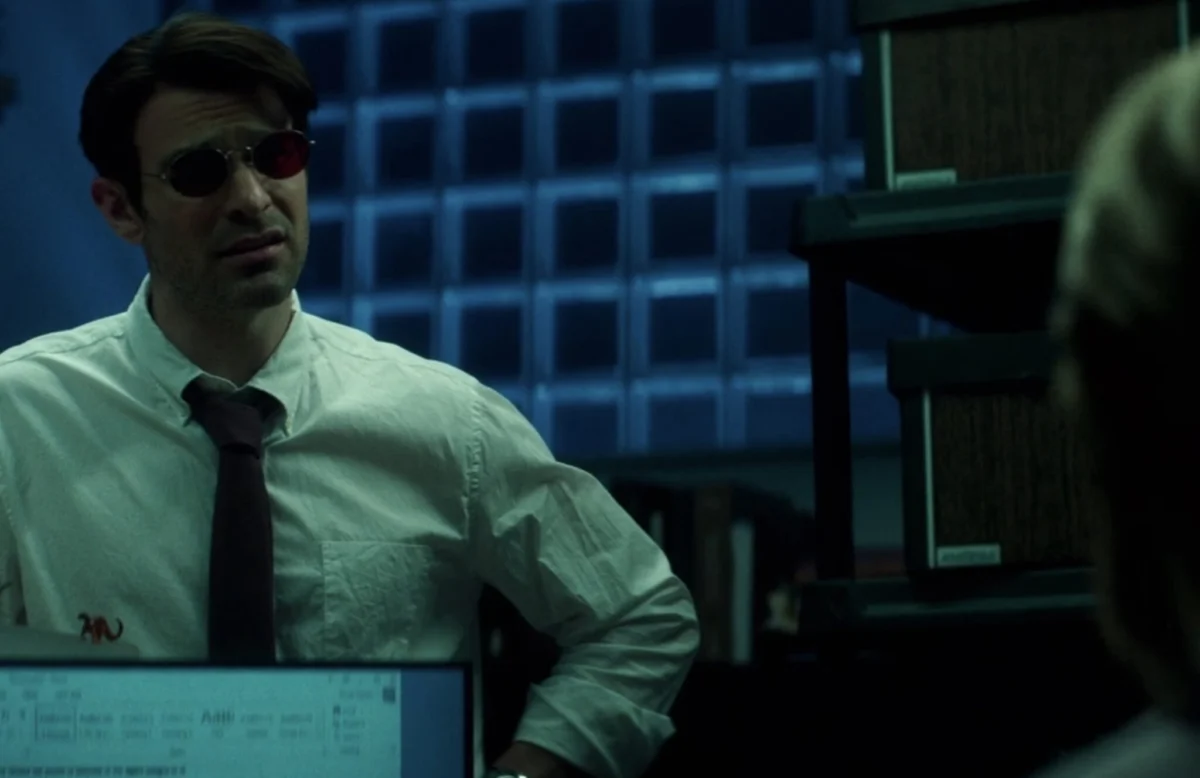
Simultaneously, Matt Murdock, operating as Daredevil, is engaged in a desperate act of preservation with a grievously wounded Dex (Bullseye). In a surprising turn, Daredevil actively seeks out prep towels in a restaurant kitchen to staunch Dex’s bleeding. This act, seemingly out of character for a vigilante engaged in combat, underscores Matt’s internal conflict and his unwavering commitment to his moral code, even when faced with the man who attempted to murder Vanessa. The episode masterfully juxtaposes Fisk’s fierce protectiveness over Vanessa with Daredevil’s determined effort to save Dex, revealing a shared, albeit differently motivated, drive to keep a specific individual alive.

Unraveling the Threads of the Past
The episode’s extensive use of flashbacks, marked by a shifting screen ratio, serves to re-contextualize current events by illuminating past decisions and relationships. These segments offer crucial insights into the motivations and histories of the key players.
Vanessa’s Early Encounters and Artistic Ambitions
A flashback transports viewers to a younger Vanessa, depicted with subtle de-aging visual effects, in an art gallery. Here, she encounters "Rabbit in a Snowstorm," a painting that resonates with her on a profound level. Her conviction that a man seeing his own emptiness reflected in the art would be compelled to buy it foreshadows her understanding of Wilson Fisk. Her proprietor’s dismissive attitude towards displaying the piece highlights Vanessa’s independent spirit and her keen eye for both art and human psychology, traits that would later draw her into Fisk’s orbit.

The Genesis of Nelson and Murdock
Another significant flashback revisits the nascent days of Nelson and Murdock, the law firm that would become a cornerstone of Matt Murdock’s life. The scene depicts Matt and Foggy Nelson grappling with an early case involving Lionel “Ray” McCoy, a man facing severe repercussions if incarcerated. Ray’s plea to the young lawyers, highlighting his fear of death and alluding to the powerful forces they unknowingly serve, serves as an early indicator of the corrupt undercurrents they would often confront. This period also establishes the foundational dynamic between Matt and Foggy, characterized by their shared idealism and occasional, humorous friction. The revelation of Matt’s casual acceptance of feet during a lighthearted discussion about their unpleasant former boss, Jeff Levine, injects a moment of unexpected levity and personal revelation, becoming a talking point for fans.
Fisk’s Strategic Diversification and the "Lion" Problem
In parallel, a present-day scene between Wilson Fisk and his trusted associate, Wesley, introduces a strategic business challenge. Fisk, seeking to diversify his assets amidst ongoing conflicts with Russian organizations, inquires about Bitcoin. Wesley, ever resourceful, reveals a solution involving a prominent art gallery owner, implicitly linking Fisk’s financial interests to the art world where Vanessa first made her mark. This subtly connects the present crisis to Vanessa’s past, hinting at the multifaceted nature of Fisk’s empire.

The Echoes of Violence and Moral Compromise
The present-day narrative continues to be defined by the immediate consequences of violence and the difficult choices it necessitates.
Daredevil’s Internal Struggle with Dex
The tense confrontation between Daredevil and Dex in a city tunnel explicitly addresses the moral complexities of their conflict. Matt’s repeated insistence that he is trying to save Dex because he tried to kill him, rather than in spite of it, highlights the core of his struggle. Dex’s nihilistic perspective, framing their actions as a futile battle against innate natures, offers a chilling counterpoint to Matt’s unwavering commitment to a higher moral standard, even when it means saving his would-be assassin. The episode’s pacing here, intercutting the present struggle with flashbacks of Nelson and Murdock’s early legal battles, emphasizes the long-standing themes of justice, mercy, and the interconnectedness of their lives.

Buck’s Calculated Manipulation
The subplot involving Buck and Daniel further explores the darker side of Fisk’s influence. Buck’s seemingly menacing behavior towards Daniel, including the purchase of a shovel and buzzsaw, is revealed to be a calculated tactic to instill loyalty and assert dominance. The flashback to Buck being assigned by Wesley to kill Ray McCoy, only to find him gone, highlights Buck’s direct lineage to Fisk’s operations and his past failures. This connection, while intended to establish Buck’s credentials, is critiqued in the analysis as potentially repetitive and lacking narrative innovation.
A Tragic Climax and Lingering Questions
The episode culminates in a series of devastating events that reshape the landscape of the narrative.

Vanessa’s Fatal Decline
Vanessa awakens after surgery, and her brief moments of lucidity are laced with subtle indicators of a deteriorating condition. Her seemingly innocuous request for pineapple juice, a known allergen, and her repeated requests for the story of how she and Wilson met, suggest a profound cognitive impairment or a deliberate deception. The flashback to her displaying "Rabbit in a Snowstorm" and the earlier mention of Fisk’s desire to diversify funds through art acquisition are juxtaposed with her present state. The heartbreaking realization that her memory is failing and her subsequent seizure lead to her tragic death, leaving Wilson Fisk utterly devastated.
The Aftermath and Emerging Threats
In the present, the news of Vanessa’s critical condition leaks to the press, drawing immediate media attention and highlighting the precariousness of Daniel’s situation. Buck’s reassurances to Daniel about Fisk’s awareness of their activities offer a sliver of confidence, but the subsequent purchase of a shovel and buzzsaw paints a grim picture of their destination. The episode concludes with Matt bringing Dex to Karen’s location, a move met with Karen’s visceral disapproval, setting the stage for future conflict and reinforcing the complex moral and ethical dilemmas Daredevil faces.

Critical Analysis and Thematic Resonance
The episode’s reliance on flashbacks, while providing necessary context, has been noted for its potential to feel overly explanatory or even "grotesque and cheap" if not handled with precision. The visual effects used for de-aging actors, particularly Ayelet Zurer as Vanessa, have drawn criticism for their uneven application and perceived sexism, with the male actors appearing less smoothed out. The narrative’s interconnectedness of flashbacks, while aiming for a cohesive tapestry, has been criticized for feeling forced, particularly the linkage of Buck’s assignment to kill Ray McCoy with Fisk’s broader operations.
The depiction of Vanessa’s death, particularly the alleged manipulation through a "fake-out" to elicit Fisk’s extreme emotional response, has been a point of contention, with critics arguing it felt like cheap emotional manipulation rather than organic character development. The lack of deeper exploration into Vanessa’s personal history, beyond her initial encounter with Fisk and her artistic inclinations, has been highlighted as a missed opportunity, especially given her pivotal role as a love interest.

Despite these criticisms, the episode is lauded for Vincent D’Onofrio’s masterful portrayal of Wilson Fisk. His nuanced performance, particularly the shift in his voice when reacting to Vanessa’s condition, is highlighted as a significant strength, drawing viewers into the character’s profound grief and emotional fragility. Elden Henson’s portrayal of Foggy Nelson also receives praise, with his compassionate and earnest interactions, particularly with Ray McCoy, serving as a poignant reminder of his character’s inherent goodness. The scene with Matt and Foggy discussing their early legal struggles and their differing views on mercy and justice, even with the unexpected foot fetish tangent, is seen as a testament to their enduring friendship.
The episode’s exploration of "The Grand Design" theme, as echoed by both Vanessa and Matt’s understanding of fate and intent, serves as a unifying element. It suggests that characters are either acting out a preordained plan or making choices that have far-reaching, often tragic, consequences. The implications of Vanessa’s death are significant, promising to destabilize Fisk and potentially trigger a wider manhunt for Daredevil and Bullseye, even as the city already operates under martial law. This heightened sense of crisis underscores the show’s ongoing critique of societal control and the pervasive influence of powerful figures like Fisk.

As the season progresses with only four episodes remaining, the fates of characters like BB and Daniel hang in the balance, representing a crucial narrative hinge. The question of whether Daniel will fully succumb to Fisk’s influence or if BB can "deradicalize" him presents an intriguing, albeit potentially crowded, narrative arc. The episode’s conclusion leaves viewers with a sense of profound loss and anticipation, as the consequences of "The Grand Design" continue to unfold.