Caroline Golum’s critically acclaimed 14th-century chamber piece, Revelations of Divine Love, offers a meticulously crafted and stylistically distinct portrayal of Julian of Norwich, a pivotal figure in English religious and literary history. The film, celebrated for its innovative use of homespun props, costumes, and miniatures, has garnered significant attention, culminating in a limited theatrical release in New York City and a forthcoming world premiere at FIDMarseilles 2025. Its unique aesthetic and profound subject matter have prompted insightful discussions with prominent filmmakers, including Sofia Bohdanowicz and the Canadian surrealist Guy Maddin, delving into the film’s thematic depths, the challenges of independent filmmaking, and the enduring resonance of medieval mysticism.
The Genesis and Vision Behind Revelations
The inspiration for Revelations of Divine Love struck filmmaker Caroline Golum in the spring of 2017. Her then-roommate, Dr. Lawrence Bond, PhD, introduced her to Julian of Norwich through an academic paper, sparking an immediate and profound obsession. Golum, known for her distinctive approach to filmmaking, felt compelled to translate Julian’s extraordinary story to the screen, a process she describes as a form of therapeutic release from intense fascination. "The way that I operate, as far as I can tell, is that I become obsessed with something, and then the only way that I can rid myself of that is to make the movie," Golum stated. This deep personal connection to the subject matter is evident in the film’s execution, which immerses viewers in the ascetic yet vivid world of its protagonist.
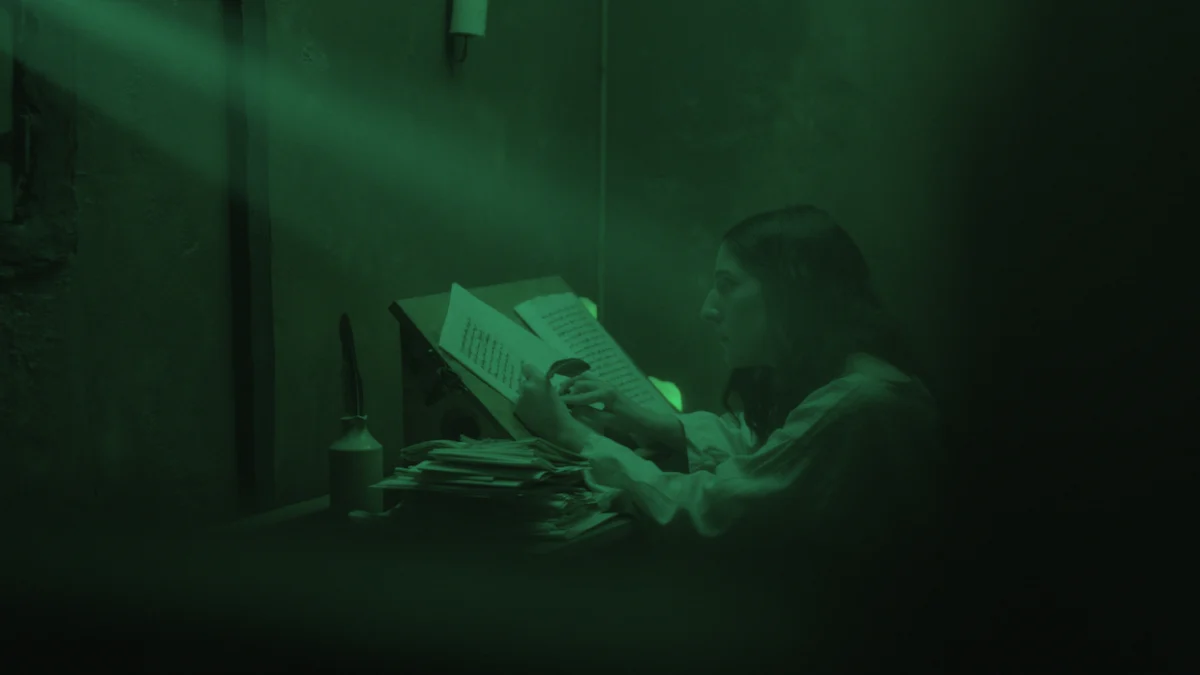
The film chronicles the life and spiritual journey of Julian of Norwich, portrayed by Tessa Strain, following a severe illness in mid-life. During a three-day period of intense fever in 1373, Julian experienced a series of profound and vivid visions depicting the crucifixion of Christ. Upon her recovery, she dedicated her life to the Catholic Church, vowing to live as an anchoress, voluntarily entombed in a single room to devote herself entirely to prayer and the meticulous documentation of her divine encounters. This commitment led to the creation of Revelations of Divine Love, a text widely recognized as the first book written in the English language by a woman, cementing Julian’s legacy as both a mystic and a literary pioneer.
Julian of Norwich: A Historical Figure and Her Context
Julian of Norwich lived during a tumultuous period in English history, marked by widespread social upheaval, political instability, and the devastating impact of the Black Death. Born around 1342 or 1343, she would have been a child during the initial wave of the plague in 1348, an experience that undoubtedly shaped her worldview and spiritual consciousness. The Black Death, which recurred in subsequent waves due to sophisticated trade networks and a lack of germ theory, inflicted immense suffering and death across Europe. While people in the 14th century understood the concept of quarantine—a practice deriving from the Italian "quaranti" for 40 days of ship isolation—the precise mechanisms of disease transmission remained unknown.
This pervasive backdrop of death and uncertainty deeply influenced religious thought and personal spirituality. Golum notes that Julian’s descriptions of Christ’s face "ravaged with pustules and bleeding and all fucked up" in her visions, though unfilmed for budgetary and tonal reasons, vividly illustrate the era’s visceral understanding of suffering and divine intervention. This context suggests that Julian’s visions were not mere hallucinations but deeply ingrained spiritual experiences informed by the collective trauma and fervent faith of her time.
The role of the Roman Catholic Church in the 14th century was profoundly pervasive, serving as the central pillar of societal structure, moral authority, and intellectual life. Golum draws a compelling parallel between the church’s omnipresence then and the internet’s ubiquitous influence today. Just as the internet is accessed through specific devices but remains a constant, pervasive force in modern consciousness, the medieval church permeated every aspect of daily life. From formal worship in cathedrals to personal devotion with religious objects at home, the church’s teachings and authority were inescapable. This comparison highlights the fundamental difference in how religious experiences were perceived: in an era where the divine was seen as an active, tangible force, visions were often accepted as genuine encounters rather than psychological phenomena, a perspective Golum deliberately adopts in her film.
A Distinctive Cinematic Language
Revelations of Divine Love stands out for its "aggressive take" on period filmmaking, as described by Guy Maddin. Eschewing conventional historical accuracy for a more impressionistic and handcrafted aesthetic, Golum employed "impressively homespun props, costumes, and miniatures," along with sets "made out of carved foam" and "digital Quay Brothers calligraphy" for titles. This deliberate choice creates a unique visual language that is both anachronistic and deeply evocative, allowing the film to transcend a purely historical recreation.
Maddin, whose own work is characterized by its surreal, collage-like quality and often nostalgic, dream-like atmospheres (My Winnipeg, The Forbidden Room), expressed profound admiration for Golum’s approach. He lauded the film as "beautiful and really smart," a contrast to his own self-described goal of making something "beautiful but stupid." This exchange underscores Golum’s intellectual rigor and artistic courage in crafting a period piece that is not merely accurate but interpretative, engaging with its subject matter on a deeper, more conceptual level.
A tangible example of this handcrafted approach is the hazelnut prop featured in the film. Golum revealed that this specific hazelnut was taken from Julian’s shrine in Norwich, where a dish of them is kept. This personal artifact, carried by Golum for years, imbues the film with an authentic, almost relic-like connection to its historical inspiration, further blurring the lines between art, history, and personal obsession. Golum asserts that this anachronistic yet deeply felt aesthetic ensures the film is not "written off right away" but rather engaged with on the terms of its historical era, even through a modern lens.

Dialogue Between Auteurs: Golum and Maddin
The film’s journey has been marked by significant critical engagement, including two notable interviews. Initially, Canadian independent filmmaker Sofia Bohdanowicz (Measures for a Funeral, MS Slavic 7) interviewed Golum ahead of Revelations’ world premiere at FIDMarseilles 2025. Bohdanowicz observed a "real parallel between Julian removing herself from the world to commune with God and the act of making a film," a sentiment Golum humorously acknowledged with "No shit, dude," highlighting the shared, often isolating, nature of profound creative pursuits.
More recently, Canadian surrealist Guy Maddin conducted an interview with Golum as the film embarked on its limited release in New York City. This conversation, rich in mutual appreciation and intellectual exchange, offered a rare glimpse into the minds of two distinctive filmmakers. Maddin, known for his self-effacing humor and extensive filmography spanning nearly 40 years, found particular resonance in Golum’s portrayal of religious mysticism, drawing parallels to figures like the Argentine writer Theresa Wilms Mont, whose "passionate and insane" writing he believes Luis Buñuel, a devout atheist, would nonetheless adore for its surreal gorgeousness.
Their discussion traversed various themes, from the spiritual dimensions of filmmaking to personal histories. Golum, raised in a "tribally Jewish" but Reformed, often atheist, household, shared her perspective on the cultural utility of religious education—providing a "toolkit for when you have to deal with a birth, a marriage or a death"—while expressing her aversion to traditional organized religion and her pride in the progressive contributions of the Jewish diaspora. Maddin, reflecting on his own "nutty" upbringing and the process of self-discovery through art, noted how his early films, made from dreams, revealed "queer" themes he hadn’t consciously intended. Both filmmakers agreed on the therapeutic, almost trance-like, nature of filmmaking, particularly when driven by intense obsession. Golum articulated the "fun" of the labor-intensive process, the satisfaction of seeing "hairbrained ideas" like carved foam stone or potato flake snow come to fruition.
Thematic Depths: Faith, Obsession, and Human Connection
Revelations of Divine Love delves into profound questions of faith, visionary experience, and the human condition. Golum’s decision to present Julian’s visions at face value, rather than pathologizing them as hallucinations, is a deliberate artistic choice that invites the audience to engage with the historical context and the spiritual sincerity of Julian’s journey. This approach, as Maddin rightly observed, is a "very smart decision" that grounds the film in the historical reality of medieval belief systems.
The film’s exploration of medieval mysticism also serves as a lens through which to examine contemporary spiritual and societal phenomena. Golum, for instance, draws a compelling, if unsettling, parallel between medieval religious visions and the "psychosis episodes" some individuals experience when interacting with generative AI models like ChatGPT. Just as medieval society grappled with interpreting divine messages, modern society confronts the "hallucinations" of AI, which merely regurgitate information rather than generate true understanding. This connection highlights the enduring human quest for meaning and the challenges of distinguishing authentic experience from manufactured reality across different eras.
Golum’s sustained "obsession" with the Middle Ages, which she describes as "bewitching" and "high-effort stuff," underscores the powerful allure of historical narratives and the artistic drive to explore them. The "gruesome and grizzly" aspects of medieval Catholic art initially drew her in, but she found "so much more there than just the blood," suggesting a deeper appreciation for the complex interplay of faith, suffering, and transcendence that defines the era. This personal connection to the subject matter elevates Revelations of Divine Love beyond a mere historical retelling, transforming it into a personal meditation on enduring themes.
Release, Reception, and Future Endeavors
Revelations of Divine Love held its world premiere at FIDMarseilles 2025, a prestigious international film festival known for showcasing innovative and independent cinema. Following this, the film has embarked on a limited theatrical run in New York City, distributed by Several Futures. It opened at the venerable Anthology Film Archives for a weekend run starting March 27, and is slated for further screenings at Roxy Cinema on the weekend of April 17, and Spectacle Theater on the weekend of April 24. The film has already garnered local attention, with several cameos from New York’s film scene—critics, programmers, directors, and cinema stalwarts—underscoring its integration into the vibrant independent film community. The extended theatrical engagements signify a positive reception, allowing more audiences to experience Golum’s distinctive vision.
Looking ahead, Caroline Golum remains committed to her "obsessive" and diverse approach to filmmaking. Despite her deep immersion in the Middle Ages for Revelations, she intends for her next project to be markedly different. She announced her intention to direct "a Jerry Lewis movie that’s a satire of the manosphere," signaling a shift towards contemporary social commentary delivered through a distinct comedic lens. This forthcoming project promises to continue Golum’s trajectory of creating films that are both intellectually stimulating and aesthetically daring, solidifying her reputation as a singular voice in independent cinema. The journey of Revelations of Divine Love—from a spark of obsession to critical acclaim and thoughtful dialogue—exemplifies the power of dedicated artistic vision in exploring history, faith, and the enduring complexities of human experience.