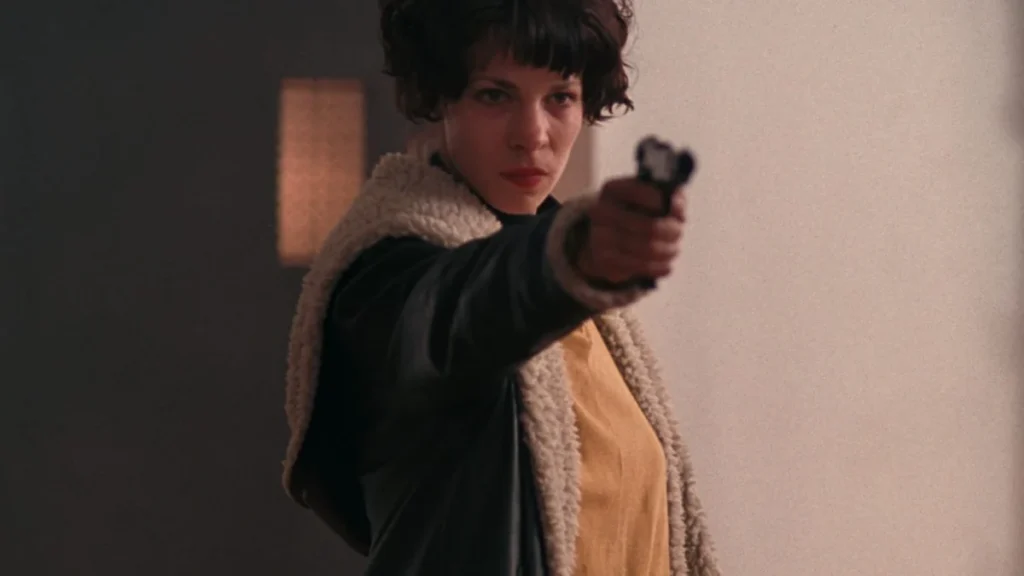
The premiere of Damian McCarthy’s latest feature, Hokum, at the South by Southwest (SXSW) Film Festival proved a resounding success, with audiences at the Austin, Texas event reacting viscerally to the film’s meticulously crafted scares. Screams mingled with nervous laughter throughout the theater as festivalgoers frequently jumped in their seats and covered their eyes, testament to McCarthy’s unique ability to create a "tightly wound trap" on screen, springing surprises—sometimes quite literally—upon an unsuspecting audience. The Irish writer-director, now a prominent voice in contemporary horror, characterizes his films as "classic ghost stories," designed to evoke the primal fear of searching for unseen faces in the shadows long after the credits roll. These are elemental tales, impeccably executed, and demonstrably effective in their entertainment value.
Hokum marks a significant milestone in McCarthy’s burgeoning career, being his third feature-length film and his first collaboration with a major Hollywood actor, Adam Scott. Scott, known for his versatile performances across comedy and drama, stars as Ohm Bauman, an acerbic novelist who becomes entangled in the film’s central mystery. McCarthy’s journey to this point is a compelling narrative of perseverance and self-reliance, beginning with decidedly humble origins. Prior to his cinematic breakthroughs, he supported himself as an electrician, meticulously honing his craft by producing microbudget short films. This hands-on, resourceful approach culminated in his critically acclaimed first feature, Caveat, released in 2020. This was followed by Oddity in 2024, a film that further solidified his reputation, building upon the eerie atmospherics and intricate "trap-door mechanics" that became hallmarks of his style, earning praise as one of the year’s best horror films.
A Deep Dive into the Narrative and Production of Hokum
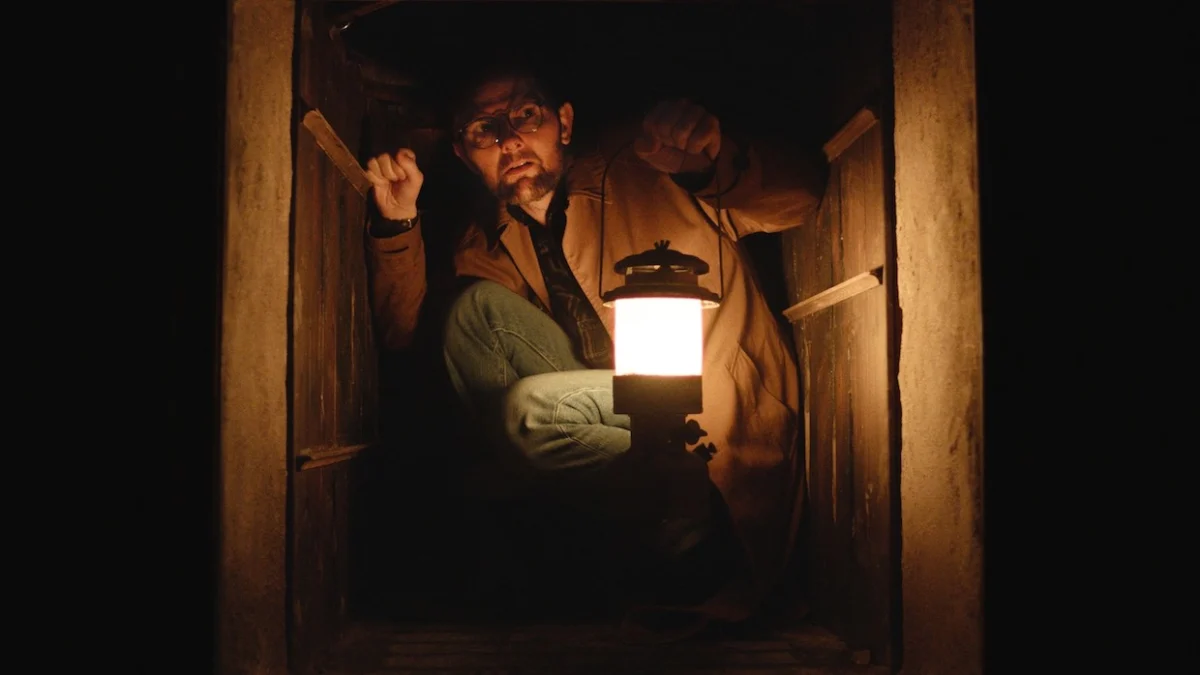
Hokum seamlessly integrates these signature traits, particularly McCarthy’s pervasive preoccupation with folklore, a recurring motif throughout his body of work. This thematic thread, the filmmaker explains, is a direct byproduct of his upbringing in rural Ireland, a landscape characterized by vast, winding roads that stretch into desolate, often isolated, expanses. The film itself is steeped in this cultural heritage, unfolding on Halloween—a holiday with deep roots in Irish tradition—within the confines of a supposedly haunted hotel nestled in the Irish countryside. This evocative setting, adorned with intricate wood carvings and bathed in flickering autumnal light, serves as the stage for Scott’s character, Ohm Bauman. Bauman is drawn into a chilling mystery that leads him from the hotel’s dimly lit bar to its long-abandoned honeymoon suite. It is here that he uncovers a hidden dumbwaiter, which descends into the hotel’s claustrophobic basement, a place rumored to be the lair of a malevolent, soul-snatching witch.
The success of Hokum and its predecessors has enabled McCarthy to transition to filmmaking full-time, a testament to his dedication and talent. The film’s journey towards a wide release in the United States is being managed by NEON, a prominent distributor known for its discerning taste in independent and genre cinema, which acquired the film in August of the previous year. McCarthy’s early, shoestring experiences have profoundly shaped his filmmaking philosophy, instilling a rigorous process that continues to benefit him, even with increased resources. In a recent interview with Filmmaker magazine, McCarthy articulated the "preparation, passion, and precision" that underpin his craft, offering invaluable insights into his creative methodology.
The Methodical Approach to Crafting Fear
When questioned about his discipline, McCarthy readily affirms his methodical approach. "There’s not really a looseness to [my films]," he states, emphasizing that camera movements are only executed when "absolutely necessary." While moments of cinematic chaos may emerge, they are always "intentional," carefully orchestrated rather than spontaneous. This intentionality stems from his comprehensive storyboarding process. Although extensive rehearsals are not his primary method, McCarthy engages in thorough discussions with his actors, meticulously reviewing scripts to preemptively identify and resolve potential issues. This upfront collaborative dialogue ensures a disciplined foundation for the production.
McCarthy’s commitment to a tightly controlled vision extends to the avoidance of improvisation on set. While acknowledging that actors invariably "bring something great you hadn’t thought of," he finds these contributions emerge primarily during preliminary discussions rather than spontaneous on-set deviations. He underscores the importance of a meticulously laid "plan," not as an rigid dogma, but as a robust framework from which to operate. This allows for flexibility, acknowledging that "things change on the day," and embracing the philosophy that "the best idea wins." This adaptable yet structured approach is a direct legacy of his independent filmmaking roots.
Lessons from Microbudget Filmmaking
The discipline evident in McCarthy’s current work is deeply rooted in his early experiences. He recalls the necessity of rigorous planning during the production of his initial short films, such as He Dies at the End and Hatch. These projects were often shot under extreme time constraints, utilizing locations generously provided by friends or local businesses for limited hours—for instance, a bar granted from midnight until 10 AM. In such scenarios, McCarthy explains, "you don’t have time to figure out where to put the camera. Then you really have to show up storyboarded." The constraint was never a budget issue, as funding was virtually non-existent, but rather a severe limitation of schedule and time. Six-hour shooting windows demanded unparalleled preparation.
This ethos seamlessly transitioned into the making of Caveat, which operated on an "absolutely tiny" budget with a core crew of only four or five individuals. McCarthy had to know "exactly what we were filming because we just didn’t have time or resources to think too much about it." This unwavering commitment to preparation has persisted throughout his career. Even on Hokum, despite greater support and experienced personnel, the "clock is always ticking," reinforcing the enduring value of his ingrained discipline.
The Art and Science of Editing Horror

The editing suite is a crucible for horror, and McCarthy’s hands-on involvement is evident. Brian Phillip Davis, who edited both Oddity and Hokum, shares McCarthy’s passion for the genre, fostering a synergistic working relationship. McCarthy, having edited all his short films and Caveat over a year of weekends and after his day job, brings a deep understanding of the editorial process. His experience in "cutting around things that maybe aren’t coming together" allows him to offer informed suggestions and solutions. Together, they have established a "good rhythm," exchanging references and refining their craft. McCarthy emphatically states that with horror, "it’s all in the edit," where subtle adjustments—removing frames, altering pacing, or holding a beat longer—can dramatically amplify the terror.
When asked whether editing horror is a science or an art, McCarthy firmly declares it an "art." He describes the often-frustrating process of watching a scene where a scare isn’t landing despite excellent performance, only to discover that removing "a frame or two" suddenly makes it effective. He actively seeks to understand why these minute changes have such a profound impact, speculating on subtle shifts in an actor’s movement, a blink, or even a slight change in light. These almost imperceptible elements, he notes, can significantly alter the audience’s perception. The duration of a shot is equally critical; holding a shot longer signals impending dread, engaging the audience in a psychological game of anticipation. This delicate balance, playing with audience expectations, is central to McCarthy’s craft, alongside the occasional, unannounced jump scare, deployed "just to put people on edge."
Embracing and Elevating the Jump Scare
The jump scare, a contentious element within the horror genre, finds a defender in McCarthy. He acknowledges that they can be perceived as "cheap" but argues for their validity when "earned," emphasizing that "it’s all about what leads up to it." He points to his early short film, He Dies at the End, a four-and-a-half-minute piece featuring his best friend sitting at a computer, anticipating a scare. Despite a "ridiculous-looking" monster that was "objectively… not scary," the film generated intense tension, nervous laughter, and ultimately, effective scares followed by immediate laughter. This experience taught him the profound importance of buildup. The lesson he carried forward is clear: maximize suspense before the release. While primarily focused on this earned tension, he also admits to employing "out-of-nowhere jump scares" simply to keep the audience "on their toes."
The Primal Power of Darkness and Sound
Darkness and shadow are fundamental tools in McCarthy’s arsenal, tapping into a "basic primal fear" of the unknown. His films intentionally evoke the feeling of a "classic ghost story," illuminated as if by lamplight or firelight, creating a pocket of safety surrounded by an ominous void. This aesthetic, he explains, encourages the audience’s eyes to "wander around the screen and see if they can find something hiding in there." Hokum specifically exemplifies this, transitioning from a wide, sun-drenched desert landscape in its opening to Adam Scott’s character descending into claustrophobic darkness, systematically building an oppressive sense of dread.
Sound design, often an unsung hero in horror, is paramount for McCarthy. He firmly believes that "if a film is scaring you, turn off the sound and it’s no longer scary. I don’t care what’s happening on the screen. It’s all sound." His collaboration with Joseph Bishara, responsible for the film’s "amazing" score, and Steve Fanagan, the "wonderful sound designer," was key. Their approach centered on layering, beginning with the playful, almost "cartoonish" sounds of someone "pretending they’re a ghost," and then building backward. This involved intricate layering of wind effects, manipulated speeds, whispered voices that leave the protagonist (and audience) questioning what they heard, the creaking of the old building, and the cries of animals like foxes. For McCarthy, Hokum was the film he had "been waiting to make" from a sound design perspective, underscoring his belief that it is an "undervalued" element, especially in horror.
Folklore and the Weight of Irish Heritage
The pervasive presence of folklore in McCarthy’s films is a natural extension of his upbringing. Living in rural Ireland, stories of banshees, the puca, and other mythological creatures were simply part of the cultural fabric. Even in school, learning the Irish language involved immersion in "old myths and folklore." This rich heritage invariably "finds its way somehow into the films," especially Hokum. McCarthy, who now resides in Cork, grew up in Bantry, a region with only a few houses, and his family hails from the tiny village of Glengarriff, a place he describes as beautiful but desolate, with "nothing there." The opening sequence of Hokum, featuring Adam Scott’s car traversing the rolling, empty hills, directly reflects this landscape, underscoring the isolation that fuels many local legends.
A recurring thematic element in McCarthy’s work is the "punishment of the wicked." Across his three features, the antagonists are consistently portrayed as "cowardly, pathetic men" who ultimately face supernatural retribution. This serves to create a dual threat for the protagonist—both a supernatural entity and a tangible, real-world villain. McCarthy attributes this motif to his upbringing in "Catholic Ireland," where narratives of moral consequence and divine, or supernatural, judgment are deeply ingrained. He wryly confirms this interpretation, noting that in Hokum, a character is "dragged off to hell, literally," affirming the acute observation of a critic who noted the film’s "very Catholic" undertones.
Broader Implications and the Future of Independent Horror
Damian McCarthy’s journey from electrician to acclaimed horror director, culminating in the SXSW success and NEON acquisition of Hokum, offers significant implications for the independent film landscape. His story is a powerful testament to the fact that compelling storytelling and meticulous craft, even on limited budgets, can capture critical attention and secure major distribution. In an era where genre films, particularly horror, are increasingly recognized for their artistic merit and commercial viability, McCarthy’s work stands out for its intellectual rigor and effective scares.
NEON’s acquisition of Hokum further highlights the distributor’s commitment to unique, director-driven visions, a strategy that has previously yielded critical and awards success for films like Parasite and Titane. This partnership promises Hokum a wider audience, demonstrating the continuing appetite for sophisticated, atmospheric horror that prioritizes psychological tension and rich thematic depth over mere shock value. McCarthy’s adherence to classic ghost story tropes, combined with a contemporary sensibility and technical precision, positions him as a significant figure in the evolving narrative of horror cinema, inspiring a new generation of filmmakers to explore the dark corners of human and supernatural fears with renewed artistry.