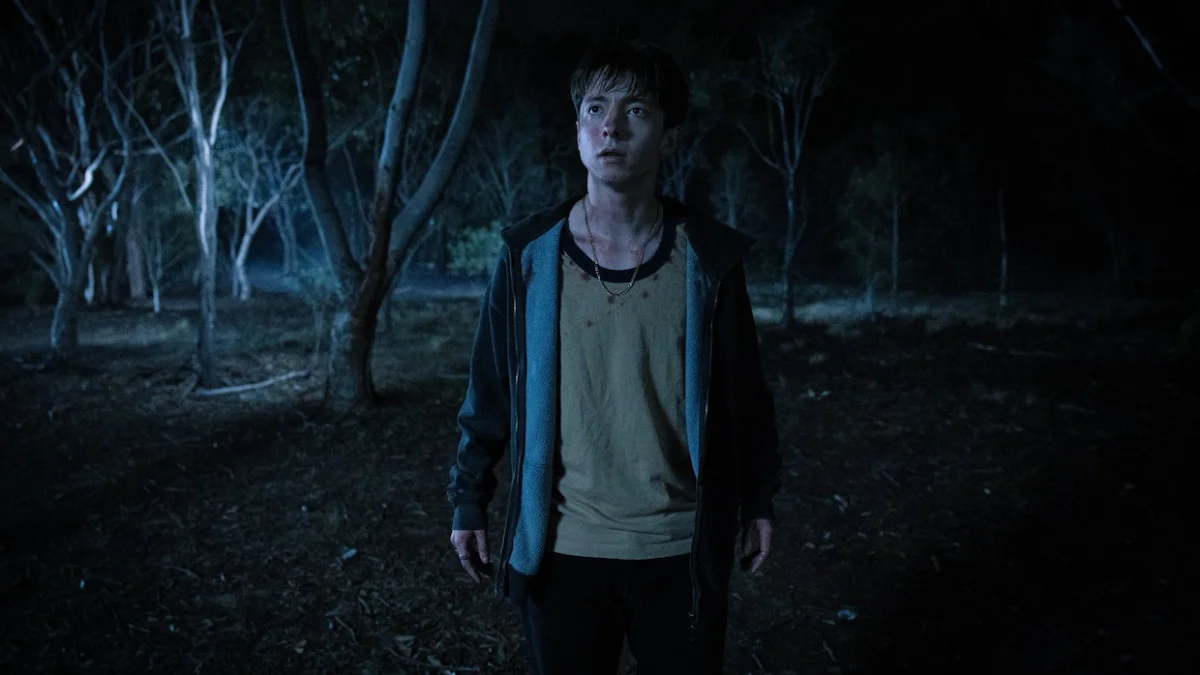
Adrian Chiarella’s debut feature, Leviticus (2026), emerges as a potent and timely entry into the queer horror genre, leveraging its conventions to confront the pervasive anxieties and systemic bigotry faced by LGBTQ+ youth. The film opens with a chilling, archetypal horror scenario: a "little death" that inexorably leads to a larger one. A lesbian lifeguard, lured by the seductive whispers of an unseen lover in a poolside shower, finds her moment of illicit pleasure brutally cut short by murder. This sinister entity, capable of manifesting as its victim’s deepest desire, is revealed to be the byproduct of a hex inflicted upon gay teenagers by a local church, framed as a form of conversion therapy. This foundational concept, a shrewd subversion of horror’s traditional association of teenage sexuality with death, directly embodies the oppressive dictum frequently used to control queer individuals: that their desires are inherently destructive.
The Genesis of a Modern Parable: Homophobia as a Literal Monster
Chiarella’s creative impetus for Leviticus was a direct response to the discernible rise in anti-LGBTQ+ bigotry and a perceived regression from the advancements made in recent decades towards the elusive ideal of queer security and safety. "I started thinking about what would be personal for me," Chiarella reflects, highlighting a deeply personal connection to the project. "Horror movies were something that I turned to as a young queer teenager. I don’t think I was alone in that. The genre has been important to the community for a very, very long time." This sentiment underscores a historical truth: for generations, horror cinema has provided a veiled language for the queer experience, allowing for exploration of otherness, fear, and hidden identities in a world often hostile to them.
The film’s title itself, Leviticus, immediately invokes the biblical book frequently cited in condemnations of homosexuality, setting a stark theological backdrop for the narrative. The hex, therefore, is not merely a supernatural device but a direct manifestation of weaponized religious doctrine, translating abstract prejudice into a tangible, deadly threat. This metaphor for homophobia – depicted as a permeant, inescapable force that twists private desire into public fear – functions as a blunt instrument of identification, a brute-force appeal for empathy in an increasingly callous age.
Chiarella openly acknowledges his debt to genre classics, waxing nostalgic about the Nightmare on Elm Street series. He specifically references Freddy’s Revenge (1985), widely interpreted as an allegory for life in the closet, and John Carpenter’s The Thing (1982), which he notes "plumbs the tension between the self and the other, not really knowing if you can trust the person in front of you." These films, forbidden to him in his youth, only amplified their allure, cementing the genre’s subversive appeal. Leviticus draws from this lineage, using the genre’s inherent capacity for allegorical storytelling to dissect contemporary queer anxieties.
The Scars of Conversion Therapy: Data and Reality
The central premise of Leviticus — a hex born from the horrors of conversion therapy — is not merely a fantastical plot device but a chilling reflection of a documented and harmful practice. Conversion therapy, which encompasses a range of pseudoscientific and often abusive interventions aimed at changing an individual’s sexual orientation or gender identity, has been widely discredited by every major medical and mental health organization worldwide, including the American Medical Association, the American Psychological Association, and the World Health Organization. These organizations consistently affirm that such practices are ineffective, unethical, and profoundly damaging, leading to severe psychological distress, depression, anxiety, and even suicide.
Despite this overwhelming consensus, conversion therapy continues to be practiced globally, often under the guise of religious counseling, particularly in conservative communities. Studies have shown that LGBTQ+ youth who experience rejection from their families or communities, or are subjected to conversion efforts, are significantly more likely to attempt suicide. For instance, a 2019 study by The Trevor Project found that LGBTQ youth who reported undergoing conversion therapy were more than twice as likely to report attempting suicide in the past year. This real-world context lends a visceral weight to the film’s monstrous creation, grounding its supernatural terror in the very real trauma inflicted by societal and religious condemnation. The hex in Leviticus embodies the internalised homophobia and self-hatred that such practices seek to instill, making the monster not just an external threat but a manifestation of the victims’ own weaponized desires.
A Narrative of Isolation and Betrayal in the Australian Boondocks
While drawing on broad genre inspirations, Leviticus firmly roots its narrative in a specific, tersely tender parable. Spiritually and spatially confined to an industrial town nestled in the Australian boondocks, and the oppressive, cult-like religious community that constricts it, the film follows Naim (Joe Bird), a shy new arrival. Naim quickly becomes enamored with his brashly charismatic classmate, Ryan (Stacey Clausen). Their burgeoning romance is encapsulated in a pivotal scene where Ryan, pinning Naim to the floor of an abandoned building, taunts, "Is there anything you’re not afraid of?" Their macho skirmish culminates in a kiss, but in that intimate moment, Naim catches his own reflection and recoils, a visceral demonstration of the self-loathing and fear of identity that grips the film’s queer characters.
The plot intensifies with the introduction of Hunter (Jeremy Blewitt), the preacher’s closeted son, who violently interjects into Naim and Ryan’s burgeoning romance. Naim, consumed by jealousy, commits a fateful transgression: he tattles, hoping for a lesser punishment than outright exorcism for Ryan, only to spend the remainder of the film grappling with the devastating consequences. Chiarella explains this narrative choice, stating, "Horror movies are always about someone committing a transgression, and whatever horrible thing that comes after is because of this." In Leviticus, Naim’s act of betrayal unleashes a chain of events that highlights the desperate, life-or-death necessity of queer camaraderie in the face of escalating peril.
The monster’s unique nature—it strikes only when victims are alone, yet can perfectly mimic a loved one when one’s back is turned—forces Ryan and Naim into a painful separation, a chilling commentary on the isolating effects of fear and mistrust. Their quest for understanding leads them to the partner of the woman killed in the opening scene, now a reclusive figure haunting a local hospital. In a brutal subversion of the "crazed recluse" trope, this woman, paradoxically, must surround herself with people to survive, yet finds herself more profoundly alone than ever. This mirrors the protagonists’ predicament, trapped in a web of false allyship and predatory affection. Hunter’s sister extends a deceptive olive branch, only for her true manipulative nature to be revealed. Even Naim’s mother (Mia Wasikowska) offers a brief, devastating gesture of care that immediately follows a moment of profound betrayal. Her chilling pronouncement to her terrified son, "We need fear," blurs the line between protection and oppression, cementing Chiarella’s intent: "I wanted to create a world where you weren’t sure you could trust even the real people around you anymore."
Visual Language and Setting: A Landscape of Despair and Denial
The film’s visual language and production design are integral to conveying its pervasive sense of dread and isolation. The isolated boys drift through barren landscapes and weathered architecture, the settings dripping with a dreary, vacant hostility. Chiarella deliberately crafted these vague, slightly anonymous backdrops to serve as a "modern biblical parable," blending contrasting industrial and pastoral features. This visual tension, between what is "man-made and what comes from the universe," as Chiarella explains, effectively evokes the conflict between human nature and "the rules and the edicts we live by." The decaying industrial structures juxtaposed with untamed natural elements visually articulate the struggle between imposed societal norms and inherent personal identities.
On a deeper cinematic level, the film’s action is frequently glimpsed furtively through windows, mirrors, and cameras, or observed impassively by uncaring bystanders. This visual strategy is dictated by what the characters can and cannot perceive. Those unburdened by the curse are unable to see it, a symbolic blindness that echoes the willful ignorance and denial queer teens often encounter from those who dismiss their sexuality as "just something they’re putting on, or that other people have convinced them to do," as Chiarella poignantly observes. This societal refusal to acknowledge or validate queer identities is made terrifyingly literal. Even Naim’s own eyes deceive him repeatedly, against all reason, mistaking Ryan’s demonic doppelgänger for the real person. In Leviticus, the adage "seeing is believing" takes on a perilous and deceptive new meaning, where perception itself becomes a battleground for truth and survival.
Queer Horror Reimagined: Beyond Doom, Towards Complex Resilience
Leviticus demands attention not just as a horror film, but as a critical piece of contemporary queer media. It arrives at a moment when much of queer storytelling has understandably shifted towards narratives of joy, affirmation, and post-crisis existence. However, Chiarella’s film offers a timely, "back-to-basics" confrontation of the adversity and disquietude that many too often presume to be relics of the past. The rise of anti-LGBTQ+ legislation, particularly targeting youth, and the ongoing struggle for fundamental rights in many parts of the world, underscore the film’s urgent relevance. It bravely asserts that the battle for queer security is far from over.
Yet, Leviticus also exemplifies a certain modernity in its approach to its ending. It eschews the oppressive doom that frequently characterized queer films of earlier eras, opting instead for something more nuanced and complex. Chiarella reflects on this choice: "We took that idea of how, in the final frame of a lot of horror movies, the monster comes crawling back, and you realize it may not actually be dead." He then applies this convention to the film’s thematic core: "I thought about what that would mean in this film – that whatever trauma these boys have been through may not go away for a very long time. It may never go away." This powerful conclusion suggests that while the immediate threat might be contained, the psychological scars of homophobia, religious trauma, and internalised fear are persistent. The monster’s potential return symbolizes the ongoing struggle against societal prejudice and the enduring impact of personal trauma, a candid acknowledgment that healing is a long, arduous, and often incomplete process.
The film’s savvy enactment of horror conventions masterfully fuses with its figurative design, using the genre’s visceral tremors to unearth something profoundly terrible, intimately personal, and unequivocally true about the queer experience today. Leviticus stands as a testament to the enduring power of horror as a vehicle for social commentary and emotional catharsis, offering a brave and unflinching look at the fears that continue to haunt a generation.
Broader Implications and Cultural Resonance
As Adrian Chiarella’s debut feature, Leviticus carries significant potential for cultural impact. It contributes to a growing body of "elevated horror" that uses genre tropes to explore complex societal issues, echoing films like Get Out or The Babadook. For the LGBTQ+ community, the film offers a rare and candid reflection of fears that are often unspoken or dismissed, particularly the lingering effects of religious condemnation and the psychological violence of conversion therapy. Its focus on youth navigating these challenges in a hostile environment resonates deeply with the experiences of countless queer adolescents worldwide.
The film’s reception will likely spark renewed discourse on the ethics of religious institutions’ influence on young queer individuals, the continued prevalence of harmful conversion practices, and the mental health crises stemming from anti-LGBTQ+ discrimination. Leviticus also marks a notable entry into Australian queer cinema, bringing a specific regional context to universal themes of identity, belonging, and survival. Its release in 2026 places it at a crucial juncture, as global conversations about LGBTQ+ rights continue to evolve, often facing fierce resistance. By confronting these anxieties head-on, Leviticus not only entertains but challenges its audience to see, to believe, and to empathize with the unseen horrors that many still endure. It is a powerful, brave, and deeply resonant cinematic achievement that promises to leave a lasting impression.