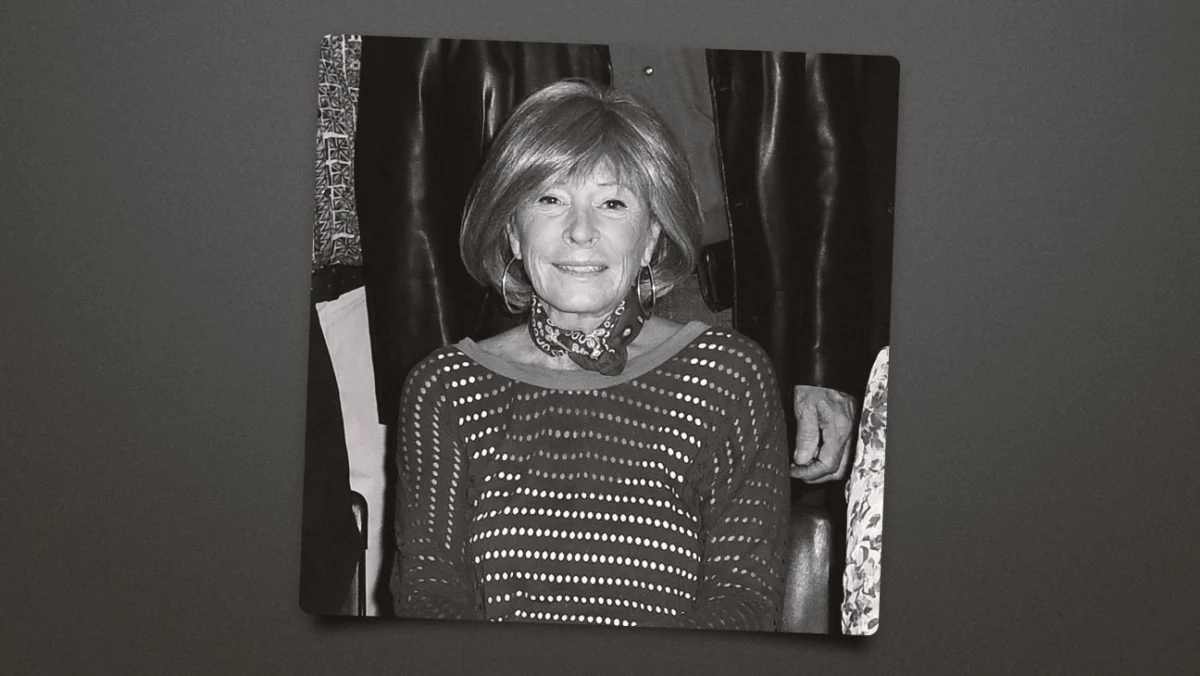
Marcia Lucas, the revered Oscar-winning film editor whose masterful touch helped define the cinematic landscape of the 1970s, most notably through her work on Star Wars: A New Hope and American Graffiti, has passed away at the age of 80. Lucas, a pivotal figure often credited with shaping the emotional core and narrative rhythm of some of Hollywood’s most iconic films, died on Wednesday, December 4, 2024, in Rancho Mirage, California, following a battle with cancer. Her passing marks the end of an era for a craftswoman whose contributions to film editing are considered indelible, leaving behind a legacy that continues to influence storytellers and filmmakers worldwide.
A Family’s Tribute to a Brilliant Storyteller
The news of Lucas’s death was accompanied by a heartfelt statement from her family, underscoring not only her professional brilliance but also her vibrant personal spirit. "Marcia will be remembered as a brilliant storyteller, a trailblazer for women in film, a loving mother and grandmother, a generous host, and a loyal friend whose humor and sparkle filled every room she entered," the family statement read. "Her influence on film is indelible, but those who knew her best will remember the way she made life feel more vivid, more beautiful, more fun, and more full of love." This tribute encapsulates the dual impact of Marcia Lucas: her profound professional achievements and the personal warmth that endeared her to those in her life.
Early Life and Entry into the Editing Suite
Born Marcia Griffin in Modesto, California, in 1945, Lucas’s journey into the intricate world of film editing began through the Motion Picture Editors Guild apprenticeship program, a traditional pathway for aspiring professionals in the mid-20th century. This foundational experience provided her with a rigorous understanding of the technical and artistic demands of the craft. Her talent and dedication quickly became apparent, leading her to secure a crucial position as an assistant to the esteemed film editor Verna Fields. Fields, herself a legend in the industry, known for her groundbreaking work on films like Steven Spielberg’s Jaws (1975) and Peter Bogdanovich’s Paper Moon (1973), served as a significant mentor for Lucas. Working alongside Fields, Lucas gained invaluable practical experience and insight into the nuances of narrative construction through editing, honing her skills on high-profile projects.
Her professional and personal life intertwined when she met and married a promising young filmmaker named George Lucas in 1969. This period marked the beginning of a highly influential creative partnership. Marcia Lucas served as an assistant editor on George Lucas’s feature directorial debut, the dystopian science fiction film THX 1138 (1971), a project that showcased the nascent artistic visions of both individuals. The film, an expansion of George Lucas’s student short, presented a unique challenge in its experimental narrative structure, requiring a precise and innovative editorial approach that Marcia helped to develop.
The Breakthrough: American Graffiti and First Oscar Nomination
The true breakthrough in Marcia Lucas’s career, and a pivotal moment for her collaborative work with George Lucas, came with the 1973 coming-of-age comedy-drama American Graffiti. This film, a nostalgic look at youth culture in 1962, marked a significant departure from the sci-fi themes of THX 1138. Marcia, working directly with Verna Fields, played a crucial role in shaping the film’s complex, multi-strand narrative and its distinctive, fast-paced rhythm. The film’s structure, which juggled several interconnected storylines over a single night, demanded an exceptional level of editorial skill to maintain clarity, momentum, and emotional resonance. Lucas’s keen sense of timing and her ability to interweave disparate scenes contributed significantly to the film’s success.
American Graffiti was a critical and commercial triumph, garnering five Academy Award nominations, including Best Picture and Best Director. Crucially, it earned Marcia Lucas her first Oscar nomination for Best Film Editing in 1974, shared with Fields. While William Reynolds ultimately took home the trophy that year for his work on The Sting, the nomination firmly established Lucas as a rising star in the editing world. The film’s success provided George Lucas with the capital and credibility to pursue his next ambitious project, one that would redefine blockbuster cinema.
Crafting a Galaxy Far, Far Away: The Genius of Star Wars
Marcia Lucas’s most celebrated and impactful contribution to cinema arrived with Star Wars: A New Hope (1977), a film that not only became a cultural phenomenon but also fundamentally reshaped the entertainment industry. George Lucas had envisioned a sprawling space opera, but the initial cuts of the film were reportedly challenging. It was Marcia Lucas, working alongside fellow editors Paul Hirsch and Richard Chew, who was instrumental in transforming the raw footage into the cohesive, exhilarating narrative that captivated audiences worldwide. Her work on Star Wars is often cited as a masterclass in pacing, character development through reaction shots, and the seamless integration of visual effects with emotional storytelling.
Sources close to the production and film historians have frequently highlighted Marcia’s crucial role in restructuring key sequences, enhancing dramatic tension, and clarifying character motivations. For instance, her influence on the iconic Death Star trench run sequence is widely acknowledged, where her editorial choices amplified the suspense and thrill. She was also reportedly instrumental in refining the emotional arc of Luke Skywalker, emphasizing his internal struggles and making his journey more relatable. Her ability to cut for emotional impact, ensuring that the audience felt connected to the characters and their plight, was paramount to the film’s success. This approach was particularly vital for a film introducing audiences to an entirely new universe with complex lore and a diverse cast of characters.
In 1978, Marcia Lucas, alongside Paul Hirsch and Richard Chew, was awarded the Academy Award for Best Film Editing for Star Wars. This win cemented her status as one of the preeminent editors of her generation and highlighted the critical importance of the editing craft in the creation of cinematic magic. The film’s monumental success, grossing over $775 million worldwide on an estimated budget of $11 million, made it one of the highest-grossing films of all time and launched a franchise that continues to dominate popular culture decades later. The profound impact of Star Wars cannot be overstated, and Marcia Lucas’s editorial genius was undeniably a cornerstone of its initial, groundbreaking triumph.
Beyond the Skywalker Saga: Collaborations with Martin Scorsese
While best known for her work on the Star Wars saga, Marcia Lucas’s talent extended far beyond George Lucas’s universe. She forged a significant creative partnership with another titan of American cinema, Martin Scorsese. Her contributions to Scorsese’s films showcased her versatility and her ability to adapt her editorial sensibilities to diverse genres and directorial styles. She edited Scorsese’s 1974 drama Alice Doesn’t Live Here Anymore, for which lead actress Ellen Burstyn won an Academy Award. Lucas also worked as an uncredited editor on two of Scorsese’s other seminal works: the gritty urban psychological thriller Taxi Driver (1976) and the ambitious musical drama New York, New York (1977).
Her work on these films further demonstrated her range, from the raw, unsettling realism of Taxi Driver to the stylized, melancholic grandeur of New York, New York. In an industry often dominated by male figures, particularly in technical roles, Lucas’s success in collaborating with two of the most influential directors of the New Hollywood era—George Lucas and Martin Scorsese—underscored her exceptional talent and her unique ability to enhance a director’s vision through her editorial choices.
The Art of Film Editing: Marcia Lucas’s "Secret Weapon"
The role of a film editor is often described as the "invisible art," yet its impact on a film’s narrative, pacing, and emotional resonance is immeasurable. Editors are the final storytellers, shaping performances, guiding audience reactions, and ensuring that the film’s message is conveyed effectively. Marcia Lucas exemplified this principle throughout her career. Dale Pollock, in his biography of George Lucas, Skywalking: The Life and Films of George Lucas, famously referred to Marcia as her husband’s "secret weapon." This description reflects the widely held belief within the industry that her critical eye, narrative instincts, and willingness to challenge creative decisions were invaluable to George Lucas’s early successes.
Accounts from the production of Star Wars often highlight Marcia’s role in making tough, but ultimately correct, editorial calls. She was known for her objective perspective, her ability to identify narrative weaknesses, and her unwavering commitment to serving the story. Her skill lay not just in technical execution but in her profound understanding of storytelling and human emotion. She understood how to build tension, deliver a punchline, evoke empathy, and sustain engagement—all through the precise arrangement of shots and sounds. This artistic acumen elevated her beyond a mere technician, positioning her as a co-author of the cinematic experience.
A Trailblazer for Women in Film
Marcia Lucas’s career trajectory also positions her as a significant trailblazer for women in the film industry. While women have historically been involved in film editing from the early days of cinema, often in less visible capacities, Lucas’s Oscar wins and high-profile collaborations helped to elevate the recognition of female editors to unprecedented levels. In an era when behind-the-scenes roles, particularly those with significant creative authority, were predominantly held by men, Lucas’s achievements served as a powerful inspiration.
Her success paved the way for subsequent generations of female editors, demonstrating that women could not only excel in technically demanding and creatively influential roles but could also be at the forefront of shaping cultural phenomena. Her legacy is not just one of exceptional craftsmanship but also one of breaking barriers and expanding opportunities for women in a historically male-dominated field.
Later Career and Personal Life
Following the immense success of Star Wars, Marcia Lucas continued her work within the burgeoning Lucasfilm empire, lending her talents to Return of the Jedi (1983), the concluding chapter of the original Star Wars trilogy. Her involvement ensured a consistent editorial vision across the saga’s core films, maintaining the narrative and emotional continuity that fans had come to cherish.
Her marriage to George Lucas concluded in 1983, a period that also marked a shift in her professional trajectory. While she continued to be highly respected within the industry, her most prominent collaborations had largely occurred during her marriage. She later married and divorced artist Tom Rodrigues. Despite her high-profile career, Marcia Lucas maintained a relatively private life in her later years, often shying away from the intense media spotlight that surrounded the Star Wars franchise.
She is survived by her daughters, Amanda Lucas and Amy Soper, and her beloved grandchildren. Her family’s statement emphasizes the personal warmth and humor that defined her, qualities that complemented her professional rigor and artistic genius.
Lasting Legacy and Tributes
The passing of Marcia Lucas has prompted an outpouring of remembrance from the filmmaking community, underscoring her profound and often understated influence. While directors and actors frequently receive the lion’s share of public recognition, Lucas’s career stands as a testament to the essential, transformative power of film editing. Her contributions to Star Wars are particularly significant, as the film’s cultural dominance has ensured that her work will be studied and appreciated by generations of filmmakers and cinephiles.
Her legacy extends beyond the specific films she cut; it encompasses her role in defining the pacing and rhythm of a new era of blockbuster cinema, her unwavering commitment to emotional storytelling, and her pioneering efforts as a woman achieving top-tier recognition in a demanding craft. Marcia Lucas’s brilliance was in her ability to find the heart of a story, to clarify chaos, and to elevate raw footage into unforgettable cinematic experiences. Her work remains a benchmark for excellence in film editing, a testament to an artist whose hands shaped not just movies, but the very fabric of modern cinematic storytelling. She will be remembered not only for the iconic films she helped create but also for the vibrant, inspiring spirit she brought to every aspect of her life.