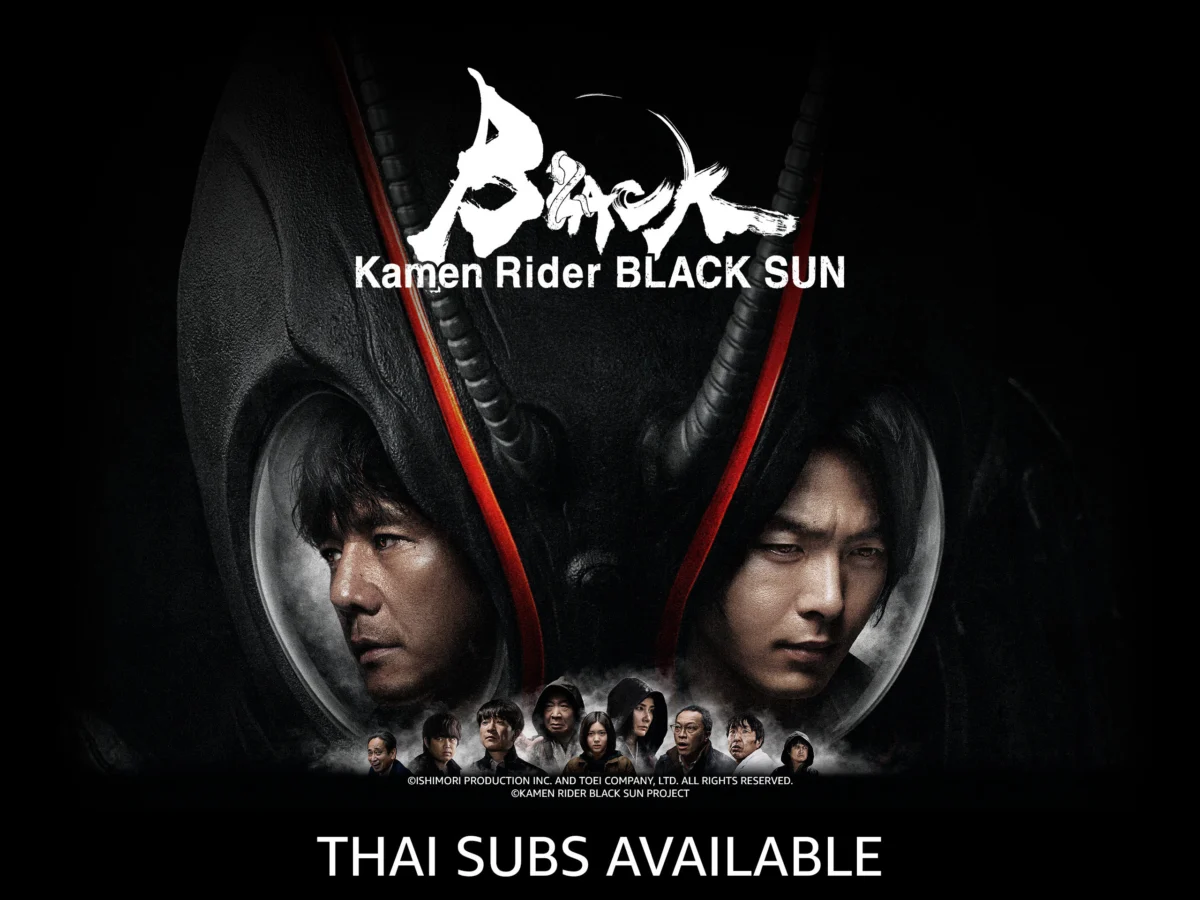
Kazuya Shiraishi’s highly anticipated series, Kamen Rider Black Sun, emerged as a pivotal entry in the venerable Kamen Rider franchise, celebrating its illustrious 50th anniversary. Released alongside Hideaki Anno’s cinematic reimagining, Shin Kamen Rider, Shiraishi’s series distinguishes itself as a profound reboot of the 1987 classic, Kamen Rider Black. Far from the conventional tokusatsu productions typically associated with Toei Company, Kamen Rider Black Sun offers a stark, adult-oriented narrative that leverages high-quality special effects and intense action sequences while delving deep into complex political and social commentary. It boldly modernizes the foundational themes established by Shotaro Ishinomori, directly confronting issues highly relevant to contemporary Japan, including systemic xenophobia, the perils of historical revisionism, and pervasive political corruption.
The Enduring Legacy of Kamen Rider: A Franchise Reimagined
The Kamen Rider franchise, which first premiered in 1971, has long captivated audiences with its iconic bug-themed heroes, thrilling motorcycle stunts, and underlying themes of justice and sacrifice. Created by manga artist Shotaro Ishinomori, the original series introduced Takeshi Hongo, a man transformed into a cyborg by the evil organization Shocker, who then uses his new powers to fight against his creators. Ishinomori’s vision consistently explored the suffering inherent in transformation, the burden of power, and the empathy required to wield justice. Over five decades, Kamen Rider evolved, often catering to younger audiences while retaining its core spirit of heroism.
The decision to revisit Kamen Rider Black for the 50th anniversary was particularly significant. The original 1987 series, Kamen Rider Black, stood out in its era for its comparatively darker tone and more dramatic narrative. It introduced Kotaro Minami and Nobuhiko Akizuki, foster brothers chosen by the Gorgom cult to become the next Creation King. Their tragic rivalry, culminating in Kotaro becoming Kamen Rider Black and Nobuhiko transforming into Shadow Moon, resonated deeply with fans due to its emotional intensity and exploration of brotherhood fractured by destiny. This foundation provided fertile ground for Shiraishi’s darker, more mature reinterpretation. The concurrent release of Shin Kamen Rider, also a mature take on the original, underscored Toei’s strategic move to engage adult fans and explore the franchise’s potential beyond its traditional demographic.
Crafting a Modern Myth: Production and Vision
The development of Kamen Rider Black Sun signaled a deliberate artistic direction. Director Kazuya Shiraishi, known for his gritty, often brutal, and socially conscious films such as The Devil’s Path (2013) and The Blood of Wolves (2018), was an unconventional yet inspired choice for a Kamen Rider project. His filmography demonstrates a consistent ability to tackle uncomfortable truths and depict the darker facets of human nature, making him uniquely suited to infuse Black Sun with its stark realism and biting social critique. This choice by Toei Company indicated a clear intention to elevate the series beyond simple superheroics, aiming for a profound narrative experience.
The production boasted an impressive roster of talent, including special effects maestro Kiyotaka Taguchi and visual supervisor Shinji Higuchi, both renowned for their work on high-profile tokusatsu projects like Shin Godzilla and Shin Ultraman. Their involvement ensured a level of cinematic quality rarely seen in series of this nature. The substantial production budget, though undisclosed, is evident in the show’s meticulously crafted visuals, elaborate sets, and sophisticated practical effects. This investment allowed for a faithful yet modern reinterpretation of the iconic Rider designs and the creation of a believable, albeit dystopian, alternate Japan. The series premiered globally on Amazon Prime Video in October 2022, ensuring a wide international reach for this ambitious project.
A Dystopian 2022: Narrative and Thematic Depths
Set in an alternate 2022, Kamen Rider Black Sun immerses viewers in a Japan teetering on the brink of socio-political collapse. Here, humans coexist with Kaijin, human-animal hybrids who, despite their shared humanity, endure systemic discrimination and violent prejudice. This societal unrest is exacerbated by a xenophobic Prime Minister, Shinichi Dounami, and powerful far-right movements that actively propagate hate speech against Kaijin and foreign residents. The narrative centers on Aoi Izumi, a young human rights activist determined to dismantle this prejudice and champion equality for all. Her unwavering pursuit of justice eventually leads her into the orbit of Kotaro Minami, a jaded freedom fighter with a mysterious past, and his estranged foster brother, Nobuhiko Akizuki. Both were once integral members of the Gorgom movement, an organization that, in this timeline, has devolved into a Kaijin-supremacist faction worshipping the enigmatic, dying Creation King. The ideological chasm between Kotaro and Nobuhiko, once brothers, forms the tragic core of the series, mirroring the larger societal divisions.
The series is unflinching in its portrayal of graphic violence and melodrama, drawing parallels to the stylistic choices seen in Shin Kamen Rider. Shiraishi masterfully balances an entertaining action spectacle with a compelling call for viewer reflection on the profound issues it raises. While the tone is predominantly nihilistic and serious, occasional moments of dark humor offer brief respite. At its heart, Kamen Rider Black Sun is a character drama, deeply invested in the complex, evolving relationship between Kotaro Minami and Nobuhiko Akizuki, and how Aoi Izumi becomes inextricably woven into their ancient conflict.
Xenophobia and Discrimination: The Plight of the Kaijin
The most prominent thematic thread in Kamen Rider Black Sun is its searing critique of xenophobia and discrimination. The Kaijin, physically distinct and often feared, serve as a powerful allegory for marginalized groups and minorities in contemporary Japanese society, including ethnic minorities, foreign residents, and even those with disabilities. The relentless prejudice they face, fueled by political rhetoric and societal fear, mirrors real-world issues of "othering" and systemic oppression. Prime Minister Dounami’s character, a corrupt official who actively exploits anti-Kaijin sentiment for political gain, directly critiques the rise of nationalist and exclusionary political ideologies. The series bravely highlights how fear and ignorance can be weaponized to divide and control populations.
Historical Revisionism and Ethical Horrors: Echoes of Unit 731
Perhaps the most disturbing and impactful thematic element is the veiled history of Kaijin creation, which draws chilling parallels to the horrific human experimentation conducted by the Imperial Japanese Army’s Unit 731 during World War II. Unit 731 was a covert biological and chemical warfare research and development unit responsible for some of the most heinous war crimes committed by the Japanese military, including vivisection and germ warfare experiments on living human subjects. By linking the origins of the Kaijin to such atrocities, Kamen Rider Black Sun confronts Japan’s often-contentious relationship with its wartime past and the tendency towards historical revisionism. This narrative choice forces viewers to grapple with uncomfortable truths about state-sanctioned violence and the long-lasting trauma of unaddressed historical injustices, presenting a powerful commentary on collective memory and accountability.
Political Corruption and the Rise of Fascism: The Gorgom’s Transformation
The evolution of the Gorgom Party serves as another potent political allegory. Initially presented as an anti-establishment student movement advocating for equality, the Gorgom Party gradually transforms into a violent, Kaijin-supremacist political faction. Its descent into radicalism, rejection of peaceful coexistence, and eventual alliances with corrupt government officials eerily reflect the historical trajectory of fascist movements. This narrative arc underscores how idealistic movements can be co-opted, corrupted, and ultimately become the very oppressors they once sought to overthrow. The series scrutinizes the seductive nature of power and the dangers of extreme ideologies, regardless of their initial intentions.
The Essence of Humanity: Ishinomori’s Enduring Questions
At its core, Kamen Rider Black Sun deepens Shotaro Ishinomori’s original philosophical inquiries into what it truly means to be human. By presenting characters like the Kaijin who are both human and monster, the series blurs traditional lines, asking viewers to question inherent biases and definitions. The suffering born from oppression, the pursuit of justice, and the necessity of empathy are explored with a mature audience in mind, pushing the boundaries of what a tokusatsu series can achieve. While some critics have noted that the thematic delivery can occasionally be on-the-nose, its directness is arguably a strength, ensuring its urgent messages are not lost.
A Feast for the Senses: Visuals, Action, and Sound Design
The production values of Kamen Rider Black Sun are undeniably outstanding, setting a new benchmark for tokusatsu series. Kiyotaka Taguchi and Shinji Higuchi’s contributions to the special effects are evident throughout, creating a world that feels both fantastical and viscerally real.
Iconic Suit Designs and Practical Effects
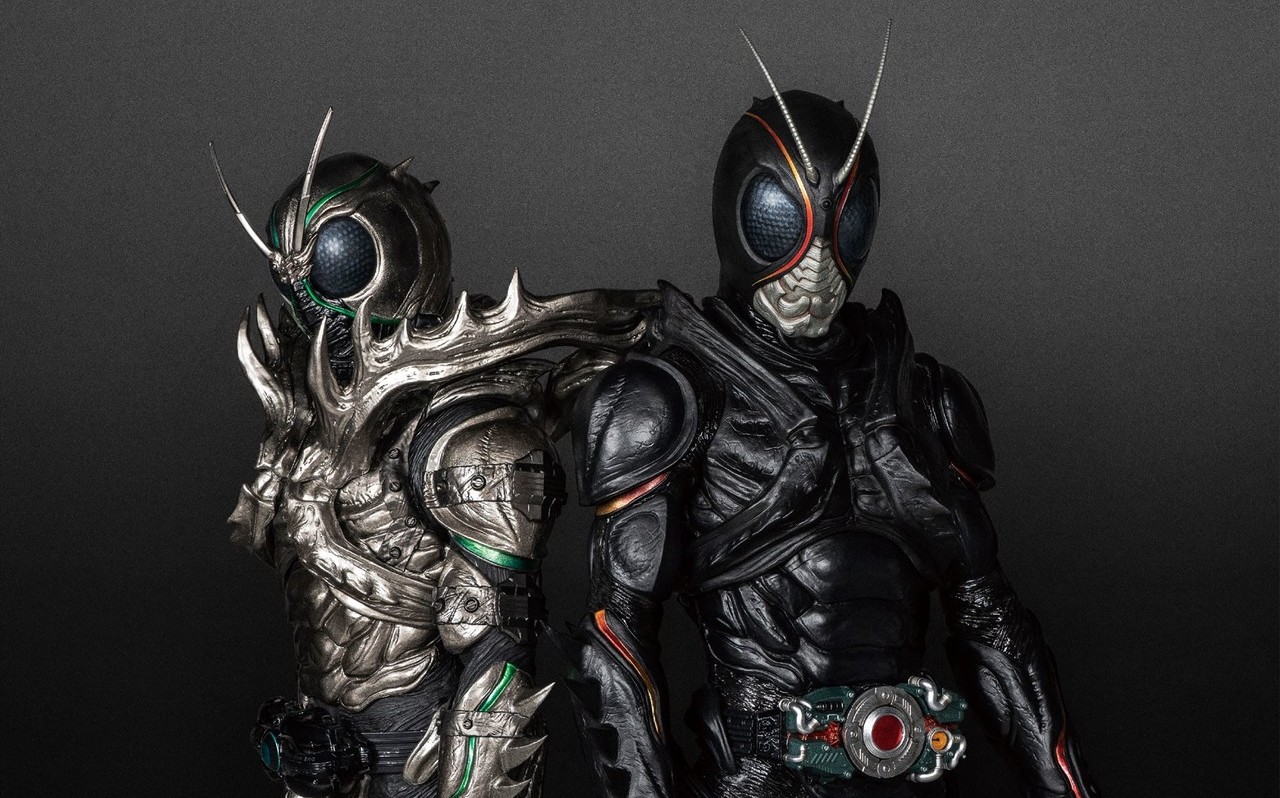
A major highlight of the series is the detailed design of the Kamen Rider suits. Capturing the iconic insectoid, grasshopper aesthetic of the original, the Black Sun and Shadowmoon suits are reimagined with a gritty, organic, and almost otherworldly presence. Black Sun appears intimidating and raw, while Shadowmoon takes on a deceptively heroic, almost regal, aesthetic. These stylistic choices are deliberately misleading, skillfully shaping first impressions that are dramatically subverted as the story unfolds. Crucially, these magnificent designs, along with other creature designs such as the grotesque Creation King, are brought to life predominantly through practical effects. This commitment to tangible, in-camera effects grounds the fantastical elements, providing a weight and realism that CGI often struggles to achieve. While CGI is used sparingly, its application is judicious and effective, enhancing rather than dominating the visual experience.
Spectacular Action and Fight Choreography
The action sequences in Kamen Rider Black Sun are nothing short of spectacular. The fight choreography is impressively visceral, emphasizing brutal impacts and kinetic energy. The dedication and skill of the suit actors are palpable, bringing a raw intensity to every confrontation. These sequences are not mere spectacles; they are integral to the narrative, reflecting the characters’ desperation, power, and evolving ideologies.
Striking Cinematography and Atmospheric Score
Hajime Baba’s polished cinematography contributes significantly to the show’s striking visuals. His expert use of lighting, shadow, and color palette crafts a mood that is consistently dark and foreboding, yet visually compelling. The series effectively uses contrasting aesthetics to differentiate between the tumultuous 2022 timeline and flashback scenes set in the 1970s, adding depth to its historical commentary. Detailed costumes and set pieces further immerse viewers in both eras. Complementing the visuals is Kenta Matsukuma’s impressive musical score, which skillfully evokes a sense of melancholy, tension, and epic tragedy. The show’s theme song, "Did you see the sunrise?" by Chogakusei, has been particularly lauded for its haunting beauty, perfectly encapsulating the series’ emotional core.
Critical Reception and Broader Implications
Upon its release, Kamen Rider Black Sun garnered significant attention from critics and fans alike. It was largely lauded for its audacious vision, thematic ambition, and exceptional production quality. Reviewers praised its willingness to tackle mature themes head-on, effectively repositioning Kamen Rider for an adult audience without betraying its legacy. The performances of the lead actors were consistently highlighted as a driving force, with Hidetoshi Nishijima, Tomoya Nakamura, and Kokoro Hirasawa delivering nuanced and powerful portrayals.
Hidetoshi Nishijima, as Kotaro Minami, expertly conveys a man hardened by a tragic past, initially cold and distant, yet gradually revealing layers of profound humanity. Tomoya Nakamura’s portrayal of Nobuhiko Akizuki is equally compelling, depicting a tormented individual’s tragic transformation into an oppressor, the very thing he once despised. Kokoro Hirasawa brings remarkable depth to Aoi Izumi, a character who embodies pacifism and equality but is repeatedly thrust into horrific circumstances, forcing her into a fight for resistance and survival. Their performances elevate the character drama, grounding the fantastical elements in raw human emotion.
Despite its many strengths, the series did face some criticisms. The pacing, particularly in its extensive world-building phase and a somewhat rushed final episode, was noted by some as an area for improvement. Critics also pointed out certain plot holes and a large cast of characters, some of whom lacked meaningful resolution, suggesting a screenplay that, while ambitious, occasionally overextended itself. Additionally, while the themes were powerful, their directness sometimes veered into being "on-the-nose," sacrificing subtlety for clarity.
Nevertheless, the overall impact of Kamen Rider Black Sun on the tokusatsu genre and the Kamen Rider franchise is profound. It represents a refreshing departure from the more kid-friendly entries, which often serve as vehicles for merchandise sales. By demonstrating that a Kamen Rider series can achieve critical acclaim and resonate with adult audiences through sophisticated storytelling and mature themes, it potentially opens doors for future adult-oriented projects within the genre. It successfully balances reverence for the franchise’s half-century legacy with a bold, innovative approach, proving that the enduring spirit of Shotaro Ishinomori’s vision can be adapted to speak to contemporary anxieties.
Conclusion: A Timely and Potent Reboot
In conclusion, Kamen Rider Black Sun stands as a monumental achievement in the Kamen Rider franchise, effectively celebrating its 50th anniversary not merely through nostalgia, but through audacious reinvention. Kazuya Shiraishi’s series delivers on spectacle with fantastic special effects and action sequences, but its true power lies in its exceptional acting and its searing sociopolitical commentary on humanity’s capacity for self-destruction and the enduring struggle against oppression. It is a timely and potent reboot that pushes the boundaries of the tokusatsu genre, offering a dark yet profoundly resonant reflection on modern societal ills. By grappling with themes of xenophobia, historical trauma, and political corruption through the lens of its iconic heroes, Kamen Rider Black Sun secures its place as a memorable and significant contribution to Japanese popular culture, prompting viewers to confront uncomfortable truths long after the credits roll.