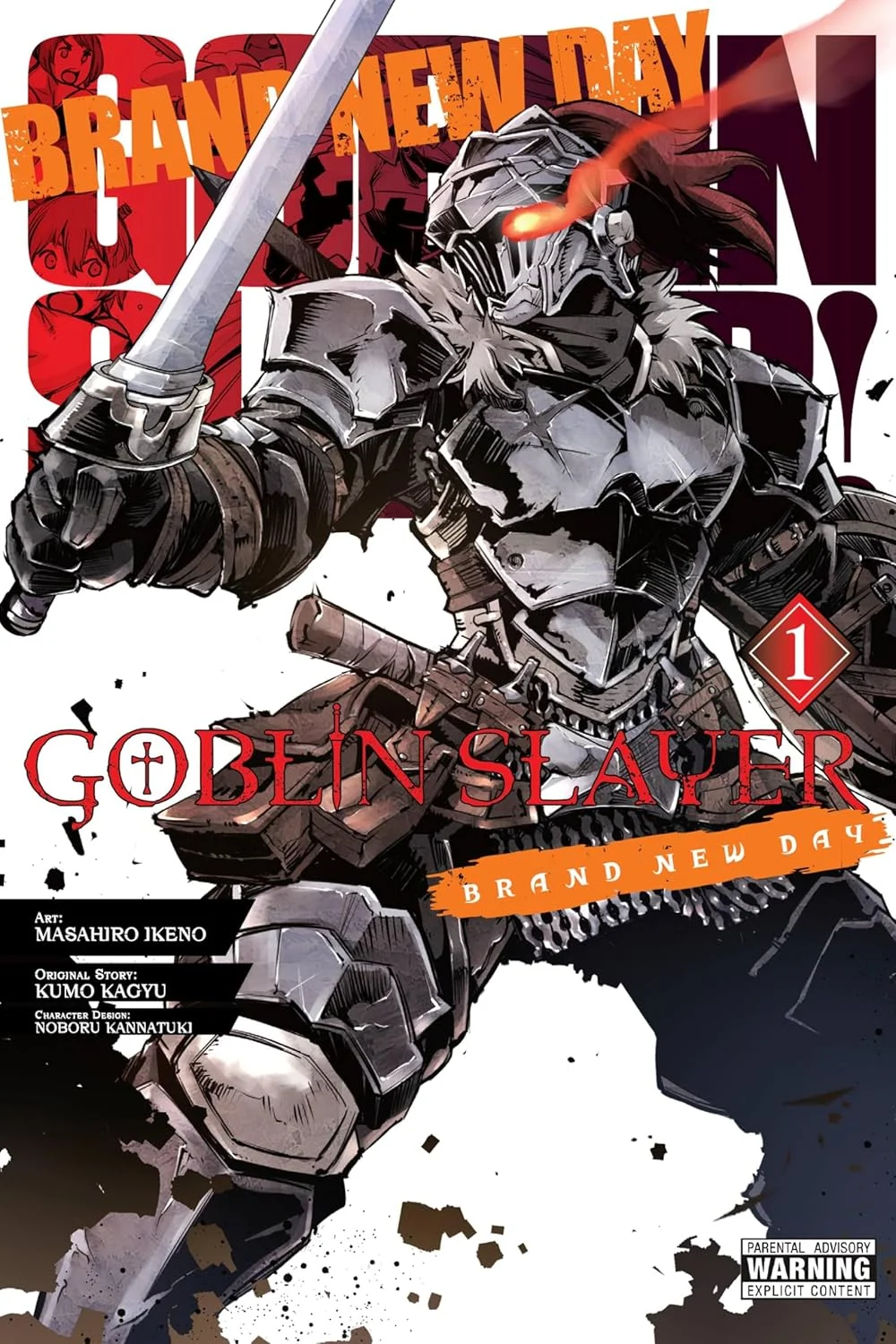
The release of Goblin Slayer: Brand New Day marks another significant expansion in the critically and commercially successful Goblin Slayer franchise, offering readers a collection of vignettes that delve deeper into the nuanced, often brutal, world established by Kumo Kagyu. This latest installment serves as a companion to the main series, providing insights into the lives of both ordinary citizens and fledgling adventurers, all while subtly enriching the mystique surrounding the titular protagonist.
The Genesis of a Phenomenon: From Web Novel to Global Franchise
The Goblin Slayer saga originated not in traditional print, but in a unique online format. Kumo Kagyu first presented the story as a web novel, distinguishing itself through its experimental use of ASCII art combined with text. This unconventional approach garnered a dedicated following, drawing readers into a grim fantasy world where the threat of goblins was depicted with unflinching realism. The initial success of the web novel signaled a burgeoning demand for darker, more grounded fantasy narratives, paving the way for its transition to a professional publishing format.
In February 2016, the series found a new home with SB Creative, under its GA Bunko imprint, a significant player in the Japanese light novel industry known for cultivating popular fantasy and science fiction titles. With illustrations provided by Noboru Kannatsuki, the light novel quickly captured wider attention. Notably, the manga adaptation was greenlit even before the first light novel volume hit shelves, underscoring the publisher’s confidence in the property. Kousuke Kurose was enlisted as the illustrator for this adaptation, which began serialization in the June 2016 issue of Square Enix’s Monthly Big Gangan, a prominent manga magazine recognized for its diverse array of fantasy and action series. This simultaneous development across multiple media platforms—web, light novel, and manga—demonstrated an early strategic vision for building a comprehensive franchise.
The immediate impact of the Goblin Slayer light novel was profound. The first volume required a reprint mere days after its initial publication, a clear indicator of overwhelming reader demand. Its critical acclaim was further cemented when it achieved top rankings in Kono Light Novel ga Sugoi! 2017 (This Light Novel is Amazing!), a highly influential annual guide in Japan that surveys thousands of industry professionals and readers to rank the year’s best light novels. The series secured the first position in the new work category and an impressive fifth place overall, signaling its rapid ascent to prominence within the competitive light novel landscape. By September 2023, the entire Goblin Slayer franchise, encompassing light novels, manga, and other media, had surpassed 10 million copies in circulation, a remarkable milestone for a series often lauded for its mature themes and uncompromising portrayal of a fantasy world. This figure places Goblin Slayer among the elite ranks of contemporary fantasy franchises, reflecting its deep resonance with a global audience.
Expanding Horizons: The Multimedia Reach of Goblin Slayer
The success of the Goblin Slayer light novel and manga paved the way for a multifaceted media expansion, transforming it into a robust multimedia franchise. The most prominent of these adaptations was the anime series, which premiered to significant anticipation and some controversy due to its mature themes and graphic depiction of violence. Produced by White Fox, the anime successfully translated the grim atmosphere and intense action of the source material to the screen, drawing in a new wave of fans while satisfying existing ones. Its artistic direction and narrative fidelity were recognized at the 2020 AnimaniA Awards, where it received both the Television Series Award and the Director Award, underscoring its impact on the anime industry. These awards are particularly significant as AnimaniA is a highly regarded German-language magazine focusing on Japanese pop culture, indicating the franchise’s strong international appeal and critical reception beyond its domestic market.
Beyond the anime, the Goblin Slayer universe expanded into other interactive formats. A tabletop role-playing game was developed, allowing fans to immerse themselves directly into the perilous world and experience the life of an adventurer, facing the pervasive threat of goblins firsthand. This extension provided a unique avenue for world-building and collaborative storytelling, further deepening fan engagement.
The franchise’s narrative scope was also broadened through a series of manga spinoffs, each offering a distinct perspective or chronological exploration within the Goblin Slayer timeline. Goblin Slayer Side Story: Year One delves into the early days of the Goblin Slayer’s career, showcasing his nascent skills and the origins of his singular obsession. Goblin Slayer Side Story II: Dai Katana explores a different historical period and set of characters, expanding the lore surrounding ancient heroes and their battles against monstrous threats. Goblin Slayer: A Day in the Life provides more slice-of-life vignettes, similar in spirit to Brand New Day, focusing on the mundane yet often dangerous realities of everyday existence in this fantasy world. These spinoffs collectively paint a richer, more detailed picture of the Goblin Slayer universe, demonstrating the narrative flexibility and thematic depth of the original concept. It is within this diverse landscape of supplementary material that Goblin Slayer: Brand New Day finds its place, offering its own unique contribution to the franchise’s ever-growing narrative tapestry.
A Deeper Dive into "Brand New Day": Vignettes of a Grim World
Goblin Slayer: Brand New Day distinguishes itself as a collection of self-contained stories, each illuminating different facets of the Goblin Slayer world, often from the perspectives of characters on the periphery of the main narrative. While the core series focuses intensely on the Goblin Slayer’s relentless campaign against his namesake foes, Brand New Day broadens the lens, providing a more holistic view of the challenges and everyday realities faced by those inhabiting this harsh fantasy setting.
The collection opens with "Of a Rookie Warrior and Apprentice Cleric," a narrative that immediately grounds the reader in the unforgiving reality of being a novice adventurer. This story centers on a young warrior and his companion, an apprentice cleric, as they navigate their initial forays into the dangerous world outside safe towns. Unlike the seasoned heroes often depicted in fantasy, these two face the brutal truth of their inexperience: they lose their weapons, are forced to flee from overwhelming foes, and constantly struggle with meager finances. The narrative vividly portrays their vulnerability and the high stakes involved in even seemingly minor quests. Through sheer perseverance, diligent hard work, and the nascent development of their teamwork, they manage to eke out small victories, signifying a gradual, hard-won step forward in their arduous journey. This story effectively sets a tone of realism, reminding readers that not all adventurers are destined for immediate glory, and many must contend with the grim, day-to-day struggle for survival. It underscores one of the core tenets of the Goblin Slayer universe: that heroism often manifests in the quiet endurance of adversity rather than grand, epic battles.
The second story, "Of a Boy," shifts focus to a more isolated setting, following a young boy living with his sister in a remote, unnamed town. The narrative highlights the pervasive danger that lurks beyond the safety of established settlements. Despite repeated warnings from his sister and other townsfolk to avoid the nearby woods—a classic trope in dark fantasy often signaling lurking evil—the boy’s youthful curiosity or perhaps a desperate need leads him to defy these admonitions. Predictably, he soon finds himself in grave peril, lost and vulnerable to the unseen threats of the wilderness. It is at this critical juncture that the Goblin Slayer appears, rescuing the boy from an unspecified but clearly imminent danger. This shortest segment in the book serves a crucial purpose: it offers a stark glimpse into the constant low-level threats that plague the world outside the major hubs where professional adventurers typically operate. It reinforces the Goblin Slayer’s role not just as a monster hunter, but as a silent protector, often operating in the shadows where conventional heroes might not venture, embodying the very essence of his dedication to eradicating goblin threats wherever they may arise.
Chapter three, "Of the Waitress at the Tavern," provides a lighter, yet still insightful, perspective into the daily grind of non-adventurers. The story centers on the titular character, a young woman working in a local tavern, who is depicted as somewhat clumsy and not particularly adept at her job. Despite her professional shortcomings, she exhibits a genuine desire to improve. More intriguingly, the narrative hints at her developing affection for the enigmatic Goblin Slayer. This unspoken crush becomes a central humorous and heartwarming element of the story. Upon hearing from a tavern patron that Goblin Slayer is rumored to enjoy stew, the waitress dedicates herself to learning the art of cooking it, driven by the hope of preparing a meal for him. This chapter offers a refreshing break from the usual grimness, providing a rare glimpse into the human connections and mundane aspirations that exist within this dangerous world. It also subtly humanizes the Goblin Slayer, not through his own actions, but through the observations and affections of those around him, adding another layer to his stoic persona.
The fourth and arguably most impactful chapter, "Of a Perfectly Ordinary Goblin Nest," abruptly plunges the reader back into the visceral horror that defines the main Goblin Slayer series. This narrative is unique in that it offers a rare, albeit brief, perspective from the antagonists themselves. It follows a hateful goblin assigned to guard duty within a nest, while the rest of his tribe are engaged in a horrific assault on a captured female adventurer. The focus on the goblin’s internal thoughts—his evident jealousy of his tribe-mates’ "pleasures"—serves to underscore the depravity and cruelty inherent in these creatures. The segment maintains a tense atmosphere as the goblin remains at his post, until the inevitable arrival of the Goblin Slayer. Once he appears, the narrative escalates into a brutal, no-holds-barred depiction of mayhem and violence, showcasing the Goblin Slayer’s ruthless efficiency. This is unequivocally the most violent and explicit segment in the book, featuring a significant amount of nudity and graphic content consistent with the darkest elements of the main series. It serves as a stark reminder of the underlying brutality that the Goblin Slayer constantly confronts and the fundamental horror that permeates his world, ensuring that Brand New Day, despite its varied tones, does not shy away from the franchise’s core themes.
Artistic Vision and Thematic Nuances
Masahiro Ikeno’s artwork in Goblin Slayer: Brand New Day meticulously adheres to the established visual language of the original manga, maintaining a consistent aesthetic that fans have come to associate with the series. The medieval setting is rendered with painstaking detail, from the architecture of rustic taverns to the rugged landscapes and the worn equipment of adventurers. Complementing this is the pervasive grotesque imagery, particularly in the depiction of goblins and the aftermath of their atrocities. Ikeno skillfully captures the grim, gritty atmosphere, ensuring visual continuity with Kousuke Kurose’s work on the main manga adaptation and Noboru Kannatsuki’s light novel illustrations. The artwork effectively conveys the pervasive sense of danger and the harsh realities of the world.
However, a notable thematic distinction exists: as a whole, Brand New Day adopts a comparatively tamer tone than the main series. This is primarily attributable to its focus on younger, less experienced protagonists in several stories, as well as narratives centered on the mundane aspects of life. While the core Goblin Slayer series is renowned for its unsparing depiction of violence and mature themes, Brand New Day often explores the human element and the struggle for survival in more subdued ways. This tonal shift allows for a broader exploration of the world without constantly resorting to the extreme violence often associated with the franchise.
Nevertheless, the element of fan service, a recurring feature in many contemporary fantasy series, remains present. Most female characters are presented in a manner that emphasizes their physical attributes, a design choice that is consistent with the broader Goblin Slayer universe. This aspect reaches its zenith in the final story, "Of a Perfectly Ordinary Goblin Nest," where the graphic nature of the content includes nudity alongside the extreme violence. This juxtaposition highlights the complex and sometimes contradictory nature of the series’ appeal, balancing a grounded, dark fantasy narrative with elements often found in more conventional genre fare. The artistic choices in Brand New Day thus serve to reinforce the franchise’s identity, delivering both familiar aesthetic elements and a slightly diversified thematic approach.
The Enduring Appeal and Future Trajectory
Goblin Slayer: Brand New Day stands as a worthy companion to the original series and a welcome addition to a universe that has significantly expanded through its various side stories. Companion volumes and anthologies like this are crucial for the longevity of a successful franchise. They allow creators to explore characters and settings beyond the main narrative arc, deepen the lore, and provide fresh perspectives without derailing the primary storyline. By focusing on the "everyday life" and what transpires beyond the immediate sphere of professional adventurers, Brand New Day effectively humanizes the world, making its dangers and challenges feel more tangible and pervasive.
While not all the stories within the collection are equally captivating—a common characteristic of anthologies—the creators judiciously save some of the most impactful narratives for the latter half, ensuring a strong finish. The consistent presence of the Goblin Slayer in each story, even if only briefly, is a significant draw for fans. Each encounter, however fleeting, contributes another small detail to his enigmatic portrait, offering glimpses into his stoic nature, his unwavering resolve, and the subtle ways he impacts the lives of others. These interactions enrich his character without ever fully unraveling his core mystery, maintaining his iconic status.
The enduring appeal of Goblin Slayer lies in its unapologetically dark and realistic take on a fantasy world. It subverts traditional tropes by portraying goblins not as mere cannon fodder, but as a genuinely horrifying and insidious threat, and adventurers not always as valiant heroes, but as vulnerable individuals facing grim realities. Brand New Day reinforces these themes by showcasing the widespread impact of such threats on ordinary people and the varied struggles for survival.
As the Goblin Slayer franchise continues to evolve, with its robust sales figures, critical acclaim, and ongoing multimedia adaptations, titles like Brand New Day are essential for maintaining fan engagement and enriching the narrative landscape. They offer opportunities for reflection, character development, and world-building that might not fit within the more focused main series. For dedicated followers of the franchise, and particularly those fascinated by the stoic character of the Goblin Slayer and the detailed world he inhabits, Goblin Slayer: Brand New Day offers a compelling and valuable expansion, promising continued depth and nuance for years to come.