The latest installment of the ongoing saga, "House of the Dragon," shifts its focus from the beleaguered Black faction to an in-depth exploration of the ascendant Team Green, centering on the pivotal and previously obscure location of Tumbleton. This episode, aptly titled "Tumbleton," marks a significant strategic development in the Dance of the Dragons, a civil war that has fractured the Targaryen dynasty and plunged Westeros into chaos. While the initial episodes were largely dedicated to Princess Rhaenyra Targaryen’s court and the burgeoning conflict from the Black’s perspective, this chapter meticulously details the machinations and evolving landscape from the Green’s vantage point, introducing new characters and historical context that underscore the deepening stakes of the war.
The Significance of Tumbleton
The choice of "Tumbleton" as the episode’s title is deliberate and speaks volumes about the narrative’s trajectory. Unlike established power centers such as King’s Landing or Dragonstone, Tumbleton has historically held little significance in the grand tapestry of Westerosi politics. This anonymity, however, is precisely what elevates its importance in the current conflict. George R.R. Martin, the architect of this world, often emphasizes how seemingly minor locations can become critical flashpoints when drawn into the vortex of war, particularly when the ambitions of the powerful intersect with the lives of the common folk. Tumbleton, situated on the banks of the Mander River, now finds itself at the epicenter of the Green’s strategic maneuvers, a testament to how even backwater towns can dramatically influence the course of history.
Unraveling the Opening Tapestry
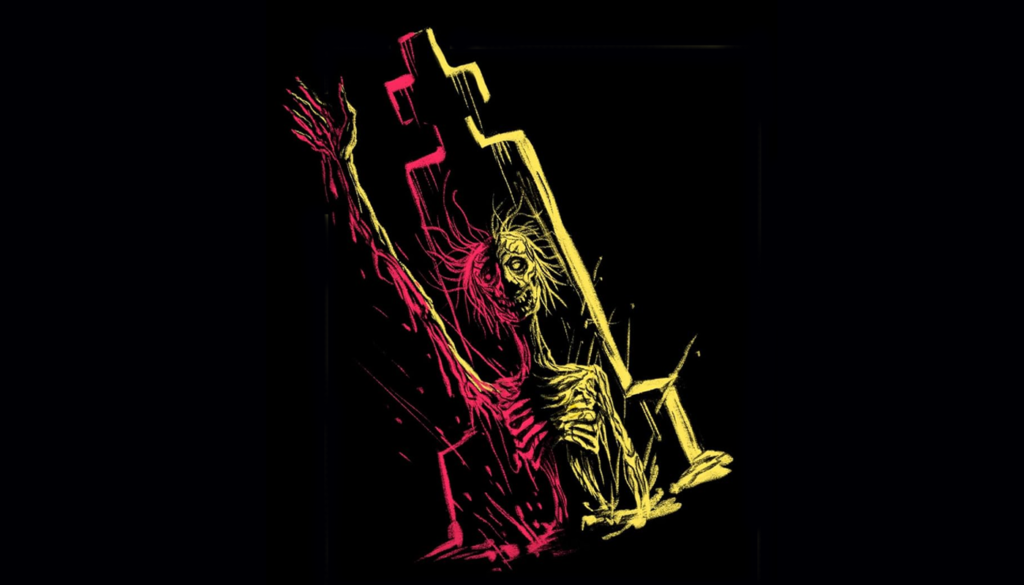
The episode’s iconic opening sequence, a visual chronicle of the Dance of the Dragons, introduces a new panel that has already sparked considerable fan speculation. This imagery depicts two figures, one seemingly whispering into the ear of the other. While definitive identification remains elusive, initial interpretations suggest a potential representation of Corlys Velaryon, the Sea Snake, engaged in counsel with Torrhen Manderly. Such a depiction, if accurate, would hint at intricate diplomatic efforts or covert alliances being forged behind the scenes, possibly involving Rhaenyra’s small council. Adding to the symbolic richness, this iteration of the tapestry features a tear that precisely decapitates a rat lurking beneath the Iron Throne, a potent visual metaphor for the impending doom or overthrow of the established order.
Lord Ormund Hightower: A Newly Forged Antagonist
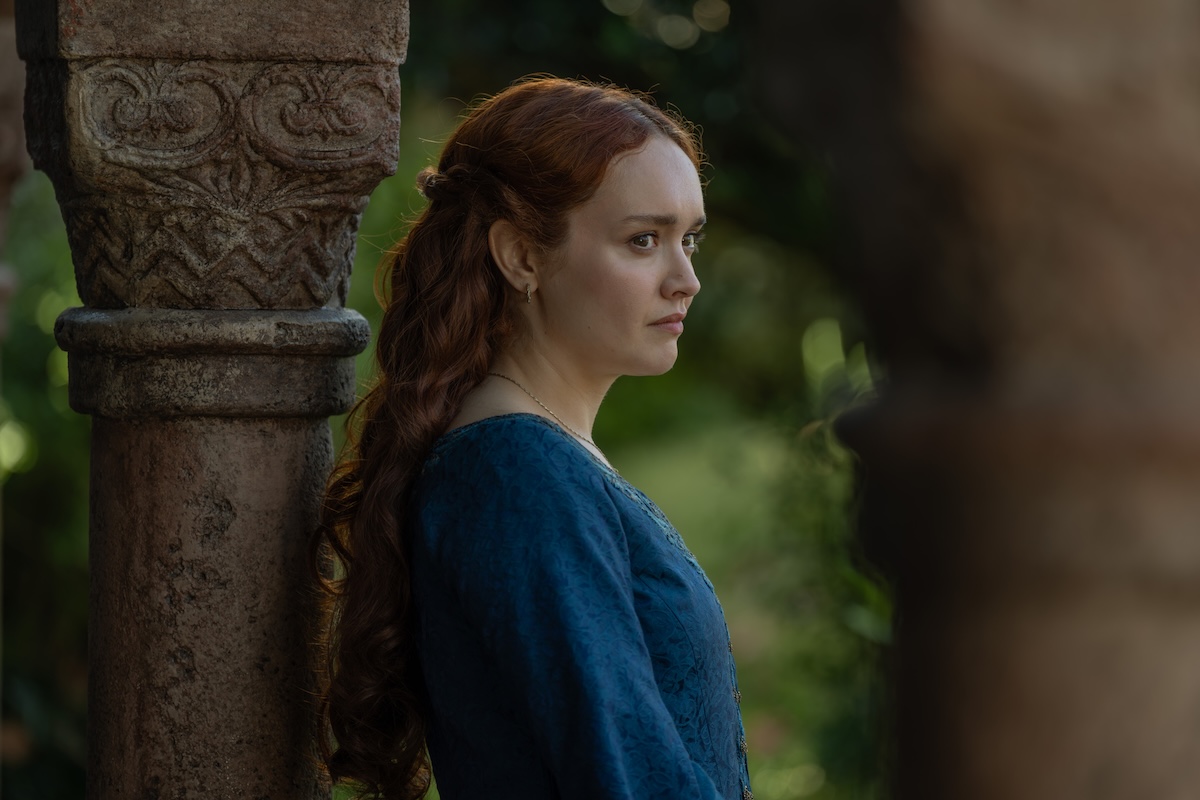
Central to the Green’s resurgence is the character of Lord Ormund Hightower, portrayed with chilling effectiveness by James Norton. Alicent Hightower’s characterization of her cousin to Rhaenyra—a scholar, historian, art collector, balladeer, and intellectual, yet possessing a deep aversion to strong odors and perceived cruelty by her brother Gwayne—paints a complex portrait far beyond the sparse historical details provided by Archmaester Gyldayn in Fire & Blood. Gyldayn primarily identifies Ormund as the head of House Hightower and commander of its army during the Dance, a role now imbued with a compelling, multifaceted personality by the series.
The show has clearly invested in developing Ormund into a formidable antagonist, a stark contrast to the more nuanced portrayal of other characters. Norton masterfully embodies Ormund’s imperious demeanor, cultured affectations, and a barely concealed undercurrent of rage. This characterization serves a crucial narrative purpose, suggesting that the environment of Oldtown, despite its cultural significance, was not conducive to fostering genuine goodness, thereby highlighting Prince Daeron’s inherent decency as a product of nature rather than nurture.
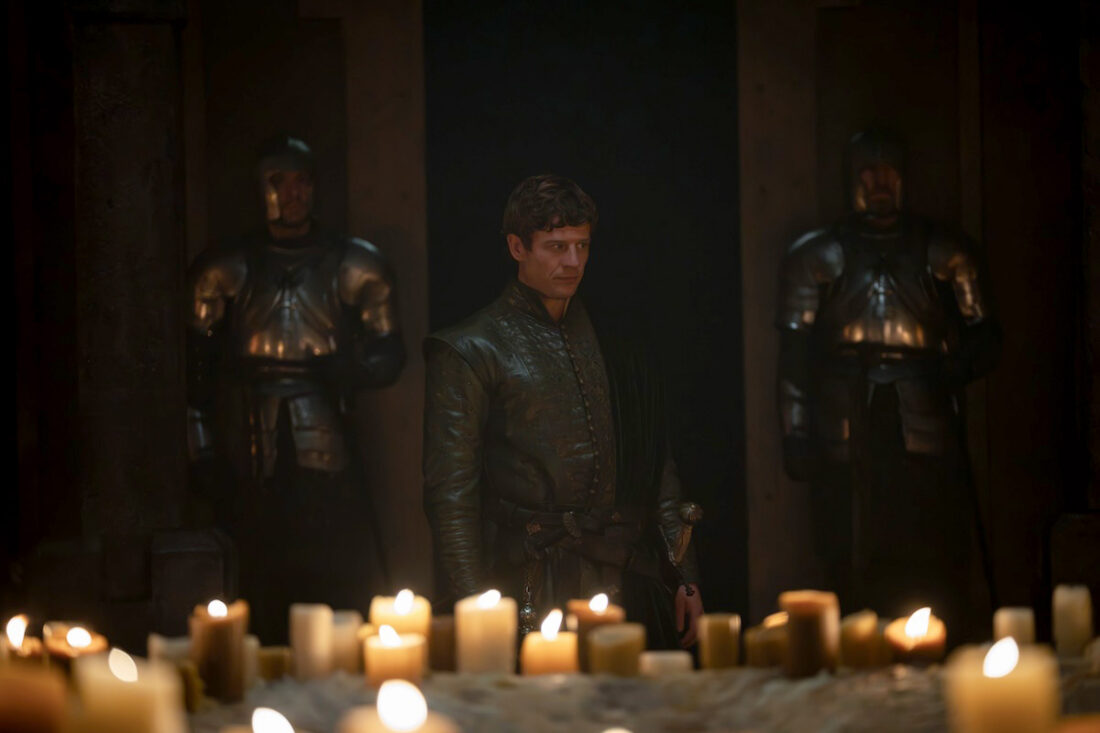
Furthermore, the episode introduces Ormund’s ambition to crown Prince Daeron, a significant deviation from the source material. This ambition, rooted in his anti-Targaryen bigotry, aligns with the historical portrayal of the Hightowers’ complex relationship with the ruling dynasty and their deep-seated pride in their own ancient lineage. This expansion of Ormund’s motivations adds a layer of ideological conflict to the Greens’ cause, positioning them not just as claimants to the throne but as champions of a particular vision for Westeros.
The Hightowers: Stewards of Westerosi Culture and Ancient Legacy
The Hightower family’s prominence is intrinsically linked to Oldtown, a city steeped in history and cultural significance, likely one of the oldest settlements on the continent. For millennia, they have been its rulers, overseeing institutions like the Citadel, the premier academy for maesters, and the Starry Sept, the most important religious site in Westeros during this era, predating the Great Sept of Baelor. Oldtown also boasts the Hightower itself, the tallest structure in Westeros, which lends the family its name.
These institutions—the Citadel, the Starry Sept, and the Hightower—represent more than just physical landmarks; they embody the Hightowers’ perception of themselves as custodians of Westerosi civilization. Their house motto, "We Light the Way," while referencing the lighthouse atop the Hightower, also alludes to their self-appointed role as the guiding light of progress and order. This deep-seated belief in their historical primacy, a sense of having been foundational to the Seven Kingdoms even before the Targaryen ascendancy, fuels their current ambitions. They see themselves not merely as usurpers but as rightful inheritors of a legacy that the Targaryens have disrupted.
The exploration of the Hightowers’ potential origins adds another fascinating dimension. While generally considered descendants of the First Men, there are speculative theories, drawing from the writings of figures like Maester Yandel, suggesting an even more ancient lineage, possibly predating the First Men and aligning with the enigmatic "Great Empire of the Dawn" from Asshai. This theory posits them as possibly being among the very first peoples to inhabit Westeros, a notion that would significantly bolster their claims to cultural and political supremacy. While such ancient origins remain speculative and are unlikely to be fully explored in the series, the in-world belief in such a past underscores the Hightowers’ profound sense of ethno-nationalist pride and their conviction of being the true inheritors of Westeros. Ormund, in this context, emerges not just as a political rival but as an embodiment of this deeply ingrained, almost supremacist, ideology, fueled by a perceived cultural displacement by the Targaryens.
Tumbleton: A Microcosm of War’s Toll
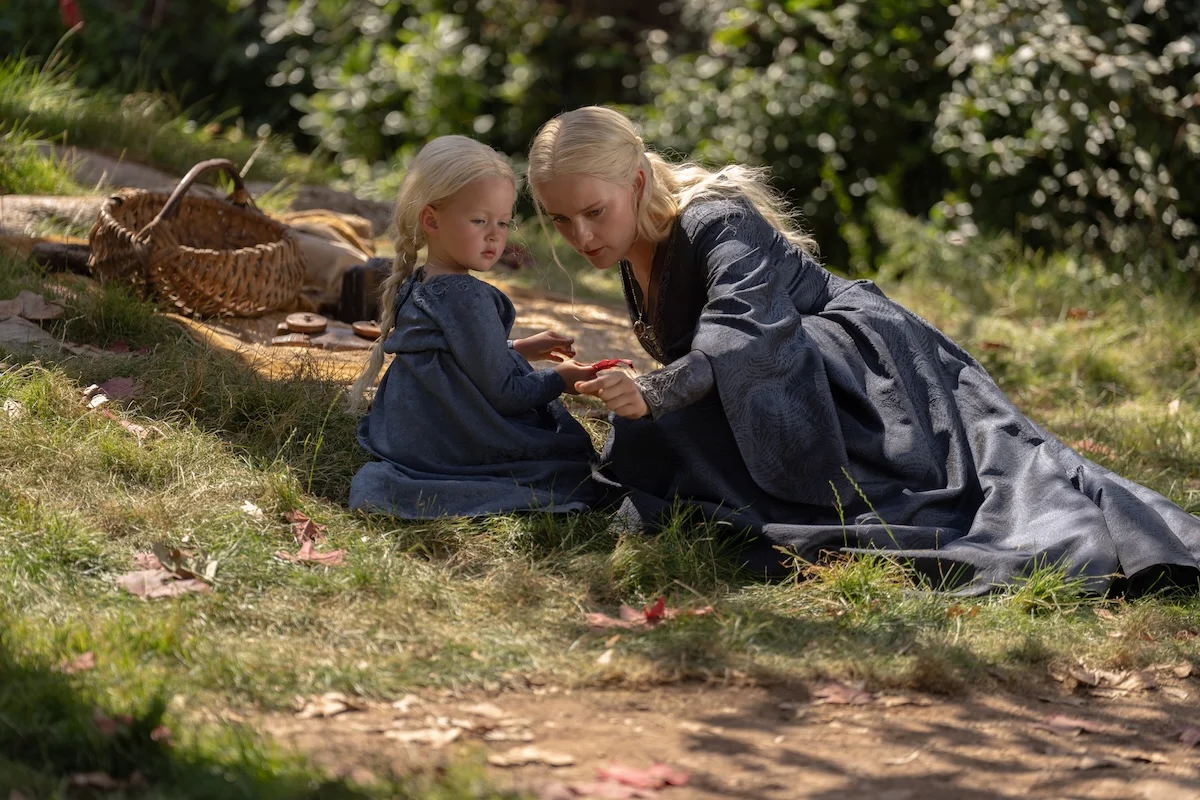
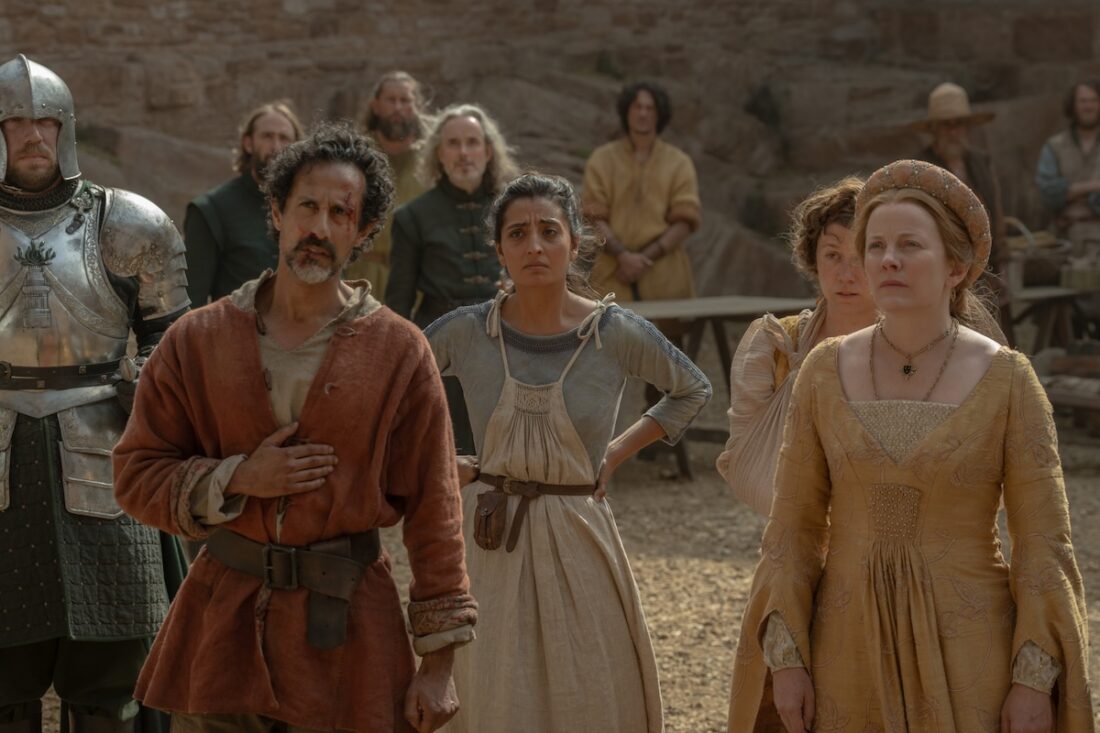
The episode’s visual opening provides establishing shots of Tumbleton, a town strategically positioned on the Mander River. This location’s prominence in the narrative is underscored by the detailed set design, which makes the town feel palpable and lived-in. Tumbleton is described as a prosperous market town, situated sixty leagues from King’s Landing, and serves as the seat of House Footly. The introduction of Lord Glendon and Lady Sharis Footly, played by Adam Brown and Alexandra Moen respectively, alongside Kat, Hugh Hammer’s wife, and her family, offers a street-level perspective on the war’s impact. Kat and her family, original characters to the show, were introduced last season with the explicit purpose of providing this grounded viewpoint.
The architectural design of Tumbleton, characterized by brown stone and distinctive tiered ziggurat or pagoda-like flourishes on its roofs, sets it apart from the predominantly Medieval English aesthetic of Westeros. This unique architectural style, reminiscent of Dragonstone, hints at potential Targaryen influence in the town’s past, despite its current allegiance to the Tyrells. This visual distinction is crucial for audience recognition, ensuring Tumbleton is easily identifiable throughout the season and differentiated from the poorer districts of King’s Landing.
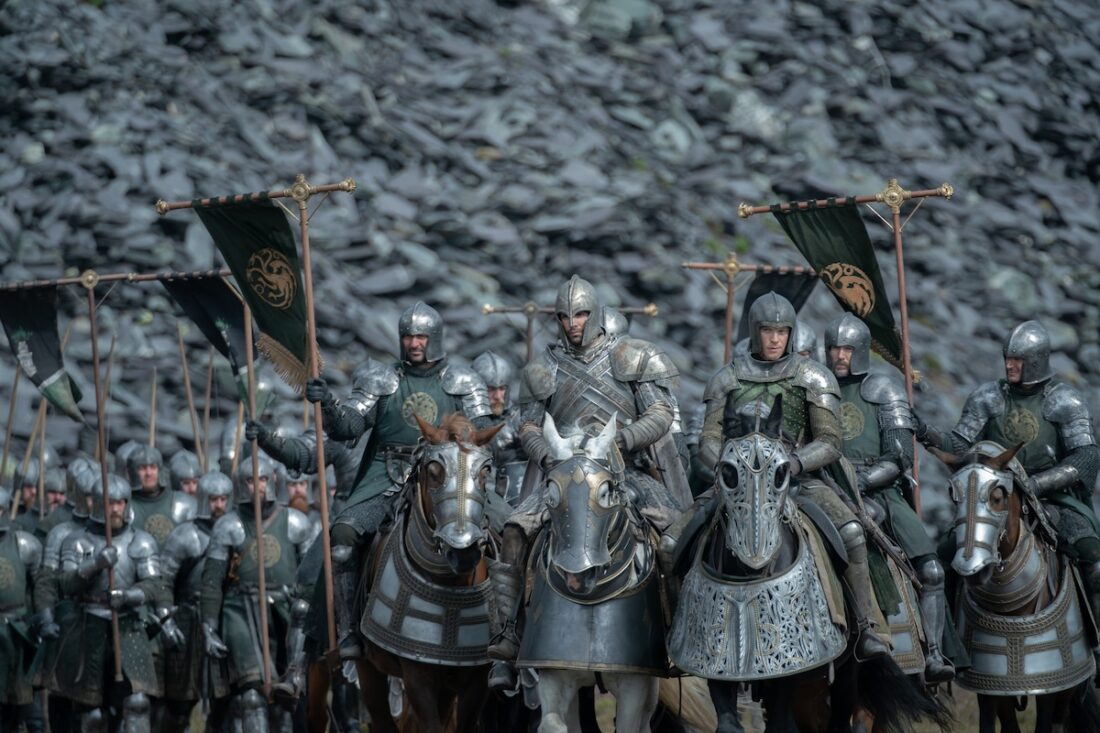
While the historical accounts of Tumbleton in Fire & Blood primarily focus on events yet to unfold in the series, the episode effectively sets the stage. The presence of Hugh and Ulf, two dragonseeds, keeping watch over Kat’s former home, and Ormund Hightower’s moral quandary—forcing Rhaenyra into a difficult position by placing a hostile army near her capital—highlight the complex ethical dilemmas of the war. More importantly, the episode serves as a powerful object lesson in the devastating consequences of war on the common people, a perspective often overlooked in Gyldayn’s more politically focused narrative. The show’s decision to dedicate screen time to the smallfolk’s plight is a welcome departure, offering a more complete picture of the conflict’s human cost. The episode also subtly reinforces the importance of principles like the Third Amendment of the U.S. Constitution, which protects against the forced quartering of soldiers, by depicting the anxieties and dangers faced by civilians when armies occupy their homes. The contrasting circumstances of Kat’s family and the Footlys facing similar unpleasantries, albeit with vastly different stakes, further underscore this theme.
Upstairs and Downstairs: The Shifting Sands of Social Mobility
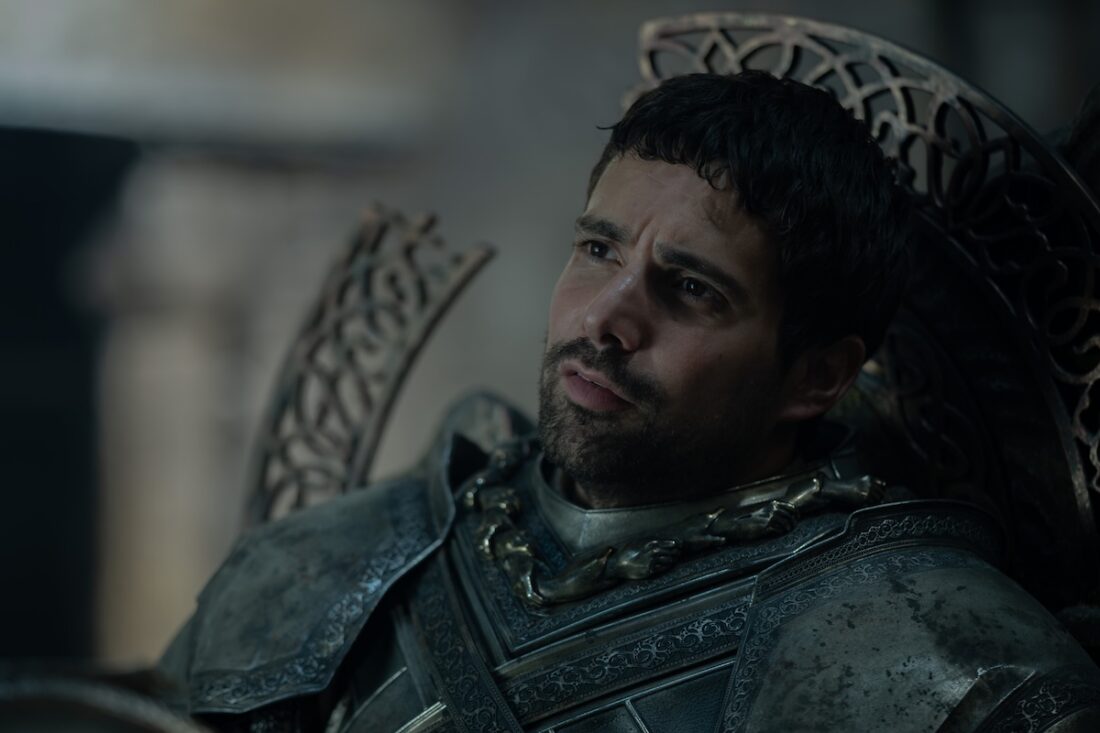
The episode also delves into the intricate social dynamics of Westeros, particularly through the character of Ser Criston Cole. While often a controversial figure, the show’s consistent portrayal of Cole as a product of Westeros’s deeply flawed class structure is noteworthy. Despondent since the Battle of Rook’s Rest, Cole’s anticipation and even welcome of death stem from his dashed hopes for advancement under both Rhaenyra and Alicent. As a knight whose lineage began with his father’s service to lords, Cole’s path to social mobility was heavily reliant on demonstrating his value to those in power.
His trajectory bears a resemblance to characters like Arlan of Pennytree or Dunk from A Knight of the Seven Kingdoms, who also grappled with their social standing. However, unlike them, Cole once embraced the romanticized ideals of chivalry as a means to achieve stability. This episode highlights his bitter resignation and his role as a conduit for insights into the lives of the smallfolk. His proximity to Ulf and Hugh, fellow commoners elevated by the whims of the nobility, suggests a narrative exploration of alternative perspectives on social mobility. While these four dragonseeds, being noble bastards, possess a stronger claim to legitimacy than Cole ever did, their journeys highlight the arbitrary nature of power and status in Westeros. The episode further illustrates this by showing Ulf’s denial of camaraderie, Aegon’s precarious position at the mercy of the Rook’s Rest garrison, and Rhaenyra’s authorization of a raid to quell dissent, all painting a bleak picture of Westerosi nobility.
Dragonwatch: A Glimpse into the Aerial Arsenal
The episode offers a poignant return to the wreckage of Sunfyre, King Aegon II’s dragon, found in the same clearing near Rook’s Rest. Aegon’s insistence that Sunfyre is alive, despite overwhelming evidence to the contrary, serves as a heartbreaking display of princely grief. The show’s visual representation of Sunfyre, with his delicate, canine snout and subtle iridescent scales, accurately reflects historical descriptions without veering into excessive fantasy. The visual effect of motes in the sunlight, ambiguously suggesting flies or ash, adds a layer of morbid beauty to the scene.
The grotesque sight of Meleys’s corpse, slumped over the curtain wall of Rook’s Rest, serves as a stark reminder of Cole’s postmortem beheading of the dragon to commemorate his hard-won, albeit Pyrrhic, victory. Caraxes and Sheepstealer are also featured, showcasing the diverse body types of Westerosi dragons. Vermithor, with his imposing bull horns, is given a more prominent appearance this season.
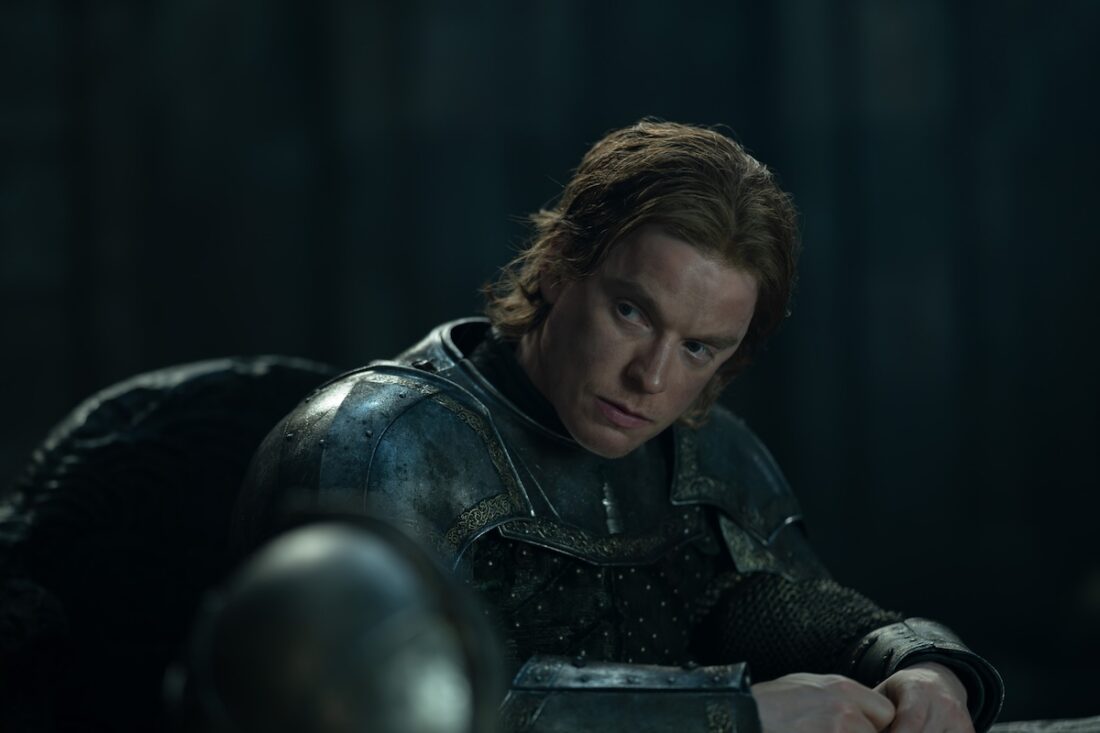
However, Tessarion, the Blue Queen, truly commands attention. Daeron’s dragon, previously seen from a distance, is now presented with close-ups, revealing a stockier, more compact design with short legs, a thick neck, smaller wings, and a stubbier snout. Her unique four-finned neck ridges and relatively long teeth are distinctive features. The visual of Tessarion fitting within the Tumbleton Sept is a striking detail, and her protective snarl when Ormund places an unwelcome hand on Daeron’s shoulder reinforces her fierce loyalty.
Odds & Ends
The episode also weaves in numerous smaller plot threads and character interactions that contribute to the overarching narrative. These include [Here, you would insert specific, fact-based details from the episode that were not covered in the main sections. For example: "the political maneuvering within Rhaenyra’s small council," "the growing unrest among the smallfolk in King’s Landing," "key dialogues between Aegon and his advisors," or "specific tactical discussions among Green commanders." These details should be factual and avoid speculative interpretation.]
Conclusion: A Strategic Realignment
"Tumbleton" functions as a crucial episode of exposition and strategic realignment, setting the stage for the latter half of the season. It effectively introduces Lord Ormund Hightower as a formidable antagonist, elevates Tumbleton to a key flashpoint in the unfolding war, and places characters like Criston Cole and Gwayne Hightower on a collision course with figures such as Oscar Tully and Roddy the Ruin. Simultaneously, it depicts Rhaenyra presiding over a city teetering on the brink of riot, with her small council engaged in internal power struggles. Ormund’s controlled fury, lurking beneath a veneer of civility, presents a compelling hook for viewers, promising a nuanced and dangerous adversary. As the Dance of the Dragons intensifies, "Tumbleton" marks a significant pivot, illuminating the strategic importance of seemingly minor locations and the complex interplay of ambition, ideology, and the devastating human cost of war.