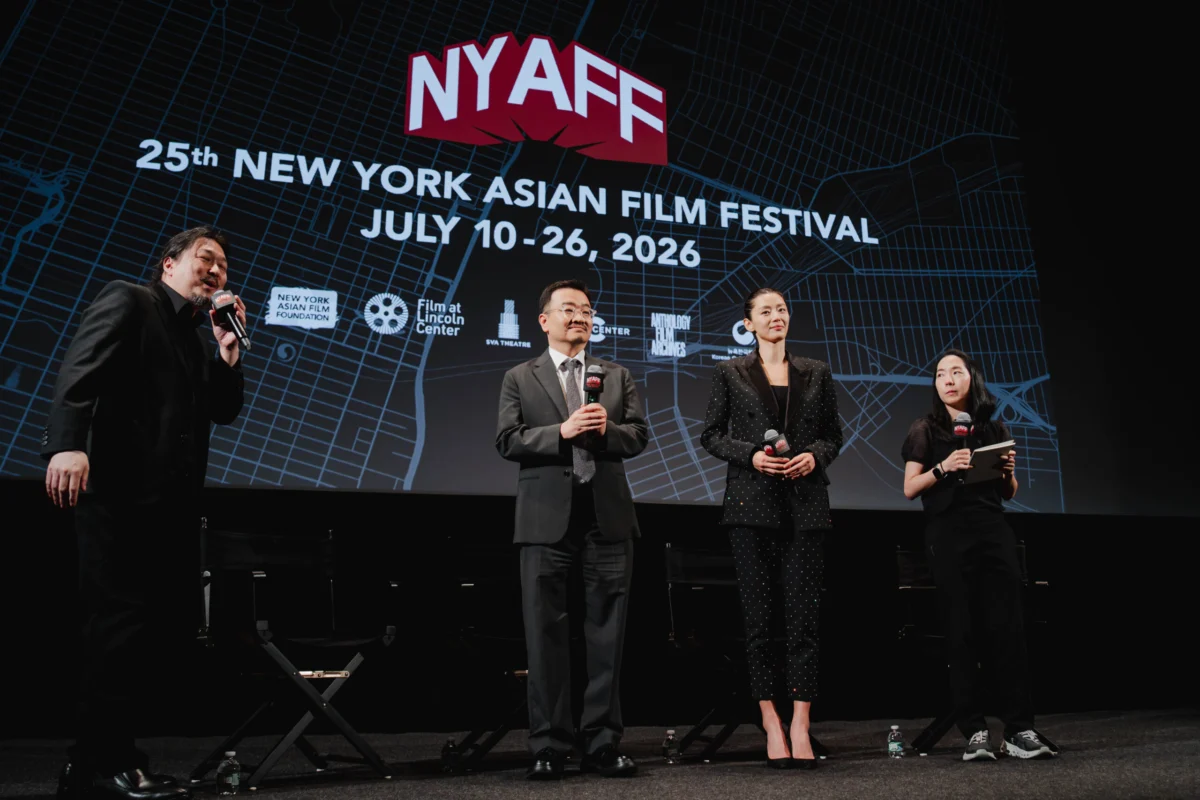
The New York Asian Film Festival (NYAFF) recently hosted a significant discussion with acclaimed South Korean actress Gianna Jun and director Yeon Sang-ho, offering an in-depth look into their latest collaboration, "Colony." The event, centered around a special screening of the film, provided a platform for the duo to explore the movie’s return to the perennially popular zombie genre, its profound anxieties regarding collective intelligence, and the intricate, physically demanding action sequences that define its set pieces. The conversation further illuminated Jun’s character, Kwon Se-jung, the film’s thematic connections to Yeon’s established body of zombie work, and the notable inclusion of Jun’s iconic 2001 romantic comedy, "My Sassy Girl," within this year’s NYAFF program, underscoring the actress’s enduring legacy and the festival’s diverse cinematic offerings.
A Return to the Undead: Yeon Sang-ho’s Evolving Zombie Vision
Director Yeon Sang-ho, widely recognized for revitalizing the zombie genre with his groundbreaking 2016 hit "Train to Busan" and its animated prequel "Seoul Station," articulated his deliberate decision to revisit the undead in "Colony." He drew a direct lineage from his work to the seminal influence of George A. Romero’s 1968 classic, "Night of the Living Dead." Romero’s enduring strength, Yeon posited, lay in its uncanny ability to mirror the latent fears and societal anxieties of its contemporary era. Building on this legacy, Yeon asserted that zombies remain an exceptionally potent metaphor through which to articulate modern dread, given that each historical period invariably grapples with its unique set of concerns.
For "Colony," Yeon revealed his primary focus was the specific anxieties prevalent in the current age, characterized by the rapid proliferation of high-speed information technology, the rise of collective intelligence, and the burgeoning influence of Artificial Intelligence (AI). In his view, "Colony" contributes a fresh perspective to the zombie genre by meticulously exploring the chilling possibility that individual thought and distinct individuality might be systematically eroded or even entirely subsumed by a universal, collective mode of thinking. This thematic ambition elevates "Colony" beyond a mere horror spectacle, positioning it as a contemplative piece on the future of human consciousness in an increasingly interconnected and algorithm-driven world.
Gianna Jun’s Portrayal of Humanity Amidst the Horde
Actress Gianna Jun, a celebrated figure in Korean cinema whose career spans iconic roles from "My Sassy Girl" to "My Love from the Star," addressed questions regarding her character, Kwon Se-jung, and the resonance of her final line in "Colony." This particular line, suggesting a familiarity with being misunderstood or judged, naturally invited speculation about its personal meaning, especially given Jun’s high-profile return to the big screen. However, Jun adeptly redirected the focus, emphasizing the internal logic and integrity of Kwon Se-jung’s character within the narrative framework.
Jun articulated her intention to portray Se-jung as a character who is "special, but also not that special." In a narrative where a rampant zombie infection systematically strips many individuals down to their most primitive instincts, Se-jung stands out by steadfastly clinging to her humanity and moral compass. Rather than rendering her as an overtly exceptional or detached figure, Jun concentrated on a nuanced approach: meticulously analyzing each unfolding situation, proactively seeking pragmatic solutions, and striving to maintain cohesion and harmony within the desperate group of survivors. This grounded portrayal underscores the film’s message that true strength lies not in supernatural abilities, but in the unwavering commitment to human values in the face of existential threat.
Behind the Scenes: Crafting "Colony"’s Intense Action
The discussion at NYAFF also provided fascinating insights into the demanding production of "Colony," particularly the elaborate and often perilous action sequences. Director Yeon Sang-ho highlighted a car chase scene involving Gianna Jun as one of the most challenging to film. Driven by a desire for visceral realism, Yeon consciously eschewed green screen technology for this critical moment. Instead, Jun was positioned inside a moving vehicle with a professional stunt driver, while a dedicated team of performers, portraying zombies, physically collided with the car. The use of real people, authentic motion, and extensive, repeated rehearsals contributed to Yeon describing it as one of the most dangerous segments of the entire production.
Gianna Jun corroborated the intensity of the car scene, describing it as one of her most formidable experiences. She recounted physically experiencing the speed and kinetic energy of the vehicle while simultaneously being required to act with an unaffected demeanor, maintaining her character’s composure amidst the chaos. Concurrently, the relentless impact of zombies striking the car from the exterior amplified the emotional and physical strain, creating a nerve-wracking environment. Jun lightened the mood with a humorous anecdote, revealing that despite the absence of functional brakes on her side of the car, she instinctively kept pressing down, driven by sheer fright. Nevertheless, she reframed the challenging experience positively, likening it to the "most thrilling bumper-car ride" she had ever embarked upon, showcasing her dedication and resilience.
Both Yeon and Jun singled out the "ant mill" sequence as a personal favorite, illustrating its pivotal role in the film’s visual and thematic architecture. Yeon described it as a key visual motif, explaining that approximately 40 to 50 dancers and stunt performers were meticulously coordinated to execute the complex movements, with CGI later employed to refine the final effect. This scene, depicting the infected moving in a self-consuming, collective pattern, serves as one of the most potent visual metaphors for the movie’s central concept: a powerful group intelligence that derives its strength precisely from its successful eradication of individual distinction.
Thematic Undercurrents: Individuality Versus the Swarm
Yeon Sang-ho elaborated on the intellectual foundation of "Colony," particularly his extensive research into colony viruses during the film’s development phase. He became deeply fascinated by the ecological principle that every healthy colony or ecosystem inherently requires variation among its members. He explained that if every individual within a group possesses identical traits, a single weakness or vulnerability could catastrophically compromise the entire collective. Yeon compellingly argued that this fundamental ecological principle holds profound relevance for human society. He posited that while the pursuit of universal language or universal thought might appear logically appealing or even desirable, such aspirations carry an inherent risk: they can paradoxically weaken society if the unique voices, diverse perspectives, and critical insights of minority groups and individuals are systematically suppressed or disappear altogether. This analytical depth firmly places "Colony" within a lineage of science fiction that uses speculative scenarios to comment on contemporary societal trends.
NYAFF and the Global Reach of Korean Cinema
The New York Asian Film Festival, established in 2002, has grown into one of the most prominent showcases for contemporary Asian cinema in North America. Its mission to introduce a diverse range of films—from blockbusters to independent features—to Western audiences makes it an ideal venue for a film like "Colony," which blends genre appeal with intellectual ambition. The festival’s programming often highlights cultural connections and the evolution of cinematic trends, making the dual screening of "Colony" and "My Sassy Girl" particularly symbolic.
Gianna Jun was asked about the significance of "My Sassy Girl" being screened concurrently with "Colony" at NYAFF. She responded by reflecting on the profound ability of cinema to forge connections between people, transcending cultural divides, geographical boundaries, and national borders. For Jun, the fact that both films, representing distinct periods and genres of her career, could be presented to and resonate with audiences in New York underscored the universal appeal of storytelling and rendered her work especially meaningful. "My Sassy Girl," released in 2001, was a seminal film that not only launched Jun into international stardom but also played a crucial role in popularizing Korean romantic comedies globally, contributing significantly to the early waves of the Hallyu, or Korean Wave. Its screening alongside "Colony" served as a powerful testament to the enduring impact of Korean cinema and Jun’s pivotal role within it.
Broader Implications: Korean Cinema’s Continued Ascent
The presence and reception of "Colony" at NYAFF, coupled with the insights shared by Gianna Jun and Yeon Sang-ho, underscore several broader implications for the global film landscape. Firstly, it reinforces the ascendance of Korean cinema as a powerhouse of genre filmmaking that consistently pushes artistic and thematic boundaries. Following the global success of "Train to Busan," and more recently, the critical acclaim for films like Bong Joon-ho’s "Parasite" and the immense popularity of K-dramas, international audiences have developed a robust appetite for Korean narratives. "Colony" appears poised to continue this trend, demonstrating that Korean filmmakers are not merely replicating Western genre tropes but are actively innovating and infusing them with unique cultural and philosophical dimensions.
Secondly, the film’s thematic exploration of collective intelligence and AI speaks directly to urgent contemporary concerns. As societies grapple with the ethical and practical implications of rapidly advancing technology, films that provide a nuanced, even cautionary, perspective offer valuable cultural commentary. Yeon Sang-ho’s deliberate use of the zombie metaphor to dissect fears surrounding the loss of individuality in an increasingly interconnected and algorithm-driven world positions "Colony" as a timely and relevant piece of art, contributing to the broader global discourse on humanity’s future.
In summation, the dialogue between Yeon Sang-ho and Gianna Jun at the New York Asian Film Festival frames "Colony" as far more than another entry in the popular Korean zombie spectacle genre. For Director Yeon, the infected protagonists serve as a potent visual allegory for visualizing contemporary fears about Artificial Intelligence, the dynamics of collective behavior, and the insidious erosion of individual identity. For actress Gianna Jun, her character, Kwon Se-jung, embodies a critical message: her significance lies in her unwavering capacity to retain her humanity, uphold her morality, and maintain clear-sightedness and independent thought, even as the world around her succumbs to the irresistible and overwhelming logic of the swarm. This sophisticated blend of visceral horror and profound social commentary ensures "Colony" will be a significant entry in the evolving narrative of global cinema.