The recent dismal box office performance of DC Studios’ "Supergirl: Woman of Tomorrow" has sent ripples of concern throughout the superhero film industry, raising critical questions about the sustainability and future direction of the genre. The film, which opened to a mere $38 million in North America and approximately $68 million globally over its debut weekend, represents a significant financial setback for a project reportedly costing $170 million before marketing expenses. This performance, only the second release under the new DC Universe leadership of James Gunn and Peter Safran, has amplified anxieties that the seemingly inexhaustible well of superhero cinema might be running dry, a problem that could extend far beyond the confines of a single studio.
A Shift in Audience Appetite?
For nearly two decades, since the advent of the Marvel Cinematic Universe (MCU) with "Iron Man" in 2008, audiences have been accustomed to a sprawling, interconnected landscape of capes, cosmic beings, and extraordinary artifacts. This era has seen dozens of comic book adaptations, many featuring characters once largely unknown to the general public, such as Rocket Raccoon, Ant-Man, and Blue Beetle. These films, often positioned as crucial building blocks for larger, interweaving narratives, have consistently performed well, fostering a perception of an unending buffet of potential billion-dollar blockbusters. However, the underperformance of "Supergirl" suggests that this audience appetite may be waning, or at least becoming more selective.
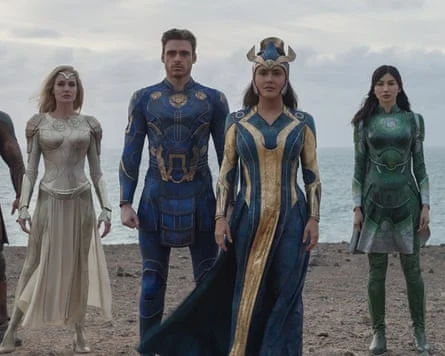
The strategy, largely pioneered by Marvel Studios, was to cultivate a sense of anticipation by introducing and developing lesser-known characters as stepping stones towards monumental team-up events like "The Avengers" films or significant narrative arcs. This approach trained audiences to invest in each new installment, viewing it as a vital component of a larger, unfolding saga. When a film like "Supergirl," despite its pedigree and the established brand recognition of the character, fails to generate significant momentum, it highlights a potential flaw in this long-standing model. This concern is echoed in the box office struggles of other recent superhero films, including Marvel’s "Eternals," Sony’s "Madame Web," and DC’s own "The Flash," all of which failed to meet expectations.
The "Supergirl" Debacle: Financial and Strategic Implications
The financial fallout from "Supergirl" is substantial. With an estimated production budget of $170 million, and considering the significant marketing costs typically associated with tentpole releases, the film is projected to incur substantial losses, potentially in the region of $100 million. This figure, if accurate, places immense pressure on the nascent DC Universe (DCU) as it attempts to establish a cohesive and profitable cinematic identity under Gunn and Safran. The immediate implication is a re-evaluation of the DCU’s expansion strategy. While Safran has publicly stated that the studio’s long-term plans remain unchanged, the financial realities at Warner Bros. could necessitate a more pragmatic approach.

One potential pivot for DC could involve a greater emphasis on its most iconic and recognizable characters. The announcement of Andy Muschietti’s "Batman: The Brave and the Bold," set within the main DCU continuity (distinct from Robert Pattinson’s standalone Batman), signals a strategic focus on established heroes. This move suggests a potential de-emphasis on introducing newer or more niche characters in solo ventures, at least until audience confidence in the broader DCU is demonstrably rebuilt. The future of projects like James Mangold’s "Swamp Thing" and proposed films based on "Teen Titans," "Bane," and "Deathstroke" now hangs in the balance, with studios likely to be more cautious about investing in lower-tier characters without a clear path to mass appeal or a significantly reduced budget.
A Broader Industry Concern: The Risk of Dilution
The challenges faced by "Supergirl" are not isolated to DC. Marvel Studios and its affiliated studios also grapple with the risk of audience fatigue and the potential dilution of their interconnected universes. Sony’s attempts to build a shared universe around Spider-Man villains, such as "Kraven the Hunter," "Morbius," and "Madame Web," have largely failed to gain traction, indicating that simply leveraging established character names is no longer a guaranteed path to success.
The core tenet of the MCU’s success has been its ability to seamlessly integrate diverse characters into grander narratives. However, if individual character films fail to resonate independently, the appeal of the larger team-up events could diminish. For instance, if audiences are not invested in characters like Shang-Chi, their willingness to see them participate in major crossover events like "Secret Wars" might be compromised. This concern is further amplified by a noticeable decline in the overall number of comic book films released annually compared to their peak. Former Disney CEO Bob Iger has also signaled a shift away from the constant stream of Disney+ spin-offs, indicating a broader industry trend towards streamlining and potentially reducing the volume of content. The cumulative effect of reduced quality and quantity could ultimately damage the entire superhero film ecosystem.
Historical Context and Evolving Trends
It is worth noting the historical trajectory of superhero cinema. For decades, Superman was a singular cinematic icon, with early films establishing his presence before the concept of interconnected cinematic universes even existed. The notion of a shared universe, where Superman would eventually meet Batman on the big screen, was a distant prospect. The advent of the MCU fundamentally altered this landscape, creating a model that has dominated Hollywood for over a decade.
However, the current downturn suggests a potential shift in audience preferences or a saturation point for the genre. Factors contributing to this may include an oversaturation of content, a perceived lack of originality, or a growing desire for diverse storytelling beyond the established superhero formula. The increasing prevalence of independent films and genre explorations could also be drawing audiences away from the predictable rhythms of superhero blockbusters.
The Impact on Future Productions
The implications of "Supergirl’s" box office performance extend to upcoming projects across the board. For DC, the immediate future may see a consolidation of efforts around more prominent characters. The success of the upcoming "Superman" film, directed by James Gunn, will be crucial in setting the tone and direction for the new DCU. If "Superman" proves to be a major hit, it could provide a much-needed injection of confidence and allow for a more gradual and strategic expansion of the universe. Conversely, a weak performance would likely accelerate a shift towards a more limited and character-focused approach.
For Marvel, the challenge lies in maintaining the interconnectivity and narrative momentum that has been its hallmark. The studio’s ability to deliver compelling solo films that also serve the larger tapestry of the MCU will be paramount. The upcoming "Avengers" films, such as "Secret Wars," will require a strong foundation of audience engagement with the individual characters involved. If standalone films continue to falter, the impact on these larger ensemble projects could be significant.
A Grim Irony for the Genre
The current situation presents a peculiar and potentially tragic irony for the superhero genre. The very elements that made these films so inspiring and successful – the imaginative crossovers, the witty banter between iconic heroes, and the epic scale of multiversal conflicts – could ultimately be the factors that contribute to the decline of the superhero cinematic universe era. If audiences begin to disengage from the individual threads of these sprawling narratives, the intricate web that has captivated millions may begin to unravel.
The continued success of superhero films hinges on their ability to innovate, to offer fresh perspectives, and to connect with audiences on a deeper level than mere spectacle. The "Supergirl" box office results serve as a stark reminder that the audience for such films, while vast, is not inexhaustible. The industry now faces the critical challenge of adapting to evolving tastes and ensuring that the magic that drew audiences in the first place can be sustained in a changing cinematic landscape. The coming years will be pivotal in determining whether the superhero genre can reinvent itself or if its current iteration is destined to fade into the annals of cinematic history.