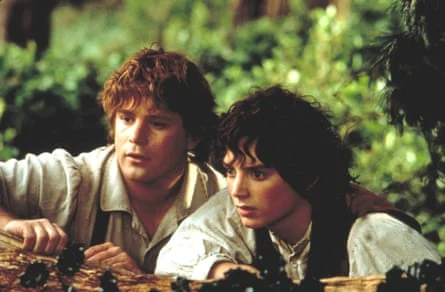
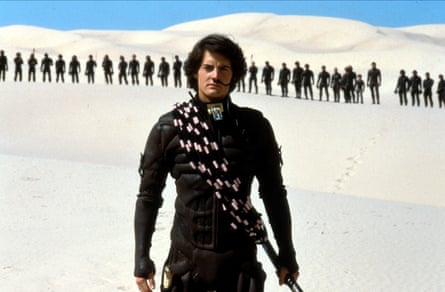
The cinematic landscape is perpetually reshaped by ambitious adaptations of literary classics, with the seemingly "unfilmable" often yielding to visionary direction and technological advancements. From the monumental undertaking of Peter Jackson’s The Lord of the Rings, which transformed Tolkien’s epic into an Oscar-winning saga with a budget and visual effects team befitting the grandeur of Middle-earth, to Denis Villeneuve’s masterful reimagining of Dune that transcended the stumbles of David Lynch’s 1984 iteration, the evolution of filmmaking capabilities has consistently challenged the boundaries of literary translation. Now, Roger Avary, a filmmaker with a notable pedigree including co-writing credits on Quentin Tarantino’s Pulp Fiction and directing cult favorites like Killing Zoe and The Rules of Attraction, has announced a project poised to push these boundaries further: a screen adaptation of John Milton’s Paradise Lost, to be brought to life through the nascent power of artificial intelligence.
This announcement arrives at a particularly charged moment, both for the creative industries and for society at large, as discussions surrounding the ethical implications, economic impact, and artistic merit of generative AI technologies intensify. The prospect of handing over one of the most foundational narratives in Western literature—the epic account of Satan’s rebellion against God and humanity’s original sin—to an artificial intelligence system is inherently provocative, raising profound questions about authorship, originality, and the very essence of artistic creation.
The Unfilmable Epic: Milton’s "Paradise Lost"
John Milton’s 17th-century epic poem, Paradise Lost, has long been considered a literary titan, a work of immense theological depth and poetic power. Its scope is staggering, encompassing the celestial realms, the fall of Lucifer and his legions, and the creation and subsequent expulsion of Adam and Eve from the Garden of Eden. The poem’s dense theological arguments, its complex characterizations of divine and infernal beings, and its sheer linguistic brilliance have historically presented significant hurdles for adaptation. While some elements might seem ripe for visual interpretation, the deeply religious and philosophical underpinnings have often rendered it an outlier, too sacred for pure fantasy and too dramatically potent for a purely reverential treatment. The narrative’s inherent drama, often described as exceeding the combined output of entire cinematic universes, is woven into its thunderous iambic pentameter, a testament to Milton’s masterful command of language and theological concept.
A Technological Frontier: AI in Filmmaking
The idea of AI-generated films is not entirely new. As far back as 2021, directors like Joe Russo, known for his work on Marvel’s Avengers franchise, predicted a future where AI would be instrumental in film creation. However, the practical application of AI in producing complete, coherent, and artistically satisfying feature films has remained largely in its nascent stages. Current impressive, albeit limited, examples of AI-driven filmmaking often still necessitate significant human intervention. Editors meticulously curate usable shots, and writers or directors guide the AI’s output to ensure narrative coherence and thematic resonance. The phenomenon, often colloquially termed "AI slop," refers to the often generic, derivative, or aesthetically uninspired results that can emerge when AI is applied without sophisticated creative direction.

Avary’s ambition to leverage AI for Paradise Lost suggests a potential leap beyond these current limitations. The announcement, made through industry sources, indicates a deliberate choice to explore the capabilities of advanced AI models in generating visual elements and potentially even narrative structures. The specifics of which AI platforms or proprietary technologies Avary intends to employ have not yet been fully disclosed, but the implication is a significant investment in exploring this cutting-edge production method.
Chronology of Adaptations and Technological Evolution
The journey of adapting Paradise Lost for the screen, or indeed any seemingly unfilmable work, has been long and fraught with challenges:
- 17th Century: John Milton publishes Paradise Lost (1667) and its sequel, Paradise Regained (1671). The poem’s immediate impact is on literature and theological discourse.
- Mid-20th Century: Early cinematic attempts to capture the epic scale of biblical narratives emerge, often relying on large-scale practical effects and extensive casts. However, the theological complexities of Paradise Lost remain a significant barrier to a direct cinematic translation.
- 1980s: The era sees ambitious, though sometimes flawed, adaptations of science fiction epics. The 1984 film Dune, directed by David Lynch, is a prime example of a visually striking but narratively challenged adaptation of a complex novel. This period highlights the evolving, yet still limited, technological capacity for translating dense literary worlds.
- Late 20th/Early 21st Century: The advent of sophisticated computer-generated imagery (CGI) revolutionizes visual storytelling. Peter Jackson’s The Lord of the Rings trilogy (2001-2003) becomes a landmark achievement, demonstrating that even the most expansive fantasy worlds can be realized on screen with unprecedented detail and scope, supported by massive budgets and vast visual effects teams.
- 2010s: Digital filmmaking and advanced AI research begin to converge. Machine learning algorithms start showing potential in image generation and pattern recognition, hinting at future applications in creative fields.
- 2020s: The widespread availability and rapid advancement of generative AI tools like Midjourney and Runway ML spark intense debate. These tools demonstrate the ability to create novel images and video sequences from textual prompts, leading to experiments in AI-assisted art and filmmaking.
- Present: Roger Avary announces his intention to adapt Paradise Lost using AI, marking a significant step in exploring this technology for a major narrative epic.
Potential Implications and Industry Reactions
The implications of Avary’s project are far-reaching, touching upon economic, artistic, and philosophical dimensions of filmmaking.
Economic Considerations: The potential for AI to reduce production costs is a significant draw. Traditionally, epic films require vast resources for set design, location scouting, special effects, and large crews. If AI can streamline these processes, it could democratize large-scale filmmaking, enabling smaller studios or independent filmmakers to tackle ambitious projects. However, concerns persist about the displacement of human labor in various creative and technical roles, from concept artists and set designers to visual effects technicians and even actors, should AI eventually be capable of generating photorealistic digital performances.
Artistic Integrity and Authorship: The core of the debate surrounding AI in art lies in its capacity for genuine creativity and authorship. Critics argue that AI, by its nature, is derivative, trained on existing data and thus incapable of true originality or emotional depth. The fear is that AI-generated art, or "AI slop" as it’s sometimes derisively called, will lead to a homogenization of creative output, prioritizing efficiency and pattern recognition over genuine human insight and artistic expression. Avary’s choice of Paradise Lost, a work steeped in profound theological and philosophical inquiry, makes this question particularly poignant. Can an AI truly capture the anguish of a fallen angel, the divine wisdom of God, or the complex moral choices of humanity?
The "Soul" of Cinema: The article’s original commentary touches upon a crucial concern: whether an AI-generated film can possess a "soul." This refers to the intangible quality that resonates with audiences, the emotional connection forged through human experience, intention, and vulnerability. While AI can mimic styles and generate aesthetically pleasing images, the capacity for conveying authentic emotion, nuanced performance, and a deeply felt artistic vision remains a subject of intense scrutiny. As one commentator noted, even the most impressive AI film-making to date has relied on human curation to achieve coherence. The question is whether Avary’s approach will transcend this, or whether the reliance on AI will ultimately dilute the profound humanistic and spiritual themes at the heart of Milton’s epic.
Inferred Reactions: While direct statements from stakeholders have not yet been released, the announcement is likely to elicit a spectrum of responses:
- AI Developers and Advocates: Will likely hail the project as a groundbreaking demonstration of AI’s creative potential, showcasing its ability to handle complex narratives and visual demands.
- Filmmakers and Artists: May express a mix of excitement about new tools and deep concern about the future of their professions, the definition of art, and the potential for devalued creative labor.
- Literary Scholars and Critics: Will undoubtedly engage with the project from a critical perspective, questioning how AI can interpret and represent Milton’s theological and philosophical complexities.
- The Public: Will likely be intrigued by the technological novelty, but also divided on the artistic merits and ethical implications.
A Bold Experiment in the Age of AI
Roger Avary’s undertaking is undeniably audacious. He aims to harness a technology that is still in its developmental infancy to tackle one of literature’s most challenging and profound works. The success of this project will hinge not only on the technical capabilities of the AI employed but, more critically, on Avary’s skill as a visionary director and storyteller. His ability to guide, curate, and imbue the AI’s output with artistic intent will be paramount.
The choice of Paradise Lost also carries a certain thematic resonance in the context of AI. The story of Lucifer’s fall is a narrative about ambition, rebellion, and the desire to transcend limitations. In a way, the development of AI itself mirrors these themes. However, the article’s closing sentiment rings true: regardless of how technically proficient the AI becomes, the question of whether it can imbue its creation with genuine soul and meaning remains the ultimate challenge. The world will be watching to see if Avary’s Paradise Lost can achieve cinematic transcendence or if it becomes a cautionary tale about the limits of artificial creation in the face of profound human artistry.