Director James Gray returned to the competitive landscape of international cinema at the 2026 Cannes Film Festival with the premiere of Paper Tiger, a gritty 115-minute crime drama that explores the volatile intersection of familial loyalty and the American Dream. Starring Adam Driver, Scarlett Johansson, and Miles Teller, the film represents Gray’s latest foray into the underworld of New York City, a setting that has defined much of his most celebrated work. Set in 1986 Queens, the narrative follows two brothers who become entangled with the burgeoning Russian mafia, marking a thematic return to the director’s roots in independent crime cinema. As one of only two American productions selected for the prestigious Palme d’Or competition in a year characterized by a limited U.S. presence, Paper Tiger arrived with significant industry expectations, serving as both a character study and a critique of capitalist ambition.
Narrative Overview and Character Dynamics
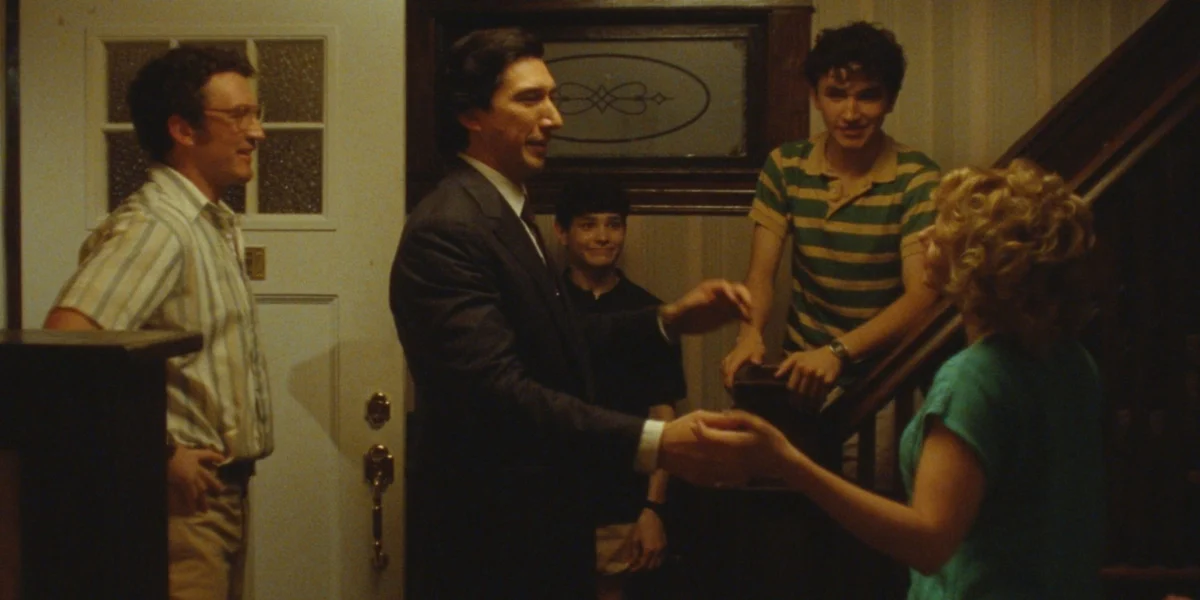
The plot of Paper Tiger centers on the Pearl family, who, despite various financial setbacks, have carved out a stable existence in the borough of Queens. Irwin Pearl, portrayed by Miles Teller, is a disciplined engineer whose technical expertise provides the foundation for his family’s middle-class lifestyle. His wife, Hester, played by Scarlett Johansson, manages the household and the emotional well-being of their two teenage sons, one of whom is on the cusp of departing for university. The family’s equilibrium is disrupted by the arrival of Irwin’s brother, Gary, played by Adam Driver.
Gary is a former police officer with an expansive network of city connections and a personality defined by a "fixer" mentality. He approaches Irwin with a proposition to consult on a new business venture involving the ports along the Gowanus Canal. In the mid-1980s, these waterways became a contested territory following the decline of Italian organized crime’s dominance. Gary has aligned himself with a rising faction of Russian gangsters who are eager to exploit the logistical complexities of the heavily polluted canal. While Irwin is recruited to handle the scientific and regulatory hurdles of the operation, Gary manages the interpersonal and often violent negotiations with the Russian underworld. The brothers soon find themselves navigating a landscape governed by paranoia, where technical errors and street-level misunderstandings carry lethal stakes for the entire Pearl family.
Historical Context and Production Background
James Gray’s filmography has long been preoccupied with the immigrant experience and the moral decay inherent in the pursuit of wealth. Paper Tiger is frequently compared to his earlier works, such as Little Odessa (1994) and We Own the Night (2007), which also dealt with the Russian-Jewish diaspora and the tensions of law enforcement in New York. However, Paper Tiger focuses specifically on the transitional period of the 1980s, when the "Bratva" (Russian mafia) began to establish a firm foothold in Brooklyn’s Brighton Beach and surrounding industrial zones.
The production of the film sought to replicate the specific "grime" of 1980s New York, moving away from the polished, epic aesthetics Gray utilized in Ad Astra (2019) or The Lost City of Z (2016). Reports from the set indicated that Gray and his cinematographer opted for a visual style that emphasized the drab, industrial atmosphere of the Gowanus Canal. This stylistic choice has been a point of contention among critics, with some noting that the film’s "muddy" and "drab" appearance feels like a departure from Gray’s typical visual sophistication. Despite these critiques, the film’s period-accurate production design effectively captures a city in flux, caught between its industrial past and a future defined by gentrification and corporate expansion.
Chronology of Development and Festival Reception
The development of Paper Tiger was first announced in late 2024, following the critical success of Gray’s semi-autobiographical Armageddon Time. Casting for the lead roles was finalized in early 2025, bringing together three of Hollywood’s most prominent actors.
- January 2025: Adam Driver and Miles Teller are cast as the Pearl brothers, with Scarlett Johansson joining shortly after as the female lead.
- May 2025: Principal photography begins on location in Queens and Brooklyn, specifically around the Gowanus Canal.
- November 2025: Post-production commences, with Gray reportedly emphasizing a "rough, scrappy" editing style to mirror the film’s themes.
- May 2026: Paper Tiger premieres at the 79th Cannes Film Festival.
The reception at Cannes was categorized by a respect for Gray’s craftsmanship but a realization that the film might struggle to reach the heights of his previous masterpieces. While the director has become a vocal advocate for traditional filmmaking—often speaking out against AI and the loss of physical media—Paper Tiger is seen as a "mid-budget" effort that seeks to preserve the soul of American independent cinema in an increasingly blockbuster-dominated market.
Critical Analysis of Performance and Direction
Adam Driver’s performance as Gary has been highlighted as the film’s centerpiece. Critics have praised his ability to convey the swagger of a man who believes he can talk his way out of any situation, even as the walls of the Russian underworld close in. Driver’s portrayal captures the "American Dream" in its most desperate form—the belief that one is always one deal away from total security.
In contrast, Miles Teller provides a grounded, reactionary performance as Irwin. His character serves as the audience’s surrogate, experiencing the slow realization that his brother’s "opportunity" is actually a death trap. The chemistry between Driver and Teller is essential to the film’s tension, as their fraternal bond is tested by the Russians’ demands for absolute loyalty.
However, the role of Hester Pearl has been viewed as a missed opportunity within the screenplay. Despite Scarlett Johansson’s proven range, her character is largely confined to the domestic sphere, reacting to the decisions made by the men. While the script introduces a subplot involving Hester’s health—intended to heighten the emotional stakes—analysts suggest this element leans into melodrama rather than contributing to the central crime narrative. Gray’s tendency toward sentimentality, which served him well in Armageddon Time, is perceived here as occasionally undercutting the visceral tension of the thriller elements.
Technical Execution and Stylistic Choices
One of the more surprising aspects of Paper Tiger is its technical presentation. Historically, James Gray has been associated with a high degree of visual polish, working with world-class cinematographers to create lush, painterly frames. In Paper Tiger, the aesthetic is intentionally unrefined. The film utilizes a dark palette that reflects the pollution of the Gowanus Canal and the moral ambiguity of its characters.
The editing has also been described as "sloppy and uneven" by some early reviewers. This may be an intentional choice by Gray to reflect the frantic, disorganized nature of the brothers’ descent into crime. However, for an audience accustomed to the precision of Gray’s earlier work, this "scrappy" quality can be jarring. The film’s climactic standoff and its high-tension "sit-down" scenes between Gary and the Russian crime bosses demonstrate that Gray still possesses a command over suspense, even if the surrounding narrative framework feels less cohesive than his previous efforts.
Industry Implications and Broader Impact
The release of Paper Tiger comes at a critical juncture for the film industry. As mid-budget dramas continue to disappear from theatrical release schedules in favor of streaming platforms, Gray remains one of the few directors capable of securing significant funding for original, non-franchise stories. The film’s presence at Cannes underscores the importance of maintaining a space for "adult" cinema that prioritizes character and theme over spectacle.
Furthermore, the film’s exploration of the Russian mafia in the 1980s offers a historical reflection on how global shifts in power affect local communities. By focusing on the Gowanus Canal—a site that is today synonymous with luxury real estate—Gray reminds audiences of the city’s violent and industrial heritage.
From a business perspective, the performance of Paper Tiger will be a bellwether for the viability of star-driven crime dramas. With three A-list actors, the film carries a higher financial risk than the typical indie feature. If it succeeds in finding a broad audience, it could encourage studios to continue investing in "old-school" storytelling. If it falters, it may signal a further retreat into the safety of established intellectual properties.
Conclusion
Paper Tiger stands as a testament to James Gray’s enduring commitment to the craft of filmmaking, even when the final product receives a polarized response. It is a film that grapples with the complexities of brotherhood and the high cost of entry into the American capitalist system. While it may not be regarded as the pinnacle of Gray’s career, it reinforces his status as a vital voice in American cinema—a filmmaker who is unafraid to revisit familiar genres through a more personal, and sometimes painful, lens. As the 2026 festival season continues, Paper Tiger will likely remain a topic of discussion for its performances, its technical choices, and its unflinching look at the darker side of the pursuit of prosperity.