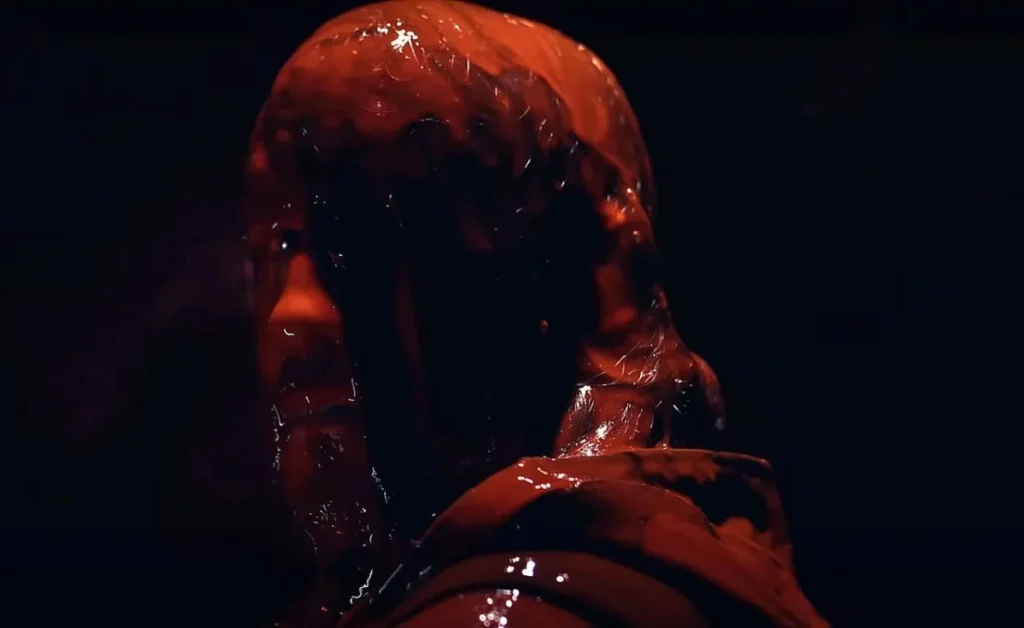
The highly anticipated trailer for 20th Century Studios’ upcoming film, Whalefall, has generated significant buzz following its premiere at CinemaCon in Las Vegas. Described by attendees as "extremely horror-adjacent," the footage offers a visceral glimpse into a terrifying survival scenario that has left audiences eager for more. The film, based on the acclaimed novel by Daniel Kraus, centers on a scuba diver’s desperate fight for survival after being swallowed by an 80-foot sperm whale, with a ticking clock of one hour before his oxygen supply is depleted.
A Terrifying Encounter Unveiled
The trailer’s most impactful sequence, as reported by The Hollywood Reporter, depicts the film’s protagonist, played by Austin Abrams, on a deep-sea diving expedition. The scene takes a harrowing turn when Abrams encounters a colossal squid, immediately followed by the appearance of an immense whale. Trapped against underwater rock formations with no apparent escape route, his situation becomes dire. The trailer intensifies as Abrams attempts to swim away and conceal himself within a kelp forest, only to be relentlessly pursued by the colossal marine predator circling in the oppressive darkness.
The narrative escalates dramatically as the whale lunges, initiating a desperate struggle for survival. Abrams is shown clinging to the whale’s tongue, fighting against its massive form. The trailer culminates in the harrowing moment of him being swallowed whole, his screams echoing as he descends into the whale’s gullet. The visual culminates with bubbles erupting from his diving mask and his descent into the creature’s interior before the screen cuts to black, leaving viewers on the edge of their seats. This depiction, confirmed by those who have read Kraus’s novel, is said to be as terrifying as it sounds, with the narrative promising to maintain this breathless intensity throughout.
The Premise: The Martian Meets 127 Hours in the Ocean’s Depths
Whalefall is being positioned as a unique blend of the meticulous survival planning seen in The Martian and the intense, claustrophobic human drama of 127 Hours, but set against the vast and unforgiving backdrop of the ocean. The film’s core plot follows a young scuba diver on a somber mission: to recover the remains of his deceased father. His expedition takes a catastrophic turn when he is engulfed by an 80-foot, 60-ton sperm whale. With his oxygen supply dwindling rapidly, he has precisely one hour to devise a strategy for escape from within the belly of the beast. The narrative explores the psychological and physical toll of such an ordeal, suggesting that the protagonist, after initially succumbing to despair, discovers an unexpected will to live in the most perilous and improbable of circumstances.
This premise taps into primal fears of being trapped, the vastness of nature’s power, and the ultimate vulnerability of the human body against overwhelming natural forces. The juxtaposition of the scientific problem-solving required for survival, akin to Mark Watney’s Martian predicament, with the immediate, physical threat and psychological isolation, mirrors the gripping tension of Aron Ralston’s true-life ordeal.
A Star-Studded Cast and Visionary Direction
The film is anchored by a compelling cast. Austin Abrams, known for his roles in Scary Stories to Tell in the Dark and Euphoria, takes on the challenging lead role. He is joined by the formidable Josh Brolin, whose extensive resume includes critically acclaimed performances in films like No Country for Old Men and Grindhouse. The directorial vision for Whalefall belongs to Brian Duffield, who has previously showcased his ability to craft engaging and often genre-bending narratives, including the screenplay for Jane Got a Gun and the direction of Spontaneous.
The supporting cast further bolsters the film’s appeal. Elisabeth Shue, a veteran actress with a career spanning decades and memorable roles in The Karate Kid and Leaving Las Vegas, adds significant gravitas. John Ortiz, recognized for his contributions to films such as American Gangster and genre entries like Aliens vs. Predator: Requiem, brings his distinctive presence to the ensemble. Jane Levy, who has impressed audiences with her performances in Evil Dead and Don’t Breathe, and Emily Rudd, a rising star known for her work in the Fear Street trilogy and One Piece, complete the ensemble, promising a rich and diverse on-screen dynamic.
From Novel to Screen: The Genesis of Whalefall
The film’s narrative originates from the gripping novel of the same name by Daniel Kraus. Kraus is a celebrated author known for his ability to weave suspenseful and often dark tales, frequently collaborating with Guillermo del Toro on projects like The Shape of Memory. His work often delves into themes of isolation, resilience, and the darker aspects of human nature, making his novel a natural fit for cinematic adaptation. The adaptation process from a literary work to a visual medium often involves condensing narrative arcs, expanding on character development, and translating internal monologues into external action. The success of Whalefall will likely hinge on its ability to capture the claustrophobic tension and psychological depth of Kraus’s source material while delivering the spectacle of a high-stakes survival thriller.
Strategic Release for Maximum Impact
20th Century Studios has strategically slated Whalefall for release just in time for the Halloween season, with a premiere date set for October 16, 2026. This timing suggests an intention to capitalize on the season’s appetite for thrilling and potentially frightening cinematic experiences. The film’s horror-adjacent elements, coupled with its intense survival narrative, position it as a strong contender for audiences seeking a jolt of adrenaline during the autumn months. The release date also allows for ample marketing campaigns to build anticipation, particularly following the strong reception of the trailer at CinemaCon.
The Broader Implications of a High-Concept Thriller
The unveiling of Whalefall at a major industry event like CinemaCon signifies a strong endorsement from the studio and suggests a significant marketing push is anticipated. The film’s success could have several implications for the genre and the studio.
Firstly, it underscores a continued audience appetite for high-concept survival thrillers that push the boundaries of human endurance and place characters in extreme, seemingly insurmountable situations. The success of films like The Shallows (a woman battling a shark) and the aforementioned 127 Hours demonstrates a market for these types of visceral, character-driven narratives.
Secondly, the "horror-adjacent" description hints at a potential expansion of what constitutes a horror film, incorporating elements of intense suspense, psychological dread, and the terrifying power of nature without necessarily relying on supernatural or traditional horror tropes. This could open doors for similar films that blend genres to appeal to a wider audience.
Thirdly, the casting of established and rising talent, coupled with a well-regarded source novel, provides a solid foundation for critical and commercial success. The performance of Austin Abrams in such a demanding role will be particularly scrutinized, as will the film’s ability to translate the internal struggle of survival into compelling on-screen drama.
Finally, the strategic release date suggests a confidence in the film’s ability to deliver a memorable and impactful experience, positioning it as a potential genre standout for the 2026 Halloween season. The coming months will undoubtedly reveal more about the film’s marketing strategy and the full scope of its terrifying underwater journey. The initial reaction from CinemaCon indicates that Whalefall is poised to make a significant splash in the cinematic landscape.