The American media landscape is undergoing a fundamental transformation as traditional news institutions, including legacy television networks and established newspapers, lose their status as the primary sources of information for the public. According to a comprehensive new study conducted by Ipsos for the Jordan Center for Journalism Innovation and Advocacy at the University of Mississippi, a significant majority of Americans now bypass traditional gatekeepers in favor of online influencers, opinionated personalities, and comedians. This shift is particularly pronounced among active voters, signaling a move toward a personality-driven information economy that prioritizes ideological alignment and entertainment value over traditional journalistic standards of objectivity and institutional authority.
The Shift in Consumption Habits: Data and Demographics
The survey, conducted in March 2024, reveals a stark disparity between digital and traditional media engagement. According to the data, nearly 70 percent of respondents reported obtaining their news through online platforms in any given week. This figure significantly outpaces television, which was cited by 55 percent of participants, and dwarfs print newspapers, which have plummeted to a mere 25 percent engagement rate.
The transition to digital consumption is not merely a change in medium but a change in the type of content being consumed. The poll highlights that the modern "news consumer" is increasingly likely to follow specific individuals rather than organizations. This "de-institutionalization" of news means that the reputation of a single creator often carries more weight than the masthead of a century-old newspaper.
Social media platforms have become the primary conduits for this new era of information. Facebook, YouTube, and Instagram emerged as the most popular online news sources among respondents. These platforms utilize algorithmic curation that favors high-engagement content, often elevating voices that are provocative, humorous, or deeply ideological—qualities that traditional "hard news" reporting often lacks.
The Dominance of the Conservative News Influencer
One of the most striking findings of the Ipsos poll is the overwhelming influence of right-leaning personalities. When respondents were asked to identify their primary news influencers, conservative figures dominated the rankings. The poll initially found that political figures themselves are now viewed as primary news sources. Former President Donald Trump and Senator JD Vance were among the only three individuals to crack the 10 percent threshold of influence among the total population.
When active politicians and cabinet members were excluded from the list to focus on media creators, the data revealed a hierarchy of influence led by Joe Rogan. Rogan, host of "The Joe Rogan Experience," has parlayed his long-form podcasting format into a massive information hub that transcends traditional categories of "news" or "entertainment."
Following Rogan, the list was populated heavily by Fox News personalities and independent conservative commentators:
- Greg Gutfeld: Known for his late-night style satire on Fox News.
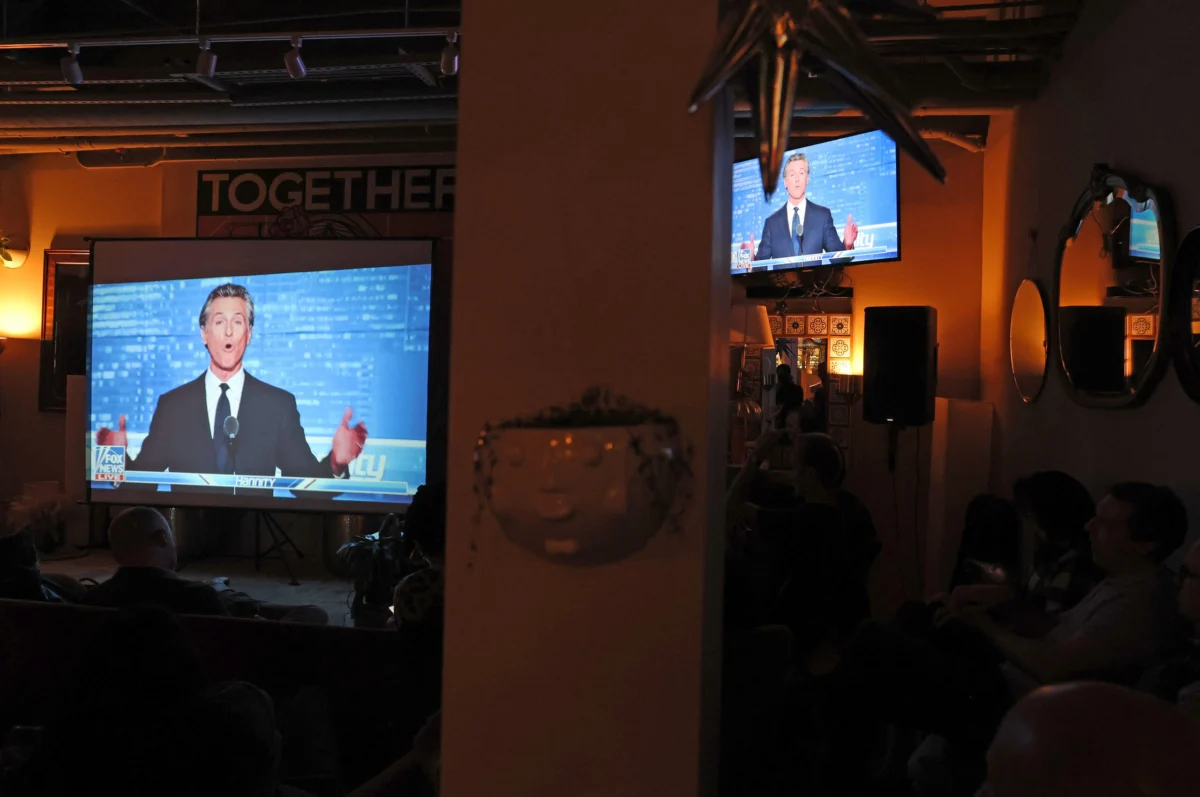
- Sean Hannity: A veteran cable news host with deep ties to the Republican establishment.
- Tucker Carlson: Who, despite his departure from traditional cable news, maintains a massive following through his independent digital media ventures.
- Ben Shapiro: Co-founder of The Daily Wire, whose digital-first strategy has made him a titan of social media news distribution.
The prevalence of these figures suggests that conservative audiences have successfully migrated to a digital ecosystem that mirrors the "alternative media" structures built over the last two decades.
The Liberal Alternative: Comedy as News
While conservative audiences gravitate toward pundits and independent commentators, voters who identified as supporters of Vice President Kamala Harris showed a distinct preference for a different type of influencer: the late-night comedian.
Among Harris voters, the top "news personalities" were not traditional anchors like Lester Holt or David Muir, but rather late-night hosts who blend political commentary with satire. The list was led by:
- Jimmy Kimmel (ABC): Whose monologues frequently address healthcare, gun control, and partisan politics.
- Stephen Colbert (CBS): Whose "Late Show" has become a nightly digest of political critique for a liberal audience.
- Jon Stewart (Comedy Central): Whose return to "The Daily Show" has revitalized his role as a primary information source for voters seeking a cynical, analytical take on the news.
This trend underscores a growing "infotainment" gap. While the right views news through the lens of independent "truth-tellers" and anti-establishment pundits, the left increasingly consumes news through the lens of moral satire and comedic relief. In both cases, the traditional, dispassionate news delivery of the 20th century is being replaced by content that provides an emotional or ideological payoff.
Expert Analysis: The End of Institution-Centered Consumption
Professor Andrea Hickerson, dean of the School of Journalism and New Media at the University of Mississippi, noted that the poll reflects a "visible shift away from institution-centered news consumption." According to Hickerson, the direct connection between followers and creators allows for a more intimate, though often less scrutinized, flow of information.
"Many respondents report following politicians, commentators and creators directly for news and commentary," Hickerson stated. This bypasses the traditional editorial process—fact-checking, legal review, and multi-source verification—that defines legacy journalism.
Steven L. Herman, the Jordan Center’s Executive Director and an assistant professor of practice, added that this phenomenon is not entirely unprecedented, though its scale is. He pointed to the late 19th and early 20th centuries as eras where sensationalist and polarizing voices held significant sway.
"Even in the late 19th and early 20th centuries, sensationalist and polarizing voices in print and later on air were among the most influential in the political landscape—such as political satirist Mark Twain and populist Father Charles Coughlin," Herman explained.
The difference today, however, is the "drowning out" effect. In the digital age, the sheer volume and speed of influencer-driven content can overwhelm traditional journalistic output. On platforms like YouTube and X (formerly Twitter), a viral clip from a comedian or an opinionated rant from a personality can reach millions before a traditional news outlet has even confirmed the basic facts of an event.
The Fractured Media Environment and Trust Deficit
The Ipsos findings highlight a deeply fractured media environment. Consumers are no longer presented with a "common set of facts" from which to debate policy; instead, they are able to select news sources that reinforce their existing worldviews. This "echo chamber" effect is exacerbated by the decline of trust in mainstream media.
Recent data from other organizations, such as the Reuters Institute and Gallup, corroborate this trend. Trust in traditional news media has reached historic lows in the United States. Many consumers perceive legacy outlets as being out of touch, biased, or beholden to corporate interests. In contrast, online influencers often project an aura of "authenticity." Because they speak directly to their audience—often from home studios or in unedited formats—they cultivate a parasocial relationship with their viewers that feels more trustworthy than a polished news broadcast.
Chronology of the Media Evolution
To understand how the U.S. reached this point, it is necessary to look at the timeline of media disruption over the last three decades:
- The 1990s: The Rise of Cable Opinion. The launch of Fox News and the expansion of MSNBC shifted the focus from "objective" reporting to "prime-time opinion," laying the groundwork for personality-driven news.
- The 2000s: The Digital Explosion. The advent of high-speed internet and the birth of social media (Facebook, YouTube) allowed independent creators to distribute content globally without a broadcast license or a printing press.
- The 2010s: The Death of Local News. As advertising revenue shifted to Google and Facebook, thousands of local newspapers closed, creating "news deserts" where citizens had no choice but to turn to nationalized, digital content.
- 2016-2020: The Influencer Presidency. Donald Trump’s use of Twitter to bypass the press corps demonstrated the power of direct-to-consumer political communication, inspiring a new generation of "news influencers."
- 2020-Present: The Podcast Era. The massive success of figures like Joe Rogan and the migration of cable stars like Tucker Carlson to independent digital platforms solidified the influencer as the new "anchor."
Broader Impact and Implications for Democracy
The implications of this shift are profound for the future of American civic life. The "influencer-first" model of news consumption presents several challenges:
1. The Erosion of Shared Reality: When different segments of the population receive their news from entirely different sets of influencers—each with their own biases and narratives—finding a middle ground on policy issues becomes increasingly difficult.
2. Accountability Gaps: Unlike traditional newsrooms, individual influencers are rarely subject to the same legal and ethical standards. There is no "ombudsman" for a YouTube channel or a podcast. While this allows for greater freedom of speech, it also allows for the rapid spread of misinformation without correction.
3. The Financial Collapse of Journalism: As audiences move toward influencers, the financial model for "hard news" continues to crumble. Investigative journalism—which is expensive and often lacks the viral "clickability" of opinion content—is particularly at risk.
4. Political Polarization: The Ipsos poll clearly shows that news consumption is now a marker of political identity. Choosing to get news from Ben Shapiro versus Jon Stewart is as much a political statement as it is a practical choice. This reinforces partisan divides, as influencers often rely on "outgroup" antagonism to drive engagement.
Conclusion
The findings from the University of Mississippi and Ipsos serve as a wake-up call for the journalism industry and the American public. The era of the "trusted news anchor" and the "paper of record" as the primary arbiters of truth is effectively over. In its place is a vibrant, chaotic, and highly polarized digital marketplace where personality is king and entertainment is the primary currency of information.
As the 2024 election cycle continues to unfold, the role of these influencers will likely only grow. Candidates are increasingly prioritizing appearances on podcasts and late-night shows over traditional sit-down interviews with news networks, recognizing that the "new newsroom" is where the voters are actually watching. The challenge for the future will be finding a way to maintain journalistic integrity and a shared factual foundation in an environment where everyone can choose their own reality.