The unsettling resonance of a rumbling stomach often underscores the saccharine veneer of modern beauty standards, a paradox acutely explored in recent cinematic offerings like "Saccharine" and "Maddie’s Secret." These films delve into the insidious grip of disordered eating, painting a stark portrait of individuals navigating relentless societal pressures, amplified by the pervasive influence of digital culture and a deeply ingrained fixation on bodily perfection.
The Descent into Obsession: "Saccharine" and the Peril of Quick Fixes
In "Saccharine," first-year medical student Hana Hitching (Midori Francis) embodies the internal conflict many face. Caught in a punishing cycle of binge eating and extreme workout regimens, her quest for an idealized physique takes a dark turn. The film subtly hints at long-standing body image issues, evidenced by a drawer filled with diet books, underscoring the allure of a seemingly effortless solution. Hana’s desperation leads her to an illicit supplement promising miraculous weight loss, its secret ingredient a horrifying revelation: human ash.
This transgression unleashes a supernatural tormentor. Hana finds herself stalked by the ghostly presence of the woman whose cremated remains she has consumed. A chillingly pragmatic friend, who has experienced similar anxieties and auditory hallucinations after using the same pills, articulates the insidious mantra at the heart of extreme diet culture: "It’s kind of worth it, right?" This statement encapsulates the film’s critique of the societal ethos that prioritizes extreme thinness above all else, even at a profound personal cost.
Director Natalie Erika James, known for her previous explorations of female protagonists grappling with bodily autonomy in "Relic" and "Apartment 7A," continues this theme with Hana. Her control over her own body erodes as the spectral entity escalates its influence, compelling her to binge eat, even during sleep. The more Hana succumbs, the stronger her phantom tormentor becomes. The film masterfully depicts the physical toll, with Hana becoming drastically underweight, yet she remains trapped in denial, clinging to the delusion that these changes signify an improvement.
"Maddie’s Secret": The Visceral Reality of Food Influencer Culture

"Maddie’s Secret" offers a more grounded, yet equally devastating, depiction of disordered eating through the lens of food influencer Maddie Ralph (John Early). The film chronicles Maddie’s hospitalization due to cardiac arrest and a subsequent gastrointestinal perforation, a direct consequence of mounting work pressures triggering a relapse into dormant bulimia. This plunges her into a vicious cycle of bingeing and purging, a life-threatening predicament she initially attempts to push through. The narrative pivot occurs with the loss of a friend under similar circumstances, a tragedy that finally breaks through Maddie’s denial and forces a confrontation with her illness.
Visualizing the Struggle: A Recurring Motif of Food and Self-Scrutiny
Both "Saccharine" and "Maddie’s Secret" employ recurring visual motifs to underscore the protagonists’ struggles. Close-ups of food being consumed voraciously or, conversely, smeared across faces, serve as potent metaphors for the complex relationship between stress, coping mechanisms, and eating disorders. Both protagonists, depicted as shy and self-conscious, turn to food as a balm for their anxieties, a behavior further enabled by their respective professions. While "Saccharine" leans into supernatural horror and "Maddie’s Secret" into melodramatic comedy, both films tap into anxieties that are both timeless and amplified by contemporary societal forces.
The Digital Echo Chamber: Online Challenges and the "Almond Mom" Phenomenon
The digital landscape plays a significant role in perpetuating these pressures. In "Saccharine," Hana participates in the online "potato masher challenge," a seemingly absurd test of slimness that mirrors real-world viral trends like the TikTok sunglasses challenge, designed to showcase impossibly small waists. This online culture intersects with familial influence, particularly the "almond mom" archetype. Popularized by a reality television episode and later amplified on TikTok, this term describes mothers who not only adhere to restrictive eating habits but also impose them on their children. Hana’s mother, a slender figure herself, embodies this with her sugar-free, butter-free, and flour-free birthday cake for her daughter, a stark illustration of inherited restrictive attitudes.
"Maddie’s Secret" delves into the "sinister and very sexual" nature of food content that writer-director John Early observed being algorithmically promoted to him. The film even references Ozempic, a weight-loss medication that has gained significant attention. At a treatment center, patients’ phones are confiscated to shield them from triggering online content, yet their curiosity leads them to secretly watch mukbang (eating show) videos, highlighting the addictive and often perverse nature of such online consumption.
A Historical Context and a Modern Resurgence

Films addressing disordered eating are not a new phenomenon, with "The Best Little Girl in the World" (1981) serving as an early example. However, the release of "Saccharine" and "Maddie’s Secret" follows closely on the heels of the "shrinking girl summer" trend, fueled by the proliferation of weight-loss drugs. These films represent an extension of a broader cinematic wave in 2024 that focuses on women fixated on perceived physical flaws. Body horror films like "The Substance" and "Shell" also explore the desperate pursuit of dubious experimental treatments by female actors facing an ageist industry, resulting in traumatic physical transformations.
Across different genres and eras, from historical dramas to futuristic dystopias, the concern with bodily imperfections has remained a persistent theme. The young protagonist of the 2024 film "Uglies" yearns for government-mandated beautification, while the 2025 film "The Ugly Stepsister" depicts barbaric cosmetic surgery, including a nose job performed with a hammer and chisel. Even a seemingly well-intentioned weight-loss remedy in this Cinderella reimagining—ingesting a tapeworm—illustrates the extreme measures individuals are driven to.
Intergenerational Trauma and the Internalization of Criticism
The maternal figures in both "Saccharine" and "Maddie’s Secret," while not outright villains like evil stepmothers, contribute to inherited trauma that fuels the protagonists’ unhealthy relationships with food. Hana’s intense cravings are linked to a deep-seated need for validation. Her extreme thinness, achieved through dangerous means, leads her to believe she has finally met her mother’s unspoken expectations, a mother who frequently commented on her face and body.
Maddie, despite having a supportive husband, exhibits disordered eating patterns learned in childhood. Her mother’s stinging remarks have been so thoroughly internalized that her own self-criticism often echoes her mother’s past judgments. This cycle of internalized criticism demonstrates how familial dynamics can profoundly shape an individual’s relationship with their body and food.
Societal Scrutiny and the Double-Edged Sword of Body Positivity
Beyond the family unit, bodies are subjected to constant scrutiny, with weight often becoming a focal point of discussions. Casual, cutting remarks are a pervasive aspect of social interaction. In "Saccharine," Hana’s fellow students mock an obese cadaver, highlighting a desensitization to the humanity of those who don’t fit prevailing beauty standards. Similarly, "Maddie’s Secret" shows cruel online comments about Maddie’s appearance accompanying her rise to fame.
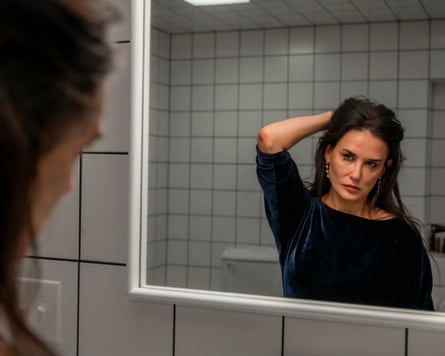
Ironically, even seemingly well-intentioned compliments can be barbed for individuals struggling with body image. A colleague tells Maddie it’s refreshing to see a food producer with an "actually healthy" body, "like not scary thin." This seemingly positive observation can reinforce the underlying pressure to maintain a specific, albeit "healthy," physique, underscoring the difficulty of navigating a landscape where every comment about one’s body carries weight.
The Profound Isolation of Body Dysmorphia
The inability to feel at home in one’s own body is a profoundly isolating experience, a theme central to both protagonists’ journeys. They miss out on meaningful connections, either by pushing away those who care about them or by being too self-conscious to engage. "Saccharine," despite its horror elements, touches upon the societal "othering" of those who deviate from the norm. The obese woman, initially remembered as kind, is transformed into a monstrous figure in death, an object of revulsion. This raises questions about how society perceives and treats individuals based on their physical appearance, even after death.
In contrast, "Maddie’s Secret" radiates a sincere empathy for its protagonist. The film offers Maddie the acceptance that she struggles to extend to herself, providing a more hopeful, albeit challenging, path towards recovery. The film’s exploration of the influencer world and the pressures it exerts on individuals to conform to often unattainable beauty standards provides a critical commentary on the digital age’s impact on mental and physical health.
The narratives of "Saccharine" and "Maddie’s Secret" serve as vital, albeit disturbing, cinematic explorations of the contemporary battle for body acceptance. They highlight how societal pressures, amplified by digital culture and intergenerational influences, can lead individuals down perilous paths in pursuit of an idealized self. By presenting these struggles with a blend of the supernatural and the starkly realistic, these films urge a critical examination of the pervasive narratives surrounding body image and the devastating consequences of disordered eating. The persistent themes of self-scrutiny, the pursuit of perfection, and the struggle for self-acceptance resonate deeply, prompting viewers to consider the broader societal implications and the urgent need for a more compassionate and realistic approach to body image.