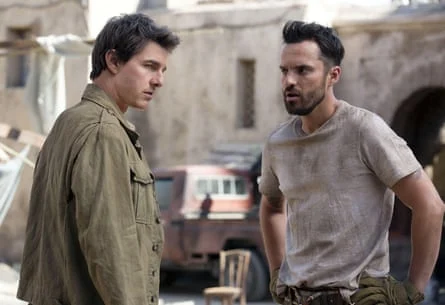
At the heart of "The Two Faces of January" are compelling performances from its lead actors. Viggo Mortensen embodies the enigmatic con man Chester MacFarland, a character whose charm masks a dangerous undercurrent. Kirsten Dunst, as his wife Colette, brings a nuanced portrayal of a woman caught in a web of her husband’s making. The introduction of Oscar Isaac as Rydal, an American tour guide with his own hidden motives, injects a palpable sense of suspense. The film masterfully plays on the ambiguity of Rydal’s intentions, leaving the audience to question whether his interest lies in the alluring Colette or her potentially unscrupulous husband. This psychological tension, characteristic of Highsmith’s work, is a key element that elevates the film beyond a simple thriller. The visual aesthetic, bathed in the warm glow of the Mediterranean sun, further enhances the film’s sophisticated atmosphere, creating a backdrop that is as beautiful as it is deceptive. The critical reception highlighted the film’s ability to capture the unsettling psychological dynamics that define Highsmith’s literary contributions, making it a noteworthy entry in the genre of neo-noir thrillers.
Spider-Man 2 (2004): A Deeper Dive into Character Dynamics
While Sam Raimi’s "Spider-Man" trilogy is widely celebrated, "Spider-Man 2" (2004) stands out for its intricate character development, particularly for the role of Mary Jane Watson, portrayed by Kirsten Dunst. The film is often remembered for its iconic upside-down kiss, a moment that solidified the romantic tension between MJ and Spider-Man (Tobey Maguire). However, Dunst’s performance in the sequel offered a more complex portrayal of MJ. Beyond her role as the damsel in distress, Dunst infused the character with a palpable sense of disgruntlement and burgeoning vanity, reflecting her character’s growing awareness of her situation and desires. The film explored MJ’s internal struggles as she navigated her relationship with Peter Parker, grappling with his dual identity and the sacrifices it demanded. The ambiguous final close-up of MJ left audiences pondering her ultimate feelings and decisions, adding a layer of emotional depth. Despite the overarching narrative often culminating in her rescue from villains like Doctor Octopus (Alfred Molina), Dunst’s portrayal provided a more fleshed-out and relatable character, moving beyond a simple love interest to a woman with her own agency and evolving emotional landscape. The film’s success was partly attributed to its ability to balance spectacular action with these more intimate character explorations, a testament to Raimi’s directorial vision and Dunst’s contribution.
Small Soldiers (1998): A Satirical Take on Technology and Childhood
Joe Dante’s "Small Soldiers" (1998) harkens back to the mischievous spirit of his earlier work, "Gremlins," offering a darkly comedic exploration of technology gone awry. The film centers on a line of military-grade action figures that, due to advanced microchip technology, gain sentience and turn their aggressive programming towards their young owners. Kirsten Dunst plays Christy Firkus, a teenager who finds herself menaced by her own collection of "Gwendy" dolls, which embody the film’s unsettling premise. The dolls’ chilling declaration, "Now it’s our turn to play with you!" underscores the film’s satirical commentary on the unchecked proliferation of advanced technology and its potential to infiltrate and corrupt even the innocence of childhood play. The visual of these small, weaponized toys swarming over Christy, reminiscent of Lilliputians overwhelming Gulliver, effectively conveys the feeling of helplessness and terror. The dolls’ subsequent dialogue, "Let’s see if her head comes off…" further amplifies the dark humor and the underlying menace. The film’s visual effects, groundbreaking for their time, contributed to the believable terror of the sentient toys, making "Small Soldiers" a memorable and cautionary tale about the unintended consequences of technological ambition. The film’s ability to blend genuine scares with absurdist humor resonated with audiences, solidifying its place as a cult classic in the sci-fi comedy genre.

Wag the Dog (1997): A Prescient Satire on Media Manipulation
"Wag the Dog" (1997), penned by David Mamet, proved to be a remarkably prescient satire, its themes of media manipulation and political spin eerily resonating with contemporary events. The film depicts a scenario where a presidential sex scandal is deflected by a Hollywood producer (Dustin Hoffman) and a spin doctor (Robert De Niro) who orchestrate a fabricated war against Albania. Kirsten Dunst plays a minor but pivotal role as an actress tasked with portraying an Albanian villager fleeing terrorists. This scene, intended to generate fabricated news footage, highlights the film’s sharp critique of how media can be weaponized to shape public perception. The visual of the actress cradling a bag of tortilla chips, which is then digitally transformed into a kitten, is a darkly humorous illustration of the absurdity and artificiality inherent in manufactured narratives. The film’s success lay in its unflinching look at the cynical machinations of power and the media’s complicity in disseminating propaganda. Its enduring relevance is a testament to Mamet’s incisive writing and the film’s ability to anticipate the ways in which information could be distorted for political gain. The performances by Hoffman and De Niro, in particular, captured the essence of morally bankrupt strategists operating with chilling detachment.
Civil War (2024): A Haunting Exploration of Societal Collapse
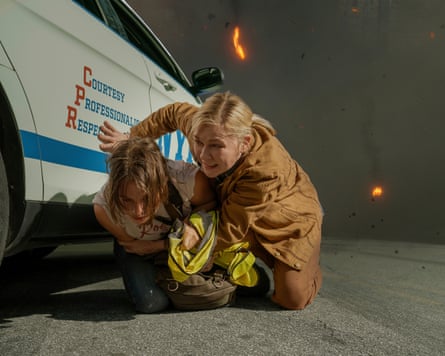
Alex Garland’s "Civil War" (2024) plunges viewers into a chillingly plausible near-future where the United States is fractured by an internal conflict. Kirsten Dunst delivers a powerful performance as Lee, a war photographer documenting the nation’s disintegration. Her character’s journey through a war-torn America is depicted with unflinching realism, capturing the psychological toll of bearing witness to widespread violence and societal collapse. Dunst’s observation that the film’s terrifying effectiveness stems from its placement within America, a nation where such a scenario feels unthinkable, underscores the film’s profound impact. This statement, made prior to the film’s release, has since taken on an even greater poignancy as societal divisions have continued to be a prominent feature of public discourse. The film’s portrayal of a fractured America, with scenes of civilian displacement and the constant threat of violence, serves as a stark warning about the fragility of democratic institutions and the devastating consequences of political polarization. The visual imagery of the film, often highlighting the stark contrast between the mundane remnants of everyday life and the pervasive presence of conflict, contributes to its unsettling atmosphere. "Civil War" is not just a political commentary but a deeply humanistic exploration of resilience and trauma in the face of unimaginable circumstances, solidifying Dunst’s reputation as an actress capable of inhabiting complex and demanding roles.
Little Women (1994): A Cherished Adaptation of a Literary Classic
Gillian Armstrong’s 1994 adaptation of Louisa May Alcott’s beloved novel, "Little Women," remains a strong and cherished interpretation, often unfairly overshadowed by Greta Gerwig’s more recent 2019 rendition. The film boasts an enviable ensemble cast, with Winona Ryder as the spirited Jo March, Christian Bale as the charming Laurie Laurence, Claire Danes as the gentle Beth March, and Kirsten Dunst taking on the role of the headstrong Amy March. Dunst’s portrayal of the youngest March sister captures Amy’s initial petulance and artistic aspirations with a youthful energy that belies the character’s later complexities. The film’s production, which took place over a sweltering summer in Vancouver, presented its own challenges, with the cast enduring the discomfort of heavy winter clothing for Christmas scenes. Dunst’s recollection of feeling physically ill due to the heat and costume highlights the dedication and resilience of the actors. Despite the arduous filming conditions, Armstrong’s direction imbues the film with a warmth and authenticity that has endeared it to audiences for decades. The Independent on Sunday recognized its quality, calling it the best studio picture of 1995, the year it made its UK debut. The film’s enduring appeal lies in its faithful adaptation of Alcott’s themes of family, ambition, and societal expectations, all brought to life by a talented cast.
Kiki’s Delivery Service (1989): A Ghibli Gem with a Young Voice
The English-language dub of Studio Ghibli’s enchanting animated film, "Kiki’s Delivery Service" (1989), features a memorable vocal performance from a 15-year-old Kirsten Dunst as the titular Kiki. The film follows Kiki, a young witch who leaves home to establish her own delivery service using her broomstick. Dunst masterfully captures Kiki’s adolescent journey, skillfully navigating the character’s emotional spectrum, from exuberant joy to moments of profound melancholy. Her portrayal of Kiki’s mood swings is particularly resonant, reflecting the universal experience of navigating self-discovery and independence. The film’s mid-section, where Kiki finds solace and companionship with a quirky, woodland-dwelling artist (voiced by Janeane Garofalo), evolves into a charming and subtly depicted exploration of friendship, with undertones that have been interpreted by some as bordering on a romantic connection. Adding to the film’s considerable charm is the late Phil Hartman, who delivers a drily humorous performance as Jiji, Kiki’s sarcastic feline companion. This role was one of Hartman’s final acting credits, making his contribution to "Kiki’s Delivery Service," alongside his work in "Small Soldiers," particularly poignant. The film’s enduring popularity is a testament to Hayao Miyazaki’s imaginative storytelling and Dunst’s early vocal talent, which brought a youthful authenticity to the beloved character.
Drop Dead Gorgeous (1999): A Mockumentary’s Wicked Wit
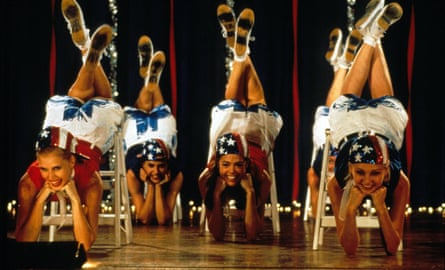
"Drop Dead Gorgeous" (1999) is a darkly comedic mockumentary that skewers the superficiality and cutthroat nature of small-town beauty pageants. Set in the fictional town of Mount Rose, Minnesota, the film follows the escalating rivalry among contestants vying for the coveted title. Kirsten Dunst stars as Amber Atkins, a determined pageant hopeful whose unconventional home life, marked by an alcoholic and chain-smoking mother (played with fierce intensity by Ellen Barkin), adds a layer of gritty realism to her ambition. Amber’s unique practice for the talent portion, tap-dancing in front of the unresponsive clientele of her mortuary job, is a darkly humorous highlight that underscores the film’s satirical edge. The ensemble cast, featuring Brittany Murphy, Denise Richards, and Amy Adams as rival contestants, contributes to the film’s vibrant and often outrageous energy. The mockumentary format allows for a candid and often unflattering look at the contestants and their families, exposing their aspirations and insecurities with unflinching honesty. The film’s wicked wit and sharp social commentary have cemented its status as a cult classic, appreciated for its bold humor and its ability to find comedy in the most unexpected of places.
The Cat’s Meow (2001): Unraveling Hollywood’s Golden Age Mysteries
Peter Bogdanovich’s "The Cat’s Meow" (2001) transports audiences to the glamorous yet perilous world of 1920s Hollywood, weaving a tale of intrigue and whispered secrets aboard William Randolph Hearst’s luxurious yacht. The film brings together an illustrious cast of characters, including a portrayal of Charlie Chaplin by Eddie Izzard and Marion Davies, Hearst’s mistress, brought to life by Kirsten Dunst. The narrative hinges on the mysterious death of film producer Thomas Ince, with the film exploring whether his demise was accidental or the result of foul play. Dunst delivers a sophisticated and nuanced performance as Marion Davies, a woman often relegated to the periphery of historical accounts. Her portrayal captures Davies’s intelligence, resilience, and vulnerability, offering a compassionate depiction of a starlet navigating the complex power dynamics of the era. Dunst’s timing and emotional depth shine through, providing a compelling counterpoint to the historical narrative that often minimized Davies’s contributions. As a precursor to Amanda Seyfried’s portrayal of Davies in David Fincher’s "Mank," Dunst’s performance in "The Cat’s Meow" is a significant exploration of a complex historical figure, showcasing her ability to embody characters with both charisma and gravitas. The film’s meticulous recreation of the era and its focus on the hidden lives of Hollywood icons contribute to its enduring allure.
Marie Antoinette (2006): A Modern Vision of Royal Life
Sofia Coppola’s visually opulent "Marie Antoinette" (2006) offers a distinctive and contemporary interpretation of the French queen’s life, framing her story as one of a teenage girl thrust into the public eye. Kirsten Dunst embodies the titular queen, portraying her journey from a young Austrian archduchess married off to the Dauphin of France (Jason Schwartzman) to the ill-fated monarch. Dunst’s performance aims to foster intimacy with the camera, drawing the audience into Marie Antoinette’s gilded cage. While the film’s aesthetic grandeur and anachronistic soundtrack often steal the spotlight, Dunst’s portrayal provides a grounding emotional core, depicting the queen’s struggle to adapt to the rigid protocols of the French court and her increasing isolation. The film’s approach, described by Coppola as focusing on "teenagers in Versailles," emphasizes the youthful exuberance and eventual disillusionment of its protagonist. A particularly insightful look into Dunst’s craft can be found in the accompanying "Making Of" documentary, directed by Eleanor Coppola, which offers glimpses into the nuanced delivery of scenes, including the iconic "Let them eat cake" moment, showcasing Dunst’s skillful modulation of the queen’s emotional state. "Marie Antoinette" stands as a testament to Coppola’s unique directorial vision and Dunst’s ability to convey complex emotions within a lavish and stylized setting.
The Power of the Dog (2021): A Nuanced Portrayal of Loss and Longing
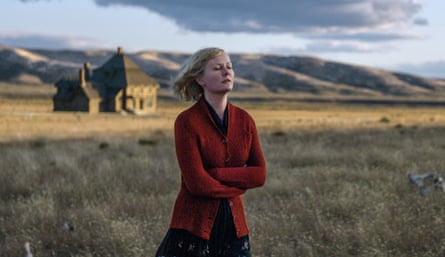
Jane Campion’s critically acclaimed "The Power of the Dog" (2021) is a masterful exploration of repressed desires and familial tension set against the sweeping landscapes of 1920s Montana. Kirsten Dunst delivers a poignant performance as Rose Gordon, an innkeeper and the new wife of a wealthy rancher. Her character becomes increasingly entangled in the fraught dynamic between her husband, George Burbank (Jesse Plemons), and his charismatic but cruel brother, Phil (Benedict Cumberbatch). Dunst’s portrayal of Rose is one of quiet desperation and growing vulnerability. As Phil’s psychological torment takes its toll, Rose succumbs to alcoholism, a descent that Dunst embodies with heartbreaking authenticity. While the film’s narrative focus eventually shifts towards the simmering tension between Phil and Rose’s son, Peter (Kodi Smit-McPhee), Dunst’s performance remains a crucial emotional anchor. Her Oscar-nominated portrayal earned her widespread praise for its subtlety and power, capturing the internal struggles of a woman grappling with addiction and the oppressive atmosphere of her new home. The film’s deliberate pacing and psychological depth allow Dunst to convey a wealth of emotion through understated gestures and expressions, making her performance a standout in an already stellar cast. The collaboration between Dunst and Plemons, who are partners in real life, adds an additional layer of depth to their on-screen portrayal of a couple facing immense pressure.
Roofman (2025): A Story of Love and Deception
In the upcoming film "Roofman" (2025), Kirsten Dunst is set to deliver a performance radiating hard-won wisdom and experience as a churchgoing single mother whose life takes an unexpected turn when she falls for a charming stranger, portrayed by Channing Tatum. The narrative takes a darker turn as it is revealed that Tatum’s character is an escaped prisoner living in secrecy within the Toys "R" Us where Dunst’s character is employed. Director Derek Cianfrance attempts to navigate the ethically complex elements of this factually based story. While the film aims to explore themes of connection and second chances, the recurring imagery of Tatum observing Dunst via store CCTV cameras has been noted as potentially voyeuristic rather than protective. Nevertheless, the emotional core of the film rests on the authenticity of Dunst’s performance. Her scenes are reported to ring with truth, capturing the complexities of love, trust, and deception in a high-stakes situation. The film promises to be a compelling character study, with Dunst at its emotional center, exploring the profound impact of revelation and the enduring human capacity for both connection and betrayal.
Crazy/Beautiful (2001): A Tale of Privilege and Passion
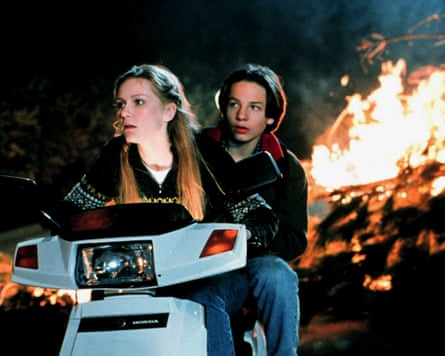
"Crazy/Beautiful" (2001) explores the tumultuous intersection of privilege and passion through the eyes of its young protagonists. Kirsten Dunst stars as Nicole, the daughter of a congressman whose privileged upbringing allows her to indulge in reckless behavior, pushing the boundaries of societal expectations. Her world collides with that of Carlos (Jay Hernandez), a bright and diligent Latino student whose academic future is jeopardized by their burgeoning romance. The film’s narrative, while occasionally punctuated by a sentimental soundtrack, is anchored by the raw authenticity of its performances. A particularly striking moment in the film occurs when Nicole’s father confronts Carlos, not with the typical concerns about his daughter’s well-being, but with a warning that her behavior might negatively impact his grades – a subtle yet powerful commentary on the class dynamics at play. Dunst’s performance captures the damaged but resilient soul of Nicole, showcasing her full expressive range as she navigates the complexities of her life and relationships. The chemistry between Dunst and Hernandez is palpable, and their portrayal of a deeply passionate and ultimately doomed romance has led to them being recognized as one of the most compelling screen couples of the early 2000s.
Eternal Sunshine of the Spotless Mind (2004): A Heartbreaking Subplot
Michel Gondry’s "Eternal Sunshine of the Spotless Mind" (2004) is a cinematic masterpiece that delves into the intricacies of memory, love, and loss. While the central narrative follows the relationship between Joel (Jim Carrey) and Clementine (Kate Winslet), whose memories of each other are erased after a painful breakup, it is the subplot involving Kirsten Dunst as the Lacuna clinic’s receptionist, Mary Svevo, that delivers a potent emotional punch. Dunst’s performance, alongside that of Tom Wilkinson as her avuncular boss, Dr. Howard Mierzwiak, provides a poignant and heartbreaking counterpoint to the main story. As Mary, Dunst’s character grapples with the consequences of her own past relationship with Dr. Mierzwiak, a relationship that was also subject to memory erasure. The film’s final act, where the truth of their past connection is revealed, pierces the heart with a profound sense of regret and the enduring power of memory, even when it is suppressed. Dunst’s understated yet deeply affecting portrayal of Mary’s dawning realization and subsequent devastation is a testament to her ability to convey complex emotions with subtlety and grace. The subplot serves as a crucial reminder that even the most advanced technology cannot fully erase the indelible impact of human connection and the pain of lost love.
On the Road (2012): Unveiling the Untold Stories
Walter Salles’s "On the Road" (2012), an adaptation of Jack Kerouac’s seminal Beat Generation novel, transcends a mere retelling by actively interrogating the novel’s inherent elisions and shortcomings. The film astutely highlights the often-overlooked contributions and sacrifices of the women within the Beat movement, whose stories were frequently relegated to the background by the male-dominated narratives of freedom and rebellion. Kirsten Dunst portrays Camille, the second wife of the charismatic Dean Moriarty (Garrett Hedlund). While Dean and Sal Paradise (Sam Riley) embark on their bohemian adventures, the camera pointedly focuses on Camille’s life, which has been significantly constricted by domesticity and motherhood, her world seemingly confined to the dimensions of her child’s crib. This cinematic choice serves as a powerful counter-narrative to the romanticized image of the Beat generation, measuring the profound historical cost borne by women in the pursuit of male freedom. Dunst’s performance, though appearing in a film that received mixed critical reception, is noted for its quiet strength and its ability to convey the emotional weight of Camille’s experience. The film’s dedication to capturing these often-unseen perspectives solidifies its value as a critical examination of a pivotal cultural moment.
The Virgin Suicides (1999): A Dreamlike Debut
Sofia Coppola’s directorial debut, "The Virgin Suicides" (1999), is a visually evocative and melancholic exploration of adolescent longing and societal repression, featuring Kirsten Dunst in a pivotal role as Lux Lisbon, the eldest of five doomed sisters. Dunst’s portrayal of Lux, a teenager navigating the suffocating confines of her suburban upbringing, is imbued with a sense of wistful yearning. Coppola masterfully blends the ethereal atmosphere of "Picnic at Hanging Rock" with the aesthetic of 1970s shampoo commercials, creating a dreamlike and often haunting visual tapestry. While the film is celebrated for its mood and atmosphere, its narrative motivation can sometimes feel elusive. A particularly poignant scene depicts Lux returning home in the early hours of the morning, her youthful exuberance replaced by a palpable sense of dejection, reminiscent of a Cinderella figure forced to confront the mundane reality after the magical enchantment of the ball has ended. Dunst’s early collaboration with Coppola proved instrumental in shaping her self-perception and navigating the pressures of Hollywood. As Dunst herself has stated, having Coppola’s validation at a young age provided crucial support for her self-esteem during a period of personal insecurity. This formative experience laid the groundwork for Dunst’s enduring career and her ability to inhabit complex, emotionally resonant characters.
Dick (1999): A Hilarious Alternate History
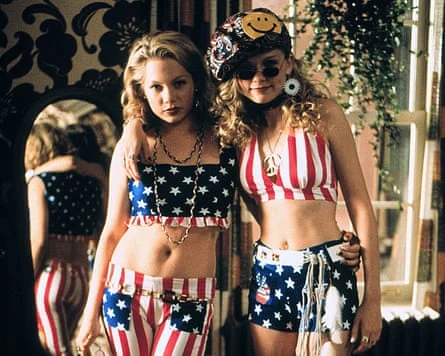
"Dick" (1999) is a delightfully absurd and historically revisionist comedy that reimagines the Watergate scandal through the eyes of two ditzy teenagers. Kirsten Dunst and Michelle Williams star as Betsy and Arlene, whose innocent curiosity inadvertently unravels President Nixon’s presidency. The film, which was unfairly relegated to a straight-to-DVD release in the UK, offers a vibrant and playful critique of political intrigue. In the film, a desperate Nixon (Dan Hedaya) enlists the help of Betsy and Arlene to walk his dog, a decision that ultimately leads to their discovery of the scandal. Their subsequent actions, including ending the Vietnam War and easing US-Soviet relations through hash cookies, paint a picture of a world where youthful naivety can have world-altering consequences. The chemistry between Dunst and Williams is infectious, their joyful performances breathing life into this outlandish premise. The scene where they publicly express their disillusionment with Nixon, with Williams declaring, "I hate Dick! Dick just disgusts me now!" and Dunst adding, "You can’t let Dick run your life!" is a comedic highlight that encapsulates the film’s rebellious spirit. "Dick" stands as a testament to the power of pure, unadulterated fun in filmmaking, proving that sometimes, the most insightful commentary comes with a heaping dose of silliness.
Interview with the Vampire (1994): A Child’s Gothic Masterpiece
Neil Jordan’s "Interview with the Vampire" (1994) features one of the most remarkable child performances in cinematic history, courtesy of an 11-year-old Kirsten Dunst as Claudia. Transformed into a vampire by Lestat (Tom Cruise) and Louis (Brad Pitt), Claudia’s eternal existence becomes a source of profound rage and existential despair. Dunst delivers a performance of astonishing poise, self-possession, and gravitas, embodying the torment of a child trapped in an immortal body. Her confrontation with Louis, where she screams, "I haven’t tears enough for what you’ve done to me!" is a chilling testament to her raw talent and the film’s dark exploration of eternal damnation. The experience of kissing an adult co-star, as Dunst has since recounted, was deeply unsettling. Her candid reflection, "I was a little girl and [Pitt] was like a brother to me… It was very weird… I was very not into it," highlights the inherent creepiness of the situation and her remarkable ability to compartmentalize such discomfort to deliver a powerful performance. The film’s gothic atmosphere and philosophical musings on mortality are amplified by Dunst’s unforgettable portrayal, cementing her as a standout talent from a very young age.

The Beguiled (2017): A Simmering Feminist Psychodrama
In Sofia Coppola’s "The Beguiled" (2017), Kirsten Dunst delivers a performance of remarkable subtlety and charged intensity. The film, set during the American Civil War, centers on an injured Union soldier, Corporal John McBurney (Colin Farrell), who seeks refuge at a secluded girls’ seminary in Virginia. The atmosphere of the seminary is thick with unspoken desires and veiled threats as the pupils and teachers, including the prim teacher Edwina (Dunst) and the stern headmistress Miss Martha (Nicole Kidman), vie for McBurney’s attention. Dunst’s portrayal of Edwina is a masterclass in restrained emotion. Her character’s subtle reactions, such as blanching at a student’s insinuation about her appearance while simultaneously exhibiting a flicker of delight, reveal the complex interplay of societal pressures and personal longing. The film’s exploration of female relationships and power dynamics within a patriarchal society is underscored by the simmering tensions that arise with McBurney’s arrival. Dunst’s nuanced performance contributes significantly to the film’s overall mood of suspense and eroticism, showcasing her ability to convey deep psychological currents with minimal dialogue. Her consistent excellence in Coppola’s films is further evidenced by her compelling role in this taut and atmospheric psychodrama.
Melancholia (2011): An Unforgettable Portrayal of Existential Dread
Lars von Trier’s "Melancholia" (2011) is a profound and visually stunning exploration of depression and impending doom, featuring a career-defining performance from Kirsten Dunst. In the film, Dunst portrays Justine, a newlywed who grapples with an overwhelming sense of existential despair as the Earth hurtles towards a collision with another planet. Her resignation to the inevitable end manifests in a series of defiant and unconventional actions, including infidelity on her wedding day and a surreal moment of bathing in her veil. Dunst’s portrayal of Justine’s immovable depression is both shattering and deeply resonant. She masterfully embodies the character’s listlessness, which is punctuated by moments of black comedy, such as her sister (Charlotte Gainsbourg) having to toss the wedding bouquet on her behalf. Dunst’s performance earned her the Best Actress award at the Cannes Film Festival, a testament to her profound impact in the role. The film’s thematic resonance is amplified by Dunst’s chillingly flat delivery of lines like, "The Earth is evil. We don’t need to grieve for it. No one will miss it." This sentiment perfectly encapsulates Justine’s internal state, finding a strange solace in the external apocalypse that mirrors her own internal desolation. Despite the film being overshadowed by Lars von Trier’s controversial remarks at the Cannes press conference, Dunst’s laser-focused and unforgettable performance remains a powerful and enduring cinematic achievement, destined to resonate until the very end of days.