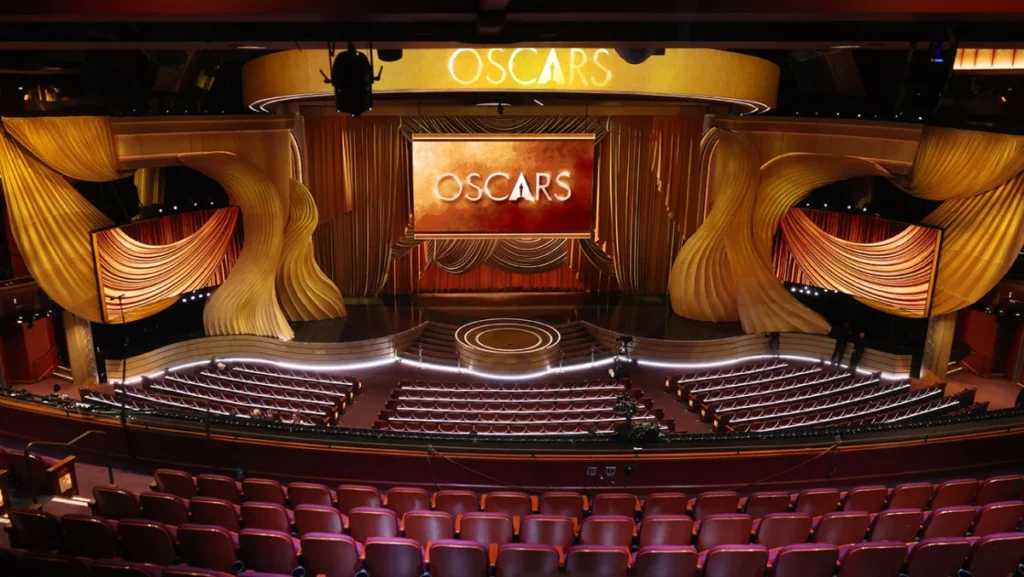
The Academy of Motion Picture Arts and Sciences (AMPAS) has announced a comprehensive overhaul of its rules and regulations, profoundly impacting eligibility criteria across key categories for the upcoming 99th Academy Awards, scheduled for Sunday, March 14, 2027. The sweeping changes address the rise of artificial intelligence, international film representation, acting nominations, and the structure of its honorary awards, signaling a proactive effort to adapt to a rapidly evolving global film industry while upholding core tenets of human artistry.
A Clear Stance Against AI in Core Creative Categories
Perhaps the most significant declaration from the Academy’s board of governors is its definitive stance on artificial intelligence: AI-generated performances and screenplays are not welcome in the competitive Oscars race. This move eliminates any ambiguity regarding the Academy’s position, cementing a commitment to human creativity in its most fundamental forms.
Under the updated Eligibility (Rule Two) pertaining to Generative Artificial Intelligence, the Academy has decreed that only performances demonstrably executed by human actors, credited in a film’s legal billing, and performed with their explicit consent, will be eligible for acting Oscars. This clarification directly addresses burgeoning ethical and artistic questions raised by the increasing sophistication of AI technologies, particularly deepfakes and voice synthesis, which enable the creation of photorealistic or vocally identical digital likenesses. Industry insiders note this rule appears to pre-emptively tackle scenarios such as the posthumous completion of performances using AI, a hypothetical situation exemplified by discussions around the use of AI for actors like Val Kilmer, where a digital recreation might extend an artist’s on-screen presence beyond their physical capacity or lifetime.
Similarly, the Academy explicitly stated that only screenplays authored by humans are eligible for writing Oscars. This policy draws a clear line in the sand against the use of generative AI tools that can produce scripts or significant portions thereof, preserving the sanctity of human authorship in narrative creation. The Academy reserves the right to request additional information about the nature and extent of AI use in any submission, underscoring its commitment to thorough vetting.
This firm stance arrives amidst a backdrop of increasing debate and concern within Hollywood regarding AI’s role. The recent Writers Guild of America (WGA) and SAG-AFTRA strikes prominently featured demands for protections against AI exploitation, highlighting anxieties over job displacement, intellectual property rights, and the very definition of creative contribution. While AI has found applications in various stages of filmmaking—from pre-visualization and digital effects to marketing—the Academy’s decision reinforces the human element as paramount in the core categories of acting and writing. Observers suggest this definitive policy aims to reassure artists and audiences that the industry’s most prestigious awards will continue to champion original, human-driven artistry, drawing a distinction between AI as a tool for efficiency or visual enhancement and AI as a substitute for fundamental creative input.
Revolutionizing the International Feature Film Race
The Academy has also introduced groundbreaking reforms to the Best International Feature Film category, fundamentally altering its long-standing selection process and the nature of its award. Historically, the category adhered to a "one country, one film" policy, where each nation or region could submit only a single film, chosen by a local Academy-approved selection committee. This system, while promoting national cinema, often meant critically acclaimed films from countries that had already selected another entry were overlooked.
Henceforth, a significant new pathway to eligibility has been introduced: a film can now qualify for consideration in the Best International Feature Film category by winning the top prize at one of several major international film festivals. The designated festivals include Berlin (Golden Bear), Busan (New Currents Award or equivalent top prize for international features), Cannes (Palme d’Or), Sundance (Grand Jury Prize, World Cinema Dramatic or Documentary), Toronto (People’s Choice Award), or Venice (Golden Lion). This progressive change could now lead to a single country or region securing multiple nominations in the category, a radical departure from past practice and a move designed to recognize a broader spectrum of global cinematic excellence.
Furthermore, the award itself will no longer be bestowed upon the country or region, but rather directly to its director. This shift acknowledges the individual artistic vision behind the film, rather than a national entity. As an illustrative example provided by the Academy, under the old rules, the Oscar for Sentimental Value would have technically been awarded to Norway, not its filmmaker Joachim Trier. With the new regulation, the director’s name will explicitly appear on the Oscar plaque and be recorded in the Academy’s official records, celebrating the specific artistic talent responsible for the work.
This reform reflects a growing acknowledgment of the increasingly transnational nature of filmmaking and the global interconnectedness of film festivals as arbiters of quality. It also aligns the International Feature Film category more closely with other competitive categories, which honor individual achievement. The move is expected to invigorate competition, elevate the profile of top-tier film festivals, and ensure that more deserving international films, irrespective of national committee selections, have a chance at Oscar recognition. It signals the Academy’s commitment to adapting to a globalized film landscape where national borders are becoming less definitive in defining cinematic impact.
Reinstating Multiple Acting Nominations in a Single Category
Another significant rule revision sees the return of a practice from the earliest days of the Oscars: actors may now be nominated for multiple performances within the same category in a given year. For decades, a subsequent rule change had mandated that if a single performer delivered multiple performances that garnered enough votes to place them in the top five of a category, only the higher-tallying performance would receive a nomination.
The Academy cited historical precedent, recalling instances like Norma Shearer, who won Best Actress at the 3rd Academy Awards for The Divorcee over a field that included her own performance in Their Own Desire. This historical context highlights an era when exceptional talent across multiple roles in a single year was fully recognized. The reintroduction of this rule aligns the acting categories with virtually all other competitive categories, such as directing, producing, or various craft categories, where an individual can receive multiple nominations for different projects or different contributions to a single project.
The implications of this change are multi-faceted. The Academy used the hypothetical example of Kate Winslet in 2009, who was nominated for Best Actress for The Reader and also delivered a critically acclaimed performance in Revolutionary Road. Under the old rule, she received only one nomination for The Reader. Had the new rule been in place, she might have received two nominations. While this offers greater recognition for an actor’s prolific excellence, it also introduces a potential strategic challenge: the possibility of "vote splitting" among an actor’s own performances. This could theoretically make it harder for them to win either Oscar, as their support base might be divided. However, many in the acting community and critics have long argued that this recognition of multiple outstanding performances is a more accurate reflection of a performer’s annual output and artistic impact. It emphasizes merit and talent over an artificial limitation designed to spread nominations.
Governors Awards to Diversify Honoree Disciplines
The annual Governors Awards ceremony, which celebrates up to four individuals or groups with honorary Oscars, the Irving G. Thalberg Memorial Award, and the Jean Hersholt Humanitarian Award, will also undergo a structural change. Moving forward, a minimum of three distinct "disciplines" must be represented among the honorees in any given year.
This rule aims to ensure a broader and more balanced recognition of contributions across the diverse fields of filmmaking. The Academy noted that under this new rule, a past ceremony like the 2021 Governors Awards—which honored filmmakers David Lynch and Lina Wertmüller, and actors Geena Davis and Wes Studi—would no longer be permissible, as only two disciplines (directing/filmmaking and acting) were represented. The new mandate encourages the selection committee to consider individuals from various crafts, such as cinematography, editing, sound design, production design, costume design, visual effects, music, and other vital areas that contribute to the art of cinema. This ensures a more holistic celebration of the countless talents that bring films to life, moving beyond a perceived over-representation of acting and directing categories in past honorary awards.
Further Tweaks to Craft Categories and Campaign Regulations
Beyond these major policy shifts, the Academy also announced a series of detailed adjustments impacting several craft categories and promotional guidelines:
- Best Casting: The number of individuals eligible to receive an Oscar statuette for Best Casting has been increased from two to three, reflecting the collaborative nature of the casting process, particularly in large ensemble productions.
- Best Cinematography: The shortlist for the Best Cinematography category will now consistently feature 20 films, an increase from the previous range of 10 to 20, providing greater visibility to a wider array of cinematographic achievements.
- Makeup and Hairstyling: Members of the Makeup and Hairstylists Branch will now only be eligible to vote for their category’s shortlist if they have attended at least one of the two final branch meetings (roundtables), ensuring more informed and engaged participation in the selection process.
- Best Original Song: For tunes that begin with the end credits, a specific submission requirement has been introduced: they must now be submitted to the music branch along with the last 15 seconds of the film before the end credits, clarifying eligibility and submission protocols for these unique placements.
- Best Visual Effects: To ensure a comprehensive understanding of the craft, members of all branches eligible to vote for the Best Visual Effects Oscar in the final round must now view the three-minute "before and after" reels captured at the visual effects bake-off. These reels, crucial for demonstrating the artistry and technical prowess involved, will be posted to the Academy Screening Room members-only streaming service.
In terms of campaign promotional regulations, the Academy has introduced two notable changes:
- Screenings with Q&A sessions or panel discussions held before nominations may now feature up to two moderators instead of a single moderator, offering greater flexibility for engaging discussions.
- All email blasts to members via an Academy-approved mailing house must now include an email address or phone number for inquiries regarding venue accessibility, underscoring the Academy’s ongoing commitment to inclusion and accessibility for all members.
Key Dates for the 99th Academy Awards (2027)
The Academy also provided the critical timeline and submission deadlines for the lead-up to the 99th Oscars ceremony on Sunday, March 14, 2027, setting the operational framework for the upcoming awards cycle:
- Thursday, Aug. 13, 2026: First submission deadline for animated short film, documentary feature film, documentary short film, and live action short film categories.
- Thursday, Sept. 17, 2026: First submission deadline for general entry categories, animated feature film, best picture, and the Representation and Inclusion Standards Entry (RAISE) form. The RAISE form is a crucial component of the Academy’s diversity and inclusion initiatives, requiring films to meet certain criteria related to on-screen representation, creative leadership, industry access, and audience development to be eligible for Best Picture.
- Wednesday, Sept. 30, 2026: Submission deadline for international feature film.
- Thursday, Oct. 8, 2026: Final submission deadline for animated short film, documentary short film, and live action short film categories.
- Wednesday, Oct. 14, 2026: Submission deadline for music (original song).
- Thursday, Oct. 15, 2026: Final submission deadline for documentary feature film.
- Wednesday, Nov. 4, 2026: Submission deadline for music (original score).
- Thursday, Nov. 12, 2026: Final submission deadline for general entry categories, animated feature film, best picture, and the Representation and Inclusion Standards Entry (RAISE) form.
- Jan. 8 – 10, 2027: Casting, makeup and hairstyling, sound, and visual effects voting events (bake-offs).
These extensive rule changes represent a significant moment for the Academy, reflecting its ongoing efforts to remain relevant, inclusive, and forward-thinking in a rapidly changing entertainment landscape, while firmly anchoring its core values in human artistic endeavor. The industry will now watch closely to see the impact of these new regulations on the upcoming awards season and beyond.