John Travolta, the acclaimed actor known for his iconic roles across five decades, has made an unexpected and critically celebrated directorial debut with Propeller One-Way Night Coach (2026). The 60-minute film premiered on the frantic first Friday night of the Cannes Film Festival, a highly anticipated event that also saw the festival’s general delegate, Thierry Frémaux, bestow an honorary Palme d’Or upon Travolta, acknowledging his monumental career and profound impact on cinema. The intimate and deeply personal film, a departure from Travolta’s action-packed blockbusters, swiftly captivated audiences and critics alike, later achieving global streaming success as the most-streamed film on Apple TV for seven consecutive days.
A Personal Odyssey to the Director’s Chair
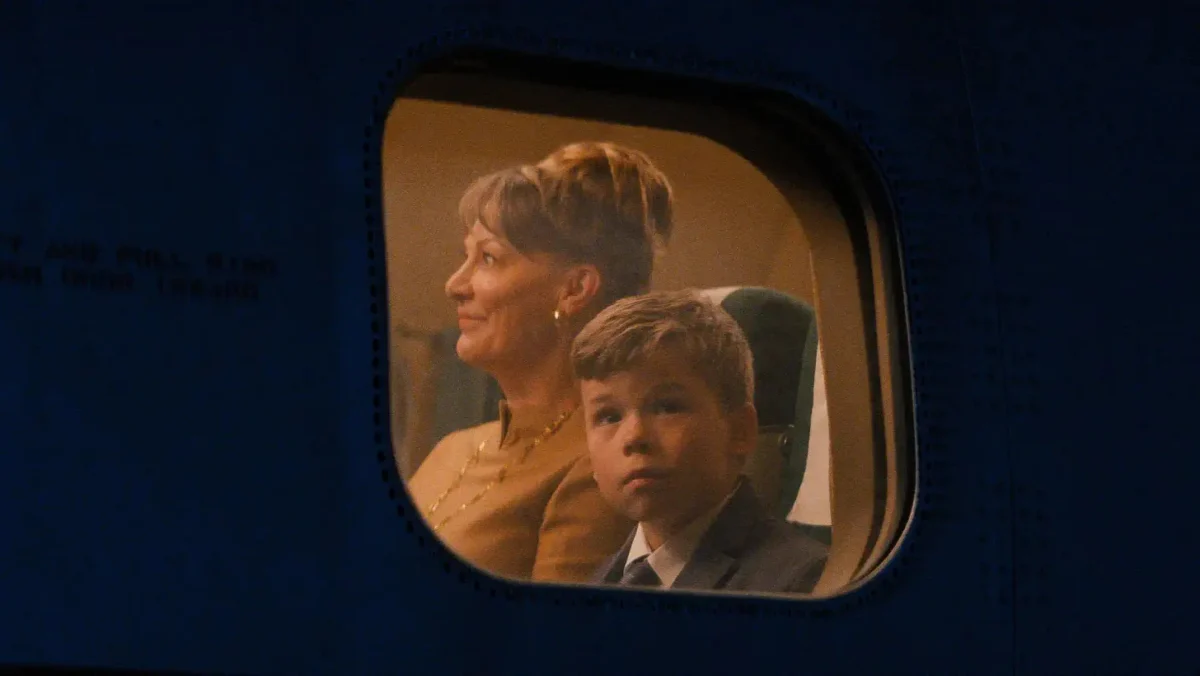
The journey to Propeller One-Way Night Coach began decades before its cinematic release. The film is a faithful adaptation of Travolta’s own 1997 novella of the same name, a literary work inspired by his vivid childhood memories. Penned originally in 1993 for his family, with only 70 copies initially circulated, the novella’s overwhelming reception encouraged its public release by Warner Brothers. For years, interest simmered in adapting the deeply subjective narrative, which chronicles a young boy named Jeff’s first airplane flight in 1962, alongside his mother and sister. However, Travolta resisted offers from producers, citing the intensely personal nature of the story and a desire to protect its authentic vision. He expressed concern that others might "get it wrong," leading him to patiently wait for the opportune moment to helm the project himself.
That moment arrived roughly a year and a half ago. Approaching his 70th birthday, Travolta recognized a critical juncture for realizing his long-held ambition. He made the decisive choice to self-finance and produce the film, ensuring complete artistic control. His objective was clear: to translate his cherished memories onto the screen precisely as he envisioned them, much like a painter approaching a canvas, and then to gauge the world’s response. This conviction underscores a significant trend among seasoned artists who, having achieved commercial success, turn to more personal, independent projects that offer creative freedom beyond studio constraints.
An Immersive Portrait of Childhood and an Era
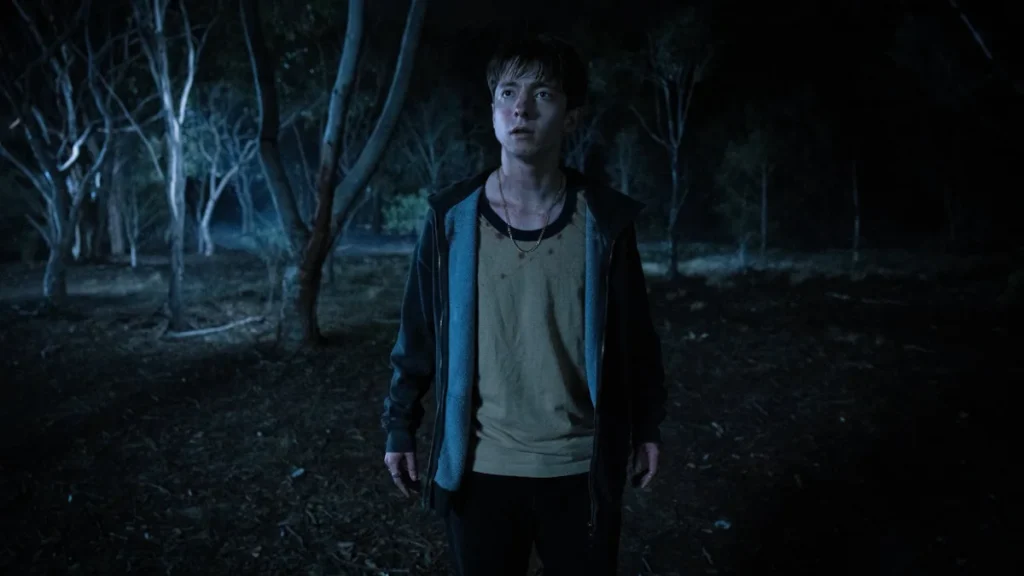
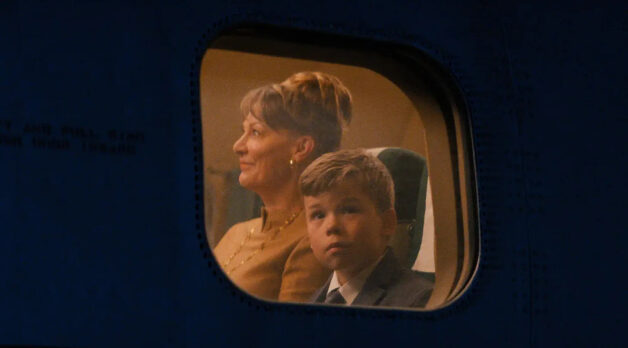
Propeller One-Way Night Coach distinguishes itself as an "absolutely charming portrait of experience," characterized by a meticulous attention to detail and a profound evocation of "sense memory." The film unfolds in vibrant color, appearing as if directly lifted from Travolta’s own childhood recollections. The central narrative follows young Jeff, portrayed by Clark Shotwell, a newcomer whom Travolta’s daughter, Ella Bleu, noted for his striking resemblance to her father, observing that "He’s a little him." Ella Bleu herself features in the film as a captivating flight attendant, while Kelly Eviston-Quinnett embodies Helen, Jeff’s mother, with an infectious joie de vivre that profoundly influences her son.
The film’s narrative is anchored by fascinating voiceover narration, offering Jeff’s internal monologue and commentary from an adult perspective recalling childhood thoughts. This technique provides an intimate window into a child’s sincere and rich experience of the world, free from the distractions and cynicism often associated with adulthood. Travolta described himself as a "voyeur, an observer of life," a philosophy evident in the film’s detailed and non-judgmental exploration of Jeff’s observations, including his mother’s flirtatiousness or proclivity to drink and smoke. The film highlights Jeff’s inherent empathy and resilience, as he processes unsettling events – from the grim reality of a neighbor who survived a concentration camp to the tragic news of a plane crash – yet consistently recovers with a child’s instinct to "move on," seeking solutions and maintaining an optimistic outlook.
Reconstructing 1962: A Symphony of Senses
Travolta’s dedication to historical authenticity is a cornerstone of the film. He harbored a "more than tenacious" resolve to accurately depict the nuances of air travel and life in 1962. As a child, he meticulously collected airline tickets and schedules, absorbing every detail of aviation advertising, architecture, and design. This personal archive of memories became the blueprint for the film’s aesthetic.
He meticulously recreated the visual impact of 1960s air travel:
- Aircraft Interiors: The distinct color palettes of plane interiors, vastly different from contemporary designs.
- Gourmet Meals: The "colorful and exotic" meals served, such as Chateaubriand and chicken cordon bleu, presented on exquisite plateware and glassware, reflecting the era when air travel was a luxurious experience. In 1962, a round-trip coast-to-coast flight could cost upwards of $200 (equivalent to over $2,000 today), making it an exclusive indulgence.
- Flight Attire: The elegant uniforms worn by "stewardesses," designed by renowned figures like Don Loper in the early 1960s, and even Dior in the 1950s, emphasizing the glamour associated with the profession.
- Cabin Atmosphere: The once-common presence of smoke in the cabin, mingling with the aroma of food, a stark contrast to today’s strict regulations.
- Passenger Density: The observation that planes "never felt sold out," often appearing only "a fourth full," a reflection of the prohibitive cost of air travel for most of the population at the time.
Beyond aviation, the film acts as a broader "homage to mid-century everything," encompassing architecture, design, clothing, and music. Travolta vividly recalls the "glorious trend in music and in fashion" and the "new freshness in architecture" of the era, where designers across various fields possessed a distinct vision. He drew parallels to the works of mid-century artists like Alexander Calder and Jean-Denis Malclès (often referred to as Marrot in the text), whose styles, though diverse, shared a common sensibility that allowed for eclectic yet harmonious integration. This artistic environment made it "very easy to differentiate moment to moment each new thing that was happening," a sensation a child, undistracted, would absorb with heightened vividness.
The film’s soundtrack is a carefully curated tapestry of 1960s sounds, a reflection of Travolta’s personal "soundtrack" from childhood. This includes the "beautiful onslaught of Brazilian samba music" from artists like Antônio Carlos Jobim and Sérgio Mendes, which gained worldwide popularity, alongside the popular tunes of the day from legends such as Frank Sinatra, Tony Bennett, and Barbra Streisand. Travolta ingeniously weaves these musical selections into the narrative to enhance specific visual and emotional moments: the melancholic beauty of "Quiet Nights of Quiet Stars" accompanying a nighttime window view, Sinatra’s "Come Fly With Me" for takeoff, Tony Bennett’s "The Good Life" for meal service, and the iconic "A Man and a Woman" theme to underscore a poignant interaction. He even incorporated Stéphane Grappelli’s whimsical violin for the opening credits and Dave Brubeck’s "Take Five" – historically the most popular jazz piece – to complement the era’s striking architecture, especially the TWA terminal. These choices are not merely background music but integral components that "correlated with my vision in this movie," serving as a powerful conduit for emotional recall and atmospheric immersion.
Directorial Craft: Lessons from the Masters
Travolta’s approach to directing Propeller One-Way Night Coach was informed by decades of experience working with some of cinema’s most revered filmmakers. He articulated key lessons gleaned from observing directors like Quentin Tarantino, Brian De Palma, and Mike Nichols. From Tarantino, he learned the power of "efficiency" in storytelling – conveying events without needing to cut to every single detail, trusting the audience’s intelligence to fill in the gaps. He recalled a specific instance from Pulp Fiction where Tarantino opted for a tight close-up and implied action rather than explicit exposition, demonstrating that "people are smart when they’re watching movies."
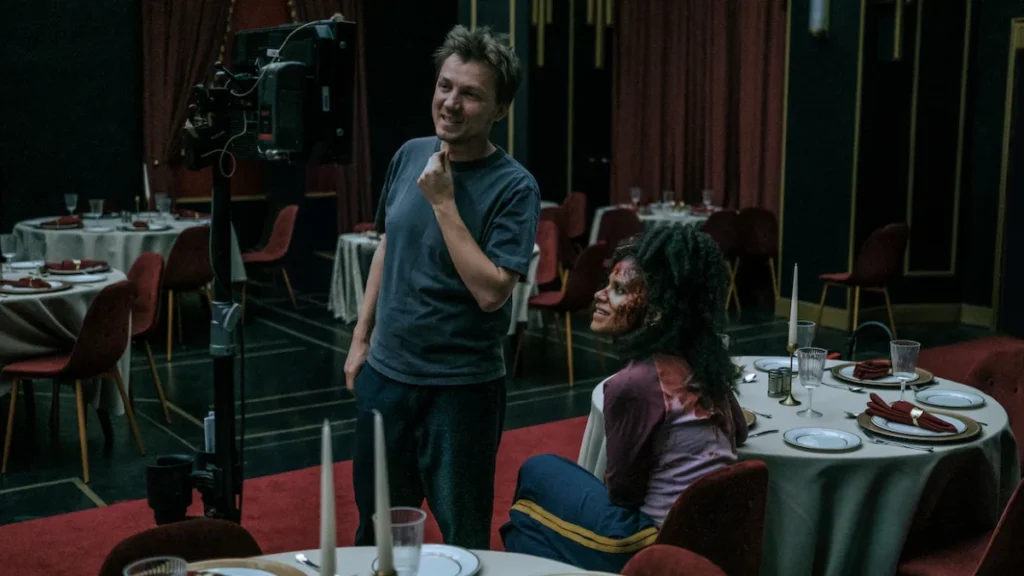
Another crucial takeaway was the emphasis on thorough rehearsal and minimizing takes. Travolta believes that well-rehearsed actors who are confident in their roles "won’t be rehearsing on screen," leading to authentic performances captured in the initial takes. This not only yields superior results but also fosters a dynamic and productive set environment, keeping both actors and crew energized.
Perhaps the most significant lesson, echoed by Mike Nichols and Brian De Palma, was the paramount importance of casting. Travolta asserted that "90% of your issues are: is everyone right for those characters?" He likened it to his mother’s philosophy on acting: talent is inborn, not taught. When an actor inherently "owns that character," the director’s role shifts from micromanagement to nuanced guidance, allowing for "delicious" collaborative moments that add "color and dimension" to the scene. This meticulous casting process, ensuring that each performer naturally embodies their role, was critical for a film so reliant on subtle emotional resonance and authentic portrayal.
Defying Conventional Narrative Structures
In an era often dominated by high-stakes drama and intricate plotlines, Propeller One-Way Night Coach deliberately eschews conventional conflict. Travolta admitted feeling "the opposite" of pressure to inject manufactured drama, instead trusting that the "cool journey" and the "interesting and bizarre" characters would inherently captivate the audience. He believed that the film’s strength lay in its ability to transport viewers to another era, where the "observation of these fascinating people" and the rich sensory experience—visuals, music, atmosphere—would be sufficient to hold attention.
The film’s 60-minute runtime, a concise format in an industry often favoring longer features, proved to be a perfect fit for its episodic, observational style. Both Apple’s Eddie Cue and Cannes’ Thierry Frémaux lauded this decision, agreeing that the film was "exactly what it had to be." This creative choice underscores a growing appreciation for shorter-form cinematic narratives that prioritize immersive experience over complex plot mechanics, offering a refreshing "uncynical oasis amid the frenzy of Cannes."
Cannes and Streaming Success: A New Chapter
The reception of Propeller One-Way Night Coach at the Cannes Film Festival was nothing short of triumphant. After Travolta presented the film to Eddie Cue at Apple, who declared it "spectacular" and an "important movie" that the world needed to see, the film secured a distribution deal. Subsequently, Thierry Frémaux, unaware of Apple’s acquisition, screened the film and was equally captivated. His enthusiasm led to an unprecedented early selection for the festival, five months ahead of the official schedule, along with the promise of a "very special night." The honorary Palme d’Or was a culmination of this recognition, not just for Travolta’s illustrious career, but also for the profound personal statement made by his directorial debut.
Frémaux’s admiration extended beyond the film’s artistic merit to its production philosophy. Upon learning of its modest budget, he declared, "Now you’re the most important film in the festival, because I want your piece of art to show everybody that film can be made at a low cost and still be impactful." This statement highlights the film’s significance as a beacon for independent filmmakers, demonstrating that compelling storytelling and artistic vision can transcend financial limitations, offering a powerful counter-narrative to the prevailing big-budget studio model.
The film’s subsequent success on Apple TV, where it rapidly ascended to become the most-streamed film globally for seven consecutive days, further validated Travolta’s vision. This strong performance on a major streaming platform underscores the growing appetite among audiences for unique, character-driven narratives that offer a distinct viewing experience. It also illustrates the power of streaming services to democratize access to diverse cinematic voices, providing a global stage for projects that might not fit traditional theatrical distribution models.
Reflecting an Era of Resilience and Hope
Beyond its nostalgic charm, Propeller One-Way Night Coach subtly reflects the broader spirit of the 1960s, a decade marked by both profound challenges and resilient optimism. Travolta intentionally wove in elements acknowledging the "equally bad things" happening in the world during that time – the Bay of Pigs, the Cuban Missile Crisis, and the looming threat of atomic bombs. Yet, these dark undercurrents are presented through the non-judgmental, empathetic lens of a child who, though exposed to pain and fear, possesses an inherent ability to recover and adapt.
The film contrasts these global anxieties with the post-World War II hopefulness that characterized much of American society. The 1960s, particularly the early years, saw a booming economy, increased consumerism (cars, new clothes, backyard pools), and a pervasive sense of looking towards the future. Events like the 1964 World’s Fair, with its futuristic exhibits, fueled imagination and wonder. Travolta recalls walking through the TWA terminal as a child, feeling as if he was stepping into "The Jetsons," anticipating flying cars. This blend of resilience in the face of adversity and an unwavering belief in progress defines the emotional landscape of the film, offering a poignant reminder of an era when "dreams felt possible."
Propeller One-Way Night Coach stands as a testament to John Travolta’s enduring artistic sensibility and his courage to explore new creative avenues. It is not merely a directorial debut but a deeply personal cinematic memoir, inviting audiences to experience the world through the innocent, observant eyes of a child, while simultaneously celebrating the design, music, and spirit of a pivotal era. Its critical acclaim at Cannes and its subsequent global streaming success herald a significant moment in Travolta’s career, cementing his legacy not only as an actor but also as a filmmaker with a distinctive and impactful vision.