The release of Christopher Nolan’s cinematic adaptation of The Odyssey (2026) marks a significant milestone in the ongoing creative partnership between the acclaimed director and Academy Award-winning editor Jennifer Lame. Over the course of three major motion pictures—beginning with the mind-bending espionage thriller Tenet (2020), continuing through the biographical historical drama Oppenheimer (2023), and culminating in this grand classical adaptation—Nolan and Lame have systematically dismantled conventional narrative chronology. Their collaborative methodology transforms complex, nonlinear structures into deeply visceral, emotionally driven cinematic experiences. By merging high-concept plotting with relentless editorial pacing, the duo has not only modernized Homer’s ancient epic but has also established a new benchmark for narrative construction in contemporary studio filmmaking.
Main Facts and the Genesis of a Creative Partnership
When Christopher Nolan first approached Jennifer Lame to edit Tenet, the hiring signaled a deliberate departure from his previous collaborations. Lame was celebrated for her deft handling of intimate character studies and independent dramas, including Noah Baumbach’s Frances Ha (2012), Mistress America (2015), and Marriage Story (2019), as well as Kenneth Lonergan’s Manchester by the Sea (2016) and Ari Aster’s Hereditary (2018). Transitioning from emotionally resonant, grounded character pieces to a massive, reverse-engineering sci-fi blockbuster featuring backward-filmed car chases and intricate physical combat posed a daunting initial challenge.
Lame famously overcame the intimidation of the project by humanizing the machinery. By treating high-speed vehicular action sequences as dialogue scenes and assigning distinct personalities to individual cars, she infused mechanical chaos with emotional weight. This philosophy—that editorial rhythm must serve narrative urgency rather than mere spatial clarity—became the foundational cornerstone of her work with Nolan. The resulting film was a masterclass in cinematic propulsion, utilizing a metered, rhythmic beat that drove audiences toward heavy emotional impacts. This approach pushed a stylistic evolution that Nolan had spent more than two decades refining, dating back to his self-edited, low-budget feature debut Following (1998), through his extensive work with veteran editors Dody Dorn and Lee Smith.
Chronology of Collaboration: From Tenet to Oppenheimer and Beyond
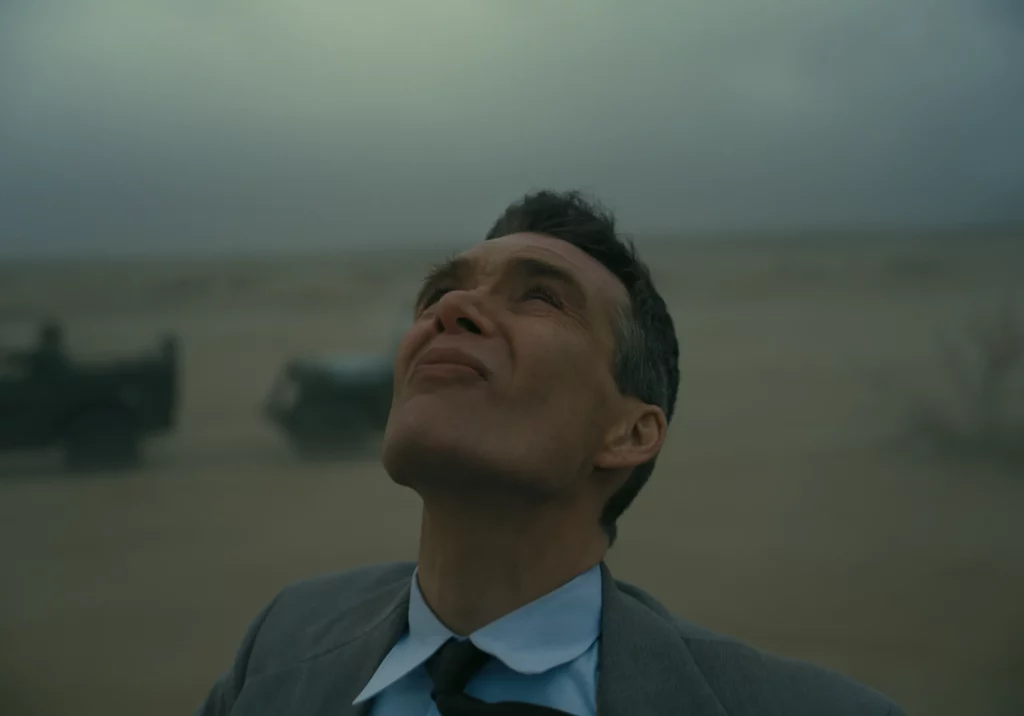
The trajectory of Nolan and Lame’s partnership illustrates a steady progression from structural experimentation to complete emotional integration. Following Tenet, the pair reunited for Oppenheimer (2023), a complex biographical drama chronicling the life of J. Robert Oppenheimer and the development of the atomic bomb. The film utilized a shifting, subjective timeline viewed through the psychological prisms of multiple central characters across several decades.

To manage the labyrinthine structure without alienating the audience, Lame drew upon her experience with flashback management honed during Manchester by the Sea. In interviews regarding Oppenheimer, Lame emphasized that the transition between timelines had to be rooted entirely in emotional necessity rather than arbitrary exposition. This discipline informed their editing passes, wherein they tailored sequences around specific characters—such as Nicholas Serber or George Kistiakowsky—to ensure that even fleeting visual appearances registered with maximum dramatic impact.
By the time production commenced on The Odyssey (2026), Nolan and Lame had perfected a shared cinematic vocabulary. Rather than relying on straightforward linear progression, the film presents a narrative effectively unstuck in time, where past, present, and memory occur simultaneously. This methodology mirrors the synaptic logic of the human mind, echoing Sergei Eisenstein’s classical theories regarding the cut as the primary instrument of intellectual and emotional expression.
Supporting Data and Structural Analysis of The Odyssey
Homer’s ancient epic The Odyssey is inherently non-linear, featuring nested narratives, geographical tangents, and shifting perspectives. This structural complexity made the source material ideal for Nolan’s sensibilities. Rather than simplifying the text into a conventional, linear adventure, Nolan and Lame streamlined the narrative while intentionally preserving its chronological dislocations.
The film opens audaciously, introducing three distinct timelines within its initial sequences. Travis Scott appears as a bard recounting the myth of the Trojan Horse, establishing an immediate multi-layered framework. Glimpses of Odysseus (Matt Damon) and Sinon (Elliot Page) flash across the screen, juxtaposed with Penelope (Anne Hathaway) standing behind a metal loom, audibly demanding that the bard cease reciting the familiar tales of war.
Throughout the feature, narrative momentum largely bypasses conventional scene-setting techniques. Editorial cuts are remarkably swift, with individual shots rarely lingering for more than a few seconds. This breathless pacing reflects Odysseus’s internal state as he struggles to assemble the fragments of his memory. Much of his legendary voyage is revealed to Calypso through disoriented flashbacks, surfacing in fits as the protagonist recovers from a prolonged, drug-induced stupor.
In stark contrast to traditional Hollywood historical epics—ranging from The Robe (1953) to Kingdom of Heaven (2005)—which frequently indulge in opulent theatricality and sweeping widescreen vistas, The Odyssey employs scale in a manner that feels immediate and psychologically unsettling. Panoramic establishing shots of the Mediterranean are deliberately fleeting. The editorial priority consistently favors psychological reality over purely aesthetic landscape appreciation.

Official Responses and Industry Implications
While studio executives and production teams have historically approached highly fragmented, nonlinear storytelling with commercial caution, the proven box-office and critical success of Nolan’s previous ventures has granted the filmmaker unprecedented creative autonomy. Industry analysts note that the commercial viability of sophisticated, structurally demanding narratives has shifted significantly over the past decade. Films that challenge traditional audience conditioning by treating memory and time as fluid constructs are no longer relegated strictly to independent arthouse circuits; instead, they command major global box-office attention.
Industry insiders and critics have widely praised Lame’s editorial contributions as pivotal to translating Nolan’s intellectual concepts into universally accessible visceral experiences. By grounding complex temporal mechanics in fundamental human emotions—such as grief, longing, and the fraying bonds of domestic separation—the creative team ensures that intellectual puzzles consistently yield emotional payoffs.
Broader Impact on Modern Filmmaking
The broader implications of Nolan and Lame’s work on The Odyssey extend far beyond a single high-profile release. As digital filmmaking technologies continue to evolve, the traditional boundaries of continuity editing are increasingly challenged by filmmakers seeking to replicate internal human consciousness rather than objective physical reality.
By demonstrating that audiences readily embrace impressionistic, memory-driven editorial structures within large-scale commercial epics, Nolan and Lame have expanded the stylistic vocabulary available to modern directors. The Odyssey stands as a testament to the power of the editing suite as a primary creative engine, proving that when narrative structure and emotional execution align perfectly, classical storytelling can be revitalized for contemporary audiences in radical, groundbreaking ways.