In a remarkable testament to the enduring power of independent cinema and the timeless allure of New York City’s past, Phil Hartman’s long-dormant 1986 feature film, No Picnic, has experienced an astonishing and unexpected resurgence, captivating new audiences and setting box office records at Film Forum. This "noirish shaggy-dog punk comedy," a luminous black-and-white 16mm snapshot of the Lower East Side and nascent East Village of the mid-1980s, has emerged from decades of obscurity to become one of the most successful repertory runs in the theater’s recent history, proving that some stories, like fine wine, only improve with age and an opportune reintroduction.
Genesis and Production: A Snapshot of 1980s NYC
The origins of No Picnic are deeply intertwined with the vibrant, yet rapidly shifting, cultural landscape of downtown Manhattan in the 1980s. Phil Hartman, a quintessential downtown cinephile and entrepreneur, channeled the profits from his wildly popular Cajun-inspired NoHo establishment, the Great Jones Cafe (cofounded in 1983), into his directorial debut. This marked a significant pivot for Hartman, who, despite his later success in the culinary world, harbored a profound passion for filmmaking. No Picnic remains, to date, his only completed feature film, though he reportedly shot another with cinematographer Peter Hutton in 1995, Eerie, which he is now planning to complete.
The film, photographed by the acclaimed experimental filmmaker Peter Hutton, leveraged the evocative aesthetic of lustrous black-and-white 16mm film, a choice that imbued the episodic narrative with a raw, ethnographic quality. This visual style perfectly complemented the film’s central character: the Lower East Side itself. Completed in 1987, the project received crucial support from Wim Wenders’ New York-based production company, Gray City Films, and additional financing from Hartman’s burgeoning new venture, Two Boots Pizza. This period of artistic creation, fueled by entrepreneurial success, highlights a unique confluence of cultural and economic forces that defined New York’s independent art scene at the time.
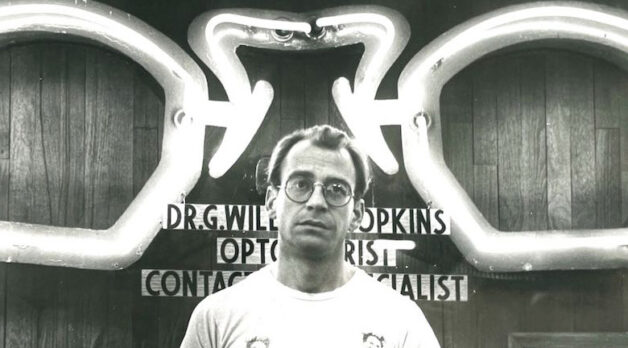
The narrative of No Picnic follows Mac (David Brisbin), a melancholic 30-something former musician struggling to make ends meet by stocking jukeboxes and cigarette machines across the city. His romantic obsession with a young woman he encounters on the street is juxtaposed with the persistent advances of his Canadian upstairs neighbor, who seeks a green-card marriage. Mac’s sense of being a relic in a rapidly changing city mirrors the plight of many small businesses and cultural institutions depicted in the film. Hartman himself articulated this urgency during production: “We were racing around to catch Adam Purple’s garden, Bleecker Bob Records, the Atlas Barber Shop, and all these places that were in danger of going, and all these people who we knew wouldn’t be around forever.” This commitment to documenting a vanishing era lends No Picnic an invaluable anthropological dimension, transforming it into a living archive of a pre-gentrification metropolis.
The film’s vibrant cast further enriches this urban tapestry, featuring early performances and cameos from figures who would later achieve broader recognition, including actors Luis Guzmán and Steve Buscemi, and filmmaker Lewis Klahr. The most recognizable name at the time of its making was musician Richard Hell, appearing in a memorable cameo as an irate neighbor, underscoring the film’s deep roots in the downtown punk and art scene.
Initial Reception and Lingering Obscurity
No Picnic made its debut at the prestigious Sundance Film Festival, where it garnered critical acclaim and won the cinematography award, a fitting tribute to Hutton’s masterful black-and-white work. The initial hope was for a theatrical run at the floundering St. Mark’s Cinema, a venue briefly glimpsed in the film, with Gray City Films planning to acquire and reopen it. However, these plans were thwarted when Wim Wenders’ company ultimately ceased operations.
The film’s fortunes took a positive turn when the legendary experimental filmmaker and archivist Jonas Mekas stepped in, offering to screen No Picnic at Anthology Film Archives on 2nd Avenue and 2nd Street. This venue proved to be a serendipitous match, given the film’s intrinsic connection to the neighborhood it depicted. The film enjoyed a record-setting six-week run at Anthology in the summer of 1990, largely propelled by a rave review from Manohla Dargis, then writing for The Village Voice. Dargis, who herself grew up in the East Village, hailed No Picnic as “one movie about the East Village that gets it right,” presciently describing it as “a valentine to a neighborhood under siege by realtors and galleries, uptowners and outsiders, a swan song to a languishing New York tribe.” Her words captured the film’s essence as both a celebration and an elegy, resonating deeply with local audiences.
Despite this initial critical and modest commercial success, No Picnic largely faded from public view over the subsequent 35 years. Hartman became consumed by the rapid expansion of his Two Boots Pizza empire, which, incidentally, also housed the Pioneer Theater, a 99-seat repertory cinema that operated from 2000 until rising rents forced its closure in 2008. For decades, No Picnic was primarily accessible through VHS tapes and later DVDs, available mostly on the shelves of Two Boots Video Store, becoming a cult item rather than a widely celebrated classic. This period of relative obscurity, while regrettable for film enthusiasts, inadvertently contributed to its eventual mystique and the profound impact of its modern rediscovery.
The Catalyst for Revival: A Fortuitous Connection
The seeds of No Picnic‘s remarkable revival were sown in 2025, through a serendipitous connection steeped in New York’s rich independent film history. Phil Hartman had maintained a close friendship, through his producer and then-partner Doris Kornish, with Morris Engel, the co-director of The Little Fugitive (1948). Engel’s pioneering neorealist film, which chronicled a boy’s day trip from Brooklyn to Coney Island, was a seminal work that inspired the French New Wave and served as a thematic template for No Picnic.
It was Mary Engel, daughter of Morris Engel and Ruth Orkin, who played a pivotal role in reintroducing Hartman and his film to Jake Perlin. Perlin, operating under the banner of The Film Desk, a company dedicated to releasing neglected cinema classics, proved to be the ideal champion for No Picnic. Coincidentally, Perlin had been a student of Peter Hutton, the film’s director of photography, at Bard College, and was a long-time admirer of the Pioneer Theater, where he had secured his very first film programming gig. This intricate web of connections – personal, professional, and historical – created the perfect storm for No Picnic‘s re-emergence.
Restoration and Reintroduction: From MoMA to Film Forum
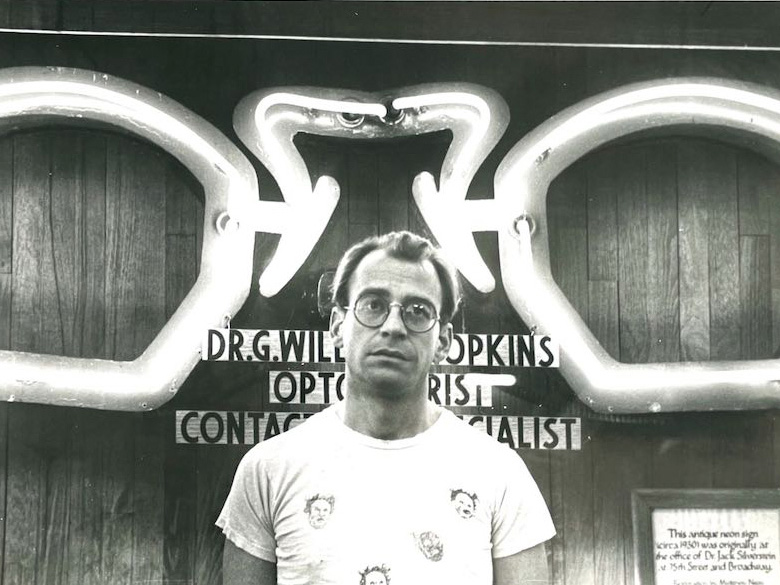
Under Perlin’s meticulous supervision, No Picnic underwent a comprehensive restoration, bringing its lustrous black-and-white imagery and gritty soundscape back to life. The restored film premiered in January as part of the prestigious “To Save and Project” series at the Museum of Modern Art (MoMA). Curator Joshua Siegel lauded it as “a priceless artifact of New York’s pre-gentrification East Village,” underscoring its historical significance beyond its cinematic merits. The premiere drew a packed house at MoMA, a remarkable turnout given that it occurred just a day after a major snowstorm, signaling an unexpected public appetite for this forgotten gem.
The enthusiastic response at MoMA caught the attention of Film Forum repertory director Bruce Goldstein. Initially, Goldstein offered Perlin a slot for No Picnic within the massive “Tenement Stories: From Immigrants to Bohemians” film series. However, Perlin, sensing the film’s potential for a broader impact, advocated for a full theatrical run. Despite Goldstein’s initial hesitation to commit to an unknown title, he was ultimately swayed by the fervent enthusiasm of repertory programming manager Stephanie Gross. Film Forum agreed to give No Picnic a dedicated run, opening on Friday, April 17, with two screenings per day. This was a particularly competitive weekend for the theater, which was also premiering Mad Bills to Pay, a Sundance favorite described as a “cinematic soulmate” to No Picnic, a beautifully crafted low-budget gem filmed in the Bronx.
Unexpected Box Office Triumph: A Grassroots Phenomenon
Against the backdrop of a crowded theatrical schedule, No Picnic defied all expectations. It sold out nearly all of its initial screenings and, by the end of its first week, had emerged as Film Forum’s top-grossing film, taking in over $28,000. Its momentum continued into the second week, where it again claimed the top spot, adding another $16,000 to its coffers. As the film’s total revenue soared past $50,000 in its third week, it became abundantly clear that No Picnic was not merely a niche revival, but a bona fide surprise hit.
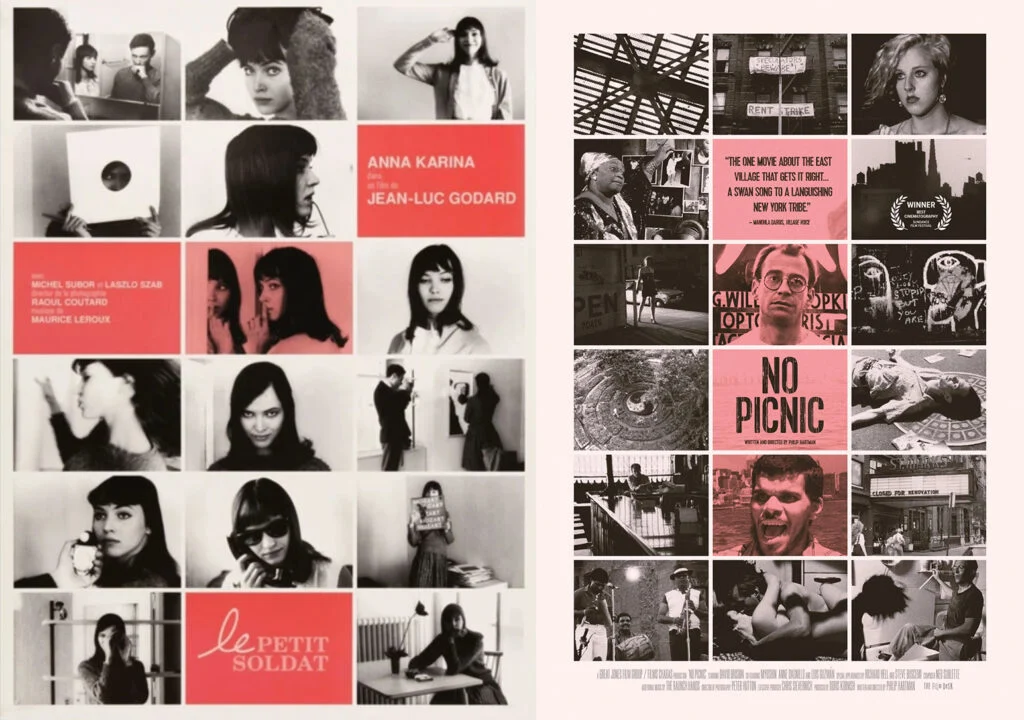
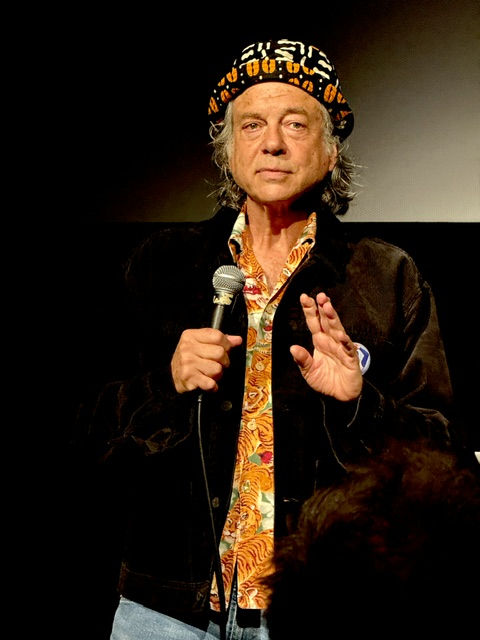
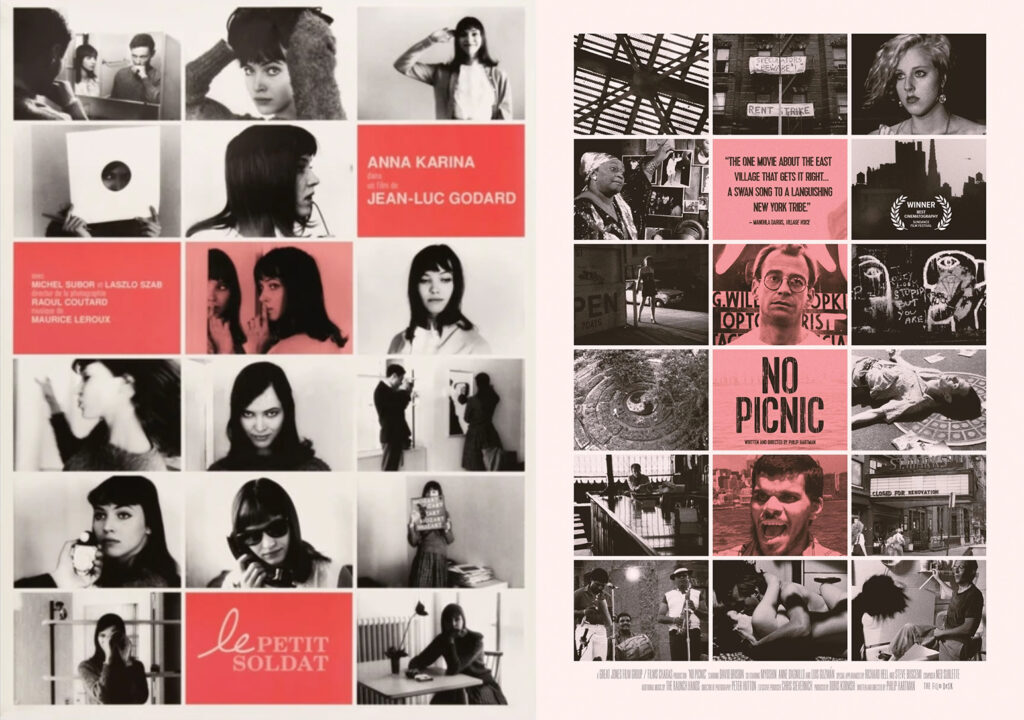
The Film Desk’s strategic marketing efforts played a significant role in this success. A dynamic trailer, expertly crafted to highlight Peter Hutton’s gorgeous cinematography, was shown repeatedly for a full month during Film Forum’s widely successful “Tenement Stories” series. Furthermore, a beautiful poster, inspired by the iconic design for Jean-Luc Godard’s The Little Soldier (1963), captured the film’s artistic spirit. Phil Hartman himself became a charismatic advocate, conducting frequent Q&As and even offering free slices of Two Boots Pizza to Film Forum ticket holders, creating a unique, community-oriented engagement.
However, the true driving force behind No Picnic‘s extraordinary success was its profound resonance with a young audience. Hartman observed this demographic shift: “It started building and building. It began with people our age coming, and within a few weeks, it was people bringing their kids. And then it was just the kids coming and bringing their friends.” By the end of its impressive twelve-week run, the film had grossed a staggering $123,000, cementing its place as one of Film Forum’s top repertory runs of the decade. This placed it in an elite company, surpassing celebrated classics like Federico Fellini’s 8 ½ ($120,000) and Akira Kurosawa’s The Seven Samurai ($103,000), and nearly matching Satyajit Ray’s Days and Nights in the Forest ($127,000). This remarkable performance underscores a potent, often underestimated, hunger for authentic, historically resonant cinema among contemporary audiences.
The Enduring Resonance: Why "No Picnic" Connects Today
The enduring appeal of No Picnic lies in its masterful exploration of duality. Early in the film, Mac muses on the rapidly transforming neighborhood: “The more things change, the more they stay the same. That’s what the French say. Fuck the French… The more things change the more they change.” This sardonic observation encapsulates the film’s core tension. It functions as an invaluable time capsule, meticulously documenting a predigital, pre-Starbucks urban landscape: record stores, dive bars, walk-up apartments with kitchen bathtubs and wall-mounted phones, where neighbors organize rent strikes and visit each other via fire escapes. Yet, beneath this specific historical veneer, the film grapples with universal themes.
The struggle to pay bills while pursuing a creative and meaningful life is, as Manohla Dargis aptly noted, an “evergreen!” issue. Dargis, reflecting on the film’s contemporary success, told me, “the film speaks to the familiar, relatable (evergreen!) issue of affordability,” recalling her own necessity to live in illegal sublets to remain in the East Village despite having grown up there. This sentiment resonates profoundly with today’s younger generations grappling with skyrocketing rents and the prohibitive cost of living in major urban centers.
Christine Vachon, who served as an uncredited assistant sound editor on No Picnic (paid in free meals at Great Jones Cafe), mused on the film’s contemporary relevance: “I think it has this mix of being relevant to today because it’s about being able to afford a place, but it also is a world that’s sort of past… It just manages to be sort of a perfect time capsule that in a funny way has folded back onto this time.” This paradox – a historical document that feels acutely current – is central to its widespread appeal.
For young filmmaker Meg Aubry, who resides in Ridgewood, a neighborhood often cited as a modern-day analog to the 1980s Lower East Side, No Picnic serves as an essential educational tool for new arrivals to the city. “We don’t really know the grounds we’re stomping on or the history of it. So it felt like it was an education in New York culture,” Aubry explained. Beyond its historical gravitas, the film possesses an undeniable entertainment value. Aubry praised its unique blend of humor and seriousness: “I love that it was kind of like a parody noir. It is willing to laugh at itself as much as it is willing to take itself very seriously. And I love a character-driven kind of vérité, a vignette-to-vignette type of story. It’s just one of those cool ride-along watches.”
Revisiting the film during its final week, with an audience spanning all ages, offered a palpable sense of its broad appeal. David Brisbin, reflecting on the current fascination, observed, “Young people in the East Village now have a sense they missed something and want to know what that time was like. Old folks like me like to remember their youth.” He echoed his character’s sentiment, adding, “Phil and Peter showed us the end of an era, but not in a nostalgic or dystopian way. Things change, but some things stay the same.”
A "Terroir" of New York Cinema: Legacy and Implications
Phil Hartman’s analogy of “terroir” perfectly encapsulates No Picnic’s distinctive character. “You talk about terroir for a wine,” he said. “I feel like there’s a terroir to No Picnic. Like you can feel the earthiness of the East Village and the rubble, the empty lots, the abandoned buildings. I think there’s something really appealing about that.” This deep sense of place, of an almost tangible connection to the ground and history of the East Village, is what makes the film so resonant. And, as Hartman humorously concluded, this "wine" has indeed aged remarkably well: “It had time to ferment. It’s marketing genius to create something and then keep it a secret for 40 years.”
The success of No Picnic at Film Forum is more than just a heartwarming story of a forgotten film finding its audience. It carries significant implications for film preservation, repertory programming, and the evolving relationship between audiences and cinematic history. It underscores the enduring power of local storytelling, demonstrating that narratives deeply rooted in a specific time and place can achieve universal relevance. Moreover, it highlights the critical role of dedicated archivists, programmers, and distributors like The Film Desk in unearthing and restoring neglected cinematic treasures, ensuring that valuable cultural artifacts are not lost to time.
In an era dominated by rapid digital consumption and fleeting trends, No Picnic‘s triumph serves as a powerful reminder of cinema’s ability to transcend generations, spark intergenerational dialogue, and offer profound insights into the human condition against the backdrop of an ever-changing world. It is a testament to the fact that some stories, much like the very neighborhoods they depict, possess an intrinsic value that time can only deepen, waiting for the right moment to be rediscovered and celebrated anew.