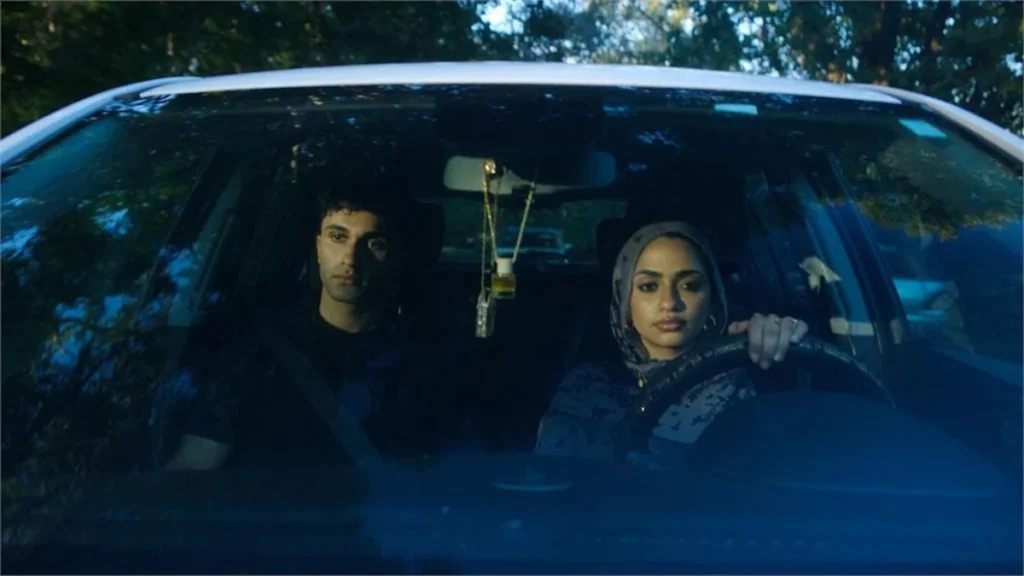
Like the internet lore from which it draws its evocative title, Kane Parsons’ feature film Backrooms (2026) masterfully encapsulates a profound paradox of embodiment and time, translating a diffuse digital mythos into a compelling cinematic experience. This adaptation of Parsons’ cult YouTube series delves into the unsettling aesthetic of liminal spaces and the pervasive anxieties of a rapidly evolving technological landscape, cementing its place as a significant cultural artifact reflecting contemporary digital consciousness.
The Genesis of a Digital Myth: From 4chan to Feature Film
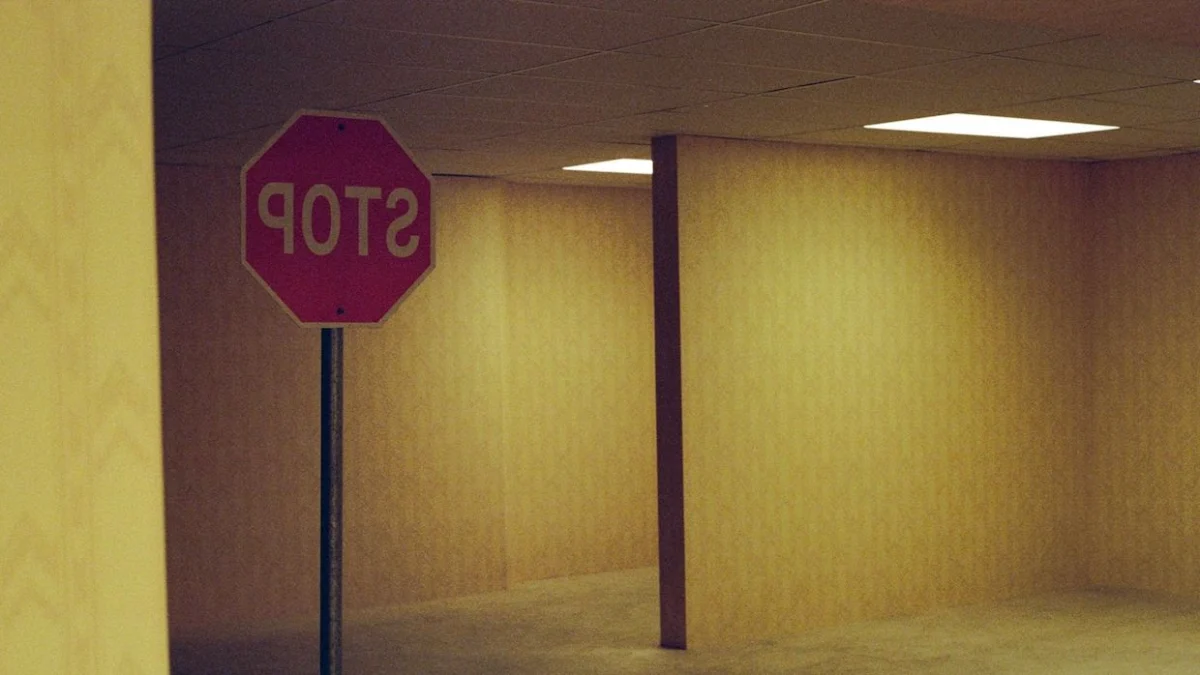
The origins of the Backrooms phenomenon are as enigmatic and decentralized as the internet itself. The lore first surfaced in 2019 on 4chan, the anonymous imageboard, with a photograph depicting an eerily vacant, yellow-hued hallway—a space devoid of discernible purpose, characterized by stained walls, cheap linoleum, and flickering sodium-vapor fluorescent lights. This image, reportedly taken in 2003 during renovations of a former furniture store in Oshkosh, Wisconsin, struck a chord with internet users, triggering a wave of communal storytelling. The photograph became the foundational visual for a burgeoning "creepypasta"—a term for horror-related legends or images that are copy-and-pasted and spread across the internet. Users began to elaborate on the concept, describing an infinite maze of empty, off-white rooms, a non-Euclidean labyrinth accessible by "noclipping" out of reality.
This initial spark on 4chan quickly evolved into a sprawling, Lovecraftian latticework of anonymous mythmaking. The narrative focus migrated to platforms like Reddit, where dedicated communities emerged. These subreddits, such as r/backrooms and r/liminalspaces, fostered both "originalists" who adhered strictly to the initial premise of a single, infinitely looping Level 0, and "revisionists" who expanded the lore with new "levels," "entities," and complex survival guides. This prolific output became a striking example of hypermodern digital creativity, predicated on the surreal anachronism of physical spaces that predate the advent of Web 2.0, yet are tinged by a curdled nostalgia for a less mediated past. The visual language—drop ceilings, stained or unfinished walls, cheap linoleum tile, and other trappings of early-aughts retail and domestic architecture—was crucial. The most important element was their ominous emptiness, presenting an Escheresque maze to be explored at one’s own risk. By the time Kane Parsons, then a seventeen-year-old filmmaker, began his YouTube series, the Backrooms had already become a deeply ingrained part of internet folklore, ripe for a more structured narrative interpretation.
Kane Parsons: From YouTube Sensation to Feature Director
Kane Parsons’ journey from a young YouTuber to a feature film director is a testament to the power of viral internet content and the mainstreaming of digital subcultures. In January 2022, Parsons uploaded a short film titled "The Backrooms (Found Footage)" to his YouTube channel, Kane Pixels. This 9-minute video, created with a blend of Blender 3D modeling, After Effects, and practical effects, depicted a cameraman accidentally falling into the Backrooms and navigating its terrifying, desolate corridors. The video quickly went viral, praised for its unnerving atmosphere, realistic visual effects, and effective use of the "found footage" trope. Within months, it garnered tens of millions of views, establishing Parsons as a significant voice in the online horror community.
His subsequent series of Backrooms shorts, including "The Oldest View," "Autopsy," and "Informational Video," further expanded the lore, introducing new concepts and deepening the sense of dread. These videos not only showcased Parsons’ prodigious talent but also demonstrated a sophisticated understanding of the psychological impact of liminal spaces and analog horror aesthetics. The success of his YouTube series attracted the attention of major Hollywood studios. In early 2023, it was announced that A24, known for its distinctive and critically acclaimed horror and independent films, would produce a feature-length adaptation of Backrooms, with Parsons at the helm. This move signaled a significant validation of internet-born intellectual property and the growing influence of digital creators on traditional filmmaking. The film, released in 2026, represents the culmination of Parsons’ vision, translating the ephemeral, community-driven nature of creepypasta into a polished cinematic narrative, with veteran screenwriter Will Soodik (known for Ash vs Evil Dead and Westworld) adapting the script.
The Aesthetic of Liminality: A Visual and Psychological Deep Dive
The visual language of Backrooms is central to its appeal and thematic resonance. The film faithfully reproduces the unsettling aesthetic of "liminal spaces"—transitional areas that are meant to be passed through rather than inhabited, like empty hallways, vacant malls, deserted parking lots, or waiting rooms. These spaces, often depicted in a state of decay or sterile uniformity, evoke a sense of disorientation, nostalgia, and latent dread. The film’s primary setting—an anonymous stretch of suburban sprawl in Santa Clara, California, in June 1990—perfectly captures this aesthetic. The clear blue sky, slightly cracked and largely empty tree-lined streets, and vast, low-slung strip malls immediately set a tone of uncanny familiarity.
Inside, the details are meticulously crafted: heavy curtains, cushy brocade armchairs atop off-white wall-to-wall carpets, surrounded by cheap blonde wood fixtures. These elements are not merely set dressing; they are psychological triggers. For many American millennials, these places feel immediately familiar, stirring memories of childhood outings to defunct retail stores or visits to relatives’ homes. For a younger generation, particularly Gen Z, who never experienced them firsthand, these sites are the stuff of viral internet content—hashtags like #nostalgiacore and #liminalcore on TikTok and Instagram. These movements, which surged in popularity during and after the COVID-19 pandemic, reflect a collective reckoning with a fractured sense of time and a troubled sense of safety in common spaces. The pandemic, by disrupting routines and emptying public spaces, inadvertently heightened awareness of liminality and accelerated the yearning for a perceived "unplugged past." The film leverages this widespread cultural phenomenon, transforming architectural banality into a landscape of existential dread.
Nostalgia in the Digital Age: #Liminalcore and #Nostalgiacore
The digital proliferation of #nostalgiacore and #liminalcore videos underscores a broader societal trend: a yearning for a bygone era, often idealized, as a refuge from the algorithmic hegemony and perceived instability of the present. These videos frequently employ deceptive "retrobait" content or AI-generated imagery, often laced with conservative political undertones, to evoke a sense of a simpler, less mediated past. Yet, even at their most ominous, these videos are heavily sentimentalized, creating a paradoxical mash-up of technologies and time periods that is essential to their aesthetic and emotional freight.
As observers, both academic and amateur, have pointed out, the entropic solipsism inherent in this kind of media is predicated on a deep sense of loss motivated by the modern internet itself. The common refrain, "I want to go there," in response to these videos reveals a collective desire for escape or reconnection. However, for every ostensibly positive piece of #nostalgiacore (e.g., unsupervised kids at play outside, "grandma’s house in 2003"), many more depict decay: Blockbusters overgrown with weeds, low-resolution shots of parking lots with tipped-over shopping carts, half-dead Toys "R" Us signs, and vacant malls, novelty restaurants, and teenage bedrooms. This duality highlights that nostalgia can be both disquieting and comfortingly narcoticizing. The past, as L. P. Hartley famously wrote, is a foreign country, and digital jaunts "back" to it both highlight the impossibility of returning to "simpler times"—most poignantly for those born after the idealized moment has passed—and augment the accelerationist instability of the present. Colette Shade, in her 2025 book Y2K: How the 2000s Became Everything, succinctly states, "Nostalgia is a surrender to the world as it is." Backrooms, a vibe piece by design, provides a surprisingly nuanced understanding of this paradox, suggesting that the past was never simpler, and the way it is pursued in this digital age is knowingly futile.
A Temporal Crossroads: The Film’s 1990 Setting
Parsons’ decision to set Backrooms in June 1990 is a deliberate and crucial narrative choice, positioning the film at a technological and cultural point of no return. This era predates the widespread adoption of the internet and Web 2.0, placing the characters on the precipice of a digital revolution that would fundamentally reshape human experience. The film opens with Blair Witch-style DV-cam found footage of the Backrooms’ impossible byways, immediately juxtaposing an early form of digital media with the analog world of 1990. This temporal setting allows the film to chart the transformation of 20th-century analog agoraphobia—the fear of open or crowded spaces—into 21st-century cyber-dissociation, where endless digital nooks and crannies uneasily host the ghosts of technologies past alongside the latest versions of our own technodystopian anxiety.
The technological artifacts scattered throughout the film serve as poignant reminders of this pivot. Floppy disks, chunky old computer monitors, outdated low-budget cable TV ads, and self-help cassettes duel for attention on clunky TV sets. Announcements like, "Are you still using paper folders?" highlight the nascent push towards digitalization. This backdrop amplifies the film’s central theme: the relentless march of technological progress and its disorienting effect on individuals. The characters inhabit a world on the cusp of profound change, making their descent into the Backrooms a metaphorical journey into the unknown territory of the internet age, a labyrinth that is constantly remaking itself.
Characters as Conduits of Anxiety
The narrative of Backrooms, though intentionally ambiguous, centers on characters who embody the anxieties of their time. Clarke (Chiwetel Ejiofor) runs a furniture store, Ottoman Empire, on the verge of liquidation. His wares are woefully cheap and prone to breaking, symbolizing the obsolescence and fragility of the pre-digital economy. Clarke’s struggles with financial instability and a viable future mirror the broader anxieties of a society grappling with rapid transformation. He comes to believe the Backrooms are windows into his own mind, a manifestation of his internal turmoil, but they are also a backdated representation of internet-enabled collective intelligence, highlighting how technology forces us to share "loops" of anxiety—to "doomscroll" each other’s septic mindsets—even as it makes us feel less connected.
Mary (Renate Reinsve), Clarke’s therapist, is similarly haunted by loss. She is consumed by the demolition of her childhood home, a physical anchor of her past, now replaced by prefab condos. Her act of carrying off a chunk of sidewalk embedded with her youthful handprints serves as a poignant talisman against further dislocation, a desperate attempt to preserve physical memory in an increasingly ephemeral world. These characters’ individual traumas become universalized within the context of the Backrooms, which act as a physical manifestation of their psychological and societal dislocations. Their experiences reflect the broader societal sentiment that "No one has any idea what’s going on. Things are changing too fast, getting too big to understand."
The AI Parallel: Iteration and Distortion
One of Backrooms‘ most insightful contributions to contemporary discourse is its subtle yet profound parallel between the generative nature of the Backrooms and the workings of artificial intelligence. The film posits that both AI and the Backrooms are based upon predictive models of iteration, endlessly generating variations of known patterns. Multiple characters articulate this concept through the analogy: "It’s like describing a dog to someone who’s never seen a dog and then asking them to draw it." This metaphor perfectly captures the generative void’s distorted "memory" for people, places, and things as it mutates ad infinitum.
In this sense, the Backrooms become a premonition of generative AI’s impact on reality, where algorithms synthesize new content based on vast datasets, often resulting in uncanny, distorted, or "hallucinatory" outputs. Clarke, fundamentally devoid of human connection, financial stability, or a viable future, succumbs to the false comfort of his own personal form of AI hallucination. He becomes just another creepypasta on a Reddit subthread, made briefly tangible on film before returning to the liminal space of internet discourse once more. This analogy elevates the film beyond a mere horror piece, transforming it into a meta-commentary on the nature of digital creation, memory, and reality in the age of advanced algorithms.
Beyond Horror: A Meta-Hauntological Tone-Poem
While the actual narrative of Parsons’ film may sometimes lean towards "run-of-the-mill, heavy-handed horror trauma-plotting" and "therapeutic psychobabble," its strengths lie in its conceptual depth and atmospheric execution. Writer Will Soodik deserves credit for committing to a highly calibrated ambiguity, particularly regarding the very existence of the Backrooms. The reason for their appearance is thankfully never explained, but their emergence at the precise moment when history is about to "end"—before new media fundamentally reshapes the world—transforms the film into a kind of ghost story for the noncybernetic individual self.
Backrooms operates as a meta-hauntological tone-poem on the ambivalent nature of our engagement with nostalgia online and on the internet itself from our current vantage point. Hauntology, a concept introduced by Jacques Derrida, refers to the persistence of the past in the present, often in a spectral, unsettling manner. The film expertly captures this, portraying the internet as a space where ghosts of technologies past and idealized memories coexist with present anxieties and the specter of future disjunction. It acknowledges the unsettling truth that the world these characters inhabit, on the eve of today’s technological regime, "wasn’t viable either." This ambivalence, built into and around its premise, is the film’s sharpest intercession into familiar technoskepticism. Under such circumstances, the film suggests, what recourse is there other than to go through the looking glass, to become a glitch within the system?
Broader Cultural Significance and Future Implications
Backrooms stands as a significant cultural artifact, illustrating the powerful trajectory of internet lore into mainstream media. It exemplifies how grassroots, community-driven narratives can transcend their niche origins to resonate with broader audiences, particularly when expertly translated through a compelling artistic vision. The film’s success reinforces the notion that the creepypasta genre has matured beyond simple scare tactics, capable of exploring complex themes of identity, memory, and technological anxiety.
A24’s involvement further underscores the growing recognition of internet-born content as legitimate intellectual property for cinematic adaptation. This trend is likely to continue, opening doors for other viral phenomena and independent digital creators. The film contributes to a wider discourse about digital nostalgia, the psychological impact of liminal spaces, and the evolving relationship between humans and technology. By presenting a tangible manifestation of collective digital anxieties, Backrooms offers a chilling yet insightful commentary on our hyper-connected, yet increasingly disoriented, world. It serves as a stark reminder that as technology advances, our understanding of reality, memory, and self continues to be redefined, pushing us further into an Escheresque maze of our own making.