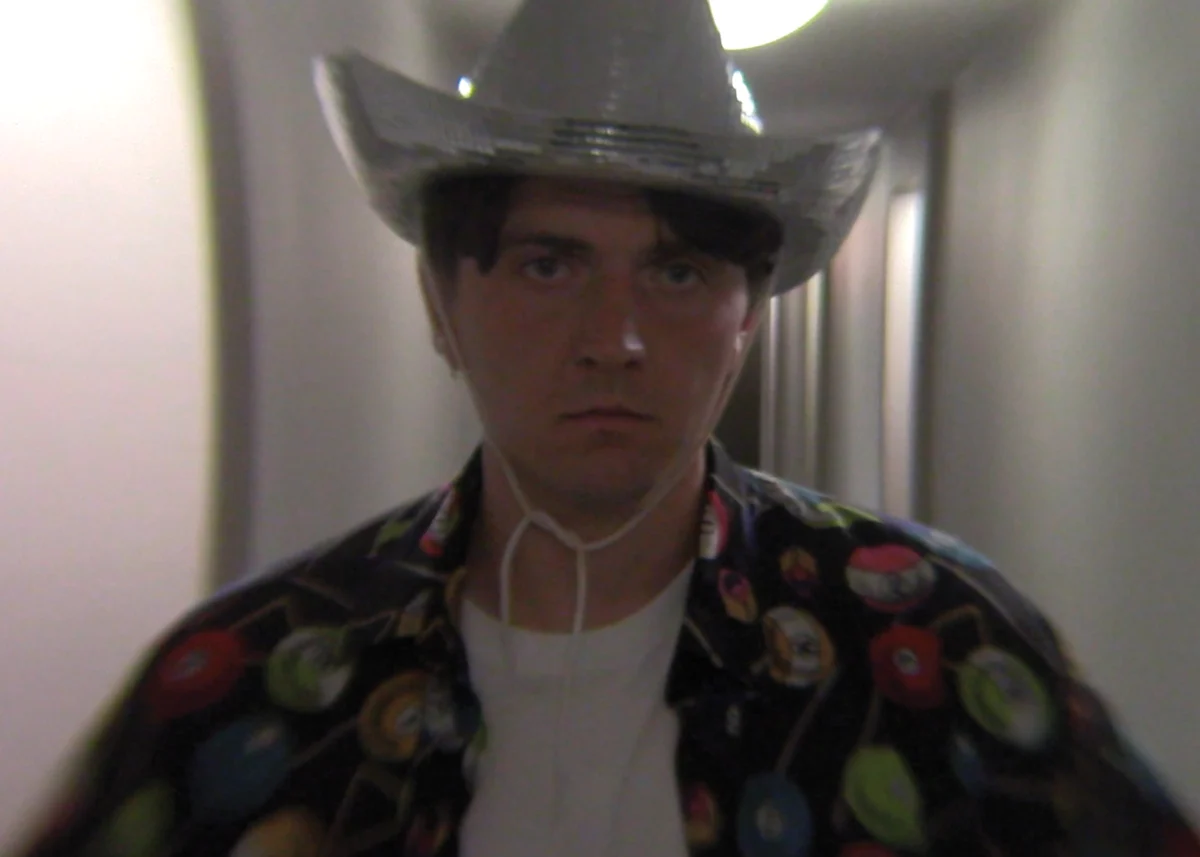
Filmmaker Tristan Wheeler confronts a stark reality shared by countless creatives in major metropolitan centers: how does one pursue artistic endeavors in a city where the relentless surge of living expenses threatens to extinguish passion before it can fully ignite? His latest work, the madcap dark comedy Toronto Apartment, serves as both a reflection and a critique of this predicament, turning the city’s chronic housing crisis into an absurdist yet deeply resonant narrative. The film, which recently celebrated its world premiere at the Mammoth Lakes Film Festival in California and its Canadian debut at Toronto’s Paradise Theater as part of the Bleeding Edge showcase, delves into the desperate measures one man takes to keep a roof over his head, mirroring the real-life struggles of its creator.
Toronto’s Unyielding Housing Crisis: A City Under Strain
Toronto, a vibrant hub for arts and culture, has increasingly become synonymous with an intractable housing crisis, a dilemma that echoes across other global creative capitals such as New York, Los Angeles, and London. For artists, whose careers often entail irregular income and significant upfront investment in their craft, the escalating cost of living presents an existential threat. "We live in a city where it’s quite expensive to live. So most of your time is spent trying to cover basic needs: having a job, having a roof over your head. That just takes more time away from being a creative person," Wheeler explained in a recent interview with THR, articulating a sentiment widely felt within the city’s artistic community.
The numbers paint a grim picture. According to recent reports from the Canadian Real Estate Association and various rental market analyses, Toronto has consistently ranked among the least affordable cities globally for several years. Average monthly rents for a one-bedroom apartment in the downtown core have surged past C$2,500, often consuming more than 50% of an individual’s pre-tax income, a figure well above the recommended 30% affordability threshold. Homeownership remains an increasingly distant dream, with the average price for a detached home nearing C$1.5 million. This unprecedented escalation, fueled by a combination of rapid population growth, speculative investment, and insufficient housing supply, has created a pressure cooker environment, particularly for those in precarious employment sectors like the arts.
Housing advocates and urban planners have long warned of the "brain drain" effect, where essential workers, young professionals, and especially artists are forced to leave high-cost cities in search of more affordable pastures. This migration not only depletes a city’s cultural vibrancy but also exacerbates existing social inequalities. For many, the choice is stark: compromise artistic ambitions for financial stability, or embrace a life of constant precarity.
Personal Struggles Fueling Creative Vision
Wheeler’s journey into filmmaking, and the genesis of Toronto Apartment, is deeply intertwined with these very personal struggles. Having moved to Eastern Canada from the west coast, he found himself navigating the labyrinthine world of Toronto’s rental market after a relationship ended. "I had ended a relationship and I had to move out and I needed a place to stay," he recounted. "So I was jumping from weird sublease to weird sublease, just trying to live as a creative person, trying to live, period, in this city. And I was thinking about every day waking up and having to struggle to figure it out."
This firsthand experience of housing insecurity, the daily grind of making ends meet, and the constant negotiation of space and finance, became the raw material for his film. It wasn’t merely an abstract concept; it was the lived reality that imbued Toronto Apartment with its authenticity and dark humor. The film’s development coincided with a pivotal moment in Toronto’s property market, as a real-life bubble began to show signs of strain in early 2024, adding another layer of contemporary relevance to Wheeler’s narrative.
The Absurdist Reality of ‘Toronto Apartment’

In Toronto Apartment, Wheeler not only directs and writes but also stars as Lock O’Hara, a protagonist whose predicament is all too familiar. The film opens with Lock being dumped by his girlfriend, Ava (Jessica Grossman), who moves out and leaves him unable to cover the exorbitant rent alone. Facing imminent eviction, Lock devises an audacious scheme: he decides to sublease his apartment by the hour when he’s not using it.
What begins as a desperate measure quickly transforms into a thriving, if chaotic, enterprise. Lock finds himself doing brisk business with a motley crew of Toronto’s nomadic renters. His "community space" becomes a temporary haven for an asexual platonic dating group, a fervent feminist book club, and even a seemingly innocuous "knitting group" that turns out to be a clandestine terrorist cell. This parade of eccentric characters highlights the varied and often bizarre ways people seek to carve out space in an unforgiving urban landscape.
The narrative gains further complexity with the introduction of Thalia (Alex Jodi Verge), a multimedia artist who wishes to install a green screen in the apartment. Lock, initially resistant to the idea, finds himself drawn to her, complicating his already precarious situation. The film masterfully navigates a central ethical dilemma: Is Lock a benevolent community provider, facilitating much-needed space for Toronto’s marginalized groups, or merely another landlord capitalizing on the city’s soaring rents, albeit through unconventional means? This question underscores the moral ambiguities inherent in survival within a hyper-capitalist housing market. Lock’s landlord, played by Neal Armstrong, predictably remains uncharmed by his tenant’s entrepreneurial spirit, adding a layer of traditional conflict to the unconventional premise.
The Art of Necessity: Low-Budget Filmmaking in a High-Cost World
Beyond its narrative, Toronto Apartment is a testament to the power of DIY filmmaking, born out of necessity and fueled by creative ingenuity. Wheeler directed the film on an astonishingly lean budget of just $10,000, utilizing a $200 camera and collaborating with a dedicated team of local DIY filmmakers. The production unfolded over 11 intensive shooting days, primarily on weekends, a schedule indicative of the cast and crew’s commitment while likely balancing other jobs to make ends meet. Braden Sitter Sr. served as cinematographer and executive producer, with Austin Birtch as an associate producer, showcasing the collaborative spirit essential to low-budget projects.
This shoestring budget was not a limitation to be hidden, but rather an aesthetic choice. "When you see this film, it looks very low budget and that’s on purpose," Wheeler explains. "I can’t make my film look like it’s by Christopher Nolan or Ari Aster or anything like that. I have to know it’s a piece of art by someone who’s trying to make it work." This deliberate embrace of a lo-fi aesthetic underscores the film’s authenticity, reflecting the raw, unpolished reality of its subject matter and production. It’s a powerful statement against the polished, high-budget productions that often dominate the industry, proving that compelling storytelling can emerge from humble origins.
Bypassing Traditional Funding: Freedom and Constraint
Crucially, Wheeler bypassed the traditional avenues of Canadian government funding, a system on which many local filmmakers depend. This decision brought both unique freedoms and significant challenges. While government bodies like Telefilm Canada and provincial arts councils play a vital role in nurturing the nation’s film industry, their funding processes can be extensive, competitive, and often come with creative stipulations or expectations regarding marketability.
"It’s both you can’t screw up a film day because we don’t have the money for a reshoot," Wheeler acknowledged, highlighting the intense pressure and precision required on set. Every shot, every scene, had to count. However, this constraint was counterbalanced by unparalleled creative autonomy. "But also it’s only $10,000. I don’t have to give someone $1 million at the end of this. I don’t have investors in that intense way. So we could have a little more fun and be experimental and find excitement in moments."
This freedom from intense investor pressure or bureaucratic oversight allowed Wheeler and his team to truly experiment, to pursue a vision that was "so narrowed down and pure, and has to fight to reach the surface." It’s a testament to the resilience of independent artists who, when faced with limited resources, often find innovative ways to circumvent traditional gatekeepers and bring their unique perspectives to the screen. This approach, while financially arduous, often fosters a deeper connection to the material and a more unfiltered artistic expression.

Toronto Takes Center Stage: A Shifting Landscape in Canadian Cinema
Toronto Apartment also contributes to a burgeoning trend in Canadian cinema: the unapologetic embrace of local urban identities. For decades, Canadian cities on screen were often disguised, standing in for generic "anywhere U.S.A." locations, a consequence of co-production deals and a perceived need for broader international appeal. However, a new wave of filmmakers is actively challenging this convention, celebrating their hometowns as distinct characters within their narratives.
"These movies are very big right now in Canada… They’re not trying to be like New York City. And my movie is about a guy who lives in Toronto, because I’m a guy who lives in Toronto," Wheeler emphatically stated. This shift reflects a growing confidence in Canadian storytelling and a desire to explore specific cultural and social landscapes.
Examples abound in recent Canadian film. Sophy Romvari’s debut feature, Blue Heron, beautifully captures the distinct atmosphere of Vancouver and its surrounding areas. Matt Johnson and Jay McCarrol’s Nirvana the Band, the Show, the Movie is intrinsically linked to the idiosyncratic fabric of Toronto. Chandler Levack’s Mile End Kicks, starring Barbie Ferreira, vividly portrays a fashionable Montreal neighborhood, rooting its romantic comedy firmly in that city’s unique charm. This trend signifies a maturation of Canadian cinematic identity, moving beyond a colonial cringe to assert a proud, localized vision. It allows for narratives that are richer, more nuanced, and deeply connected to the lived experiences of Canadians, resonating strongly with local audiences while offering fresh perspectives to international viewers.
A Message for the Modern Artist: Navigating Economic Headwinds and New Threats
Ultimately, Wheeler created Toronto Apartment with a specific audience in mind: young artists facing the same economic squeeze and systemic challenges he has endured. He views the pervasive housing crisis as fundamentally a class issue, observing a widening chasm between Toronto filmmakers who possess the financial backing to sustain their creative careers and those from working-class backgrounds who struggle to do so.
This economic stratification is now compounded by emerging threats to the creative industries, most notably the rapid advancement of artificial intelligence (AI). While not explicitly addressed in the film’s plot, Wheeler’s mention of AI highlights a growing anxiety among artists regarding job displacement, copyright infringement, and the potential devaluation of human creativity. The prospect of AI generating scripts, images, or even entire films adds another layer of uncertainty to an already precarious profession, making the struggle for artistic survival even more daunting.
Despite these formidable challenges, Wheeler’s message is one of profound resilience and encouragement. "My movie is for people like myself. I came to this city because I wanted to be a creative person, and I knew there was a lot of fun, interesting stuff that has happened here. And I also didn’t have and don’t have a lot of money. But I was able to figure it out and hopefully people that watch this movie will say, ‘okay, I can just do it.’ As long as you understand your movie and your budget, you can make something people will connect with."
His film serves as a beacon of hope, demonstrating that creativity can flourish even in the most economically challenging environments. It underscores the vital importance of understanding one’s limitations, leveraging them as creative strengths, and trusting in the power of authentic storytelling to connect with audiences. Toronto Apartment is more than just a dark comedy; it is a poignant commentary on the state of art in contemporary urban life, a call to arms for aspiring creatives, and a testament to the enduring human spirit in the face of overwhelming odds. It reminds us that sometimes, the most profound art emerges from the very struggles that threaten to silence it.