Literary World Awaits Release of Sapphic Dystopian Romantasy, "The Divine Gardener’s Handbook"
On August 18th, Saturday Books is set to unveil "The Divine Gardener’s Handbook," a highly anticipated sapphic dystopian romantasy penned by emerging author Eli Snow. This debut novel plunges readers into a meticulously crafted world where lush, almost sentient gardens stand in stark contrast to the oppressive urban sprawl, and where the pursuit of a coveted position within the divine hierarchy ignites a fierce rivalry. The book promises a compelling narrative of ambition, obsession, and unexpected connection, set against a backdrop of societal unrest and hidden truths.
World-Building and Premise: A Glimpse into the Divine Gardens
The novel introduces readers to a "Jenga-stacked megacity," a towering metropolis where the remnants of nature are cultivated in an almost mythical realm known as the Divine Gardens. These gardens are depicted as places of unparalleled beauty and otherworldly luminescence, where "glowing blue flowers hum in the dark" and "palace doors open into secret worlds." The stark reality for most inhabitants, however, is the grim existence within the city’s sprawling industrial sectors. Cyprin, the protagonist, hails from one of twelve hundred apple orchards, a place characterized by a suffocating environment of "stale light," "hot-sick smell of full trash cans and close bodies."
Securing employment within the Divine Gardens is presented as an "almost impossible" feat, akin to being "plucked from obscurity by a carnival claw machine." This exclusivity underscores the immense social and professional chasm between the city dwellers and the elite inhabitants of the gardens. Cyprin’s lifelong aspiration to join this privileged echelon hinges on her participation in the annual flower pageant. This prestigious event is dominated by Purcell, the brilliant yet seemingly unbearable head gardener, who also emerges as Cyprin’s most formidable rival and, unexpectedly, the object of her intense fascination.
The narrative’s central conflict ignites when Cyprin resorts to cheating to win the pageant, thereby gaining access to the clandestine world of the Divine Gardens. This entry thrusts her into an environment populated by "sentient plants, ancient secrets, and a God who turns out to be just some exhausted man with a very good garden." What begins as a relationship fraught with rivalry, "heated glaring, and increasingly personal acts of warfare," is poised to evolve into something far more complex and perilous.
Themes of Ambition, Obsession, and Societal Decay
"The Divine Gardener’s Handbook" explores the potent forces of ambition and obsession as Cyprin navigates her newfound position. Her journey is not merely about professional advancement but also about unraveling the profound secrets that lie beneath the veneer of the Divine Gardens. As "rebellion spreads through the city and the truth beneath the Gardens begins to unravel," Cyprin and Purcell find themselves ensnared in a web of conflicting desires, torn between their personal ambitions and the growing realization of their mutual understanding. The novel hints at a climactic confrontation where the protagonists may be forced to "burn the whole world down in the process" to achieve their goals or expose the systemic injustices.
The excerpt provided vividly contrasts the opulence of the Divine Gardens with the squalor of the city. The gardens are described with meticulous detail: leaves so lustrous they appear polished, petals in "saturated hues that put Cyprin in mind of fresh paints," and grass so perfectly manicured it seems "laser cut." This idyllic portrayal serves to amplify the stark reality of Cyprin’s urban life, where the very concept of natural beauty is overshadowed by the relentless cycle of labor and survival.
The Allure and Elitism of the Divine Gardens
The Divine Gardens are established as the zenith of horticultural advancement and scientific research, a sanctuary for approximately ten thousand select individuals. This figure, while seemingly substantial, represents a minuscule fraction of the "seven billion who lived in the Divine Kingdom of Verdure," many of whom possess a natural affinity for cultivation. The low turnover rate within the gardens, with most employees serving until retirement or even death, further solidifies its status as an elite, almost cult-like institution. Cyprin’s desire to belong stems from this perceived exclusivity, a yearning to escape her humble origins and join a society that bathes in "starch and dewed instead of sweating."

Cyprin’s preparation for her interview highlights the rigid social codes of the gardens. Her attempt to conform involves meticulously styling her dark hair, precise lip lining, and scrubbing her skin to achieve a flawless complexion. She dons "impractical but showy all-white coveralls," a sartorial choice that quickly succumbs to the "midmorning heat." The admin center itself, "hewn out of the bedrock," offers a respite from the external conditions, yet it harbors its own peculiar hazards, such as ankle-height grow lights posing an "OHS hazard" and seedlings scattered across the floor.
An Unforeseen Encounter: The Seeds of Rivalry and Fascination
The initial encounter between Cyprin and Purcell is steeped in animosity. Cyprin’s attempts to announce her arrival for her interview are met with dismissive shushing from the brown-haired woman, later identified as Purcell Whitlock, the head gardener. The blond woman, Amanda Anstan, displays a more sympathetic demeanor, but Purcell’s rudeness solidifies Cyprin’s immediate dislike. This initial interaction is charged with a palpable tension, fueled by Purcell’s preoccupation with her duties, including the seemingly trivial concern over the color of rose petals for "petal-mail fitting" and its potential to make "God look sallow."
Cyprin’s internal monologue reveals a deep-seated resentment towards Purcell’s perceived arrogance and eccentricity. She fixates on Purcell’s "manic corkscrew curls," "cheeks the pink of rat tails," and the careless drips from her watering can, which land perilously close to a plant. This visceral reaction culminates in Cyprin’s forceful assertion of her appointment, a moment that shifts the dynamic and reveals Purcell’s identity.
The revelation that Purcell is the head gardener is a significant turning point. Her "brittle" smile and dismissive farewell, "Fine. I’ll leave you to it. After all, I’m supposed to go and dress God," further fuels Cyprin’s disdain. In her internal world, Cyprin mocks Purcell’s perceived self-importance, contrasting it with the precariousness of her own life. Purcell’s physical proximity as she departs, marked by a "sweet and cloying" scent, triggers an unexpectedly visceral reaction in Cyprin, a fleeting thought of cracking Purcell open "like a piñata." This unsettling internal imagery underscores the intense, almost predatory nature of Cyprin’s burgeoning obsession.
The "God" Figure and the Cult of the Gardens
The concept of "God" within "The Divine Gardener’s Handbook" appears to be a figurehead, a symbol of ultimate authority whose role is seemingly reduced to the mundane task of being "dressed." This deconstruction of divinity suggests a subversion of traditional power structures and hints at a more human, perhaps even flawed, reality behind the divine facade. The Divine Gardens are characterized as an "elite family," but Cyprin’s internal assessment evolves to a "cult," implying a system of strict adherence to dogma and potentially sinister undertones beneath the idyllic surface.
The narrative hints at a broader societal critique, where access to beauty, resources, and opportunity is dictated by a rigid, hierarchical system. Cyprin’s struggle to infiltrate the Divine Gardens reflects the aspirations of many in a world where upward mobility is severely restricted. The contrast between the lush, meticulously maintained gardens and the oppressive urban environment serves as a powerful metaphor for social inequality.
Literary Significance and Publication Details
"The Divine Gardener’s Handbook" marks a significant addition to the growing genre of sapphic dystopian romantasy. Eli Snow’s debut is poised to captivate readers with its intricate world-building, complex character dynamics, and thematic depth. The novel is published by Saturday Books, an imprint of Macmillan, and is available for purchase starting August 18th. The book’s potential impact lies in its ability to blend genre conventions with a potentially subversive exploration of power, identity, and the nature of devotion. The author’s engagement with themes of environmentalism, social stratification, and the complexities of human relationships within a fantastical framework promises a thought-provoking reading experience.
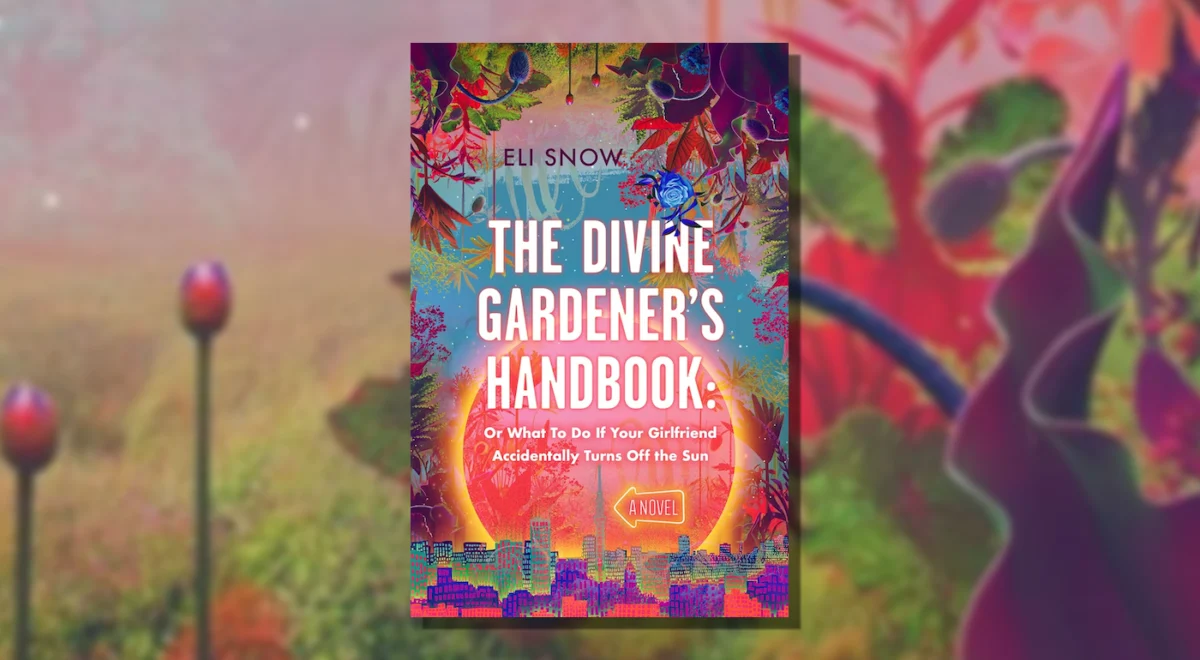
The book’s publication is supported by a clear call to action for readers to "Buy the Book," with promotional images of the cover prominently displayed. The cover art itself, featuring lush botanical elements intertwined with subtle hints of dystopian machinery, visually encapsulates the novel’s core themes. The inclusion of copyright information and acknowledgment of the author and publisher underscores the formal presentation of this literary release. The detailed excerpt, offering a substantial window into the novel’s prose and character interactions, suggests a commitment to providing readers with a genuine taste of the story’s atmosphere and narrative voice. The excerpt’s length and detail serve as a testament to the author’s dedication to crafting a rich and immersive world, further building anticipation for the full release.