Chiweitel Ejiofor, a seasoned actor with an extensive filmography, describes his experience on the set of "Backrooms" as uniquely disorienting. The production was housed in a sprawling 30,000 square foot labyrinth, meticulously designed to replicate the unsettling aesthetic of the internet phenomenon it’s based on: endless, carpeted corridors illuminated by harsh fluorescent lights, adorned with the same sickly yellow wallpaper. The sheer scale of the set led to genuine confusion among the cast and crew. "People were getting lost in it," Ejiofor recounted, a hint of amusement in his voice as he recalled the early days of filming. "Especially on those first days. As you try to navigate your way around and you’re like, ‘I’m sure it’s this door, I’m sure that’s the way.’ And you find yourself just back in the wrong corner of the whole studio and you’re like, ‘Get me some help!’"
This inherent disorientation is precisely the point of "Backrooms," both the film and the online universe that birthed it. The concept, while initially perplexing, has been summarized through various comparisons: "The Blair Witch Project meets Severance," or "The Shining set in an infinite Travelodge," or even "the exact opposite of a Wes Anderson movie." However, these analogies struggle to fully capture the otherworldly essence of the Backrooms, which feels as if it has emerged from a parallel dimension. Ejiofor himself echoed this sentiment, admitting, "There was stuff that we were doing by the end of the film that I was just like: ‘This is among the most bizarre things I have ever been involved in.’"
The Genesis of a Digital Nightmare
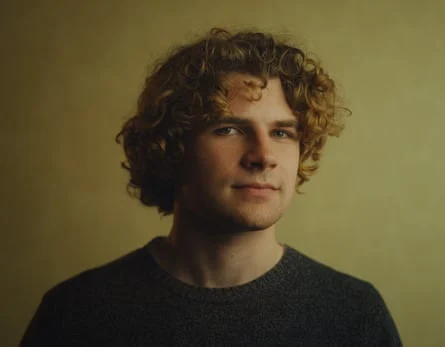
The unexpected journey from a niche internet forum to a major Hollywood production is largely credited to the visionary talent of 20-year-old Kane Parsons. A Californian director with no prior feature film experience, Parsons emerged as the unlikely architect of this cinematic endeavor. His upbringing, deeply influenced by platforms like YouTube, provided a different entry point into content consumption than traditional cinema. "It’s something that I didn’t ever make enough time for in the past," Parsons explained during a video call from Los Angeles, a touch of self-effacing humor in his tone. "Growing up with YouTube, it’s like there’s a lower requirement to go out and consume through a cinema."
Whether Parsons represents a paradigm shift in filmmaking or a fleeting trend remains to be seen. In person, he projects an image of focused intensity rather than overt confidence or shyness. He is articulate and passionate, even offering apologies for his tendency to "ramble." Despite his youth, Parsons is far from a novice. He claims to have been creating films since childhood, boasting a portfolio of several hundred short projects. His creative output consistently surpasses his consumption of media. Nevertheless, stepping onto a massive studio set and directing seasoned professionals, including actors twice his age like Ejiofor, Renate Reinsve, and Mark Duplass, would be an intimidating prospect for anyone, let alone a recent high school graduate.
Parsons acknowledged the unique trajectory of his career: "I recognized it as a big, potentially jarring, leap forward. Like: ‘Holy shit, I am on an accelerated fast track somehow, because some shadowy overlord decided to…’ I have no idea how all of this spiraled to the place it’s at now. But I was there, and I know I wanted to make the movie, and I knew how to make what I make online. And I feel when it comes to the actual creative direction, knowing what’s wanted, that’s there."

The Viral Seed: From 4chan to Subreddit Sensation
The genesis of both the Backrooms concept and Parsons’s involvement can be traced back to a single, innocuous photograph. Originally taken in 2003, the image was posted in May 2019 on a 4chan message board, an online forum known for its anonymous and often provocative content. The prompt invited users to submit "disquieting images that just feel ‘off’." The submitted photograph, depicting a vacant commercial space characterized by fluorescent lighting, suspended ceilings, and that now-infamous dingy yellow wallpaper, resonated deeply within the online community.
This seemingly mundane image became the fertile ground for "creepypasta," a genre of viral online horror stories. Users began crafting narratives inspired by the photograph, expanding this unsettling visual into an entire fictional universe of "liminal spaces"—places that evoke a sense of uncanny familiarity and unease, often characterized by their transitional or abandoned nature. The r/Backrooms subreddit, a testament to the phenomenon’s growth, now boasts over 350,000 members. A dedicated Backrooms wiki meticulously catalogues fan fiction, detailing over 100 distinct "levels" of this conceptual space and an extensive roster of imagined "entities" that inhabit them.
"I first saw that image when I was in eighth grade," Parsons recalled. "I probably saved it to my computer at the time and was generally like: ‘I get an interesting feeling from this.’" During this period, Parsons resided in Petaluma, California, sharing a room with his brother. His parents had amicably divorced when he was seven, and he maintained close relationships with both. His father, a visual effects artist, and his mother, a therapist, provided him with a unique blend of creative and analytical perspectives that he believes have profoundly shaped him.
A Digital Native’s Ascent: From Blender to Blockbuster
While his father wasn’t a direct mentor in filmmaking, Parsons naturally gravitated towards 3D animation through a process he described as "general osmosis." His childhood was filled with drawing, playing sandbox video games like Minecraft, and consuming countless YouTube tutorials. The advent of the COVID-19 pandemic in 2020, however, proved to be a pivotal moment. "I did not have a specifically negative experience personally during the pandemic," Parsons stated. "For me, it was mostly marked by like: ‘Whoa, no school. Amazing.’" This unexpected period of free time allowed him to immerse himself in learning Blender, a free and open-source 3D creation suite.
Parsons’s inaugural Backrooms-inspired short film was a masterclass in sustained dread. He transformed the initial eerie photograph into a visceral, point-of-view found-footage horror experience, complete with the garish aesthetic of 1990s video recordings, the incessant hum of fluorescent lights, and a pervasive sense of unseen menace lurking in every shadowed corner. Uploaded to YouTube in 2022, the short quickly gained traction, fueled by a "scariest video on the internet" buzz. Within two weeks, it had garnered 20 million views, and its current viewership stands at nearly 80 million. This viral success was not entirely unprecedented for Parsons; in the preceding years, he had built a substantial following with shorts related to the popular manga "Attack on Titan," which regularly achieved 10 million views. He initially viewed his Backrooms content as a "palette cleanser," a means to hone his visual effects skills. The overwhelming positive reception, however, spurred him to delve deeper into the concept.
By the time Hollywood took notice in 2023, Parsons, still a high school student, had produced an additional 22 episodes of his Backrooms series. These installments progressively deepened the lore and backstory, with one eight-minute episode featuring a team of government researchers meticulously analyzing the Backrooms’ ceiling panels and lighting components with an almost absurd level of forensic detail. The fact that these YouTube shorts are entirely digital animation, created by a teenager on a laptop, continues to surprise many, but Parsons confirms their authenticity.

Translating the Digital to the Cinematic
The transition from online shorts to a feature-length film, complete with developed characters and live actors, presented a significant challenge. The inherent power of the Backrooms concept lies in its inhuman, depopulated, and soulless nature, making the introduction of human drama a delicate balancing act. Renate Reinsve, acclaimed for her performances in arthouse dramas like Joachim Trier’s "The Worst Person in the World," admitted to initial apprehension about working with "someone who doesn’t really have their references in movies." However, she was also drawn to the "new wave of building something creative." Meeting Parsons ultimately convinced her. "I just found him so smart and eloquent," she stated. By the time filming commenced, Reinsve found herself humorously indulging his unfamiliarity with cinematic history. "One of our first conversations when I got to Vancouver was that this world kind of reminded me of [David Lynch’s] Blue Velvet. And he was like: ‘Oh, I’ve never seen that.’ I was like: ‘Really? You’re a film-maker and you’ve never seen that movie?’"
Ejiofor, however, sees youth and inexperience as potential assets in the creative process. "You can have such strong ideas and such clarity of thought when you’re young," he observed. "There’s something very exciting about somebody who is incredibly knowledgeable about something and has the capacity to express it in a way that isn’t convoluted, isn’t confounded by this process of growing."
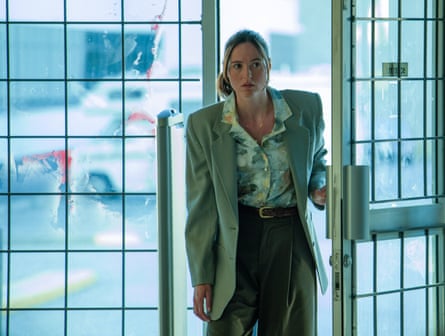
In the film, Ejiofor portrays Clark, a disillusioned architect now managing a budget furniture warehouse, even resorting to sleeping on-site. Reinsve plays his therapist, Mary, who becomes understandably concerned when Clark begins to obsessively describe discovering a portal to a bizarre, yellow-wallpapered parallel world. Mary also carries her own unresolved emotional baggage related to architecture. Their intertwined journeys lead to a conclusion that is both satisfyingly unhinged and resistant to easy explanation, even for those intimately familiar with the Backrooms lore from its online origins. Parsons acknowledges the potential for further narrative exploration: "There’s a lot more space to explore there."
The Psychological Landscape of the Backrooms
At its core, the Backrooms appear to be a manifestation of the visitors’ own psyches, growing increasingly abstract and surreal as one ventures deeper. It represents an infinite regression of copies, untethered from reality, meaning, and sanity. "The more times it remembers something, the less it does," muses Clark, Ejiofor’s character, offering a cryptic insight into the nature of this dimension.
"I think Kane is really scratching at something that is in a lot of people’s psychology," Ejiofor reflected. "I would come off from certain days and think: how do I think about my memory? How do I reshape events? Do I create my own sort of backrooms, these distortions of other things? Do I operate in a slightly cyclical way with minor adjustments?"
Reinsve found herself drawn to the existential themes, particularly how the film explores the human psyche and the difficulty of escaping one’s own ingrained patterns. "It circles around psychology and how you can get lost in your own patterns and how difficult it is to get free from them."
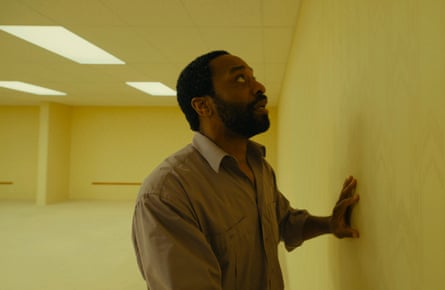
Parsons perceives the Backrooms as a reflection of both individual and societal malaise. On a personal level, he suggests the space represents an escape for those who have become insular, "who has maybe closed themself off to every other direction and they’ve been sitting still, staring at a wall for too long." More broadly, he views it as "a non-space propagated by an industrial monoculture."
He elaborates, describing the Backrooms as "the obvious outcome of just everything we as a species have been doing for a long, long time… Everywhere is starting to look more and more the same, and we’re drowning in information. But all that information is just turning into a cloud of noise that feels very meaningless. We’re hitting a place where information about our world is getting filtered through so many systems that are inherently putting it through a blender and regurgitating it back out in a pretty distorted form."
This perspective suggests that the contemporary built environment is already a manifestation of societal anxieties and a "death of meaning" in the postmodern era. The banality, in this interpretation, has become a source of dread. Other interpretations of the Backrooms metaphor range from the psychological impact of COVID-19 isolation to the existential anxieties surrounding artificial intelligence.
Ejiofor encapsulates the film’s impact with a simple yet profound observation: "I somehow get what it’s saying. I can’t articulate it exactly, but I feel it – and that is cinema, isn’t it?"
The Future of Filmmaking: From Online to On-Screen
While "Backrooms" may not conform to traditional cinematic expectations, its emergence from online platforms and its production by a young, digitally native filmmaker could signal a vital injection of fresh talent and storytelling into the industry. This phenomenon is not entirely new; the YouTube pipeline has previously launched successful careers for creators like Bo Burnham ("Eighth Grade"), Danny and Michael Philippou ("Talk to Me," "Bring Her Back"), and David F. Sandberg ("Lights Out," "Annabelle: Creation"). However, the attempt to translate the "creepypasta" phenomenon into a feature film, as seen in the poorly received 2018 "Slender Man" movie, has not always yielded successful results.
Parsons himself expresses a pragmatic view on media formats, stating, "Who gives a shit if it’s a movie, if it’s a TV show, if it’s a video game? It’s like: ‘Here’s a story. How strongly does it make you feel and pick up on these ideas that it wants to convey?’" His generation is inherently accustomed to consuming narratives across a diverse range of media platforms. "I think that was kind of a subconscious, prevalent, just normalised thing online that I grew up with: I was more interested in the contents of the story rather than how it was conveyed."
Even if Parsons possesses the potential to influence the future of cinema, he remains grounded in his independent creative process. He has expressed contentment with creating content for YouTube on his own terms, valuing the absence of strict timelines, budgets, and creative restraints, limited only by his own skills and dedication.
Nevertheless, for a film career, his debut is undeniably remarkable. Engaging in the production of a "proper" feature film has fostered a newfound appreciation for the cinematic medium in Parsons. While he doesn’t consider himself a devoted cinephile, he has developed a discerning taste and a list of personal favorites. He particularly enjoyed the sound mixing process for "Backrooms," realizing the distinctiveness of a theatrical mix compared to near-field mixing for broadcast or streaming. This experience led him to a revelation: "Wait a minute, I have to go into a cinema for every single thing I watch from now on." He concluded, "So yes, I deeply enjoy the cinema experience." At just 20 years old, the possibility of him revisiting cinematic classics like "Blue Velvet" and further refining his craft seems not only plausible but inevitable.