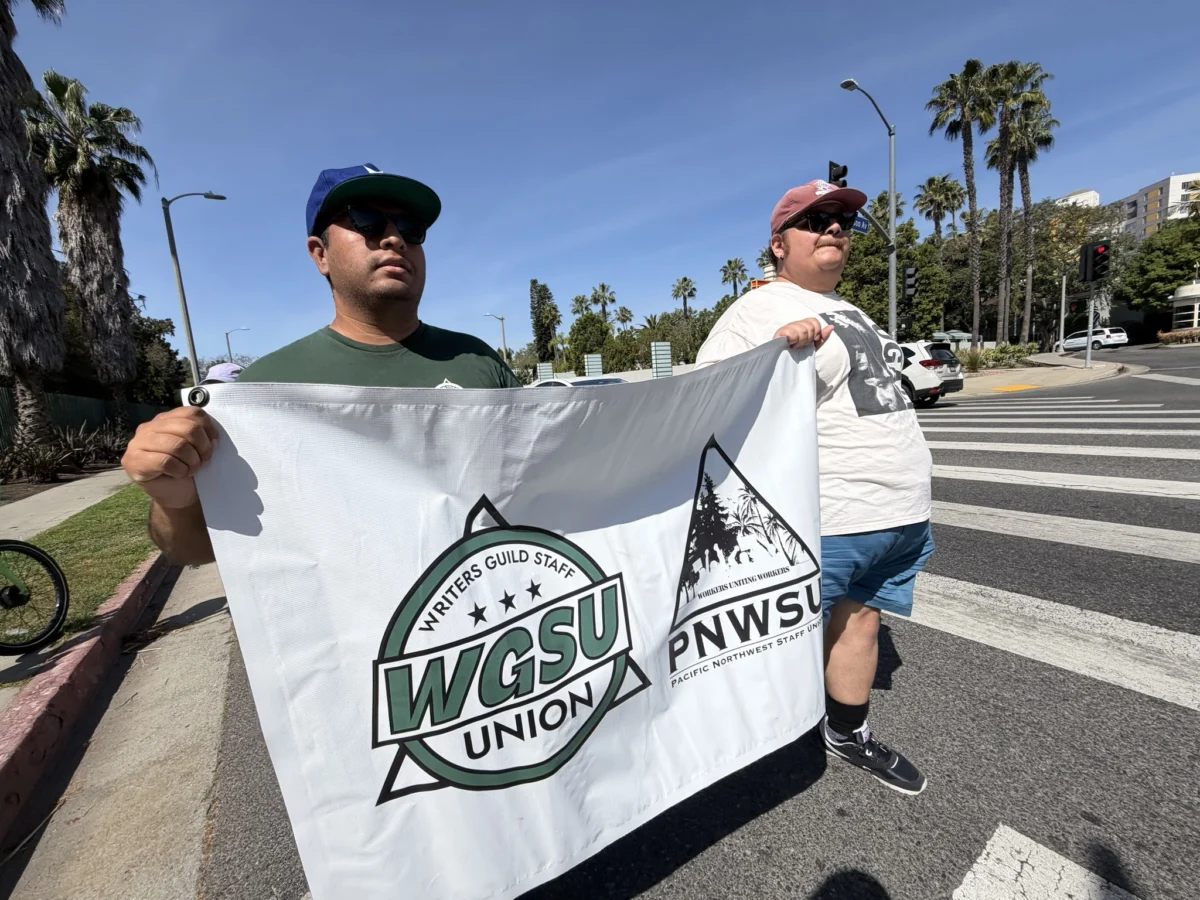
The Writers Guild Staff Union (WGSU) officially concluded its 82-day work stoppage on Saturday after a decisive majority of its members voted to ratify a three-year collective bargaining agreement with the Writers Guild of America West (WGAW). The ratification marks a milestone in the history of the Hollywood labor movement, as the very individuals who supported the high-profile writers’ strike of 2023 successfully navigated their own labor dispute against the organization that employs them. According to the WGSU, 89 percent of participating members voted in favor of the deal, with 77 members voting to ratify the contract and only six members voting against it. This inaugural agreement secures significant economic gains, workplace protections, and structural reforms intended to modernize the relationship between the WGAW and its professional staff.
The conclusion of the strike brings an end to a period of internal friction that many industry observers found ironic: a labor union dedicated to the protection of writers found itself embroiled in a bitter dispute with its own internal workforce. The WGSU bargaining committee, led by co-chair Missy Brown, heralded the deal as a transformative victory for the 115-plus member bargaining unit. Brown noted that the contract secures over $500,000 in total wage increases over the life of the agreement. By the conclusion of the contract in August 2027, every member of the WGSU will see their salary increase by a minimum of 12 percent across the board, a figure aimed at keeping pace with the rising cost of living in the Los Angeles area.
A Chronology of the Dispute
The path to this agreement was characterized by months of difficult negotiations and a strike that lasted nearly three months. The staff union was first organized and recognized in recent years as employees sought the same protections and collective bargaining power that the WGAW provides for its screen and television writer members. Tensions began to mount in early 2024 as the two sides struggled to find common ground on foundational contract language.
The work stoppage officially began 82 days ago, following a breakdown in talks over economic floors and job security. Throughout the summer, the strike occasionally became contentious, with staff members picketing the very offices where they usually work to support the guild’s mission. The "ugly" nature of the dispute, as described by some participants, stemmed from disagreements over how a labor organization should treat its own employees during periods of financial belt-tightening or organizational restructuring.
The breakthrough occurred on Friday, when a tentative deal was finally reached. The rapid ratification on Saturday suggests a strong desire among the staff to return to work, provided their core demands were met. The timing is particularly notable as the entertainment industry continues to navigate a period of contraction and post-strike stabilization following the dual WGA and SAG-AFTRA strikes of the previous year.
Economic Gains and the Salary Floor
One of the most significant achievements of the new contract is the substantial raise in the salary floor. Previously, the lowest-paid unionized staff members at the WGAW earned approximately $43,000 per year. Under the new agreement, that floor has been raised to $57,000. This represents a nearly 32 percent increase for the guild’s lowest earners, a move designed to ensure that entry-level staff can afford to live in Southern California, one of the most expensive regions in the United States.
In addition to the base salary increases, the contract introduces a "longevity increase" structure. This provision rewards long-term employees who remain with the guild for specific intervals, incentivizing retention and acknowledging the institutional knowledge that veteran staff members bring to the organization. The WGSU also successfully negotiated a wage scale modeled after the one used by the Writers Guild of America East (WGAE), creating a sense of parity between the two coastal branches of the guild.
Resolving the Sticking Points: Seniority and No-Strike Clauses
Beyond the financial compensation, the negotiations were frequently stalled by two primary "non-economic" issues: seniority provisions and the specifics of a no-strike clause. These elements are fundamental to labor law and collective bargaining, yet they proved difficult to resolve in this specific context.
The newly ratified contract requires the WGAW to take years of service into account during any potential layoffs. This seniority provision provides a layer of security for long-term employees, ensuring that "last-in, first-out" principles are applied fairly rather than allowing management total discretion in downsizing.
The no-strike clause was another area of intense debate. While standard in most labor contracts, the WGSU fought for language that "protects concerted activity." This means that while the staff agrees not to strike during the term of the contract, their rights to engage in other forms of protected labor activity remain intact. This was a critical point for the staff, who often find themselves in a unique position when the writers they serve go on strike.
Modern Protections: AI and Just Cause
Mirroring the concerns of the writers themselves during the 2023 strike, the staff union secured specific protections regarding the use of Artificial Intelligence (AI). As AI tools become more prevalent in administrative and research tasks, the WGSU sought to ensure that technology would not be used to displace human workers or degrade the quality of staff positions. The inclusion of AI language in a staff contract underscores how pervasive the technology debate has become across all sectors of the entertainment industry.
The contract also establishes "just cause" provisions and a formal grievance procedure. In the absence of a union contract, many employees are considered "at-will," meaning they can be terminated for almost any reason. The "just cause" standard requires the employer to provide a legitimate, documented reason for disciplinary action or termination. The grievance procedure provides a clear, legally binding roadmap for resolving workplace disputes, moving away from the informal and sometimes inconsistent methods of the past.
Furthermore, the agreement addresses the rights of temporary and contract staffers. In an industry where "perma-temp" status can be used to avoid paying benefits, the new language aims to provide clearer pathways to permanent employment and ensures that contract workers are not exploited to undermine the bargaining unit.
Improving Workplace Culture and Communication
Recognizing the damage done to the internal culture during the 82-day strike, the agreement mandates the creation of a labor-management committee. This body is tasked with fostering "healthy worksite communication between staff and Guild leadership." The goal is to move past the animosity of the strike and create a collaborative environment where issues can be addressed before they escalate into full-scale labor disputes.
Alfie Ebojo, a WGSU member, reflected on the emotional and professional weight of the process in a statement following the vote. "This was a long time coming. I am glad I’m here to see it happen, and I couldn’t be prouder to stand alongside my union siblings," Ebojo said. "The relationships that we’ve built during this process will only make our union stronger for future contracts to come."
Broader Implications for the Labor Movement
The success of the WGSU strike is part of a broader trend often referred to as the "Union of Unions." In recent years, employees of labor organizations, non-profits, and political campaigns have increasingly moved to unionize themselves. The logic is that those who work to advance the rights of others deserve the same protections and dignity in their own professional lives.
For the WGAW, the resolution of this strike allows the organization to refocus its full attention on its core mission: representing the interests of its thousands of writer members. The guild has been at the forefront of the fight against the consolidation of media power and the encroachment of tech-centric business models in Hollywood. By settling with its own staff, the WGAW avoids the ongoing optics of a labor-on-labor conflict that threatened to undermine its moral standing in the broader industry.
However, the financial commitments made in this contract—totaling over half a million dollars in increases—will require the WGAW to manage its budget carefully. Like many organizations in the entertainment sector, the guild must balance its advocacy work with the rising costs of operations and personnel.
Conclusion
The ratification of the first-ever contract between the WGSU and the WGA West marks the end of a difficult chapter but the beginning of a new, formalized era of labor relations within the guild. With 12 percent raises, a higher salary floor, and robust protections for seniority and AI, the staff of the WGA West has secured a deal that reflects the essential nature of their work.
As the 82-day work stoppage concludes, the focus now shifts to implementation. The success of the newly formed labor-management committee will be a key indicator of whether the guild can heal its internal rifts. For now, the members of the WGSU return to their desks not just as employees, but as unionized professionals with a seat at the table, having proven that the principles of collective bargaining apply just as much to the people behind the scenes as they do to the names on the screen.