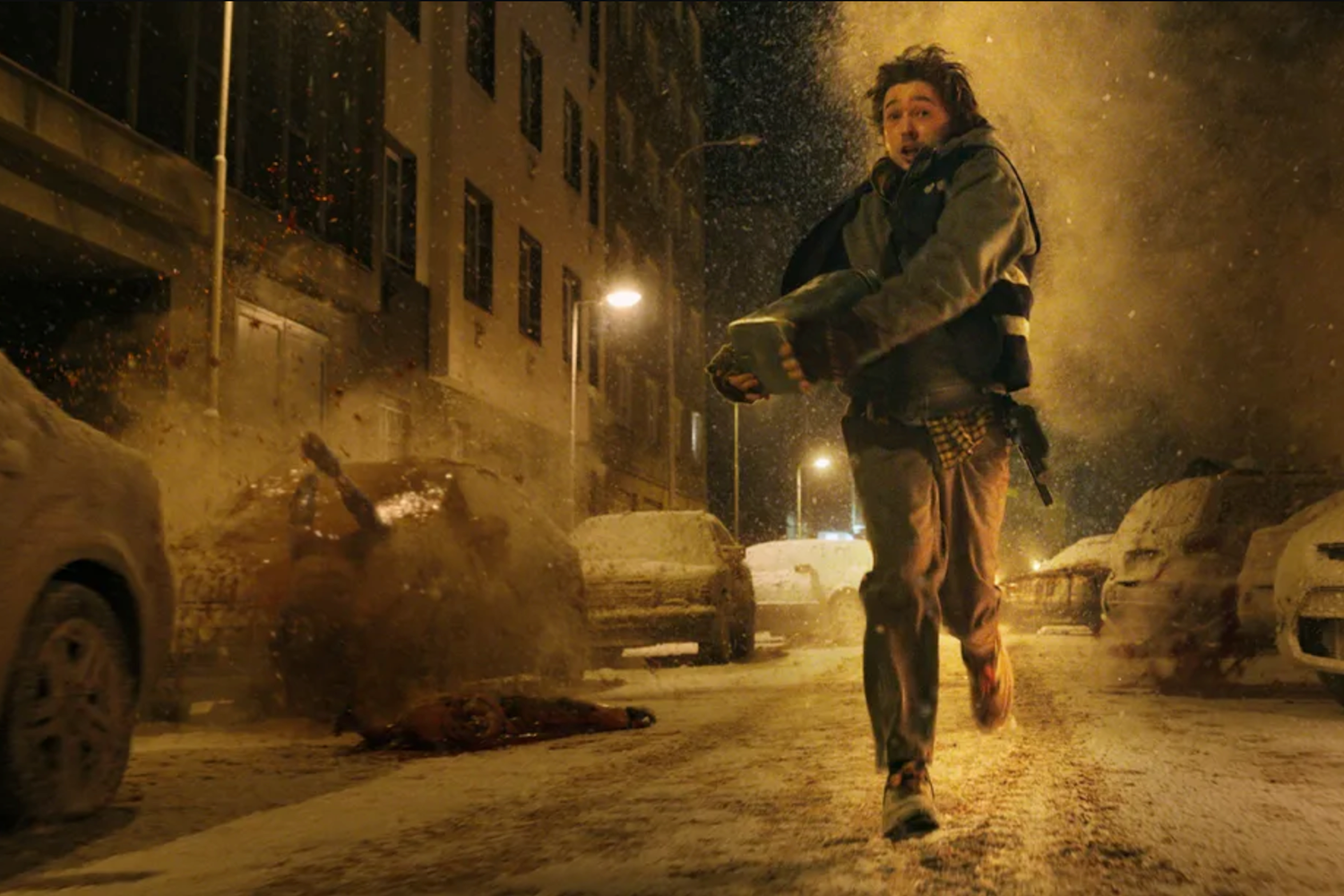
The first official teaser trailer for the upcoming Resident Evil film, helmed by director Zach Cregger, has offered a chilling glimpse into the survival horror experience that fans have long associated with the iconic video game franchise. The brief yet potent preview, released through official channels, focuses on a lone courier named Bryan, portrayed by Austin Abrams, who finds himself in dire straits within an abandoned, seemingly empty house. The trailer eschews grand exposition, instead relying on a palpable sense of dread and the sudden, visceral introduction of the undead, or at least their dismembered parts, to convey the immediate danger.
Bryan’s plight is established as he desperately seeks refuge and attempts to leave a message, his words becoming increasingly difficult to discern as the horrific reality of his situation unfolds. The visual cues—a ransacked interior, Bryan’s disheveled state, and the unsettling sounds—all contribute to a narrative of immediate peril and a desperate struggle for survival. This focus on a vulnerable protagonist thrust into an overwhelming crisis directly echoes the foundational gameplay mechanics of the Resident Evil series.
In a candid interview with the PlayStation Blog, Director Cregger articulated his profound admiration for the Resident Evil games, particularly highlighting the crucial element of resource management. "What I loved about the games is this new mechanic of resource conservation," Cregger explained. "You had to be completely aware of how many bullets you had, and how many healing items you had. You’d make these tough decisions about – what am I going to carry with me? What am I going to leave behind? It was such a unique mechanic. And it felt for me, with all the Resident Evil games, or with most of them, some of them get a little too arcade-y for my taste, but I really like the survival horror mechanics of moving slow and with deliberation. That was something that was really important to me to bring into the movie."
This philosophy is immediately evident in the trailer’s depiction of Bryan’s search through the house. His cautious exploration, punctuated by the discovery of a shotgun—likely with a limited ammunition supply—underscores the game’s emphasis on making every resource count. The trailer effectively translates the tension of inventory management and strategic decision-making into a cinematic experience, suggesting that players and viewers alike will be tasked with making difficult choices in the face of overwhelming odds.
A Return to Raccoon City’s Shadow
Cregger further elaborated that the film is set within the universe of Resident Evil 2, a pivotal installment in the game series known for its atmospheric tension and introduction of iconic characters and locations, including the infamous Raccoon City Police Department. However, Cregger has indicated that he has taken "a couple of little shifts for dramatic license," implying that while the setting is familiar, the narrative may explore uncharted territories or offer a fresh perspective on established events.
The character of Bryan, the sole human visible in the teaser, is described by Cregger not as a seasoned survivor like Leon S. Kennedy, but as an ordinary individual caught in extraordinary circumstances. "He’s just a good-natured, hapless dude who gets sucked into a nightmare," Cregger stated, differentiating Bryan from the more adept protagonists of the games. This choice suggests a deliberate move to center the narrative on the experience of an unprepared civilian, amplifying the sense of vulnerability and the stakes involved.
Cregger also addressed the decision not to directly adapt the plot of a specific game, a common approach for many franchise reboots. He reasoned that retelling a beloved game’s story would inevitably invite comparisons and potential disappointment. "To me, I would feel like there’s kind of no winning there if I were to tell Leon’s story, because the games do such a great job. It would just be kind of redundant, and ultimately, I think, disappointing," Cregger admitted. Instead, his ambition is to "celebrate everything I love about the games by telling the story that could exist on the sidelines of one of the games," offering a narrative that complements, rather than replaces, existing lore.
The Legacy of Survival Horror
The Resident Evil franchise, originating in 1996 with the release of Biohazard (known as Resident Evil in Western markets) by Capcom, revolutionized the survival horror genre. The first game set a precedent for claustrophobic environments, limited ammunition, puzzle-solving, and a narrative steeped in biological horror. Its success spawned numerous sequels, spin-offs, and even a long-running film series, cementing its place as a cultural phenomenon. The original film adaptations, starting with Paul W.S. Anderson’s 2002 Resident Evil, often leaned more towards action than pure survival horror, a direction that has been met with mixed reactions from the dedicated fanbase.
Cregger’s stated intention to prioritize the "slow and deliberate" survival horror mechanics of the games marks a potential return to the series’ roots, a move that is likely to be welcomed by long-time fans who have expressed a desire for more authentic adaptations of the game’s core tenets. The emphasis on resource scarcity, strategic combat, and atmospheric dread is precisely what defined the early Resident Evil titles and set them apart from other action-oriented horror offerings.
Production and Release Timeline
The new Resident Evil film, co-written by Zach Cregger and Shay Hatten, is slated for a theatrical release on September 18. Cregger, known for his directorial work on the acclaimed horror film Barbarian (2022), brings a proven track record in crafting suspenseful and effective horror narratives. The production timeline, from the initial announcement of Cregger’s involvement to the release of this teaser, indicates a focused development process aimed at delivering a film that respects the source material.
The teaser trailer’s release date, in relation to the film’s theatrical debut, suggests a strategic marketing campaign designed to build anticipation and allow for further glimpses into the film’s world and narrative in the coming months. The initial reception to the trailer, particularly its focus on survival horror elements, has generated considerable discussion within the gaming and horror communities.
Anticipated Fan Response and Industry Implications
The Resident Evil franchise has a dedicated global fanbase, with the games consistently achieving high sales figures and critical acclaim. The recent success of Resident Evil Village (2021) and Resident Evil 4 Remake (2023) demonstrates the enduring appeal of the series and the continued appetite for high-quality survival horror experiences. This new film’s commitment to the genre’s core principles could therefore tap into a significant and enthusiastic audience.
From an industry perspective, the success of a Resident Evil film that leans into its survival horror origins could have broader implications. It might signal a renewed interest in more faithful video game adaptations that prioritize the genre’s defining characteristics rather than solely focusing on broad action appeal. This could encourage other studios to explore similar approaches with their own gaming intellectual properties, potentially leading to a richer and more diverse landscape of video game-based cinema. The film’s performance at the box office will undoubtedly be closely watched as an indicator of audience preference for this specific brand of horror adaptation.
Broader Context of the Resident Evil Franchise
Since its inception, the Resident Evil franchise has explored a variety of themes, including the dangers of unchecked scientific ambition, corporate greed, and the resilience of the human spirit in the face of apocalyptic scenarios. The Umbrella Corporation, the primary antagonist in many installments, serves as a potent symbol of these themes, with its bioweapons research unleashing a torrent of biological horrors upon the world. The series has also delved into the psychological toll of survival, the complex moral choices faced by protagonists, and the blurry line between humanity and monstrosity.
The recurring motif of viral outbreaks and the subsequent transformation of ordinary people into terrifying creatures has resonated with audiences for decades. This foundation provides a rich narrative tapestry for filmmakers to draw upon, and Cregger’s focus on the core survival elements suggests a deep understanding of what makes the Resident Evil universe so compelling. The emphasis on a lone individual’s struggle against overwhelming odds, as seen in the teaser, is a direct reflection of the personal stakes inherent in the Resident Evil narrative. The film’s potential to explore these themes through a lens of genuine horror, rather than just action, could be a significant draw.
The cinematic history of Resident Evil has been varied, with the Milla Jovovich-led film series achieving considerable commercial success but often diverging significantly from the games’ tone and gameplay. More recent attempts at rebooting the film franchise, such as Resident Evil: Welcome to Raccoon City (2021), have aimed for a more faithful adaptation but have met with less commercial success. Cregger’s approach, as articulated, seems to aim for a middle ground—a new story within the established universe that prioritizes the core survival horror experience that fans cherish. The success of this film could therefore redefine expectations for future video game adaptations and underscore the value of staying true to the source material’s genre conventions.