Dominga Sotomayor, the acclaimed Chilean filmmaker known for her distinctive exploration of human relationships within tightly structured environments, unveiled her latest feature, La Perra, at the prestigious Cannes Film Festival. This new work marks a significant evolution in Sotomayor’s cinematic journey, moving away from the deeply autobiographical narratives that defined her earlier successes and venturing into the complex terrain of literary adaptation. Set on a windswept island off Chile’s southern coast, La Perra delves into a character study that, while retaining Sotomayor’s signature thematic concerns with space and identity, pushes her into uncharted creative waters.
A Director’s Evolving Vision: From Memoir to Adaptation
Sotomayor’s filmography has consistently demonstrated a fascination with confined spaces, utilizing them not merely as settings but as active participants in shaping character psychology and narrative trajectory. Her 2012 debut, Thursday till Sunday, masterfully unfolded within the confines of a car journey through northern Chile, mirroring the emotional compression of its characters. This was followed by the festival prizewinning Too Late to Die Young (2018), which meticulously charted the intricate dynamics of a bohemian commune in post-Pinochet Chile, illustrating how external political shifts and internal social structures exert profound influence. More recently, her Netflix-produced Swim to Me (2025) zoomed in on an affluent Santiago villa, dissecting contemporary social anxieties through its affluent inhabitants.
La Perra, while adhering to this established predilection for delimited geographies, represents a pivotal departure. Unlike its predecessors, which often drew directly from the director’s childhood memories and experiences, this film is an adaptation of Pilar Quintana’s 2017 novel of the same name. This shift into non-autobiographical territory, co-written with Inés Bortagaray, allowed Sotomayor a newfound sense of freedom and lightness. As she articulated in an interview prior to the Cannes premiere, "I had to set aside my own stories for a change, but I think that when you move away from those private realms you often wind up finding things that are even more personal and intimate. It’s a beautiful contradiction." This sentiment underscores a maturing artistic philosophy, where empathy for the unknown can yield deeper insights than introspection alone.
The transition from deeply personal narratives, often fraught with the emotional weight of reconstructing memory and overcoming significant financing challenges within Chile’s independent film landscape, to an adaptation, presented a different kind of creative liberation. Sotomayor found working with a "preexisting text… stuff that was already ‘digested,’ and by another woman, to boot," to be immensely interesting. This process allowed the material to "become yours in the end," fostering a "rawer, more obscure" quality in La Perra compared to her earlier, more introspective works. This was not a conscious decision to abandon autobiography but rather the culmination of a broader artistic journey, driven by a desire to explore the experiences of "another woman, who lived on an island I didn’t know," as an "exercise in empathy."
The Genesis of La Perra: A Novel’s Allure and a Director’s Touch
Pilar Quintana’s novel, La Perra, first captivated Sotomayor with its inherent ambiguities and narrative pull. The director was drawn to the book’s ability to evoke a sense of mystery, guiding the reader without explicitly revealing its destination – a quality she deeply values in cinema. A central element that resonated profoundly was the complex, non-clichéd relationship between a human and an animal, diverging from conventional portrayals of pets as mere emotional crutches or plot devices.
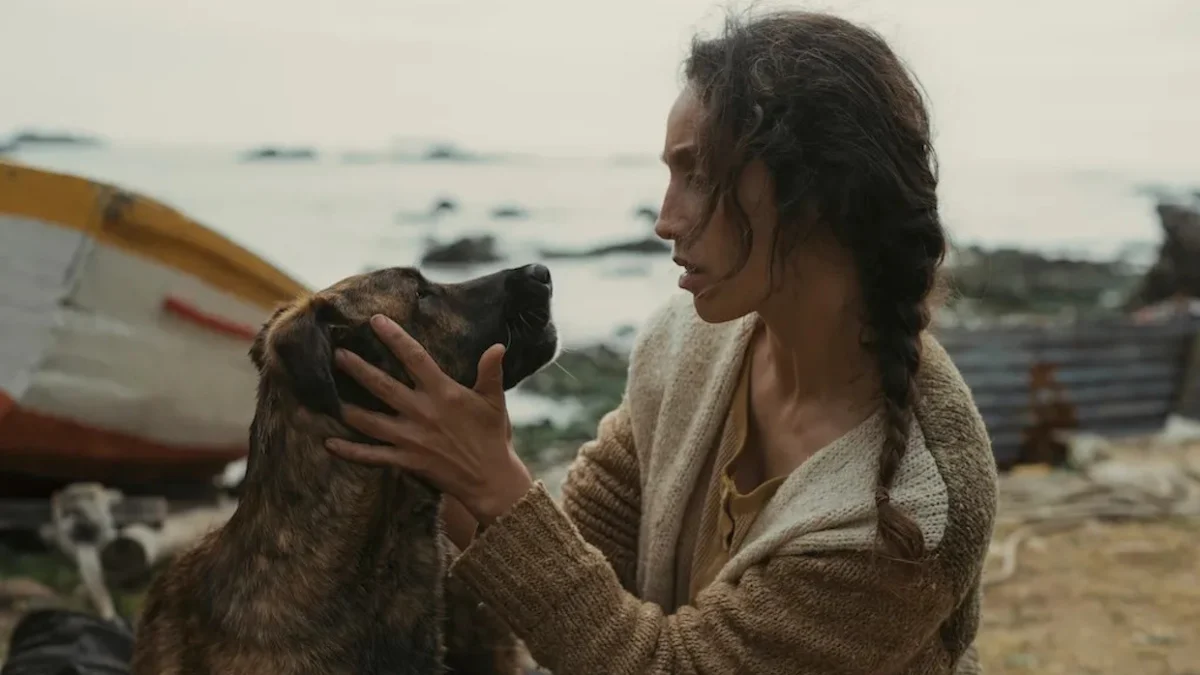
The narrative centers on Silvia (Manuela Oyarzún), a childless 40-something islander who sustains herself by harvesting seaweed. Her solitary existence is profoundly altered when she adopts a stray puppy found on the shore, whom she names Yuri, in homage to a Mexican pop star. The film deftly avoids treating Yuri as a simple metaphor for Silvia’s desires or voids. Instead, Sotomayor is deeply interested in "the concept of domestication, the extent to which an animal can ever really be ours." This nuanced approach positions Yuri as a protagonist in her own right, her wild energy and independent spirit challenging Silvia’s perceptions of control and belonging. Cinematographer Simone D’Arcangelo’s decision to occasionally shift perspective to the dog, capturing Yuri running freely across the beach, visually reinforces this co-protagonist status, highlighting the permeable border between the human and the non-human that Sotomayor consistently explores.
The project’s inception was notably spontaneous. Upon reading the book, Sotomayor immediately discussed it with producer Rodrigo Teixeira. While she loved the narrative, she expressed reservations about setting it in Colombia, the novel’s original location, due to her unfamiliarity with that specific jungle environment. Her commitment to authentic cinematic representation meant she was not interested in simply "bringing a book to the screen," but rather in leveraging cinema’s potential to transcend direct adaptation. Teixeira’s trust and willingness to grant her complete creative freedom to reinterpret the story within a Chilean island setting were crucial, allowing the film to take root in a landscape Sotomayor could imbue with her unique vision.
Thematic Depths: Domestication, Identity, and the Shifting Landscape
Sotomayor’s cinema has often probed the idea that the familiar can become foreign, and La Perra continues this exploration with a powerful intensity. The concept of domestication extends beyond the literal taming of an animal to encompass human attempts to control their environments and their own emotional landscapes. Silvia’s initial warmth and affection for Yuri gradually transform as the dog’s untamed nature asserts itself, becoming a source of friction and even threat. This dynamic mirrors the unsettling shifts observed in Sotomayor’s earlier films, such as the initial comfort of the commune in Too Late to Die Young slowly morphing into something "threatening, exhausting."
The isolated island setting, though seemingly vast, becomes a confined space for Silvia, mirroring the internal struggles of her character. The relentless winds and rugged coastline act as a constant, shaping force, reflecting the psychological impact of the environment on self-perception. Sotomayor posits that landscapes "wind up shaping how we see ourselves and our place in the world," and in La Perra, this connection is visceral. The island is not merely a backdrop but an active participant in Silvia’s journey of self-discovery, challenging her notions of solitude, companionship, and wildness.
Navigating Temporal Ambiguity and Invented Geographies

One of La Perra‘s most compelling and unconventional aspects is its deliberate manipulation of time. The film eschews a clear linear progression, creating a sense of "temporal limbo." Modern elements like smartphones and contemporary cars appear alongside vintage television sets and props from past decades, making it difficult for the viewer to pinpoint the exact era in which the action unfolds. This atemporality, a recurring fascination for Sotomayor, suggests that cinema operates less on linear time and more on the subjective experience of memory and imagination.
Adding another layer of complexity, the film incorporates a flashback sequence—Sotomayor’s first—to address an unresolved childhood trauma. Yet, even this dip into the past resists conventional cinematic markers. There are no distinct palettes or drastic costume changes to demarcate eras, blurring the lines between past and present. The director explains that the past sequence was conceived not merely to explain Silvia’s present, but as "its own standalone unit that tried to capture a feeling of her childhood," contributing to the film’s diffused and digressive structure. This choice invites viewers to "luxuriate in its enigmas," allowing the narrative to splinter into something far more mysterious than its straightforward premise suggests.
The setting itself is a testament to Sotomayor’s inventive approach to reality. While partially shot on the real Santa María island, the film constructs an "imaginary geography." Elements like Silvia’s shack and an abandoned beachside villa were fabricated, creating a territory that "suggests a documentary but doesn’t turn the film into a mirror of reality." Even the depiction of the seaweed industry, though researched, was creatively adapted for cinematic effect, illustrating Sotomayor’s love for cinema’s capacity to "create a fake reality and then document it as if it was real." This blurring of fact and fiction, reality and invention, is central to the film’s disorienting yet captivating atmosphere, making the "where" and "when" less important than the "how" and "what" of its emotional and psychological landscape.
The Production Journey: Challenges, Collaborations, and Canine Co-Stars
The creation of La Perra was a demanding yet ultimately liberating experience. The remote island location presented unique logistical challenges, but these adversities, as Sotomayor observed, ultimately became "the film’s language." The production embraced spontaneity, allowing the unpredictable nature of the shoot to inform the artistic outcome.
A significant aspect of the production involved casting and directing the canine co-stars. Sotomayor was adamant about using mutts rather than pedigree dogs, ultimately finding two dogs—an adult and a puppy—from Santiago animal shelters. The adult Yuri, a wild and untrained one-year-old, was adopted by a crew member, necessitating intensive bonding sessions with lead actress Manuela Oyarzún. This unconventional approach meant much of Oyarzún’s performance was a reaction to the dogs’ natural behavior, leading to moments of both frustration (such as the dog running away mid-scene) and genuine spontaneity that enriched the film’s authenticity.
The film also marks Sotomayor’s first collaboration with cinematographer Simone D’Arcangelo, known for his work on visually striking films like Felipe Gálvez Haberle’s The Settlers (2023) and Alessio Rigo de Righi and Matteo Zoppis’s The Tale of King Crab (2021). Despite time constraints preventing a traditional storyboard, their collaboration involved creating a "storyboard of photos" and exchanging artistic references over several weeks. These references spanned a wide array of influences, from the dramatic, 19th-century landscape paintings of Sotomayor’s grandmother and uncle (Carmen and Adolfo Couve) to the psychologically intense works of Lucien Freud and Francis Bacon. Cinematographic inspirations included films like Wanda (1970), Michael Roemer’s Vengeance is Mine (1984), Michelangelo Antonioni’s L’avventura (1960), and Australian films such as Walkabout (1971) and Storm Boy (1976), admired for their "open cinematic language." This eclectic mix of influences allowed Sotomayor to break from her typically strict directorial approach, embracing a more "dispersed, meandering" style that ultimately contributed to La Perra‘s unique formal freedom.
Creative Freedom: Independent Cinema vs. Streaming Platforms
Sotomayor’s experience directing Swim to Me for Netflix in the same year as La Perra offers a valuable perspective on the contrasting dynamics of independent filmmaking and streaming platform commissions. While she values both projects, she unequivocally states that La Perra is a "completely free film," made "for the cinema." This creative freedom, she notes, cannot be taken for granted, especially given the scale of La Perra as a project and the trust placed in her by its producers.
Working with Netflix on Swim to Me involved a different set of expectations, catering to a broader audience and adhering to certain guidelines, though Sotomayor was still granted liberties, such as casting choices. The formal freedom of La Perra, however, allowed her to explore new and sometimes "radical" cinematic territories, moving beyond the familiar tools she employed in Swim to Me, such as working extensively with children or focusing on performance-heavy narratives. While both films are performance-driven, La Perra distinguishes itself through its profound engagement with the relationship between humans and landscapes, echoing the "permeable border between the human and the non-human" that has long characterized her earlier independent works. This ability to produce two "polar opposites" within a single year, after typically spending "six or eight to make one," highlights Sotomayor’s versatility and her deliberate navigation of different creative ecosystems.
Broader Implications and Outlook
La Perra arrives at a time when Chilean cinema, and Latin American cinema more broadly, continues to gain international recognition for its bold storytelling and distinctive voices. Dominga Sotomayor, as a prominent figure in this movement, further solidifies her reputation as a filmmaker unafraid to challenge conventional narrative structures and explore complex psychological terrains. Her consistent presence at festivals like Cannes not only elevates her profile but also shines a spotlight on the vibrant cinematic output of her region.
The film’s exploration of domestication, empathy, and the wildness within both humans and animals carries universal resonance, prompting reflection on our place in the natural world and the boundaries we construct around ourselves and others. Its ambiguous temporal setting and invented geography invite a more contemplative, immersive viewing experience, encouraging audiences to engage with its enigmas rather than seeking straightforward resolutions. As La Perra embarks on its festival run and eventual release, it is poised to contribute significantly to ongoing discussions about artistic freedom, the evolution of directorial style, and the enduring power of cinema to create deeply personal yet universally resonant narratives, even from borrowed stories and imagined worlds.