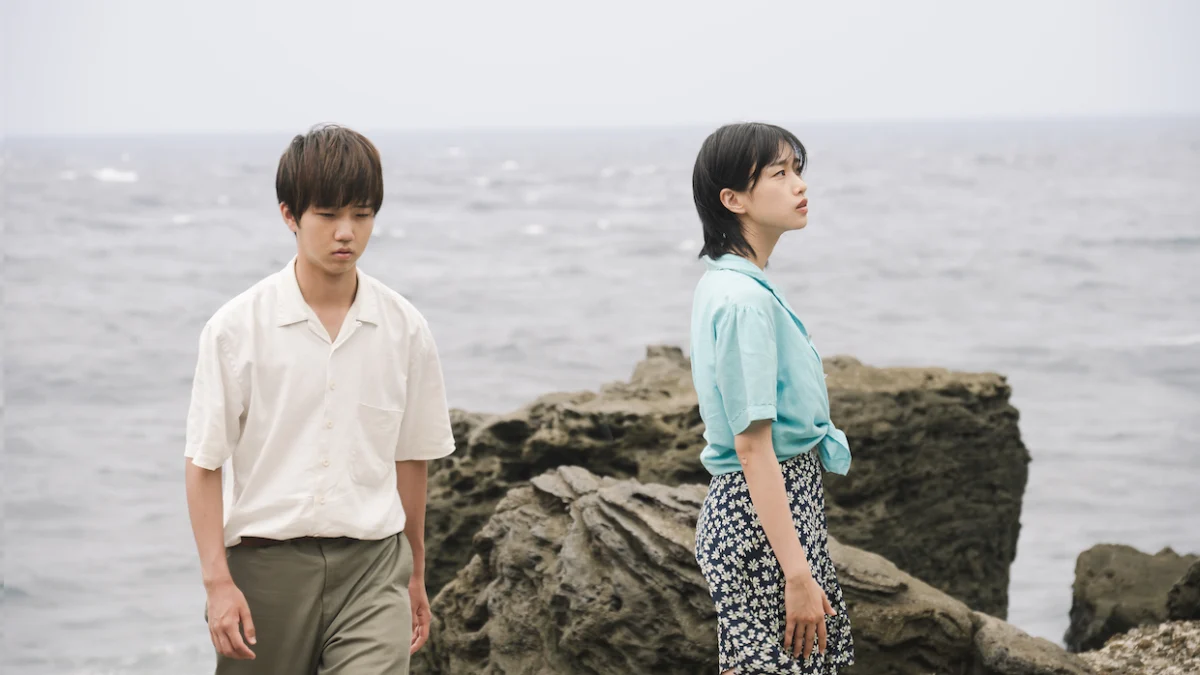
Amidst a growing global appreciation for contemporary Japanese cinema, Sho Miyake is steadily solidifying his reputation as a visionary filmmaker. His latest cinematic offering, Two Seasons, Two Strangers, a poignant diptych adaptation of two stories by the enigmatic manga artist Yoshiharu Tsuge, has garnered significant international acclaim, including the prestigious Golden Leopard at last year’s Locarno Film Festival. Its subsequent screenings at revered platforms like Lincoln Center and MoMA’s New Directors/New Films underscore Miyake’s increasing prominence on the world stage, suggesting a director meticulously refining his craft towards mastery.
Sho Miyake’s Evolving Cinematic Vision
Since graduating from the esteemed Film School of Tokyo, Miyake has meticulously cultivated a distinctive body of work characterized by quietly considered, character-driven dramas. His early low-budget features, released in 2012, offered a glimpse into his nascent talent. Playback was lauded for its Alain Resnais-ian exploration of memory and youth, a non-linear narrative delving into the subjective experiences of its characters. Concurrently, Good for Nothing presented a grounded portrayal of high-school boys navigating the mundane realities of working at a security company in Miyake’s native Hokkaido, a setting that often informs his earlier works. These initial films established his penchant for intimate narratives and a keen observation of human behavior within specific social contexts.
Miyake’s filmography consistently delves into the intricacies of group dynamics, a thematic thread that matured beautifully in his exceptional summer romance, And Your Bird Can Sing. This film, known for its evocative atmosphere and nuanced performances, explored the complex relationships between young individuals working together, a recurring motif in his early career. More recently, Miyake has continued to evolve, demonstrating a remarkable versatility in his storytelling. His 2022 feature, Small, Slow But Steady, garnered critical praise for its rhythmic and gentle portrayal of a deaf female boxer, offering an intimate look into her disciplined world and inner struggles. This was followed by 2024’s All the Long Nights, a film that tenderly follows a pair of lonely workers at a science toy company, further solidifying his ability to find profound meaning in the ordinary lives of his characters. These recent works illustrate a director not content to rest on established formulas, but rather committed to continuous artistic exploration and refinement.
The Genesis of Two Seasons, Two Strangers
Two Seasons, Two Strangers represents a significant artistic leap for Miyake, both in its narrative structure and thematic depth. The film’s dualistic nature is derived from two distinct stories by the cult manga figure Yoshiharu Tsuge: "A View of the Seaside" and "Mister Ben of the Igloo." Miyake’s adaptation is ingeniously framed through the perspective of a fictional screenwriter named Li, portrayed by the talented Shim Eun-kyung. The audience is first introduced to Li struggling with her writing, a moment of creative blockage that seamlessly transitions into the world of her imagined film. This initial segment follows two young individuals whose lives serendipitously intersect at a tranquil island resort, immersing viewers in a sun-drenched, subtly romantic narrative.
The meta-narrative structure takes an unexpected turn as the film-within-the-film reaches its climax. The scene abruptly shifts to a classroom setting, where Li and the director of her fictional film engage in a Q&A session, breaking the fourth wall and inviting reflection on the creative process itself. This self-reflexive moment serves as a pivotal point for Li’s personal journey. Still grappling with her writing, she embarks on her own quest for inspiration, heading to a snowy, unfamiliar town with minimal planning but high expectations. Her journey leads her to a dilapidated inn, run by the brusque yet intriguing Benzo (Shinichi Tsutsumi), setting the stage for the film’s second, more grounded narrative.
Miyake’s directorial prowess is evident in the film’s delicate mise-en-scène. Critics have noted how he subtly evokes the visual style of Tsuge’s original comics while simultaneously channeling the singular staging and quiet humanism reminiscent of Japanese master Yasujirō Ozu. This intricate balance allows Miyake to craft a film that is effortlessly watchable on the surface, yet remarkably complex and enduring in its lingering impressions.
A Deep Dive into Yoshiharu Tsuge’s Influence
The decision to adapt Yoshiharu Tsuge’s work is a testament to Miyake’s commitment to exploring the unconventional. Tsuge, while not a mainstream figure, holds a legendary status within Japan’s subcultural landscape, particularly among those with a refined taste for his unique artistic sensibility. His manga, often characterized by their dreamlike quality, existential angst, and explorations of the mundane, gained prominence through Garo, an alternative manga magazine that championed experimental and avant-garde artists from the 1960s onwards. Unlike the action-packed or genre-driven narratives prevalent in mainstream manga, Tsuge’s works presented introspective, often melancholic, and subtly humorous vignettes of everyday life, infused with surreal elements and a deep sense of psychological realism.
Miyake first encountered Tsuge’s work as a university student, a formative experience that challenged his perceptions of the manga medium. He recalls an older classmate presenting him with one of Tsuge’s books, teasingly remarking, "You’re not gonna be able to understand it." This initial encounter left a lasting impression, revealing a manga artist distinct from any he had previously encountered. Tsuge’s influence spawned many followers and imitators, but Miyake emphasizes Tsuge’s pioneering ambition to forge a unique expressive path within the art form. This ambition resonated deeply with Miyake, inspiring him to seek a new form of cinematic expression through adapting Tsuge’s narratives.
The choice to frame the adaptation through the lens of a screenwriter, Li, was a deliberate artistic decision by Miyake, informed by Tsuge’s own creative methodology. Tsuge often projected himself onto his protagonists, many of whom were mangaka (manga artists) like himself. Miyake adopted this technique, believing that by making his protagonist someone akin to himself—a creative struggling with their art—he could achieve a "core-level adaptation" rather than a mere surface-level translation of Tsuge’s stories. This approach allowed for a deeper, more personal engagement with the source material, infusing the film with a meta-commentary on the creative process itself.
Crafting the Narrative: Structure and Contrast
Miyake’s meticulous approach to narrative construction is evident in the subtle contrasts woven throughout Two Seasons, Two Strangers. The film’s diptych structure, spanning the warmth of summer in the nested film and the stark beauty of a snowy winter in Li’s journey, provides an immediate and striking visual juxtaposition. Beyond the seasonal shift, Miyake deliberately imbues the film-within-the-film with a slightly more romanticized, vibrant aesthetic. The colors are richer, the lighting softer, and the characters inhabiting this island resort are predominantly young, embodying a youthful idealism that contrasts with the more grounded reality of Li’s experiences.
When Li embarks on her solitary journey, the film shifts to a more down-to-earth, realistic tone. The dilapidated inn she finds herself in, run by the brusque Benzo, feels authentically "lived-in" to the point where it scarcely resembles a typical tourist accommodation. This contrast extends to the interactions within each segment. The early film portrays nascent connections with a gentle, almost dreamlike quality, while Li’s encounters in the snowy town are marked by an awkward realism and a search for genuine, albeit challenging, human connection.

Miyake elaborated on his intention to depict various forms of contrast, even in minute details. He cites the example of a dead fish: in the summer sequence, it might appear as an ominous foreshadowing, while in the winter sequence, a fish being grilled in a fire pit is presented humorously. This dualistic symbolism highlights Miyake’s interest in how context transforms perception. "I wanted to depict things as having these dual meanings," Miyake explained. "Even the film itself can be interpreted through various meanings, and I think that shows the richness of film expression." This layered approach grants the film a profound depth, inviting multiple interpretations and sustained reflection long after viewing.
Miyake’s Artistic Influences: Hasumi, Ozu, and Resnais
Miyake’s cinematic language is undoubtedly shaped by a rich tapestry of influences, prominently featuring the acclaimed film critic and theorist Shigehiko Hasumi. Hasumi, a towering figure in Japanese film criticism, is known for his incisive analyses and a unique critical approach that emphasizes concrete details, gestures, and the physical presence of cinema over abstract thematic interpretations. Miyake readily acknowledges Hasumi’s profound impact, stating that he had been reading Hasumi’s writings since his teenage years and considers him the primary source of his knowledge about film history.
Miyake’s collaboration with Hasumi on the essay film John Ford and Throwing further underscores this deep connection. This project likely intensified Miyake’s interest in the nuances of physical gestures and their expressive power on screen, an element subtly present across his filmography. Miyake clarifies that while Hasumi didn’t teach him how to make films, he instilled in him a profound love for cinema and the ability "to watch and see them truly for what they are," stripped of preconceived notions or overly intellectualized interpretations. Hasumi’s criticism, Miyake notes, consistently reveals overlooked details, transforming the viewer’s experience upon re-watching films.
Beyond Hasumi, Miyake’s aesthetic sensibilities frequently draw comparisons to other cinematic masters. The "singular staging of Ozu" mentioned in the article points to Miyake’s embrace of a contemplative, observational style, often employing fixed camera positions and a patient rhythm that allows scenes to unfold organically. The reference to Alain Resnais in relation to Playback highlights Miyake’s early experimentation with non-linear narratives and the subjective nature of memory, elements that Resnais famously explored in films like Hiroshima Mon Amour and Last Year at Marienbad. These influences, rather than being mere imitations, are absorbed and reinterpreted through Miyake’s unique lens, contributing to his distinctive authorial voice.
Themes of Connection and Solitude
A recurring thematic thread in Miyake’s earlier works has been the exploration of group dynamics and the ways in which individuals find happiness or meaning within cooperative settings. Films like And Your Bird Can Sing and All the Long Nights illustrate characters forming bonds through shared work environments—a bookstore or a science toy company, respectively. Two Seasons, Two Strangers marks a nuanced shift in this thematic focus, moving towards the exploration of individual journeys and the challenge of forging meaningful connections through happenstance.
In this latest film, the characters are often solitary travelers, propelled by personal quests for inspiration or escape. The very nature of travel and tourism, as Miyake notes, presents a unique challenge: "You can go on a trip and meet no one. Or, you can also meet people, but have only very shallow interactions your entire time." This premise formed a deliberate artistic challenge for Miyake: to explore whether deeply special moments could be shared between strangers meeting purely by chance, outside the established contexts of work or social circles.
The awkward yet profound interactions between Li and Benzo at the dilapidated inn exemplify this new thematic direction. Li’s inquisitive nature, delving into the details of Benzo’s life and the history of his unconventional inn, is met with a degree of resistance. Benzo’s response, essentially questioning why she’s so curious about a stranger’s life, encapsulates the friction inherent in such chance encounters. Miyake finds humor in these "awkward conversations," which he sees as distinct from "typical, frictionless conversation." This portrayal of difficult, hard-to-parse interactions, he points out, is also a source of humor in Tsuge’s original manga, and watching his actors perform these lines with earnest seriousness was a source of enjoyment for the director. This shift signifies a maturation in Miyake’s exploration of human connection, acknowledging its fragility and the effort required to transcend superficiality.
The Role of Location and Autobiography
While Miyake’s films are deeply personal, his engagement with autobiographical elements is often subtle and indirect. In Two Seasons, Two Strangers, the director character within Li’s nested film speaks of growing up on a small island, a detail that Miyake reveals was borrowed from the actor’s own experience rather than his own Hokkaido upbringing. This distinction highlights Miyake’s nuanced approach to autobiography, where personal truths might be channeled through the experiences of others or through the emotional landscape of a setting, rather than a direct translation of his own life. He acknowledges the differing perspectives that arise from growing up in outer prefectures or islands compared to the normative experience of Tokyo, hinting at a broader understanding of diverse Japanese identities.
When asked if he uses travel as a source of inspiration for his writing, much like his protagonist Li, Miyake notes a different approach. While he doesn’t undertake spontaneous, unplanned journeys in the same vein as Li, he emphasizes the importance of walking and changing his environment. A pivotal decision for him was moving from Tokyo, where he had lived for an extended period, to a more rural area several years ago. This geographical shift, though "not quite travel," served as a significant environmental change, underscoring the profound impact that surroundings can have on one’s creative and personal life. This deliberate choice reflects a search for new perspectives and an altered relationship with space, mirroring the journey of his characters in a more introspective manner.
Global Recognition and Future Prospects
The critical and festival success of Two Seasons, Two Strangers marks a significant milestone in Sho Miyake’s career. Winning the Golden Leopard at the Locarno Film Festival, one of the most prestigious awards in independent cinema, immediately elevated the film’s profile and signaled Miyake’s arrival as a major international directorial voice. Locarno is renowned for its commitment to discovering and championing innovative filmmaking, and the Golden Leopard often serves as a powerful springboard for directors to gain wider global distribution and recognition. Subsequent screenings at events like New Directors/New Films at Lincoln Center and MoMA further solidify its standing, placing Miyake alongside emerging and established talents from around the world.
This acclaim comes at a time when Japanese cinema is experiencing a renewed surge of interest in the West, with directors like Ryusuke Hamaguchi and Hirokazu Kore-eda consistently garnering international awards and critical attention. Miyake’s quiet, introspective style offers a distinct, yet equally compelling, facet of contemporary Japanese filmmaking. His ability to explore profound human experiences through understated narratives, combined with his meticulous craftsmanship and evolving thematic interests, positions him as an increasingly influential figure. As Two Seasons, Two Strangers continues its global exhibition—including upcoming runs at venues like Metrograph—it is poised to further introduce Sho Miyake’s unique vision to a broader audience, cementing his place as one of the most exciting and significant voices in world cinema today.