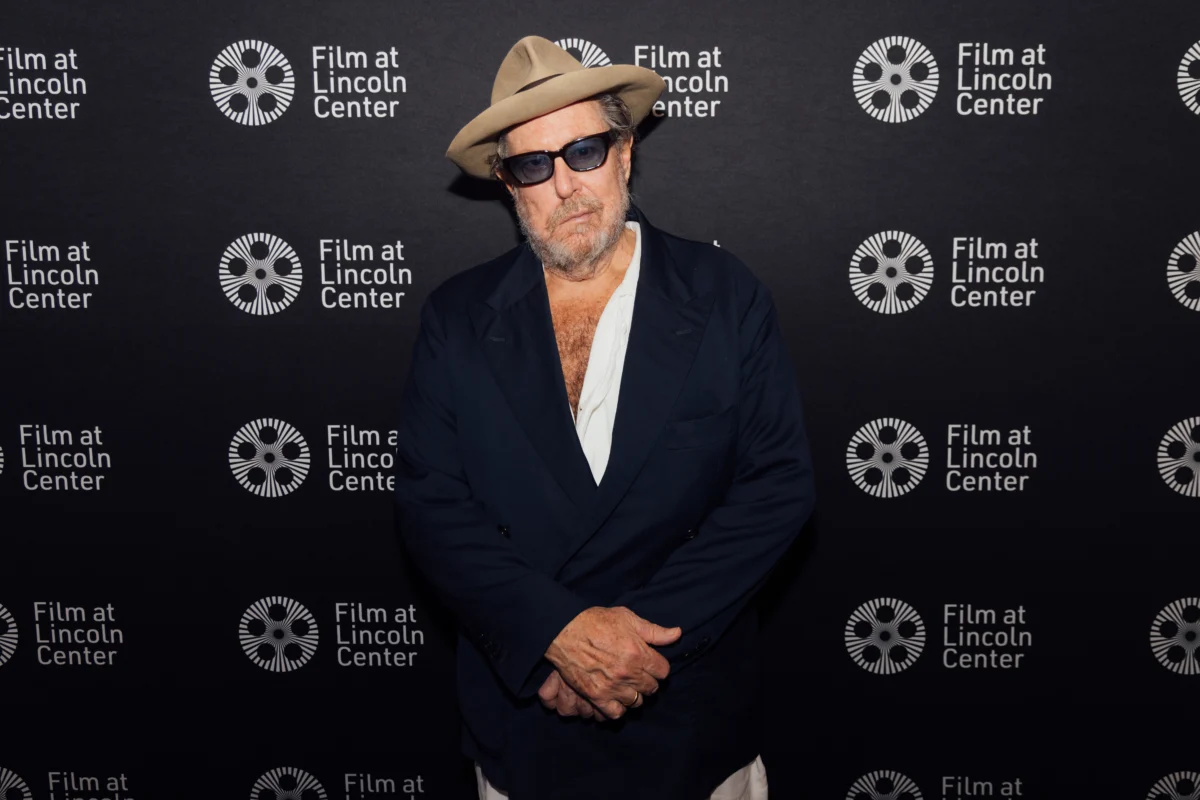
Acclaimed artist and filmmaker Julian Schnabel is set to be honored for his profound contributions to both the visual arts and cinematic landscapes, receiving a Lifetime Achievement Award at the upcoming Lucca Film Festival. The prestigious recognition was announced by the festival organizers on Friday, highlighting Schnabel’s enduring impact and innovative approach across multiple creative disciplines. The 2026 Lucca Film Festival is slated to run from September 26 to October 4 in the picturesque Tuscan city, providing a significant platform for celebrating cinematic excellence.
Schnabel is confirmed to attend the festival in person, a highlight for attendees and industry professionals alike. His participation will include a public masterclass, offering a rare opportunity for aspiring filmmakers and art enthusiasts to gain insights into his distinctive creative process and vision. Beyond the award ceremony, the festival will host a comprehensive retrospective of his filmography, showcasing the breadth and depth of his directorial work. This special program will culminate in the screening of his latest feature, In the Hand of Dante, where Schnabel will officially receive his Lifetime Achievement Award.
The Lucca Film Festival: A Beacon for Independent and Authorial Cinema
The Lucca Film Festival, renowned for its commitment to showcasing independent and authorial cinema, has established itself as a vital fixture on the international festival circuit. Held annually in the historic city of Lucca, Italy, the festival celebrates both established masters and emerging talents, fostering a vibrant dialogue around contemporary film. Its programming often features retrospectives, masterclasses, and unique screenings, making it a significant cultural event in Tuscany and beyond. The Lifetime Achievement Award, one of the festival’s highest honors, is bestowed upon individuals whose body of work has demonstrably shaped the cinematic landscape and pushed artistic boundaries. Previous recipients of this esteemed accolade include visionary directors such as David Lynch, known for his surrealist narratives; Paul Schrader, celebrated for his introspective screenplays and direction; and Alfonso Cuarón, recognized for his technical mastery and emotional storytelling. By adding Julian Schnabel to this distinguished list, the Lucca Film Festival underscores its appreciation for artists who transcend conventional categories and leave an indelible mark on global culture.
"In the Hand of Dante": A Star-Studded Latest Endeavor
Schnabel’s latest cinematic offering, In the Hand of Dante, which premiered out of competition at the Venice Film Festival last year, will be a focal point of the Lucca celebration. This Netflix feature is an adaptation of Nick Tosches’ acclaimed 2002 novel, weaving a complex narrative that blends historical intrigue with contemporary thriller elements. The film boasts an impressive ensemble cast, featuring leading performances from Oscar Isaac, Gal Gadot, and Gerard Butler. The star power extends further with notable appearances by Jason Momoa, cinematic icon Al Pacino, and legendary director Martin Scorsese, underscoring the project’s ambition and Schnabel’s ability to attract top-tier talent. The screening at Lucca will not only mark the occasion of his award but also offer festival-goers an opportunity to experience his most recent foray into storytelling on the big screen, a testament to his ongoing creative vitality.
From Canvas to Camera: Schnabel’s Artistic Genesis
Before making his indelible mark in cinema, Julian Schnabel first achieved international prominence as a painter, becoming a seminal figure in the vibrant and often tumultuous 1980s New York art scene. His work was characterized by a bold, neo-expressionist aesthetic that challenged minimalist and conceptual trends of the preceding decades. Schnabel’s most iconic contributions from this period were his "plate paintings"—large-scale canvases meticulously adorned with shards of broken ceramic plates, fused with resin and other materials. These monumental works, often measuring upwards of ten feet, were both visually arresting and conceptually provocative, exploring themes of fragmentation, renewal, and the tactile nature of art. Critics and collectors were captivated by their raw energy and challenging materiality, instantly positioning Schnabel as a leading voice of his generation. His rapid ascent to stardom during this era was unprecedented, solidifying his reputation as an artist unafraid to break conventions and assert a powerful, individualistic vision. This background in large-scale, tactile, and emotionally charged visual art profoundly influenced his later move into filmmaking, where his distinctive aesthetic sensibilities found new avenues of expression.
Pioneering Biopics: "Basquiat" and "Before Night Falls"
Schnabel’s transition from the art studio to the director’s chair was a notable event in the mid-1990s, signaling a burgeoning trend of visual artists crossing into filmmaking. His directorial debut arrived in 1996 with Basquiat, a poignant biopic on the tragically short life and meteoric career of fellow artist Jean-Michel Basquiat. The film, which premiered at the Venice Film Festival, garnered critical attention for its raw portrayal of the 1980s New York art world and its central performances. Jeffrey Wright delivered a breakout performance as Basquiat, capturing the artist’s intensity and vulnerability, while music icon David Bowie offered a memorable portrayal of Andy Warhol. Basquiat was lauded for its authentic atmosphere and Schnabel’s intimate understanding of the artistic milieu, which he himself had been a part of. Despite a limited theatrical release, the film emerged as a sleeper hit, earning over $3 million in domestic box office, a respectable figure for an independent art-house film at the time, and cementing Schnabel’s credibility as a filmmaker.
His follow-up feature, the literary adaptation Before Night Falls (2000), further solidified his standing in the cinematic world. Also premiering at the Venice Film Festival, the film chronicled the life of Cuban poet and novelist Reinaldo Arenas, a defiant figure persecuted for his homosexuality and anti-Castro views. The film was met with widespread critical acclaim, lauded for its lyrical beauty and powerful performances. It secured a Special Jury Prize at Venice and, most notably, earned Javier Bardem the Best Actor Silver Lion for his transformative portrayal of Arenas. Bardem’s performance was universally praised, leading to his first Academy Award nomination for Best Actor, a significant milestone for both the actor and the film. Before Night Falls continued Schnabel’s trend of critical and commercial success for independent cinema, earning over $8.6 million worldwide and reinforcing his reputation for crafting visually compelling and emotionally resonant biopics that explored the lives of extraordinary artists and intellectuals.
Critical Acclaim and International Recognition: "The Diving Bell and the Butterfly"
Schnabel’s third feature, The Diving Bell and the Butterfly (2007), marked a significant zenith in his filmmaking career, achieving widespread international acclaim and numerous prestigious awards. The film premiered at the Cannes Film Festival, where Schnabel was honored with the Best Director award, a testament to his masterful visual storytelling. An adaptation of Jean-Dominique Bauby’s poignant autobiographical book, the film recounts Bauby’s harrowing experience with locked-in syndrome, a rare neurological condition that left him almost entirely paralyzed, able to communicate only by blinking his left eye. Starring Mathieu Amalric as Bauby and Emmanuelle Seigner, the film was celebrated for its innovative cinematography, which viscerally placed the audience within Bauby’s perspective, especially in the early stages of his illness.
The critical reception was overwhelmingly positive, with many critics hailing it as a masterpiece of empathy and visual ingenuity. The film went on to win Schnabel the Best Director Golden Globe Award, further cementing its status as a major cinematic achievement. Its accolades extended to the Academy Awards, where it received four nominations, including Best Director for Schnabel and Best Foreign Language Film. While it did not take home an Oscar, its multiple nominations underscored its profound artistic merit and global impact. Commercially, The Diving Bell and the Butterfly became Schnabel’s most successful film to date, grossing over $20 million worldwide, a remarkable achievement for a French-language art-house film with such a challenging subject matter. Its success demonstrated Schnabel’s ability to connect with a broad audience through deeply human stories, rendered with artistic sensitivity and technical brilliance.
Continued Exploration: Later Works and Thematic Consistency
Following the triumph of The Diving Bell and the Butterfly, Schnabel continued to explore diverse narratives and artistic figures in his subsequent films. His 2010 feature, Miral, starring Freida Pinto, delved into the complex sociopolitical landscape of the Israeli-Palestinian conflict through the eyes of a young woman growing up in an orphanage in East Jerusalem. While not reaching the same critical heights as its predecessor, Miral showcased Schnabel’s continued interest in exploring human stories within challenging geopolitical contexts and his willingness to tackle sensitive subjects with a distinctive visual style.
He returned to the biopic genre with significant acclaim in 2018 with At Eternity’s Gate, a deeply personal portrayal of the final, turbulent years of Vincent van Gogh. The film offered an intimate and impressionistic look at the iconic painter’s struggles with mental illness, his fervent dedication to his art, and his unique perception of the world. Willem Dafoe delivered an extraordinary performance as Van Gogh, immersing himself fully in the artist’s psyche. His portrayal was widely lauded, earning him an Academy Award nomination for Best Actor, his fourth Oscar nomination, and a Golden Globe nomination. At Eternity’s Gate resonated with audiences and critics alike, further illustrating Schnabel’s talent for bringing the lives of artists to the screen with profound empathy and visual flair, often drawing parallels between their creative struggles and his own. These later works reaffirm his consistent thematic interests in the lives of marginalized figures, the nature of artistic creation, and the human spirit’s resilience in the face of adversity.
The Interdisciplinary Vision of Julian Schnabel
Julian Schnabel’s career is a compelling case study in interdisciplinary artistic practice. His lifelong engagement with painting profoundly informs his approach to filmmaking, creating a unique cinematic signature. His films are often characterized by a painterly aesthetic, with a keen eye for composition, color, and texture that sets them apart. He frequently employs subjective camera work, dreamlike sequences, and unconventional narrative structures, inviting the audience to experience the world through the protagonist’s internal landscape, much like an abstract painting might evoke an emotional state. This blurring of lines between visual art and cinema is not merely stylistic; it is integral to his storytelling, allowing him to explore themes of perception, memory, and the subjective nature of reality with unparalleled depth.
His casting choices are also notable, often featuring actors who embody a certain gravitas or intensity, allowing for raw and unvarnished performances. Schnabel’s ability to elicit such profound portrayals speaks to his skill in guiding actors to tap into the emotional core of their characters, much as he might manipulate paint to convey emotion on a canvas. The recurring motif of the artist as an outsider, grappling with societal expectations and personal demons, runs through his filmography, from Basquiat and Arenas to Van Gogh and Bauby, reflecting a deep-seated empathy for those who challenge norms and pursue their vision with unwavering commitment. This enduring fascination with the creative spirit and the human condition, viewed through his distinctive artistic lens, has cemented his status as a truly unique voice in contemporary cinema.
The Broader Implications of the Award
The decision by the Lucca Film Festival to bestow a Lifetime Achievement Award upon Julian Schnabel carries significant implications for his legacy and for the festival itself. For Schnabel, this honor serves as a comprehensive recognition of a career that defies easy categorization, celebrating his contributions not just as a filmmaker but as a holistic artist whose vision transcends medium. It cements his position as a rare polymath, a painter of global renown who successfully transitioned into a critically acclaimed director, achieving mastery in both fields. This award underscores the artistic courage and intellectual curiosity that have defined his journey, highlighting the enduring relevance of his work to both the art and film worlds.
For the Lucca Film Festival, this selection reinforces its reputation as an institution that values artistic innovation, interdisciplinary exploration, and a profound appreciation for challenging, authorial voices in cinema. By honoring an artist like Schnabel, Lucca signals its commitment to celebrating those who push boundaries and provoke thought, further distinguishing itself within the crowded international festival landscape. It also provides a valuable platform for a new generation of artists and filmmakers to witness the trajectory of a singular creative force, demonstrating that artistic expression knows no boundaries. The retrospective and masterclass will offer invaluable educational opportunities, inspiring attendees to consider the deeper connections between different art forms and the power of a unified artistic vision. As the festival approaches, the anticipation builds for a celebration of a career that truly embodies the spirit of artistic achievement and cross-pollination.