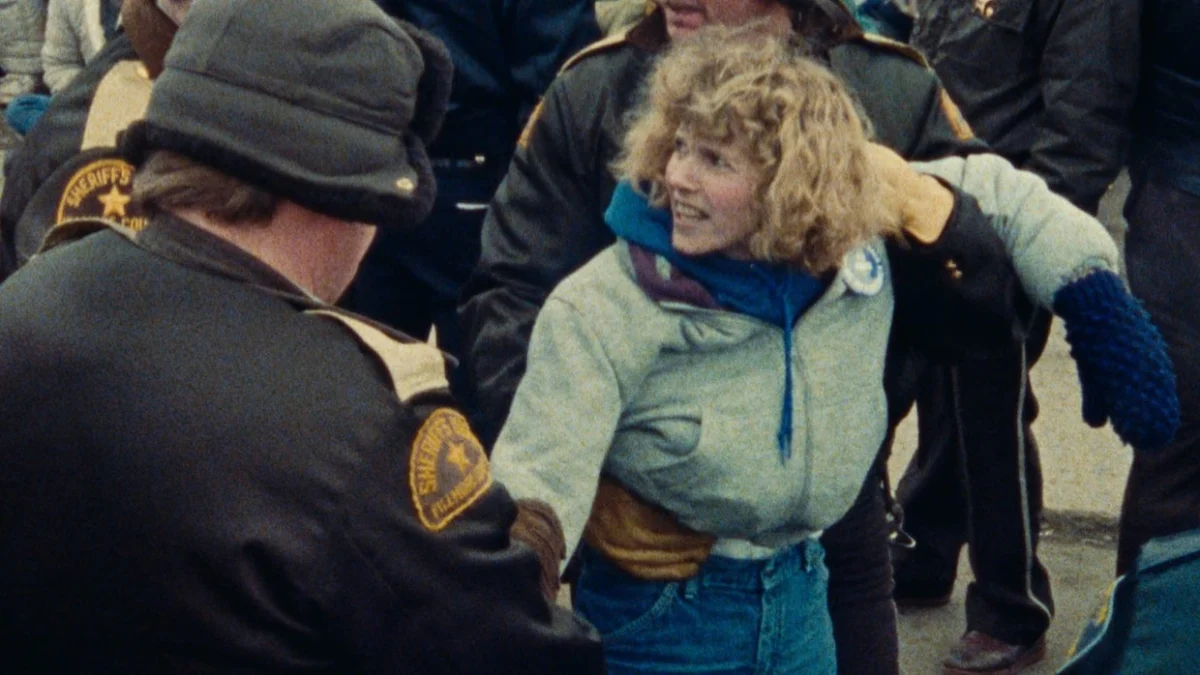
Barbara Kopple’s seminal 1990 documentary, American Dream, stands as a stark and unflinching portrait of labor conflict in the heartland of America, specifically chronicling the bitter 1985-1986 strike at Hormel Foods in Austin, Minnesota. The film, which recently received a 4K digital restoration and theatrical rerelease by Janus Films, immerses viewers in a community fractured by economic pressures and the diverging strategies of its own union leadership. Unlike its more triumphant predecessor, Harlan County, USA, American Dream delves into a devastating loss for labor, capturing the profound human cost when corporate profits clash with the livelihoods of working-class families.
The Genesis of Conflict: A Company Town Under Siege
Austin, Minnesota, in the mid-1980s, was a quintessential company town, its economic and social fabric inextricably linked to Hormel Foods, a meat-processing giant founded in 1891. For generations, employment at Hormel offered a pathway to a stable, middle-class life, providing good wages and benefits that fostered a sense of security and community identity. This stability, however, was shattered in 1985 when Hormel announced a drastic 23 percent hourly wage cut for its unionized meatpackers, proposing to reduce wages from $10.69 to $8.25 per hour. This move came despite the company reporting what the film highlights as "unprecedented corporate profits," sparking outrage among the workers.
The proposed wage cut was not an isolated incident but a symptom of broader economic shifts sweeping across industrial America in the 1980s. The decade was marked by a severe recession in the early years, increased global competition, and a prevailing corporate push for concessions from labor unions. Many companies argued that such cuts were necessary to remain "competitive" in a rapidly changing market. For the workers of Hormel’s Local P-9 of the United Food and Commercial Workers (UFCW) Union, however, the demand felt like an unjust betrayal, threatening their ability to maintain the "quality American life" they believed they had earned.
The Strike Unfolds: A Chronology of Disagreement and Desperation
The film meticulously documents the year-long strike, tracing its origins from the initial shock of the wage cut announcement through the protracted negotiations and the eventual, heartbreaking collapse of the workers’ resistance.
1985:
- August 17: Hormel implements the wage cut, leading to immediate outcry from Local P-9.
- August 19: Local P-9 initiates an aggressive public relations campaign, seeking to rally support and expose what they viewed as corporate greed. They adopt a defiant stance, epitomized by chants of "We’re not going to take it anymore."
- October 11: The strike officially begins after negotiations fail to yield an acceptable agreement. Workers walk off the job, confident in their unity and the historical strength of their union.
- Internal Strife Emerges: Almost immediately, tactical disagreements begin to surface between the militant Local P-9 leadership, led by President Jim Guyette and labor activist Ray Rogers, and the national UFCW leadership. The national union advocated for a more cautious approach, fearing that a protracted strike could lead to the loss of jobs and the complete erosion of union power. National UFCW Vice President Lewie Anderson, responsible for negotiating contracts across dozens of plants, articulated the national union’s philosophy of "bringing everybody up" rather than allowing individual locals to jeopardize gains for the collective. He accused Local P-9 of internalizing the "individualist ethos of the time," equating their "I’ll get mine and to hell with everyone else" mentality with Reagan-era philosophy.
1986:
- January: As the strike drags on, Hormel begins hiring replacement workers, often referred to as "scabs," further escalating tensions. Some union members, desperate for income, cross the picket lines, earning the derogatory label "P-10ers" from their striking brethren. This division within the workforce becomes one of the most painful aspects of the conflict.
- January 20: Minnesota Governor Rudy Perpich deploys the National Guard to Austin to maintain order amidst increasingly volatile picket line confrontations. The presence of armed troops underscored the gravity of the situation and the state’s intervention on behalf of the company.
- February: The national UFCW, believing the strike to be unwinnable and detrimental to the broader union movement, places Local P-9 under trusteeship, effectively seizing control of its operations and resources. This move further isolates the striking workers and weakens their bargaining position.
- May: The strike formally ends. The outcome is a devastating defeat for Local P-9. Most striking workers lose their jobs, replaced by new hires and former union members who crossed the picket lines. The union’s power in Austin is severely diminished, and the community is left deeply scarred by the internal divisions.
The Broader Economic and Political Landscape of the 1980s
The Hormel strike did not occur in a vacuum but was a dramatic manifestation of the profound economic and political shifts that characterized the Reagan era. The 1980s saw a concerted effort to curb the power of labor unions, a trend exemplified by President Ronald Reagan’s decisive action against the Professional Air Traffic Controllers Organization (PATCO) strike in 1981. When PATCO members went on strike, Reagan fired over 11,000 striking controllers, a move that sent a clear message to both corporations and unions: the federal government would not tolerate unauthorized strikes and would prioritize management interests.
This event marked a turning point, contributing to a precipitous decline in labor strikes and union membership across the United States. From 1981 onwards, the number of major work stoppages (involving 1,000 or more workers) fell dramatically, from hundreds annually in prior decades to fewer than 50 by the end of the 1980s. Union density, which had peaked in the mid-20th century, began a steady decline that continues to this day. Furthermore, the Reagan administration reconstituted the National Labor Relations Board (NLRB), appointing members who were generally perceived as more sympathetic to management, thereby tilting the legal and regulatory landscape against organized labor.
Against this backdrop of weakening union power, corporations like Hormel felt emboldened to demand concessions. The meatpacking industry, in particular, underwent significant restructuring during this period, with many companies seeking to reduce labor costs to compete with non-unionized operations and cheaper imports. The economic philosophy of the time often championed deregulation and a reduced role for government intervention in the economy, leading to an environment where corporations had greater leverage in labor disputes. The American Dream strike thus became a microcosm of these larger national trends, illustrating the immense challenges faced by workers fighting for fair treatment in an increasingly hostile environment.

Barbara Kopple’s Vision: A Continuation and Counterpoint
Barbara Kopple’s American Dream is often viewed in conversation with her earlier, Academy Award-winning documentary, Harlan County, USA (1976). While Harlan County documented a successful, albeit violent, coal miners’ strike in Kentucky, culminating in a union victory, American Dream presents a more somber narrative. Kopple herself describes American Dream as "an uneasy film," a "counterpoint to and continuation of" her previous work. Where Harlan County celebrated the resilience and eventual triumph of collective action, American Dream grapples with the pain of division, the erosion of solidarity, and the bitter taste of defeat.
Kopple’s formidable artistic skills are evident in her immersive filmmaking style. She and her collaborators embedded with Local P-9 for over a year, gaining unprecedented access to the raw emotions, strategic debates, and private deliberations of all parties involved. This "embedded" approach allowed her to gather a wide array of voices – striking workers, their families, union representatives (both local and national), labor consultants, and even company officials – creating a truly "multivalent portrait" of a community in crisis. The film’s strength lies in its refusal to simplify the conflict into a clear-cut good-versus-evil narrative. Instead, it meticulously unpacks the complex motivations and moral dilemmas faced by individuals caught in an impossible situation. As Kopple notes, "aside from the company, Hormel, there are really no villains here in those strands." She trusted the viewer to navigate the nuances of the conflict, understanding that even those with opposing strategies, like Lewie Anderson and Jim Guyette, were driven by a genuine concern for the workers.
The Filmmaking Journey: Challenges, Access, and Unwavering Support
The journey to create American Dream was as arduous as the strike it documented. Kopple initially began filming in Worthington, Minnesota, where the closure of an Armour plant highlighted the devastating impact of corporate decisions on workers’ lives. She recounted a heartbreaking scene where a worker learned all Armour plants were closing, leaving him with "nowhere that we can go." It was amidst this despair that she heard radio reports of the Austin workers "fighting Hormel" and "cheering, ‘We’re not going to take it anymore.’" This spark of defiance resonated deeply, pulling her towards Austin.
Gaining access to such a contentious and emotionally charged situation required immense patience and trust-building. Kopple’s long-term presence – living in Austin for over a year, often with her then-husband Hart Perry (a cameraperson) and their young son Nicholas – was crucial. This sustained engagement allowed her to penetrate spaces typically off-limits to filmmakers, including sensitive negotiation sessions between unions and management, and the private strategy meetings of both Local P-9 and the national UFCW. "The company wanted their side to be heard," Kopple explained, highlighting how her commitment to presenting multiple perspectives ultimately opened doors. This level of access was vital in allowing the film to "give us a sense of the entire shape of the labor struggles in this industry, in a very completist way."
Financing the documentary was a constant struggle. Kopple candidly shared that her team had "practically no money whatsoever." Filmmakers and crew often worked pro bono, driven by a shared belief in the story’s importance. A pivotal moment of relief came when, freezing and disheartened, Kopple received a call from her office informing her of a "miracle" grant of $25,000 from Bruce Springsteen, to whom they had been applying for a long time. This unexpected support provided a much-needed lifeline. Additionally, DuArt Film Labs, under the leadership of Irwin Young, processed their film without upfront payment, demonstrating a deep commitment to independent documentary filmmaking. Young’s philosophy, as Kopple recalled, was that "he really cared about documentaries and he cared about the people who weren’t being funded and that he felt that their films were just as important as anybody else’s."
Kopple also underscored the collaborative spirit of the project, notably by giving co-director credits to her editors. This decision reflected her belief that "we never make films alone" and acknowledged the profound contributions of her team in shaping the narrative from countless hours of footage. This approach underscored her respect for their "different points of views and feelings" and their critical role in structuring the complex story.
Legacy and Contemporary Resonance
Upon its release, American Dream garnered widespread critical acclaim, culminating in an Academy Award for Best Documentary Feature in 1991. More than three decades later, its power and relevance remain undiminished. Studs Terkel, the celebrated chronicler of working people, famously predicted in a 1992 interview with Kopple that he would be thinking about American Dream for at least another decade, describing its "Greek tragic aspects," where the destructive force was not gods but a "company. And a union-busting climate." Kopple herself noted that rewatching the film recently felt as if it "happened a week ago," observing its continued timeliness "with what’s happening today—people having to fight and struggle for basic human rights."
The film serves as a powerful historical document, offering an invaluable window into a pivotal moment in American labor history. It meticulously dissects the challenges faced by organized labor in the face of corporate power, economic restructuring, and a shifting political landscape. Its enduring themes—the struggle for fair wages, the ethical dilemmas of corporate competition, the internal conflicts within social movements, and the elusive nature of the "American Dream"—resonate deeply in contemporary society.
Kopple’s Ongoing Commitment to Labor Stories
Barbara Kopple’s dedication to chronicling the lives and struggles of working people has not waned. She is currently working on a new film that explores modern-day unionism, a project she describes as "even harder to do" than American Dream. This new documentary weaves together three distinct narratives of workers fighting for their rights in the 21st century:
- UPS and the Teamsters: Highlighting the ongoing battles within a long-established union, where workers still "have to fight like crazy because the company doesn’t always follow the contract and will just fire people indiscriminately."
- Amazon and the Teamsters: Examining the challenges of organizing in a massive, rapidly growing company that largely relies on independent contractors, where "Amazon is not responsible for anything."
- Los Deliveristas Unidos (The Deliveristas): Following the plight of immigrant delivery workers who, on their bikes and motorcycles, navigate a new country, a new language, and precarious working conditions in pursuit of their own version of the American Dream.
Kopple’s new film promises to be a vital continuation of her career-long commitment to labor, drawing clear parallels between the historical struggles depicted in American Dream and the contemporary battles for dignity, fair compensation, and basic human rights. Her enduring, immersive approach to filmmaking—spending "a couple of years" following these new stories—underscores her belief in the importance of commitment to truly capture the essence of these human experiences. As the "Filmmaker" interviewer noted, there’s an immediate recognition when a film has been shot over several years, a testament to the profound depth and authenticity that such dedication brings to the screen. For Barbara Kopple, the fight for the "American Dream" is a timeless narrative, continually unfolding, and always deserving of witness.